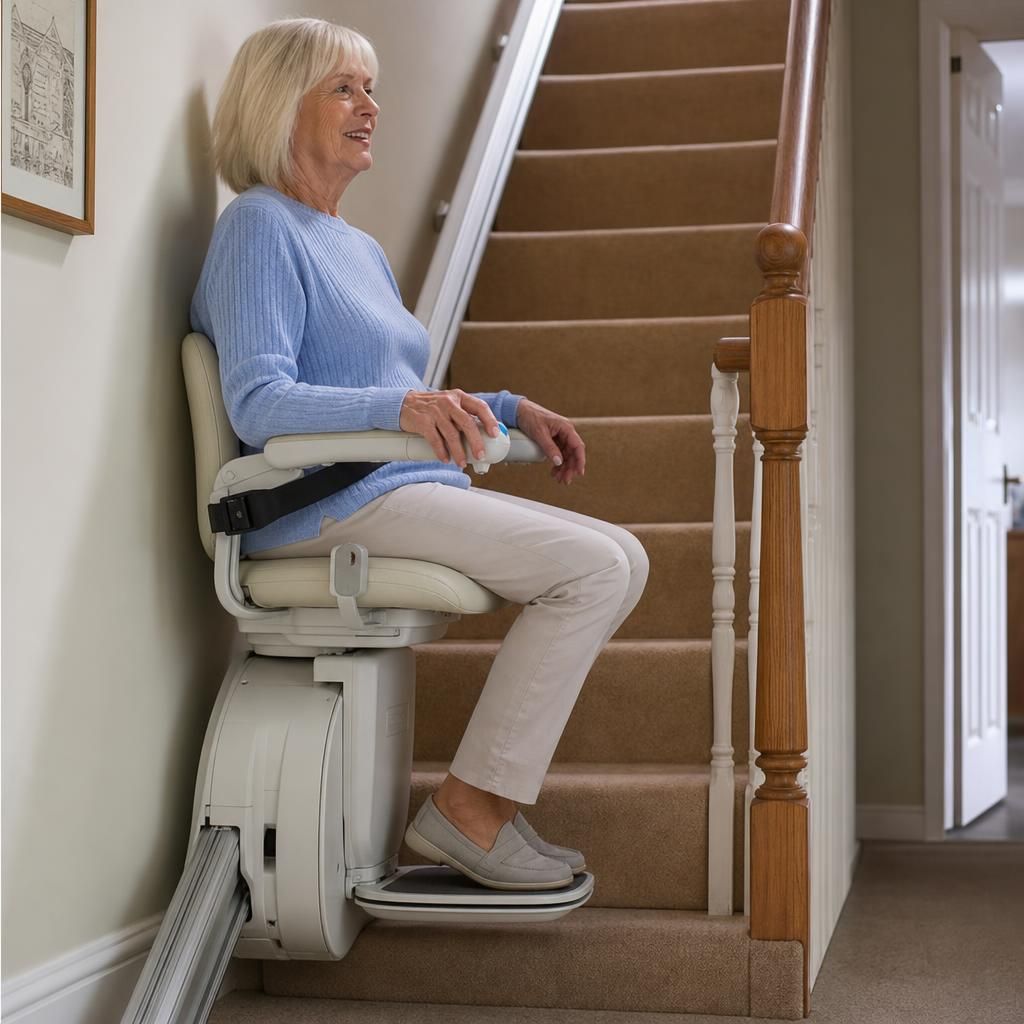
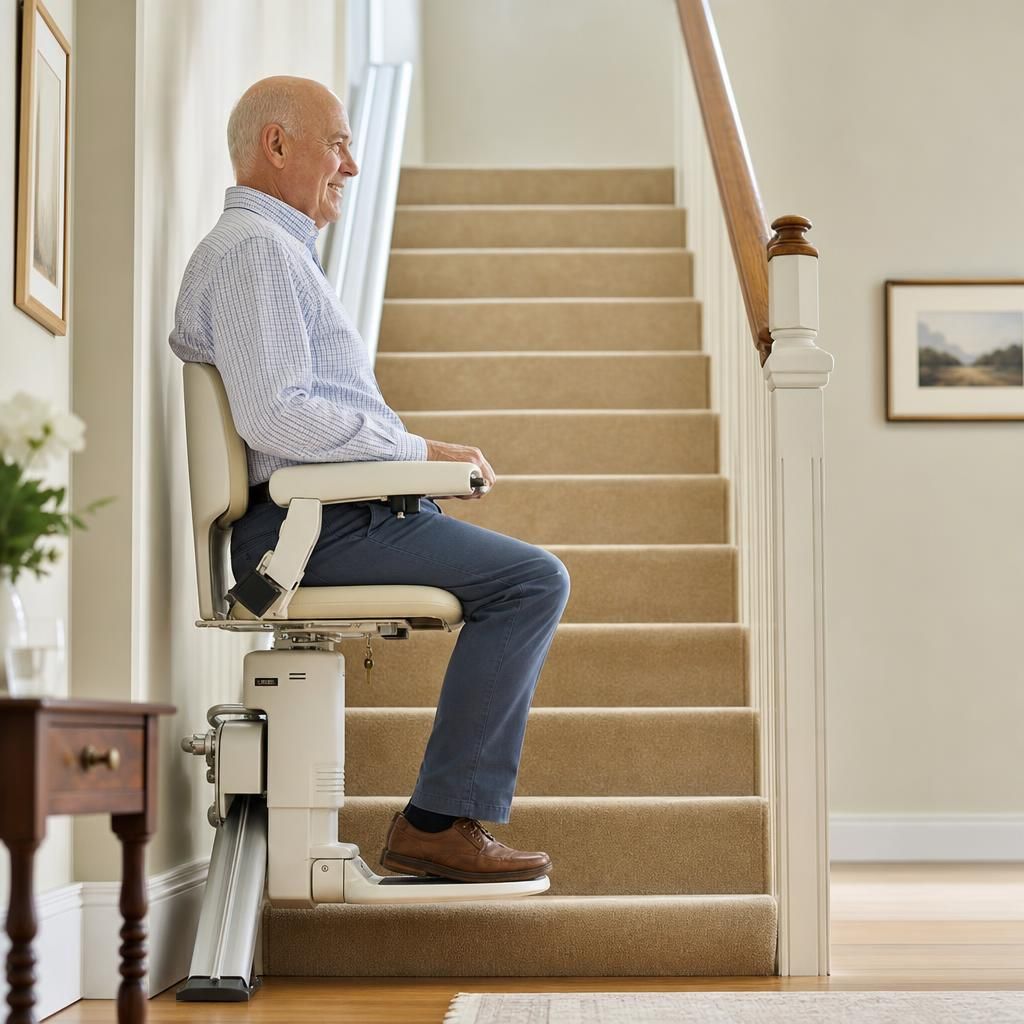
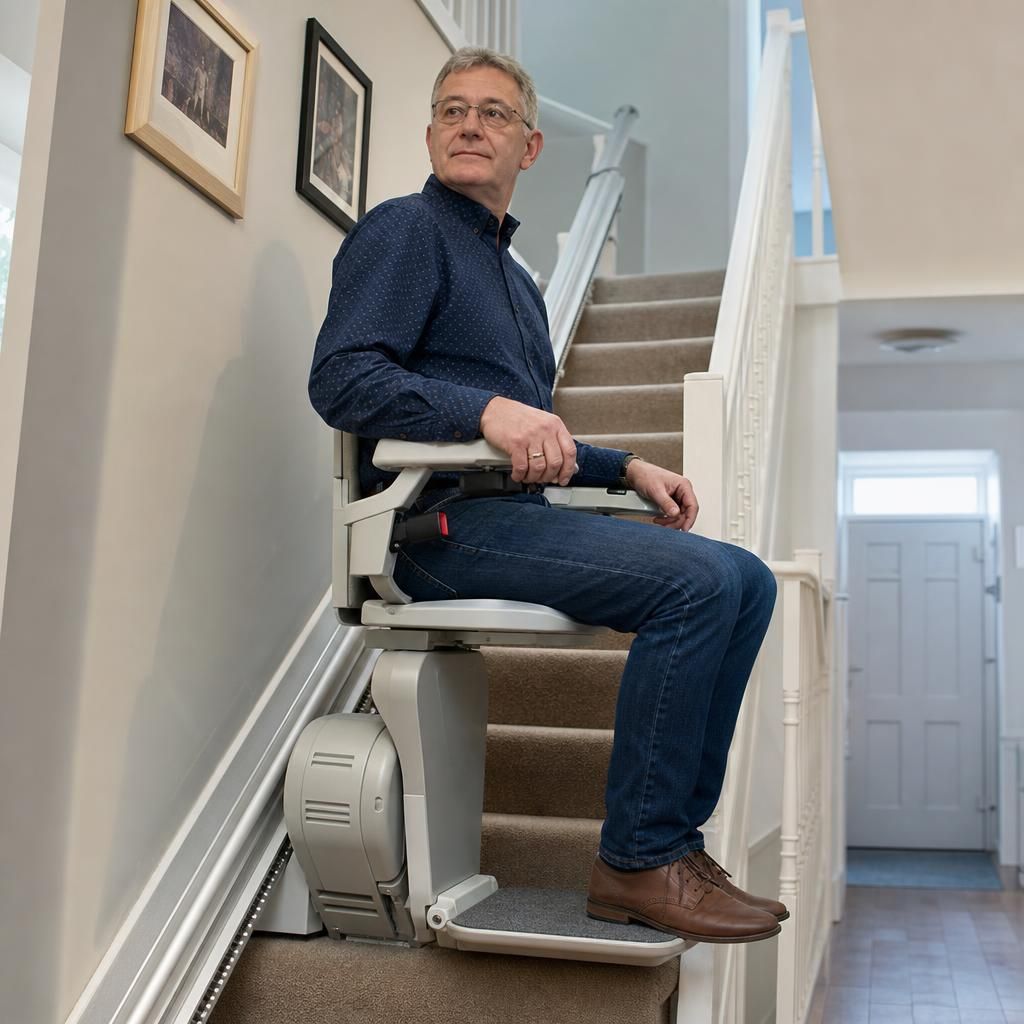
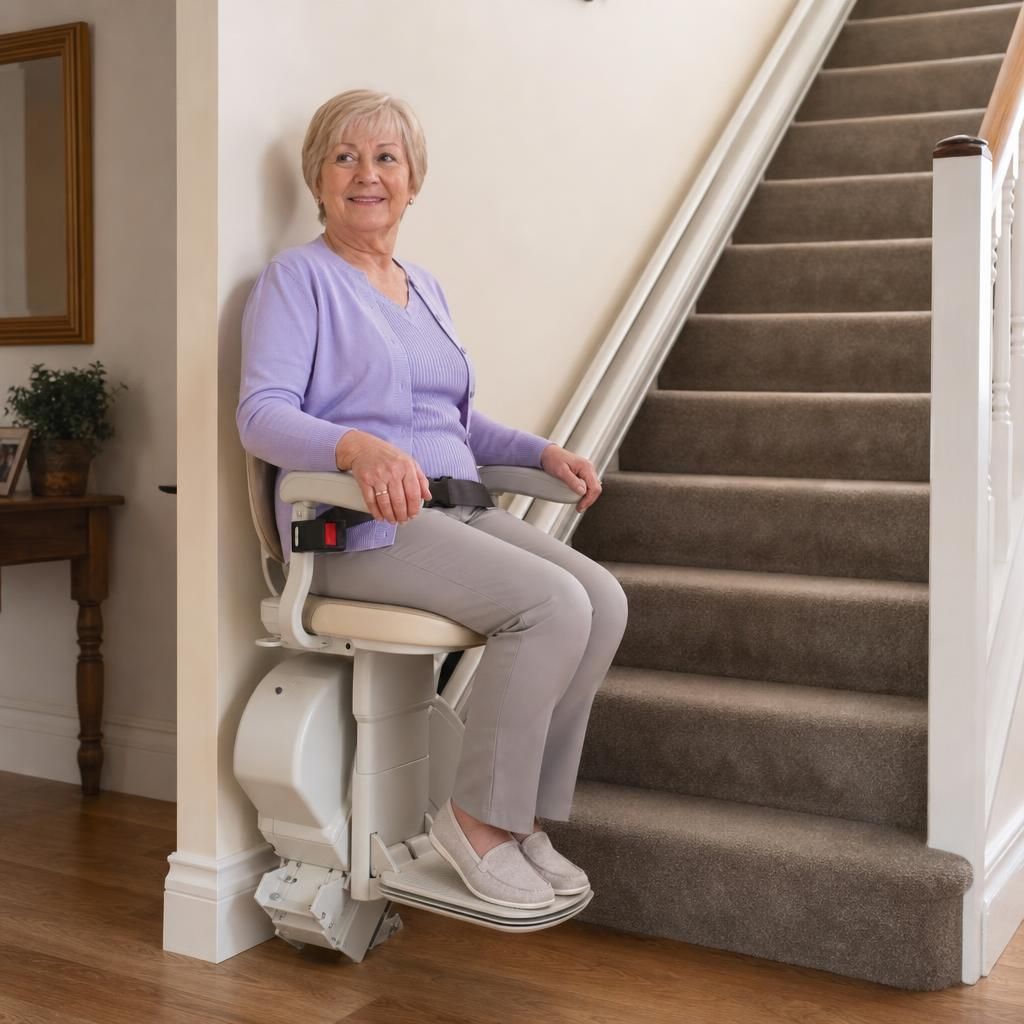
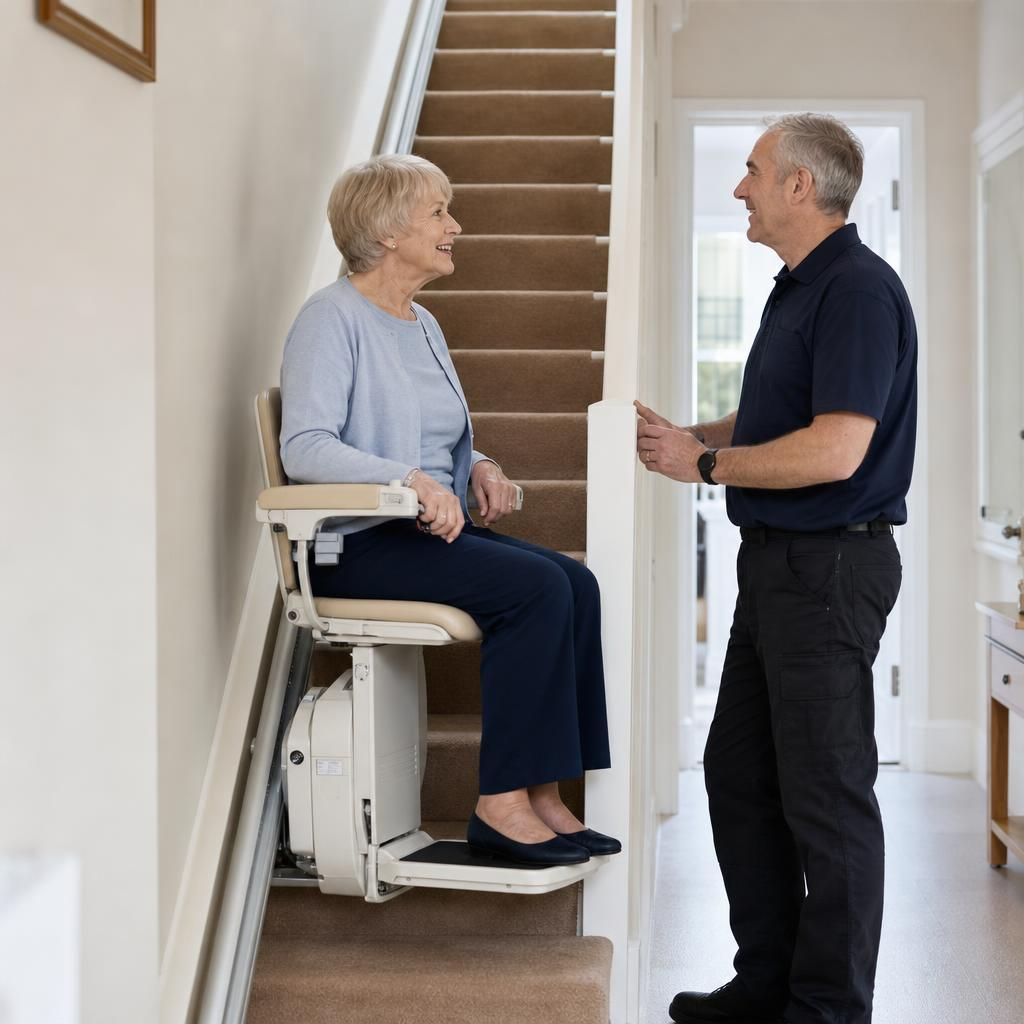
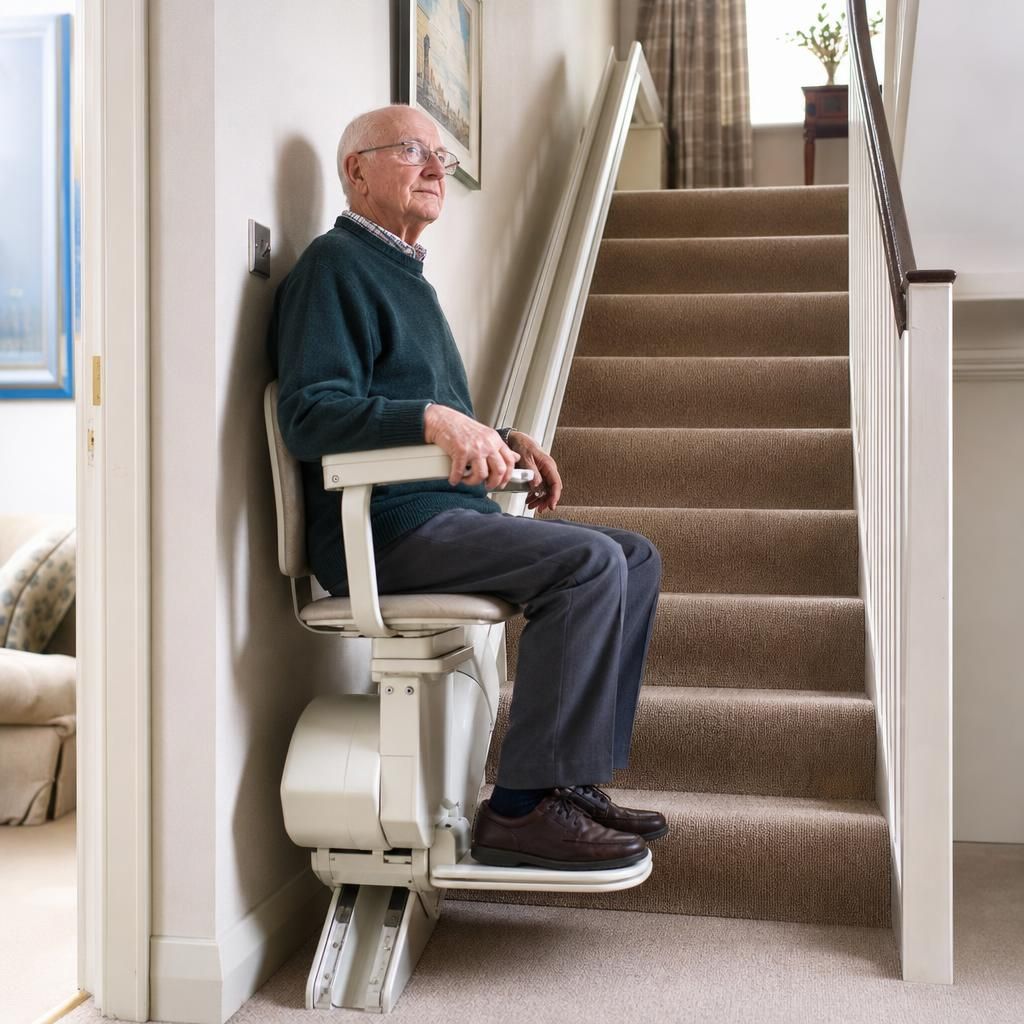
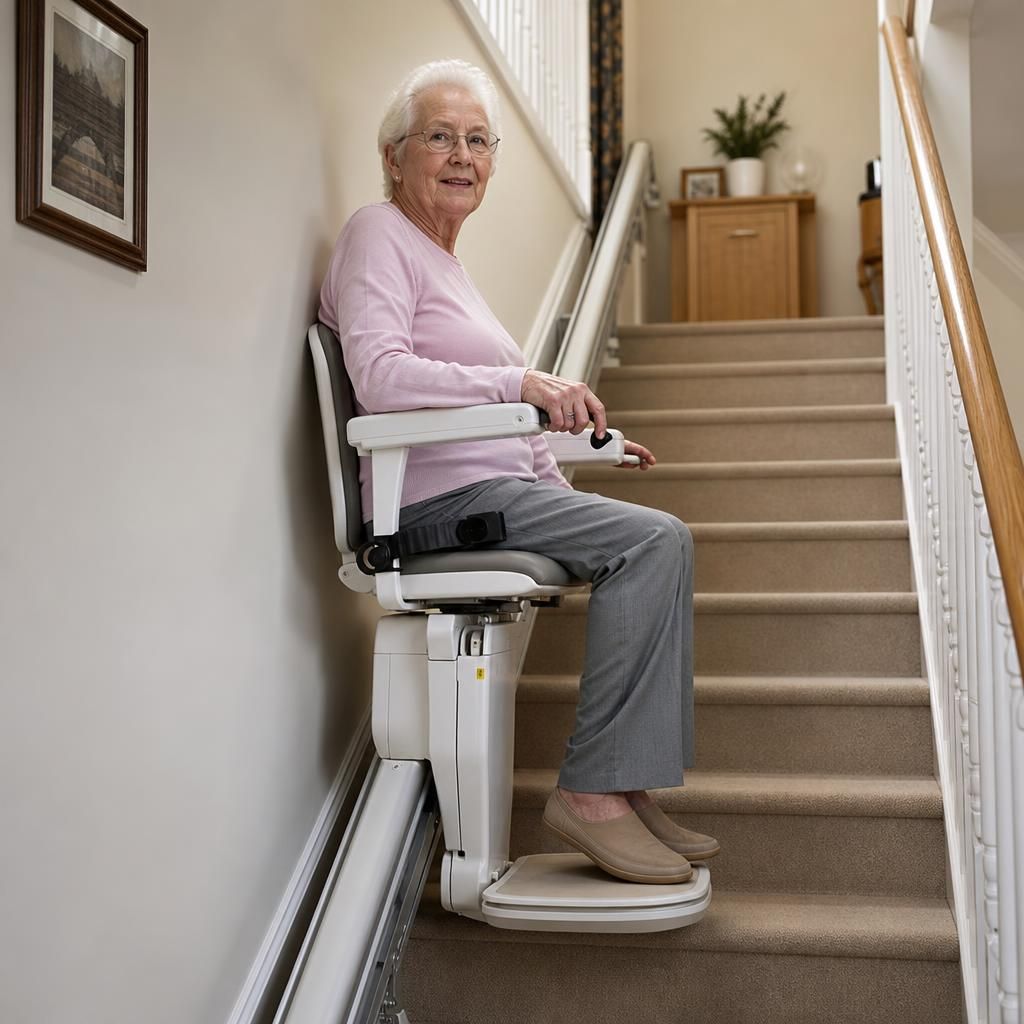
Stairlifts For Disabled Users

Stairlifts for disabled users provide access between floors for people whose mobility, balance or strength makes stairs difficult or unsafe. Straight, curved and outdoor models can be assessed with suitable seating, controls and safety features for the user and property.

Book a free assessment

Specialist Stairlift Expertise for Disabled Users

Assessment-led recommendations

A suitable stairlift depends on more than whether a staircase is straight or curved. Independent Stairlifts considers the user’s transfer technique, posture, balance, grip and ability to operate controls, alongside the position of doors, landings and available clearance. This creates a more practical basis for comparing models than choosing from a catalogue alone.

Experience with bespoke curved stairs

Curved staircases often require a rail designed around bends, intermediate landings or changes in direction. Independent Stairlifts assesses the full route and recommends a bespoke configuration where a standard straight lift would not provide a suitable journey. The design is considered alongside parking position, transfer space and access to other parts of the home.

Straight stairlift knowledge

Straight stairlifts can be appropriate where the staircase follows a single uninterrupted run, but the installation still needs careful planning. Independent Stairlifts reviews the stair width, bottom and top landings, doorways and parking requirements before advising on the rail position, seat style and control layout.

Solutions for outdoor access

Outdoor stairlifts are exposed to changing weather and may serve steps leading to an entrance, garden or split-level area. Independent Stairlifts can assess external access routes and identify suitable features such as weather-resistant construction, secure parking and controls that remain practical for the user.

Attention to safe operation

Controls, seating and transfer features can determine whether a stairlift is manageable in daily use. Recommendations may include adjustable control positions, swivel seating, powered footrests or other adaptations where these support safer mounting and dismounting. The aim is to match the equipment to the individual rather than expect the user to adapt to a fixed design.

Clear comparison of available options

A reconditioned stairlift may provide a suitable alternative where the layout and user requirements can be matched to available equipment. Independent Stairlifts can compare reconditioned and new solutions with bespoke installations, taking account of the staircase, expected use, seating needs, service arrangements and the practical requirements of the household.

UK-wide installation support

Independent Stairlifts provides assessment and installation support across the UK for domestic stairlift requirements. Reviewing the property before fitting helps identify access constraints, potential obstructions and any preparation needed, giving the household clearer information before a model and installation approach are selected.

Your Stairlift Assessment, Installation and Aftercare

A stairlift for disabled users is selected and fitted around safe transfers, posture, control access and the person’s ability to use the stairs independently. Independent Stairlifts carries out a home assessment before recommending a suitable straight, curved or outdoor model, checking the seating position, footrest, controls, landing clearance and any risks around the installation.

Before installation, the proposed equipment, work, price and warranty or guarantee terms should be explained clearly in writing. If an issue develops, the aftercare process should cover troubleshooting, servicing and repairs, with appropriate support available for faults or changes in mobility. Independent Stairlifts can discuss these arrangements during the assessment so the user and their family understand what is included and which ongoing costs may apply.

How is suitability assessed?

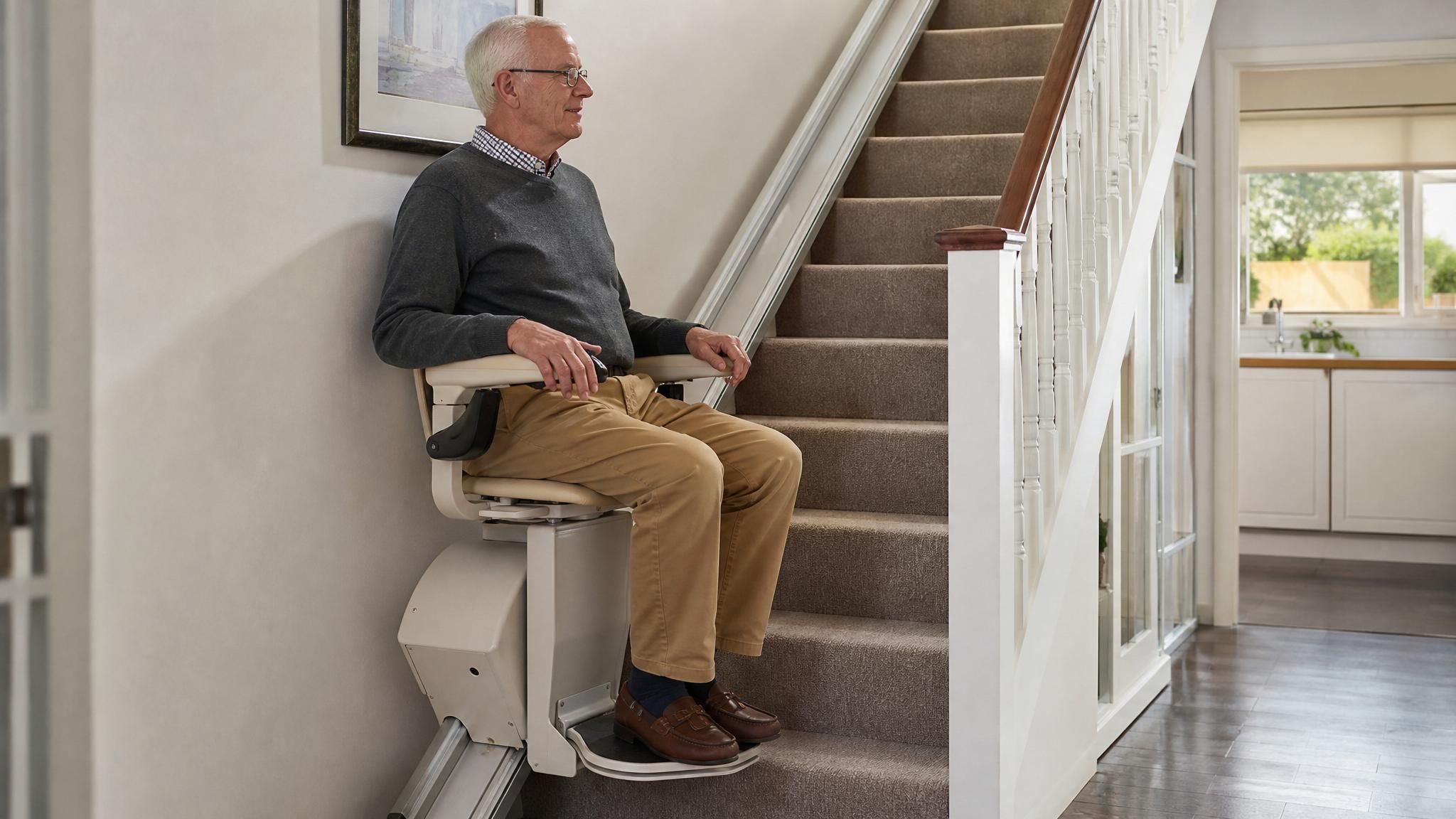
A stairlift for a disabled user should be selected after assessing mobility, transfers and the staircase together. The assessment considers how the person will approach the lift, sit down, operate the controls and leave it safely at the other floor.

Assessment based on the user and property

Independent Stairlifts reviews the stairs, landings, access points, seating position, footrest and control reach before recommending equipment. The assessment can help determine whether a straight, curved or outdoor stairlift is suitable, and whether features such as a swivel seat, powered footrest, adjustable controls or alternative seating would make daily use safer and easier.

What safety features can be included?

Safety features are chosen according to the user’s movement, balance, strength and ability to transfer on and off the stairlift. They should also suit the available space and avoid creating new obstructions on the stairs or landings.

Features matched to practical needs

Depending on the assessment, suitable equipment may include a swivel seat to support transfers, sensors to detect obstructions, a seat belt, adjustable controls and a powered footrest. A professional installer should explain how each feature works and confirm that the user, or an assisting family member or carer, can operate it correctly.

What is covered before installation?

Before installation, the proposed stairlift, fitting work, price and applicable warranty or guarantee terms should be explained clearly. This gives the user and their family an opportunity to compare the recommendation with other suitable options.

Clear arrangements in writing

Independent Stairlifts can discuss the recommended model, any adaptations, the installation requirements and the expected aftercare before work begins. Ask which parts and labour are covered, how long the relevant protection lasts, and whether servicing or call-out charges may apply outside those terms.

What happens if there is a problem?

If a stairlift develops a fault, the aftercare process should explain who to contact and what support is available. Prompt troubleshooting, servicing and repair can help restore safe access between floors.

Support for faults and repairs

Independent Stairlifts can explain the reporting and repair arrangements for the recommended stairlift, including the support available during the applicable warranty or guarantee period. Users should stop using equipment that appears unsafe, report unusual noises, movement or control problems, and follow the installer’s advice rather than attempting repairs themselves.

Can the stairlift be reviewed later?

A person’s mobility, strength or confidence may change after installation, so the original setup may need to be reviewed. Changes to the home, seating position or transfer method can also affect safe use.

Adjustments as needs change

Contact Independent Stairlifts if the user begins to struggle with the controls, transfers, posture or footrest, or if a carer needs guidance. The company can discuss whether servicing, an adjustment, a different seating arrangement or another stairlift option is appropriate, rather than assuming that the original configuration will remain suitable indefinitely.

Bespoke Stairlift Solutions for Disabled Users

A bespoke stairlift for disabled users is designed around mobility, transfer and access requirements, with seating, controls and safety features selected for the person and staircase.

Independent Stairlifts provides professional assessments and installation for straight, curved and outdoor stairs. We compare standard, heavy-duty, reconditioned and tailored options, explaining suitability, access, aftercare and costs before work begins.

Bespoke stairlift design

A tailored stairlift is specified around the user’s mobility, transfer method and staircase, rather than relying on a one-size-fits-all configuration.

Suitable for complex stairs

Curved and multi-flight staircases can be assessed for a solution that follows the available route while preserving practical access around landings and doorways.

Comfort matched to the user

Seat style, swivel action, armrests, footrest and support can be considered together to make getting on, travelling and getting off more manageable.

Safety-led specification

The recommended equipment should reflect balance, strength, vision and transfer ability, with safety features explained clearly before a decision is made.

Considered home integration

Rail position, parking location and access around the staircase are reviewed so the stairlift supports daily movement without creating avoidable obstruction.

Support beyond installation

A premium stairlift solution includes clear warranty terms and a defined route for servicing, repairs and adjustments if the user’s needs change.

How the Stairlift Process Works

The process of arranging a stairlift for disabled users should cover assessment, comparison, design, quotation, installation and aftercare. Each stage helps confirm that the lift suits the staircase, transfer needs, controls, safety requirements and budget.

  1. 01

    1. Discuss the user’s needs

    The process starts by discussing how the stairs are used, where assistance is needed and any difficulties with balance, strength, transfers or posture. The user, family member or carer can explain current concerns, so the assessment reflects practical daily needs rather than the staircase alone.

  2. 02

    2. Assess the staircase and access points

    An assessor examines the staircase, landings, doorways and available space at the top and bottom. They also consider whether a straight, curved or outdoor stairlift is appropriate, along with parking positions, power requirements and any potential obstruction to other household members.

  3. 03

    3. Compare suitable equipment

    The available options are compared by seat design, weight capacity, controls, swivel or powered features, footrest arrangement and the way the lift folds or parks. Controls should be reachable and straightforward for the intended user, including where hand strength or dexterity is limited.

  4. 04

    4. Confirm the design and quotation

    For a curved staircase, the proposed rail is designed around the individual bends, landings and access points. The written quotation should identify the stairlift, installation work, total price, expected timescale and warranty or guarantee terms, including any ongoing servicing or repair costs.

  5. 05

    5. Arrange professional installation

    Once the equipment and specification are agreed, the stairlift is installed to suit the surveyed staircase. The installer checks the rail, seat, footrest, sensors, controls and charging arrangements, while taking care to leave the staircase and surrounding areas safe and usable.

  6. 06

    6. Complete handover and aftercare

    The user is shown how to start, stop, steer and park the stairlift, use the safety belt and respond to a fault indication. Independent Stairlifts can also explain servicing, troubleshooting and repair arrangements, giving the user and their family a clear point of reference after installation.

Questions About Stairlifts for Disabled Users

What are the key considerations when selecting a stairlift for disabled users?

Independent Stairlifts offers an extensive range of stairlifts, tailored specifically for disabled users, ensuring compatibility with various home layouts and meeting personalized mobility needs effectively.

How does Independent Stairlifts ensure the safety and reliability of its installations for disabled users?

Expert technicians perform thorough assessments and precise installations, adhering to strict industry safety standards. Regular maintenance checks and prompt aftercare support further ensure your stairlift's reliability and longevity.

What types of stairlifts are available for disabled users with complex staircase designs?

Independent Stairlifts provides bespoke solutions for complex staircase designs, accommodating spiral, narrow, or multi-flight staircases with custom-built curved rails, ensuring secure and tailored movement throughout unique home layouts.

Are outdoor stairlifts suitable for all weather conditions?

Outdoor stairlifts are designed to withstand various weather conditions, featuring weatherproof materials and durable construction, ensuring functionality during rain, snow, and sunshine. Regular maintenance is recommended to uphold performance.

What options are available for heavy-duty or bariatric stairlifts for disabled users?

Heavy-duty or bariatric stairlifts offer enhanced weight capacities and robust construction to support users of heavier build. Tailored designs ensure comfort, while reinforced mechanisms provide reliable, smooth operation on various stair configurations.

Reliable Stairlift Support and Aftercare

Your assessment should confirm the stairlift’s suitability, installation requirements and controls before work begins. Independent Stairlifts can explain warranty or guarantee terms, servicing and repair support, helping families understand care arrangements and who to contact if assistance is needed.

Contact Us

Request a free assessment

No obligation. We will talk through your staircase and options.

Ease of Use Commendation — Arthritis FoundationAll of our stairlifts carry the Ease of Use Commendation.

Questions to Ask When Choosing a Stairlift for Disabled Users

What features should I consider to ensure the stairlift accommodates the specific mobility requirements of the disabled user in my home?

Independent Stairlifts combines expert knowledge with a focus on personalised solutions, tailoring each installation to unique user and home requirements, thus ensuring enhanced mobility and satisfaction for disabled users.

How can I ensure the stairlift I choose is compatible with the size and layout of the staircase in my home?

Choose a stairlift design tailored to your staircase's dimensions and configuration, considering straight or curved models. Independent Stairlifts conducts precise assessments to match solutions efficiently, ensuring optimal compatibility and performance.

What factors should I consider regarding the long-term maintenance and servicing needs of a stairlift for disabled users?

Ensure regular maintenance checks and servicing to extend your stairlift's lifespan. Choose a provider offering comprehensive aftercare, addressing mechanical issues promptly to maintain reliability and safety for disabled users.

How can I assess the suitability and benefits of different stairlift styles, such as bariatric or standing options, for disabled users with unique mobility requirements?

Evaluate various stairlift styles by considering weight capacity, seating options, and safety features. Independent Stairlifts provides expert guidance to align products with individual needs, promoting safety and comfort in mobility solutions.

What are the safety features and compliance standards a stairlift should meet to ensure the well-being of disabled users in domestic settings?

Ensure your stairlift is equipped with essential safety features like seatbelts, obstruction sensors, and smooth start/stop functions. Adherence to ADA compliance and BS standards guarantees safety and reliability.

Book Your Free Stairlift Assessment

Arrange a free home assessment for a stairlift suited to your disability, staircase and transfer needs. Independent Stairlifts can compare straight, curved and outdoor options, explain costs and aftercare, and provide a clear recommendation before installation.

Contact Us

Request a free assessment

No obligation. We will talk through your staircase and options.

Ease of Use Commendation — Arthritis FoundationAll of our stairlifts carry the Ease of Use Commendation.