
What features should I consider to ensure the stairlift accommodates the specific mobility requirements of the disabled user in my home?
Consider the disabled user’s posture, balance, transfer ability, weight, reach and dexterity when choosing features such as a powered swivel seat, adjustable footrest, suitable seat belt, accessible controls and a supportive seat design. A professional assessment should also check the staircase layout, available space, charging position and any need for features such as hinged or powered rails, so the stairlift can be used safely and comfortably in your home.
The most important stairlift features are those that support the user’s posture, transfers, balance, reach, weight and ability to operate controls. A suitable stairlift should make getting on and off the seat manageable, keep the user secure during travel and fit the staircase without creating an obstruction. The correct combination depends on the person’s condition and the layout of the home, so a professional assessment should consider both the user and the stairway before a model is selected.
Start with how the user transfers on and off the stairlift. If they can stand briefly and turn safely, a standard seated stairlift may be appropriate. If bending, twisting or reaching is difficult, features that reduce the effort of transferring can be important. These may include:
- A powered swivel seat that turns towards the landing, helping the user face away from the stairs before standing or sitting.
- A manual swivel seat where the user or carer can operate the release safely and easily.
- A powered or hinged footrest if lifting or folding the footrest is difficult.
- Adjustable seat height or a seat position selected to suit the user’s leg length and transfer height.
- Armrests that provide useful support without making the seat too narrow for comfortable use.
- A folding seat and compact folded dimensions where other people need to pass on the stairs.
A swivel seat is not automatically suitable for everyone. The user must still be able to control their body position during the transfer, unless a carer provides appropriate assistance. The assessment should therefore consider whether the person is likely to slide forwards, lose balance, become disorientated or need additional support when the seat reaches the landing.
Choose the seat and support arrangement around the user’s posture and physical control. A supportive backrest can help a person who cannot sit fully upright without support, while a firm seat may make transfers easier than a very soft cushion. The seat width, depth and angle should allow the user to sit centrally with their back supported and feet positioned securely. Someone with limited trunk control may need more lateral support, while a person with stiff hips or knees may need a seating position that avoids excessive bending.
Consider whether the user’s condition changes during the day. Fatigue, pain, involuntary movements, reduced muscle control or difficulty maintaining a seated position may affect which features are required. If the user has pressure-care needs, continence considerations or skin sensitivity, these should be discussed during the assessment so that the seat and upholstery are appropriate. A stairlift is not a substitute for specialist clinical advice, so recommendations from an occupational therapist or other healthcare professional should also be taken into account where relevant.
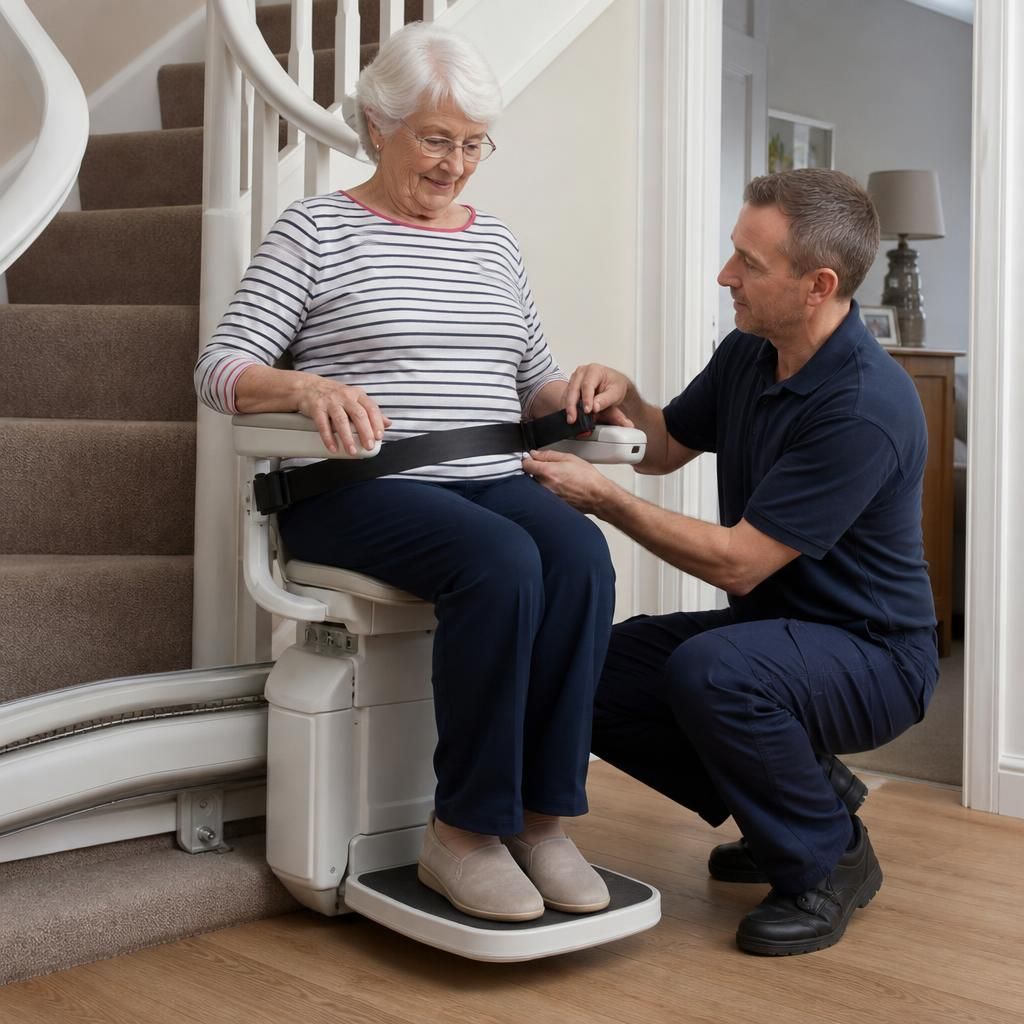
The restraint should match the user’s balance and movement needs. A seat belt or harness must be easy to fasten, release and adjust, and it should hold the user securely without causing discomfort. A conventional lap belt may be suitable for a person who can remain upright and still. Someone who leans, has poor trunk stability or makes involuntary movements may need a different restraint arrangement, subject to professional assessment. The user should be able to release the belt at the landing, but controls should not be so easy to operate accidentally that the restraint is undone during travel.
Controls must be reachable, understandable and usable with the person’s available dexterity. Assess whether the user can operate a joystick, button or toggle control with one hand and whether they can apply the required pressure. Arthritis, tremors, reduced grip, weakness, visual impairment or one-sided weakness can affect this choice. Controls may need to be positioned on the more capable side, clearly marked and designed to minimise accidental operation. Call and send controls at the top and bottom of the stairs should also be accessible to the user or carer.
Where a user cannot reliably operate the stairlift, consider how a carer will assist and whether an attendant control or remote control is appropriate. The person assisting should not need to lean across the staircase or place themselves in the stairlift’s path. Everyone who may use the controls should receive clear instruction and understand the emergency stop, charging and fault procedures.
Foot and lower-limb support should be selected carefully. The footrest needs to accommodate the user’s footwear and leg position while keeping the feet clear of the stairs and surrounding structure. An adjustable footrest can help where leg length, joint stiffness or reduced ankle movement affects positioning. Safety sensors on the footrest and other parts of the lift should stop travel if an obstruction is detected. If one leg cannot be placed normally, the assessor should check that the proposed position does not leave it vulnerable to contact with the stairs, wall or handrail.
Check the available space at landings, bends and doorways. The stairlift should stop where the user can transfer safely, rather than simply at the end of the rail. A powered swivel or a powered hinge may be helpful where the rail would otherwise extend into a doorway, corridor or narrow landing. A folding or hinged rail can reduce obstruction at the bottom of the stairs, but it must be operable without creating a manual handling problem for the user or carer. On a curved staircase, the rail should be planned around the user’s transfer points, changes in direction and available clearance.
Other household members also need to be considered. The lift should fold away sufficiently for safe pedestrian access where possible, and its travel path should not block fire exits, doors or essential routes. The assessment should identify radiators, furniture, low ceilings, adjacent stairs and other features that could affect safe use.
Include features that support reliable and safe operation. These commonly include obstruction sensors, a secure seat belt, a swivel-seat safety mechanism, an emergency stop, battery backup and audible or visual status indicators. The stairlift should stop correctly at the intended landing positions and charge reliably when parked. If the user has hearing or sight loss, the assessor should consider whether indicator lights, tones or alternative instructions will be understood.
Battery-powered stairlifts are designed to operate during a mains power interruption, but the user should know what to do if the lift stops away from a charging point. Ask where the batteries and charging contacts are located, how faults are reported and what routine servicing is required. Regular servicing helps identify wear, charging problems and changes in the home that could affect safe operation.
Weight capacity and dimensions must be checked against the individual user, clothing, equipment and transfer method. Do not select a lift solely because the user can fit on the seat. The installer should confirm that the rated capacity is suitable and that the seat, footrest, armrests and belt provide enough support. If the user has a larger frame, needs additional postural support or travels with essential equipment, a heavy-duty or alternative configuration may be more appropriate. The staircase must also have enough width and structural suitability for the proposed installation.
Before installation, prepare a complete picture of the user’s needs. Note which leg is stronger, whether the user can stand and turn, how far they can reach, whether they can follow instructions and what help a carer provides. Bring any relevant occupational therapy or clinical recommendations to the assessment. Independent Stairlifts can then assess the staircase and discuss practical options, including seating, controls, restraints, rails and charging arrangements, rather than treating the stairlift as a standard fit. The best solution is the one the disabled user can operate or be assisted to use consistently, comfortably and safely in the actual home.
Transfer features determine how safely the disabled user can get on and off the stairlift. A powered swivel seat can turn towards the landing, while a suitable seat height, supportive armrests and an adjustable or powered footrest can reduce bending, twisting and lifting. These features must match the user’s balance, leg strength and ability to stand, rather than being selected in isolation.
The assessment should also confirm that the user can operate the swivel mechanism and remain stable while turning. If a carer provides assistance, the arrangement must leave enough space for a safe transfer without anyone leaning across the stairs. Where standing transfers are not reliable, the seat, restraint and landing position may need a more specific assessment, including advice from an occupational therapist where appropriate.
Arrange a personalised stairlift assessment
Arrange a personalised stairlift assessment with Independent Stairlifts to review the disabled user’s mobility needs, staircase layout and required features. We can help you compare suitable seating, controls, restraints and transfer options for safe use at home.