Assessment around the user
The recommendation is based on how the user approaches, sits on and leaves the stairlift, so the final setup supports safe, practical everyday use.

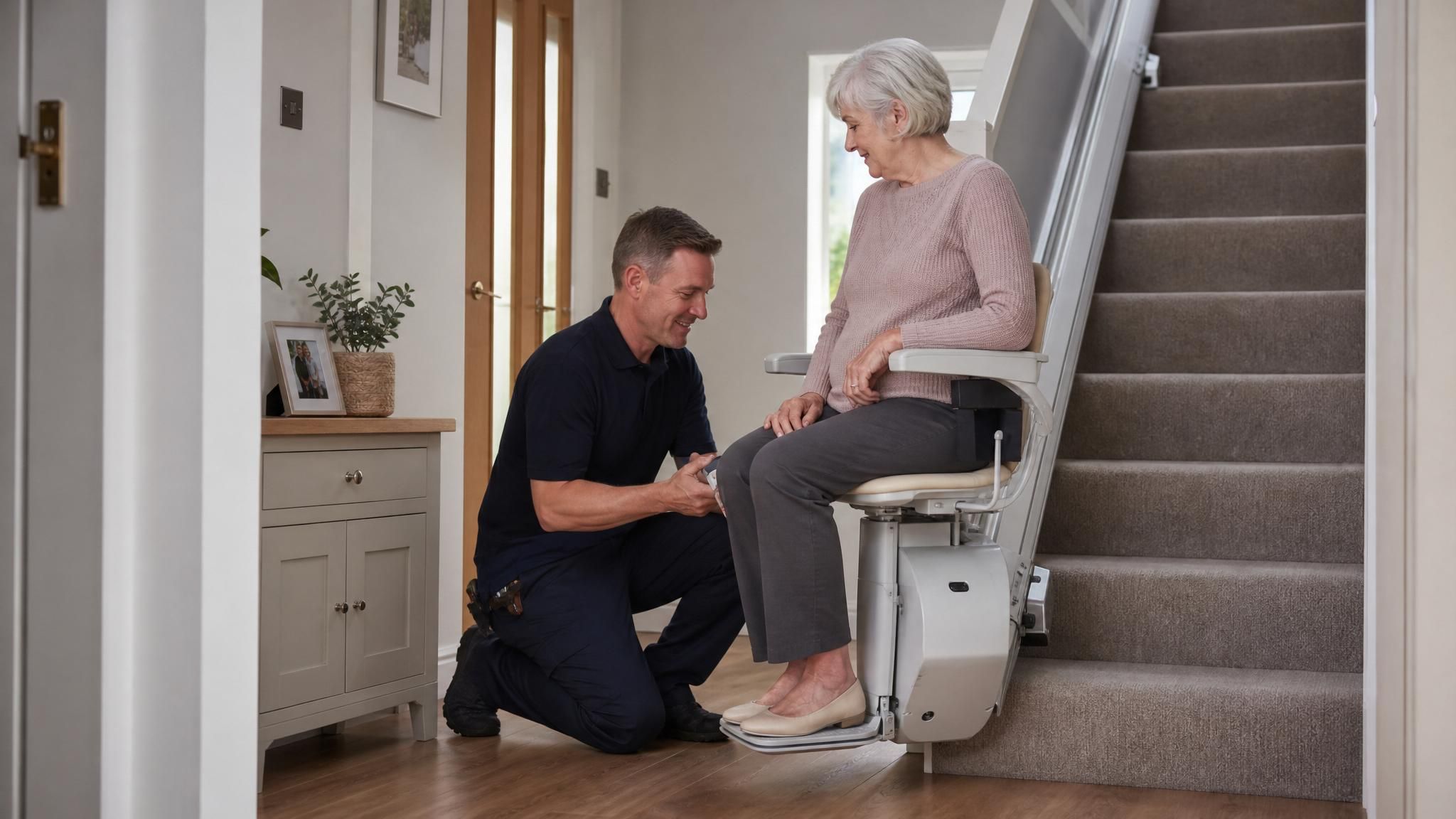
A disabled stairlift assessment examines the user’s mobility needs, staircase and home layout before installation. This process identifies suitable equipment, safety features and positioning for reliable access between floors with minimal disruption. Book your assessment today.
A disabled stairlift assessment reviews the user’s mobility, transfer ability and safety needs alongside the staircase, landing and available space. It helps identify the most suitable stairlift type, seat position, controls and safety features before any installation is planned.
During the assessment, practical requirements such as power access, parking positions and safe movement at the top and bottom of the stairs can also be considered. Book an assessment with Independent Stairlifts to receive clear advice on a suitable installation and the ongoing support required to keep it working safely.
Suitability is confirmed by considering the user’s mobility, transfer needs and the physical features of the staircase. The recommended stairlift should support safe, practical use in the home.
Independent Stairlifts considers factors such as the user’s ability to sit and transfer, the width and shape of the stairs, landing space, controls and preferred parking position. If a particular stairlift is not appropriate, this should be explained clearly, with any alternative options discussed before installation proceeds.
Stairlift safety features are selected according to the user’s needs and the layout of the staircase. The aim is to support controlled travel, secure positioning and safe transfers at each end of the stairway.
Depending on the assessment, safety considerations may include a suitable seat position, armrests, a seat belt, obstruction sensors, swivel or powered options, and controls that the user can operate reliably. The installer should explain how to use the stairlift safely, including how to stop it and what to do if an obstruction is detected.
Stairlift installation is planned around the staircase, access to the property and the user’s daily routine. Most equipment is fitted to the stairs rather than fixed into the wall, helping limit building work.
Before work begins, the installation arrangements should cover access, power supply, parking points and any items that need moving from the stairs or landings. The installer should protect the surrounding area, keep disruption to a practical minimum and leave the route safe and usable when the work is complete.
Guarantee and warranty cover depend on the stairlift supplied and the written terms provided with the installation. These terms should be checked before accepting the quotation.
Ask for clear information about what is covered, how long the cover lasts, and whether it applies to parts, labour, call-outs or replacement equipment. The paperwork should also explain exclusions, servicing responsibilities and any conditions that could affect the cover, so you know what support is available after installation.
If a stairlift stops working or develops a fault, the first step is to follow the operating instructions and contact the installer or service provider using the supplied details. Do not attempt repairs or bypass safety features yourself.
Keep the installation documents, warranty information and service contact details in an accessible place. When reporting a problem, describe the warning light, sound or operating issue and whether the stairlift is occupied, so the support team can advise on safe next steps and arrange appropriate assistance.
An assessment for a disabled stairlift identifies how the user moves, transfers and manages stairs, then matches those needs to suitable equipment and safety features.
The review also checks staircase width, landings, power access and parking positions, helping installers plan a practical, low-disruption installation. Book a home assessment to confirm compatibility and receive clear recommendations.
The recommendation is based on how the user approaches, sits on and leaves the stairlift, so the final setup supports safe, practical everyday use.
The assessment identifies potential hazards around the staircase and selects appropriate features to help the user travel between floors securely.
The installer checks the home environment in person, helping confirm that the proposed stairlift will work with the staircase, access points and surrounding space.
Different seat designs, controls and optional features can be considered according to the user’s movement, comfort and level of assistance required.
A home assessment gives you a clear plan for preparation, fitting and handover, reducing uncertainty before the stairlift is installed.
You can discuss daily routines, carer access and any concerns during the visit, allowing practical issues to be resolved before work begins.
Independent Stairlifts combines nationwide installation coverage with bespoke assessments for disabled users. Its team considers mobility, staircase design and home access before recommending straight, curved, outdoor or reconditioned equipment, with installation and aftercare planned around individual requirements.
Recommendations based on individual needs
The assessment considers mobility, balance, transfer ability and how the stairlift will be used. This helps identify appropriate seating, controls and safety features rather than relying on a standard specification.
Solutions for different staircases
Independent Stairlifts can advise on straight, curved and outdoor stairlift options. The recommendation takes account of the staircase shape, landings, available space and the way the user moves through the home.
Suitable equipment for varied budgets
Where appropriate, reconditioned stairlifts can provide a practical alternative to new equipment. The available options can be discussed alongside the user’s requirements, staircase and expected level of use.
Careful installation planning
Installation planning covers the position of the stairlift, charging or parking arrangements and access at the top and bottom of the stairs. This helps reduce disruption and supports safe, convenient daily use.
Support beyond fitting
Independent Stairlifts can explain how to use the controls, charge the stairlift and follow basic safety procedures after installation. Ongoing support helps users and family members manage the equipment with greater confidence.
Advice for the whole household
A disabled stairlift affects how family members, carers and visitors use the staircase. Recommendations can therefore consider shared access, transfers, doorways and available space throughout the relevant parts of the home.
A disabled stairlift assessment checks whether a stairlift can safely support the user’s mobility, transfer and access requirements in the home. The assessor reviews the staircase, landings, available space and power supply, as well as the user’s posture, ability to sit and stand, and how the controls can be operated.
The assessment also determines whether a straight, curved, outdoor or reconditioned stairlift is appropriate, and identifies practical details such as seat position, parking points, footrest clearance and safe movement at the top and bottom of the stairs. These checks help avoid unsuitable equipment and allow the installation to be planned around the home.
After the assessment, Independent Stairlifts can explain the suitable options, installation requirements and ongoing servicing considerations clearly. Book a home assessment to receive practical advice based on the user’s needs and the layout of the staircase.
A disabled stairlift assessment is a home review of the user’s mobility needs and the staircase layout before equipment is selected. It considers transfers, posture, control access and safe movement at both ends of the stairs.
The assessor checks landing space, power access, footrest clearance and parking positions. These details help determine whether a straight, curved, outdoor or reconditioned stairlift is appropriate, and whether features such as a swivel seat, powered controls or a standing option may be needed. Installation can then be planned to minimise obstruction and support safer transfers.
Following the assessment, Independent Stairlifts explains the recommended solution, installation requirements and servicing considerations. Arrange a home assessment to receive advice based on the user’s needs and your staircase.
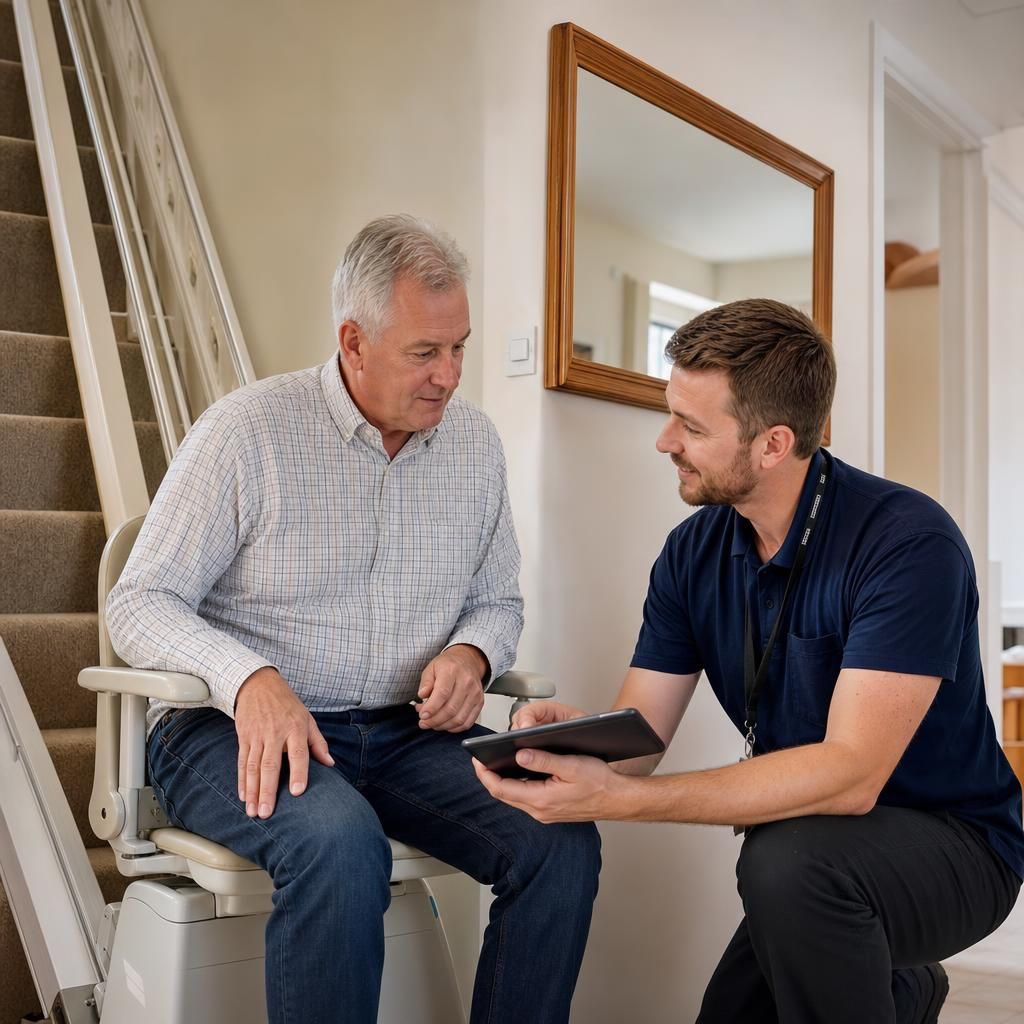
Our stairlift installation process begins with a detailed assessment, ensuring a perfect fit for your needs and home. Skilled technicians then handle installation and provide ongoing support for reliability and safety.
The stairlift assessment process begins with a thorough evaluation of your staircase and environment, ensuring the recommended solution aligns with your specific safety and accessibility requirements.
Expect a precise and efficient installation by skilled technicians, followed by comprehensive aftercare services to ensure ongoing reliability and performance of your stairlift, enhancing accessibility and peace of mind.
Ensure your staircase and surrounding areas are clear of obstacles, secure sufficient power outlets nearby, and consult with the installer for specific requirements prior to installation day.
We offer routine maintenance checks, priority repair services, and expert advice to ensure your stairlift remains in optimal condition. Our team provides prompt assistance, addressing concerns to maintain safety and functionality.
Your assessment identifies the appropriate stairlift and installation requirements before installation is arranged. Independent Stairlifts can explain available warranty cover, servicing and aftercare, giving you clear expectations and ongoing support from assessment through to use.
Contact UsOur stairlifts are designed to fit all types of staircases, including straight, curved, and narrow spaces, ensuring every home can be equipped with an effective mobility solution.
Stairlift installations typically take a few hours to complete and are designed to minimise disruption, allowing you to continue your daily routine with little to no inconvenience.
Independent Stairlifts ensures transparent pricing with no hidden charges. Your quote includes all necessary assessments, installations, and follow-up services, guaranteeing a clear understanding of the full costs involved.
Our maintenance team responds promptly to repair requests, typically resolving issues within 24 to 48 hours, ensuring your stairlift remains reliable and fully operational for continued peace of mind.
Most homes don’t require structural changes. Stairlifts are designed to fit existing stair configurations, ensuring easy and non-invasive installation while preserving your home’s original structure and integrity.
Book a disabled stairlift assessment with Independent Stairlifts to review the user’s mobility, staircase and access requirements. Receive clear recommendations, installation advice and aftercare information, then arrange a tailored solution that supports safer movement between floors.
Contact Us