Higher Weight Capacity
Heavy-duty models are built and tested for users who exceed the safe operating limit of standard stairlifts. The correct model must always be selected according to the manufacturer’s specified weight rating.

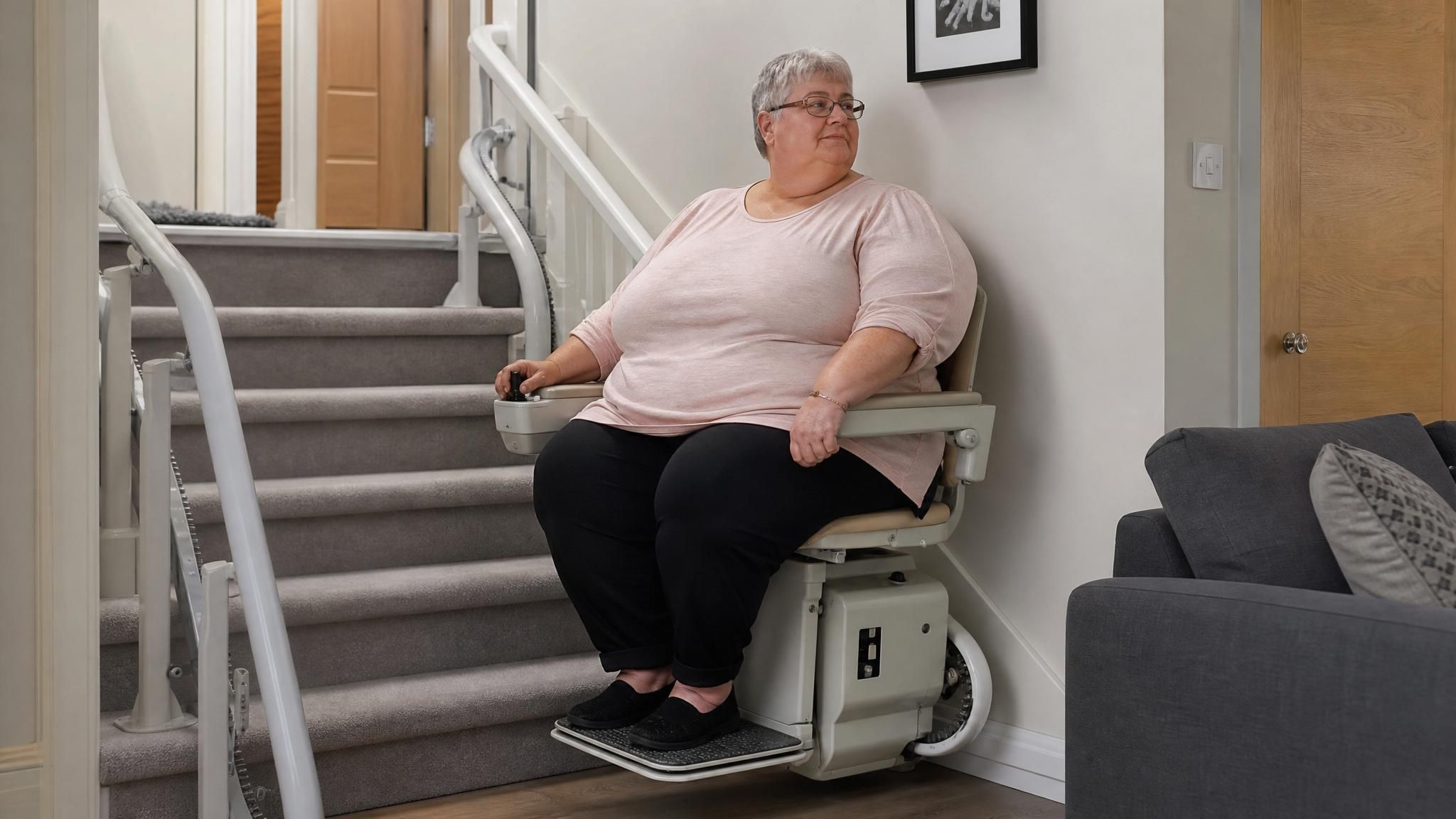
Heavy-duty stairlift solutions are designed for users who need greater weight capacity or additional seating space than a standard stairlift provides. A professional assessment confirms staircase compatibility, safe positioning and suitable installation requirements.
A heavy-duty stairlift, also called a bariatric stairlift, is designed for users who need a higher weight capacity, a wider seat or additional support compared with a standard model. Suitability depends on the user’s mobility needs, the staircase layout, available space and the manufacturer’s safe operating limits.
Independent Stairlifts can assess these requirements in your home and explain suitable options, including seating, controls, safety features and installation needs. Open the sections below for practical information, then arrange an assessment to confirm the right heavy-duty stairlift solution.
A heavy-duty stairlift is only suitable when its weight capacity, seat dimensions and operating position match the user and staircase. A home assessment checks these points before any recommendation is made.
The assessor will consider the user’s weight, height, posture, transfer ability and any need for additional seating space. They will also check the staircase width, bends, landings, doorways and available space at the top and bottom. The recommended model must remain within the manufacturer’s stated safe operating limits; if a standard stairlift is not appropriate, alternative equipment or installation arrangements can be discussed.
Heavy-duty stairlift installation requires secure fixing to the staircase and careful planning around doors, walkways and household access. The installation team should explain where the equipment will be positioned and what work is required before fitting begins.
Installers secure the stairlift to the stairs or another approved structural surface rather than relying on unsuitable fixtures. They should protect surrounding areas, keep disruption to a minimum and leave the staircase and access routes clear when the work is complete. Any concerns about flooring, decoration, narrow access points or shared entrances should be raised during the assessment so they can be considered in advance.
Guarantee terms depend on the stairlift model, the supplier and the installation agreement. The written documents should state what is covered, how long cover applies and what conditions may affect it.
Ask for clear details about cover for parts, labour and installation, together with any exclusions or maintenance requirements. Accidental damage, misuse, unauthorised alterations and normal wear may be treated differently from faults covered by the guarantee. Keep the paperwork and contact details supplied at installation, and ask for an explanation of any term you do not understand before proceeding.
If a heavy-duty stairlift stops, moves unusually or displays a fault indication, stop using it unless the instructions specifically permit a safe reset. Do not attempt to open the carriage, alter the wiring or repair the equipment yourself.
Use the operating instructions to place the stairlift safely, then contact the installer or service contact provided with the equipment. Describe what happened, any warning displayed and whether the lift is occupied or blocking access. A trained engineer can determine whether the issue requires a visit, a replacement part or a simple user check. If someone is left unable to move safely, follow the agreed emergency arrangements and seek appropriate assistance.
A heavy-duty stairlift needs to remain correctly adjusted and maintained throughout its working life. The user or their carer should know how to operate the controls, charge the batteries and report changes in mobility or seating needs.
The installer should demonstrate normal operation, safety controls, charging and the approved way to use the seat, footrest and restraint. Keep the stairlift’s path clear and arrange servicing in line with the manufacturer’s guidance or the agreed support plan. If the user’s weight, posture, transfer ability or support needs change, request a reassessment rather than adapting the equipment independently.
Heavy-duty stairlifts offer greater weight capacity, wider seats and stronger support than standard models. They may suit users unable to sit comfortably or safely on a conventional stairlift, subject to measurements, mobility needs and staircase layout.
An assessment confirms suitable equipment and installation requirements. Independent Stairlifts can recommend and fit a bariatric stair lift for safer access.
Heavy-duty models are built and tested for users who exceed the safe operating limit of standard stairlifts. The correct model must always be selected according to the manufacturer’s specified weight rating.
A wider, stronger seat with supportive armrests can provide a more stable travelling position for users who find standard seating restrictive or difficult to use.
Controls can be assessed around your grip, reach and dexterity. Options such as a simple joystick or remote control may make operation easier for the user or a carer.
A professional survey checks load requirements, transfer points, stair width, landing space and obstructions before installation, helping ensure the stairlift is positioned and used safely.
Heavy-duty stairlift solutions may be available for straight or curved staircases, but the rail design and available clearance must be confirmed at the property.
You receive guidance on using the stairlift, charging it and following safety procedures, with servicing and repair support available to help maintain reliable access.
Independent Stairlifts provides tailored heavy-duty stairlift assessments and installation across the UK. Its specialists consider user weight, seating position, staircase dimensions, controls and transfer needs before recommending a suitable bariatric solution for safer, more practical access at home.
Assessment for higher-capacity users
Independent Stairlifts assesses the user’s weight, posture, mobility and transfer needs alongside the staircase. This helps identify a suitable heavy-duty model rather than adapting a standard stairlift beyond its safe operating limits.
Seating matched to the user
A bariatric stairlift may require a wider seat, stronger support and an appropriate seat belt arrangement. The team can discuss seating position, armrest space and controls to make the lift practical for the individual user.
Solutions for different staircase layouts
Heavy-duty requirements must be considered alongside the shape and width of the stairs. Independent Stairlifts can review straight, curved and other domestic staircases to establish whether the required equipment can be installed safely.
Controls suited to limited mobility
Controls can be considered in relation to hand strength, reach and dexterity. Options such as accessible switches or remote controls may make it easier for the user or a carer to operate the stairlift safely.
UK-wide specialist service
Independent Stairlifts provides heavy-duty stairlift support across the UK, helping customers arrange advice, assessment and installation without relying on a local search alone. The service is tailored to the home and the person using it.
Advice on practical alternatives
If a stairlift is not suitable because of staircase space, transfer requirements or the user’s needs, the assessment can identify the limitation clearly. Independent Stairlifts can then discuss other access equipment where appropriate, rather than recommending an unsuitable installation.
A heavy-duty stairlift, also known as a bariatric stairlift, is designed for a heavier user or someone who needs a wider seat, stronger support and a higher safe weight capacity than a standard model. It is not suitable for every staircase or user, so the lift must be matched to the manufacturer’s limits, the user’s posture and transfer ability, and the available space.
During an assessment, Independent Stairlifts considers the staircase shape, landing space, access to the controls, seat position, armrest clearance and how the user will get on and off the lift. Where appropriate, features such as a powered swivel seat, supportive arms, adjustable controls or a standing stairlift may be discussed. A heavy-duty chair lift may also require careful checking of the fixing points and surrounding structure.
The practical next step is a home assessment before choosing a model. This confirms whether a bariatric stairlift can be installed safely, identifies any alterations or clearance requirements and provides a recommendation based on the user and property rather than weight alone. Independent Stairlifts can arrange an assessment across the UK and explain the available options clearly.
A heavy-duty stairlift, also called a bariatric stairlift, provides a higher safe weight capacity and wider seating than a standard model. Suitability depends on the individual’s posture, transfer ability, arm clearance and access to controls, not weight alone.
A professional assessment checks the staircase, landing space, fixing points and seat position. Features such as a powered swivel seat, adjustable controls and supportive armrests may make transfers and operation easier. A standing option may suit users who cannot sit comfortably.
Independent Stairlifts assesses the user and property before recommending a suitable heavy-duty chair lift. The installer explains operating limits, clearances and servicing needs, then confirms whether fitting is practical. Arrange a home assessment to identify the safest option for your staircase.
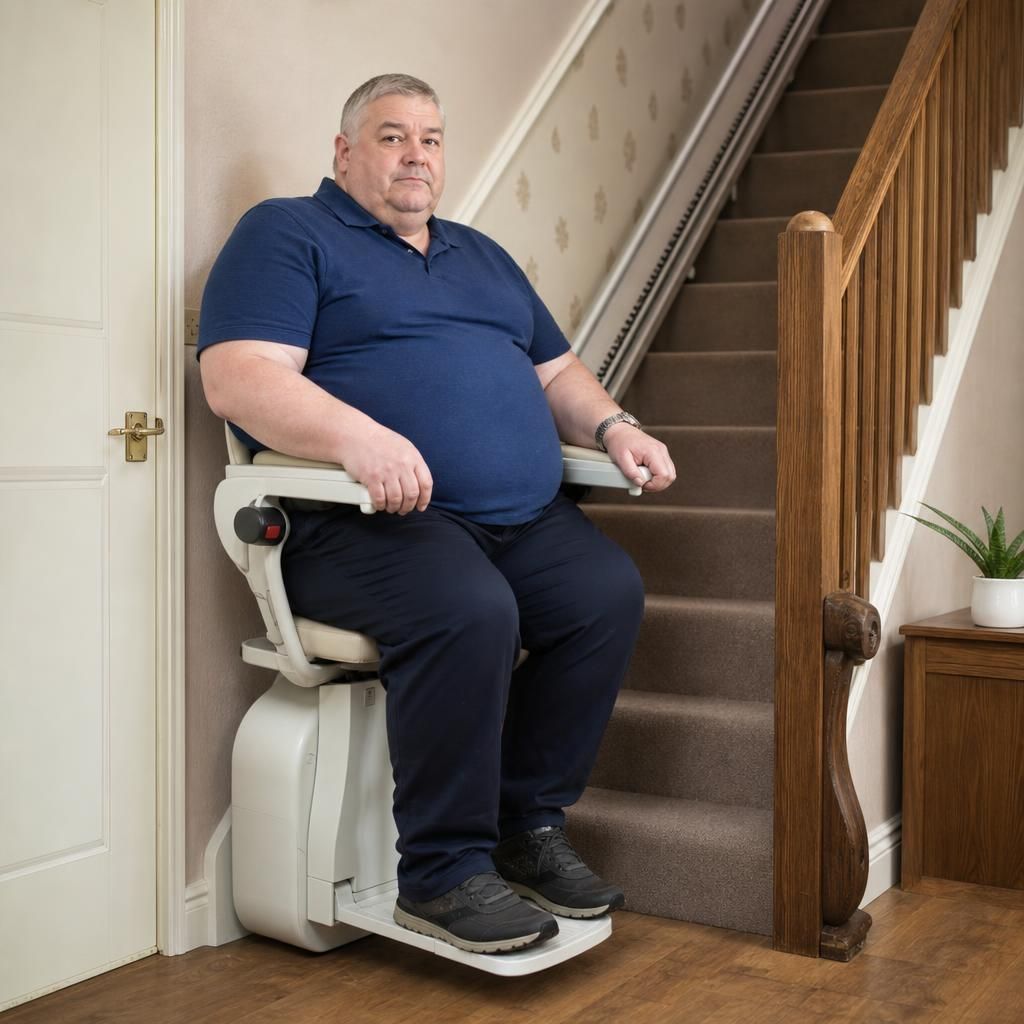
Our heavy duty stairlifts are rigorously tested for maximum safety, offering dependable and secure operation for users weighing up to 25 stone or more, with reinforced design for confidence and usability.
Consider space, weight capacity, seat width, and motor strength when selecting a heavy duty stairlift. Ensure compatibility with your home's layout for seamless integration and safe, daily operation.
Our stairlifts undergo robust engineering, using reinforced materials and advanced testing, ensuring durability under daily use. Independent Stairlifts provides expert maintenance and support for ongoing reliability and customer satisfaction.
Ensure professional installation for optimal performance and safety. Our expert team performs precise fitting tailored to your home. Routine maintenance ensures longevity, with scheduled servicing and prompt support for seamless function.
Heavy duty bariatric stairlifts include robust seat belts, anti-slip features, emergency stop buttons, and safety sensors to prevent collisions and entrapments, ensuring a safe and secure experience for users.
Every heavy-duty stairlift is assessed and fitted against the manufacturer’s safety requirements, with operating guidance and ongoing servicing advice provided. Independent Stairlifts can explain warranty cover and aftercare clearly, so you can proceed with confidence and arrange your home assessment.
Contact UsFor weights over the standard 18 stone limit, our stairlifts ensure safe, comfortable transfers with durable materials and reinforced engineering to support heavier users effortlessly.
Evaluate your mobility needs and consider features like seat width, adjustable armrests, and control types. Consult our experts to recommend options based on your home layout and personal preferences.
Regular servicing from a certified technician is essential, focusing on lubrication, battery checks, and component inspections to maintain safety and function. Follow manufacturer guidelines and schedule annual maintenance for optimal reliability.
Heavy duty stairlifts are engineered for challenging staircases, offering custom rails and compact designs. For ultra-narrow spaces, a professional evaluation can determine the best alternative solutions.
Consider alternative mobility solutions like platform lifts or home elevators that might better suit challenging configurations, ensuring accessibility needs are still met effectively and safely.
Book a home assessment for a bariatric stairlift to confirm safe weight capacity, seating, staircase clearance and controls. Independent Stairlifts will explain suitable heavy-duty options, installation requirements and aftercare, helping you choose a practical solution with confidence.
Contact Us