
Are outdoor stairlifts suitable for all weather conditions?
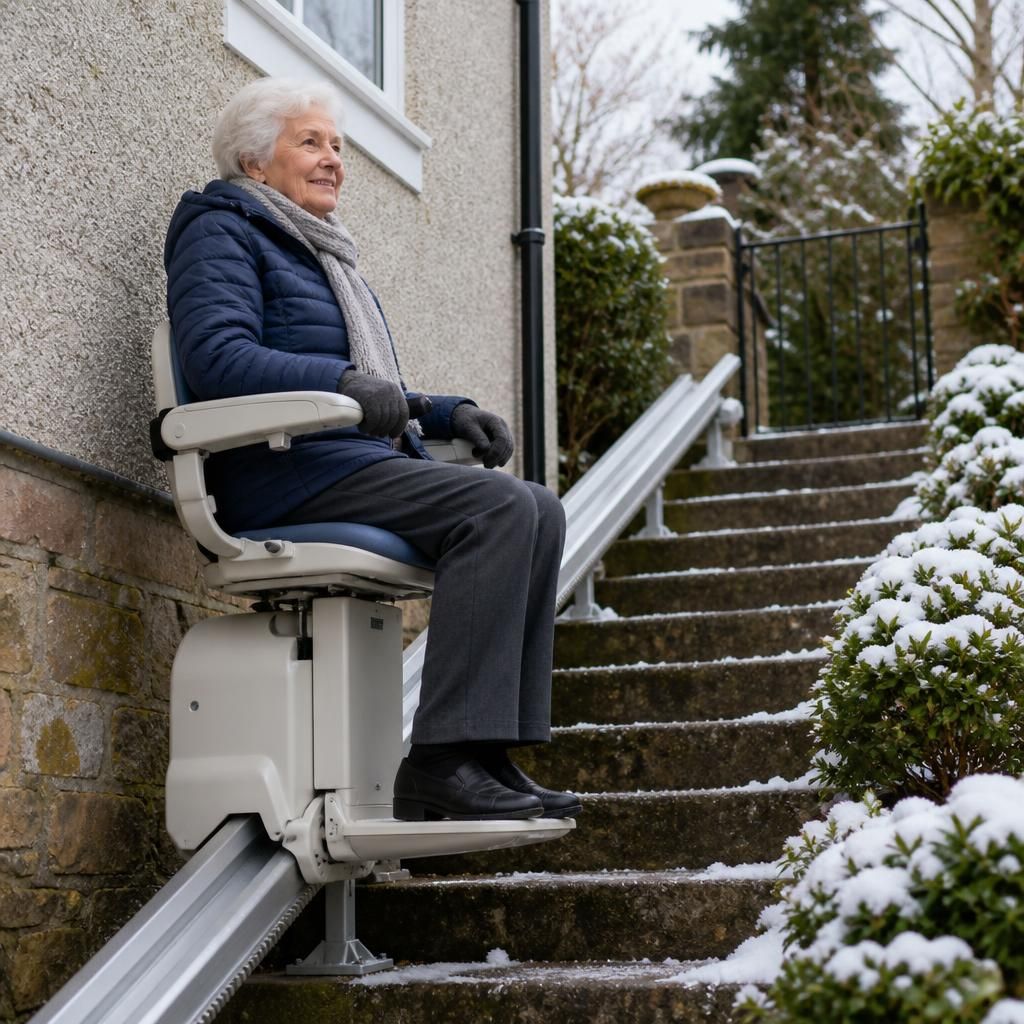
Outdoor stairlifts are designed to operate safely in typical UK weather, including rain, frost, wind and sunlight, using weather-resistant components and protective covers. They are not completely unaffected by every condition, so extreme weather, standing water, heavy snow and ice require extra care, regular maintenance and a pre-use safety check.
Outdoor stairlifts are designed to operate safely in typical UK weather, including rain, frost, wind and sunlight, but they are not completely unaffected by every condition. Weather-resistant components, sealed controls, durable upholstery and a protective cover help an outdoor stairlift cope with exposure; however, heavy snow, ice, standing water, flooding and exceptionally strong winds require additional care and a safety check before use.
The suitability of an outdoor stairlift depends on both the equipment and the staircase environment. A lift installed on a sheltered external staircase may experience considerably less exposure than one positioned in an open garden, beside the coast or on a steep path with poor drainage. During the assessment, the installation team should consider the position of the staircase, prevailing weather, drainage, access to the charging points and where the lift will be parked when it is not in use.
How outdoor stairlifts withstand normal weather
Outdoor models are built with materials and protective features intended for external use. These commonly include weather-resistant covers for the seat and controls, corrosion-resistant parts, sealed electrical components and upholstery designed to dry more readily than indoor furnishings. The track, seat, arms, footrest and controls still need to be kept reasonably clean and dry, particularly where the lift is exposed to regular rain or wind-blown debris.
A cover should be used whenever the stairlift is parked, unless the manufacturer’s instructions state otherwise. It helps reduce exposure to rain, frost, bird deposits, leaves and direct sunlight. The cover must be fitted correctly and removed before the lift is operated. Do not operate the stairlift with a cover, loose fabric or another object caught around the seat, track or footrest.
Rain and damp conditions
Rain alone should not normally prevent an outdoor stairlift from being used when it has been correctly installed and maintained. Nevertheless, water should not be allowed to collect around the charging points, controls, motor or track. Check that drainage remains clear and that the lift is not positioned in standing water. If the staircase or equipment has been affected by flooding, stop using the lift and arrange an inspection before switching it back on.
After prolonged rain, wipe excess water from the seat, armrests and controls where practical. Avoid using electrical appliances, extension leads or improvised covers outdoors. The stairlift should be connected only as specified during installation, with charging equipment protected in accordance with the manufacturer’s instructions.
Frost, ice and snow
Frost and ice are important safety concerns because they can make the steps, footrest or transfer areas slippery. Snow and ice may also obstruct the track or prevent the lift from reaching its charging position. Clear the staircase, landing areas and the lift’s route before use. Do not pour hot water over frozen components, as this can create more ice and may damage equipment. Use a suitable, non-corrosive method of clearing the steps and follow the care guidance provided for the stairlift.
Before sitting down, check that the seat, armrests, footrest and controls are free from ice and that the safety sensors are not obstructed. If the lift is stiff, unusually noisy or fails to move normally, do not force it. Contact the servicing team for advice.
Wind, sunlight and coastal exposure
Strong wind can make transferring on and off the stairlift more difficult, particularly on exposed staircases. It can also move the seat cover or blow branches, leaves and other objects onto the track. In exceptionally windy conditions, wait until it is safe to use the external staircase and make sure the route is clear.
Prolonged sunlight may fade upholstery and gradually affect some plastics, so parking the lift under a suitable cover is helpful. On coastal properties, salt in the air can accelerate corrosion even where weather-resistant materials have been used. More frequent cleaning and servicing may therefore be appropriate. Never apply lubricant, cleaning products or corrosion treatments unless they are approved for the model, as unsuitable products can affect sensors, electrical parts or the track.
When an outdoor stairlift should not be used
- Do not use it if the staircase is covered in ice, snow, deep water, mud or loose debris.
- Do not use it if the seat, track, footrest, controls or charging point appears damaged or waterlogged.
- Do not use it during conditions that make the staircase or transfer areas unsafe, even if the stairlift itself is operating normally.
- Do not attempt to dry, repair or reset electrical components after flooding or significant water ingress.
- Do not leave the lift parked where it blocks a safe route or prevents access to the charging position.
Maintenance for reliable outdoor use
Regular checks are particularly important for an outdoor stairlift. Keep the track and surrounding steps clear, inspect the cover for damage, and report unusual noises, jerky movement, reduced battery performance or charging faults promptly. A planned service allows the condition of the drive system, batteries, safety sensors, charging equipment and exposed fixings to be checked before a minor issue affects reliability.
Follow the operating and cleaning instructions supplied with the specific model, as weather protection and care requirements can vary. If the stairlift is not used for an extended period, ask for guidance on how it should be left connected, covered and checked. Batteries and charging systems need to remain maintained even when the lift is used infrequently.
In summary, an outdoor stairlift is suitable for most normal UK weather when it is the correct model for the location, installed with appropriate drainage and protection, and maintained properly. It is not a guarantee that the staircase will remain safe in every condition. A pre-use check, sensible use of the protective cover and prompt attention to ice, flooding, debris or faults will help protect both the user and the equipment. If the exposure at your property has changed or you are unsure whether the lift is safe after severe weather, contact Independent Stairlifts before using it.
Outdoor stairlifts are weather-resistant rather than completely weatherproof. They are designed for normal UK conditions such as rain, frost, wind and sunlight, but heavy snow, ice, flooding and standing water can make the staircase or lift unsafe to use.
Use the protective cover when the stairlift is parked, keep the track and steps clear, and check the seat, footrest, controls and charging area before every journey. Do not use the lift if it is obstructed, waterlogged or affected by ice. After severe weather, contact Independent Stairlifts for advice or an inspection before using it again.
Need Advice After Severe Weather?
If your outdoor stairlift has been exposed to flooding, heavy snow, ice or significant water ingress, do not use it until it has been checked. Contact Independent Stairlifts for advice or an inspection before your next journey.