No transfer to a stairlift seat
The user remains in their wheelchair while travelling between floors, which can be useful when transferring is difficult or unsafe.

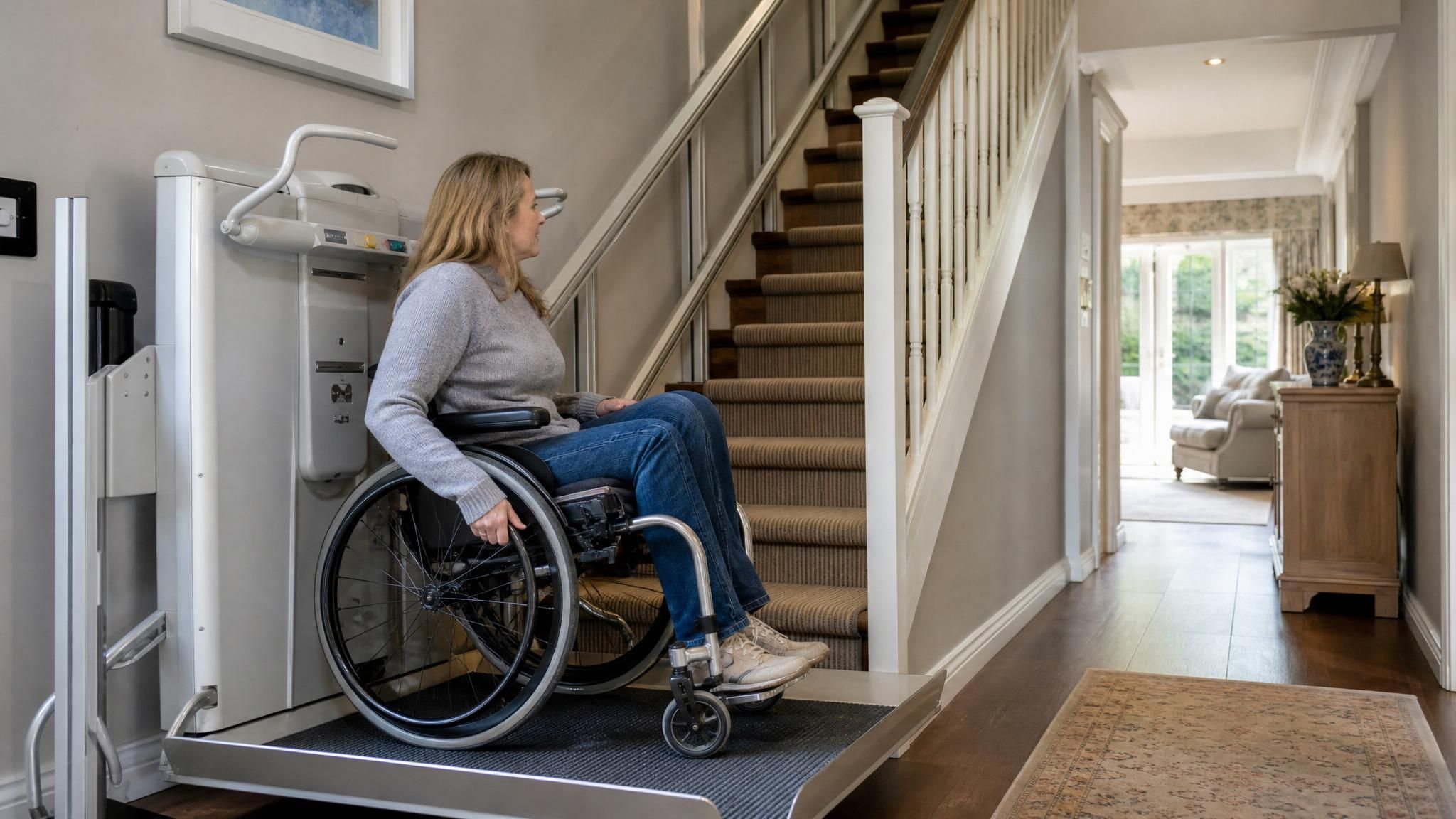
Platform stairlifts for wheelchair users use a powered platform to carry a person and wheelchair between levels, avoiding transfers to a seat. They are assessed against stair width, landings, access routes and the wheelchair’s dimensions before installation.
Safety and aftercare for a platform stairlift depend on correct assessment, installation and ongoing servicing. The platform, controls, safety edges, restraints and access points should be checked during installation, with users shown how to operate the equipment safely and what to do in an emergency.
Guarantee and warranty cover varies by supplier and equipment, so check the written terms for included parts, labour, exclusions and response arrangements. Regular servicing helps identify wear or faults early; if the platform stairlift stops working or its safety features behave unusually, stop using it and contact the service provider for advice.
A pre-installation assessment confirms whether the stairway, landings and access points can accommodate a platform stairlift and the wheelchair it needs to carry.
The assessment should consider the wheelchair’s length, width, weight and turning space, as well as stair width, headroom, doorways and available landing space. The installer should explain any building alterations, access restrictions or operating limitations before you decide whether the proposed solution is suitable.
Platform stairlifts use protective features that help keep the wheelchair and passenger within the platform while it moves between levels.
Depending on the design, protection may include a safety ramp, folding arms, barriers, interlocks or controls that require deliberate operation. The installer should demonstrate how to position the wheelchair, secure any required restraints and keep other people clear of the route. Do not use the lift if a protective feature is damaged, loose or failing to operate as shown.
A power cut can affect a platform stairlift differently depending on its battery system and model, so the emergency procedure should be explained before use.
Ask for clear instructions covering what to do if the platform stops, how any emergency lowering or manual release works, and how to contact support. Keep the instructions accessible and follow the manufacturer’s procedure rather than attempting to move the platform, leave it on the stairs or bypass a safety device.
Fault handling should be clear before installation, including who to contact, what information to provide and how repair arrangements are recorded.
Check the written paperwork for the service contact, opening arrangements, response process, parts and labour terms, and any exclusions that apply. Record the model details and installation information, and report unusual noises, movement or control faults promptly so the provider can advise whether the equipment should remain out of use until inspected.
A platform stairlift carries a wheelchair user between floors without requiring a transfer into a seat. Its powered platform must accommodate the wheelchair safely and suit the staircase, landings, approach routes and clearances.
Benefits include direct wheelchair access and simpler movement between levels. A survey checks controls, restraints, weight capacity and whether alterations are needed at either end of the stairs.
The user remains in their wheelchair while travelling between floors, which can be useful when transferring is difficult or unsafe.
A platform can provide a continuous route between floors where the wheelchair user needs to keep their own mobility equipment with them.
The system can be assessed against the staircase layout, landings, doorway positions and available clearances before a suitable configuration is recommended.
Platform controls and call stations can be considered during the assessment so the user or carer can operate the lift from the appropriate position.
A platform stairlift needs sufficient room for the wheelchair, safe boarding and clear passage, so a professional survey is essential before installation.
Independent Stairlifts provides tailored platform stairlift assessments for wheelchair users, considering stair dimensions, landings, access routes and equipment requirements. Its UK-wide service includes installation guidance, safety advice and aftercare, helping households assess practical options for home access.
Suitability-led recommendations
Platform stairlift planning starts with whether the equipment is suitable for the staircase, wheelchair and household. Independent Stairlifts considers the available space, route, landing access and how the user will approach and leave the platform before discussing options.
Experience with different stair layouts
Straight and curved staircases can present different requirements for platform travel, parking and access. A tailored assessment helps identify how the platform would fit the route rather than assuming that one standard arrangement will work in every home.
Consideration of the wheelchair
The wheelchair’s overall length, width, weight and turning needs affect platform selection and everyday use. Recommendations can take account of whether the user will remain seated in the wheelchair, use the controls independently or need assistance from a carer.
UK-wide assessment and installation service
Independent Stairlifts provides a UK-wide service, allowing households to arrange advice and installation support through one provider. The process can cover the initial assessment, equipment planning and practical guidance for using the platform at home.
Advice that includes the wider access route
A platform may be only one part of making a home accessible. Independent Stairlifts can discuss the approach to the staircase, doorways, thresholds and landing areas so that the proposed solution is considered in the context of the user’s complete journey through the property.
A platform stairlift can often be installed in a home when the staircase, landings and access routes provide enough space for the platform and wheelchair. It is not suitable for every layout, so a survey is needed to check stair width, turns, obstructions, doorways, floor levels and the wheelchair’s overall dimensions.
Platform systems may work on straight or curved staircases, but the equipment and space requirements differ. A landing may need clear approach and departure areas, while narrow stairs, tight turns or limited headroom can affect the design. Where a platform stairlift is impractical, other options such as a vertical power lift for a wheelchair may be considered.
Independent Stairlifts can assess your home and explain the practical options without assuming that one system will suit every property. The assessment should also cover controls, restraints, battery or mains power, emergency use, installation work and ongoing servicing before you decide whether a wheelchair platform stairlift is appropriate.
A platform stairlift is a powered lift that carries a wheelchair and its occupant along a staircase, removing the need to transfer into a stairlift seat. The platform travels on a rail and may be designed for straight or curved stairs, subject to space.
For someone who uses a wheelchair full-time, this arrangement can make access between floors more consistent while keeping the chair with them. Controls may be fitted on the platform and at landings, with safety edges, restraints and ramps helping manage movement during travel and boarding.
A home assessment checks platform width, wheelchair dimensions, stair clearance, landing space, doorways and power arrangements. Independent Stairlifts can explain whether the layout is suitable and what adaptations, controls and servicing requirements should be considered before installation.
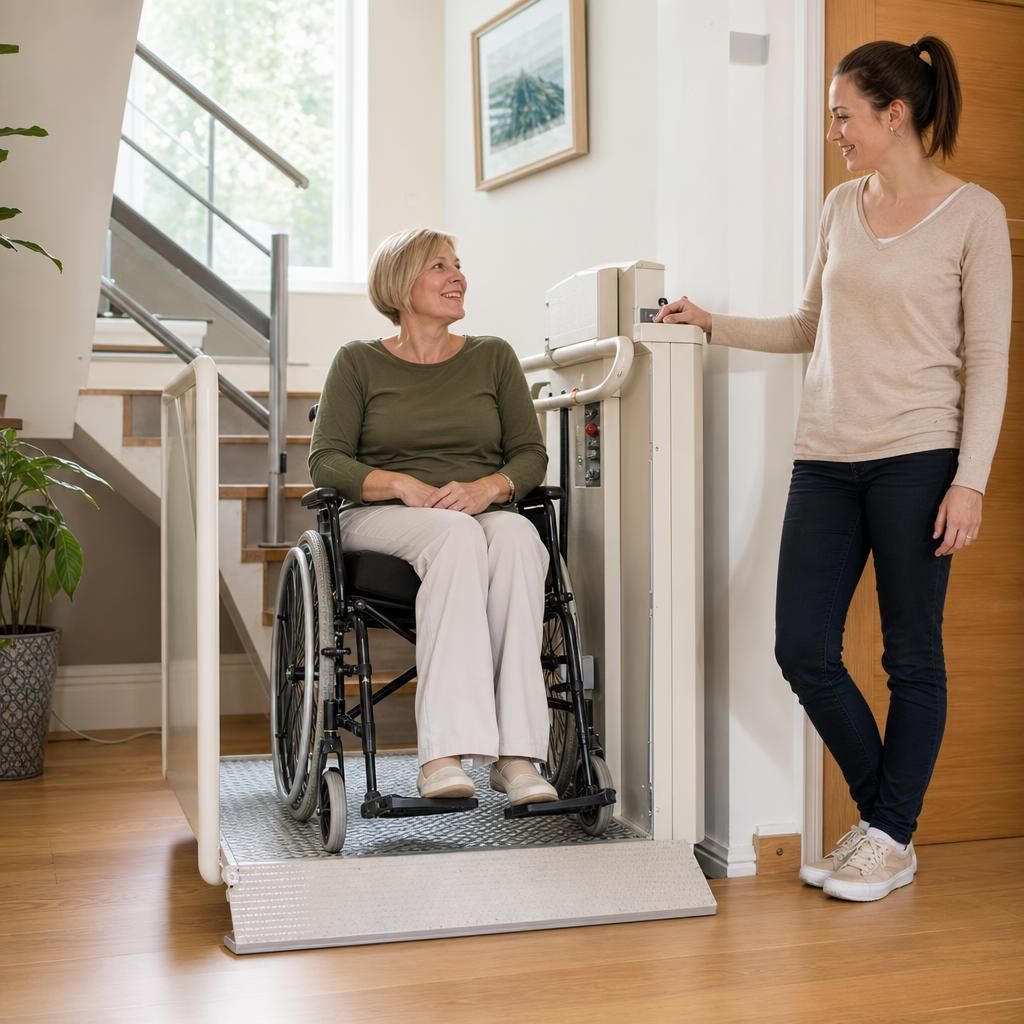
Platform stairlifts are designed to provide wheelchair accessibility on stairs, offering a reliable solution that minimises the need for structural alterations while ensuring safety and ease of use.
Platform stairlifts feature non-slip surfaces, secure barriers, smooth braking systems, user-friendly controls, and backup power for security during outages, ensuring reliable and comfortable operation throughout use.
Platform stairlifts mount directly onto existing stairs, preserving structural integrity and allowing straightforward installation without significant home modifications, offering a seamless blend into various domestic settings.
Consider space-saving models with foldable platforms or swivel functionality for tight areas, ensuring easy stair access for non-users while meeting mobility needs efficiently and effectively.
Regular servicing includes checking for wear and tear, lubricating moving parts, testing safety features, and ensuring proper alignment to maintain reliability and safety in platform stairlifts.
Before choosing a platform stairlift, confirm the written warranty, servicing arrangements and emergency support available after installation. Independent Stairlifts can explain operating checks, maintenance responsibilities and what to do if the equipment develops a fault, helping you plan with confidence.
Contact UsPlatform stairlifts can accommodate a range of wheelchair sizes and styles, including both manual and electric types, offering a tailored solution for most users' accessibility needs.
Installing a platform stairlift usually involves minimal adjustments, primarily requiring the secure attachment of the lift track to the stairs, avoiding major structural changes or renovations.
In emergencies like power failures, platform stairlifts operate with backup battery systems, allowing safe movement to the nearest floor. Safety measures ensure these lifts function reliably even during outages.
Platform stairlifts accommodate both manual and power wheelchairs, ensuring versatility for different user needs. They are designed to support a wide range of wheelchair models and sizes effectively.
Space requirements vary based on the stairlift model and home layout, but typically need sufficient stair width and headroom to ensure safe operation and easy wheelchair access.
Arrange a home assessment to discuss whether a platform wheelchair stairlift fits your staircase, wheelchair and access needs. Independent Stairlifts can explain suitable configurations, installation requirements, servicing and safety considerations before you decide on the next step.
Contact Us