
How do platform stairlifts handle emergency situations, such as power failures?
Platform stairlifts are usually equipped with rechargeable battery backup, allowing the platform to complete a journey or return to a safe position if the mains power fails. Safety sensors, emergency stop controls and manual lowering or release procedures provide additional protection, although the exact arrangements depend on the model and installation.
Platform stairlifts are generally designed to remain safe and usable during a mains power failure. Most have rechargeable batteries that keep the lift operational for a limited period, allowing a passenger to complete the journey, return to a landing or move to another safe position. The exact response depends on the model, battery condition, installation and whether the platform was travelling when the power was interrupted.
What happens when the mains supply fails? A charging system normally keeps the batteries topped up while the platform stairlift is parked at its charging point. If the household electricity supply is interrupted, the control system switches to battery power. Depending on the design, the platform may:
- continue travelling to the selected landing;
- allow the passenger to move to the nearest safe position;
- complete a return journey using the available battery charge; or
- stop safely until power is restored or an approved manual procedure is carried out.
Battery operation is intended to provide controlled movement, not unlimited use. Repeated journeys during an outage can reduce the remaining charge, particularly if the batteries are old, the platform is carrying a heavy wheelchair or the lift is working on a demanding staircase.
Safety systems during an interruption
Platform stairlifts usually include several safeguards to reduce risk if power is lost or an obstruction is detected. These can include emergency stop controls, sensors around the platform and its ramps, non-slip surfaces, grab rails, seat belts or other restraint systems, and controls that prevent movement unless the platform is correctly positioned. Some installations also have audible alarms, diagnostic indicators or a battery condition warning.
These features do not remove the need to follow the operating instructions. The passenger should remain within the platform’s protected area, keep the wheelchair brakes applied where appropriate, use the restraint provided and avoid trying to leave the platform while it is moving. If the lift stops between landings, do not force the ramps, open guards or climb onto the stairs unless an installer or emergency service has given clear instructions.
If the platform stops between landings
- Keep calm and apply the platform’s brake or wheelchair brakes as instructed.
- Press the emergency stop only if necessary, remembering that this may prevent further movement until it is reset.
- Use the onboard alarm, telephone or other agreed communication method to request assistance.
- Contact Independent Stairlifts or the nominated service provider, using the emergency contact details supplied with the installation.
- Follow the model-specific manual release or manual lowering instructions only if you have been trained to do so and it is safe.
A manual lowering system, hand-winding facility or emergency release may be fitted on some platform stairlifts. These arrangements vary considerably. They may require a trained person at the control cabinet or another safe location, so the procedure should be explained during installation and kept accessible for future reference. Never attempt to bypass an interlock or remove covers to reach the mechanism.
What if somebody cannot leave the platform? If the passenger is unwell, injured or at immediate risk, call the emergency services. Give the operator the property address, explain that a person is on a stairlift and say where the platform has stopped. If there is no immediate danger, contact the service team and remain in communication with the passenger until help arrives. Family members and regular carers should know where the emergency stop, alarm and isolation switch are located, but should not move the platform manually unless the manufacturer’s instructions specifically allow it.
Battery condition is important
A backup system only works reliably when the batteries are charging correctly and are in good condition. Keep the platform parked at its designated charging point whenever it is not in use, unless the manufacturer states otherwise. Do not switch off the charging supply as part of a normal routine, and report warning lights, repeated low-battery messages, slow movement or a failure to charge.
During routine servicing, the engineer can check the batteries, charging contacts, wiring, controls, safety edges and emergency functions. Rechargeable batteries are consumable components and will eventually need replacement. A battery that appears to charge but loses capacity quickly may not provide enough travel during an extended power cut.
Preparing for a power failure
- Keep the user manual and service contact details somewhere easy to find.
- Make sure everyone who may use the lift knows how to operate the emergency stop and alarm.
- Ask the installer to demonstrate the battery-backup behaviour and any manual recovery procedure for your specific model.
- Keep landings and the area around the platform clear so the passenger can reach a safe position when the lift arrives.
- Arrange servicing at the recommended intervals and report unusual operation promptly.
Do not rely on a household generator or an alternative power source unless it has been approved for the particular installation. Incorrect power supplies can damage the charger or control equipment and may create an additional safety risk. If you are considering a generator, battery system or other backup arrangement, ask a qualified engineer to confirm compatibility first.
For the most accurate emergency guidance, refer to the instructions supplied with your platform stairlift and the information recorded at installation. If you are unsure how the lift should respond to a power failure, contact us before an outage occurs so the battery system, emergency controls and recovery procedure can be checked and explained.
A platform stairlift normally uses rechargeable batteries to provide limited operation if the mains power fails. Depending on the model and where the platform is positioned, the battery may allow the passenger to reach a landing or another safe position, but it is not intended for unrestricted use during a prolonged power cut.
For the backup system to work reliably, leave the platform at its designated charging point when it is not in use and keep the charging supply switched on. Report warning lights, slow movement or repeated low-battery messages promptly. During servicing, the batteries, charger and emergency controls should be checked, as batteries lose capacity over time and may eventually need replacement.
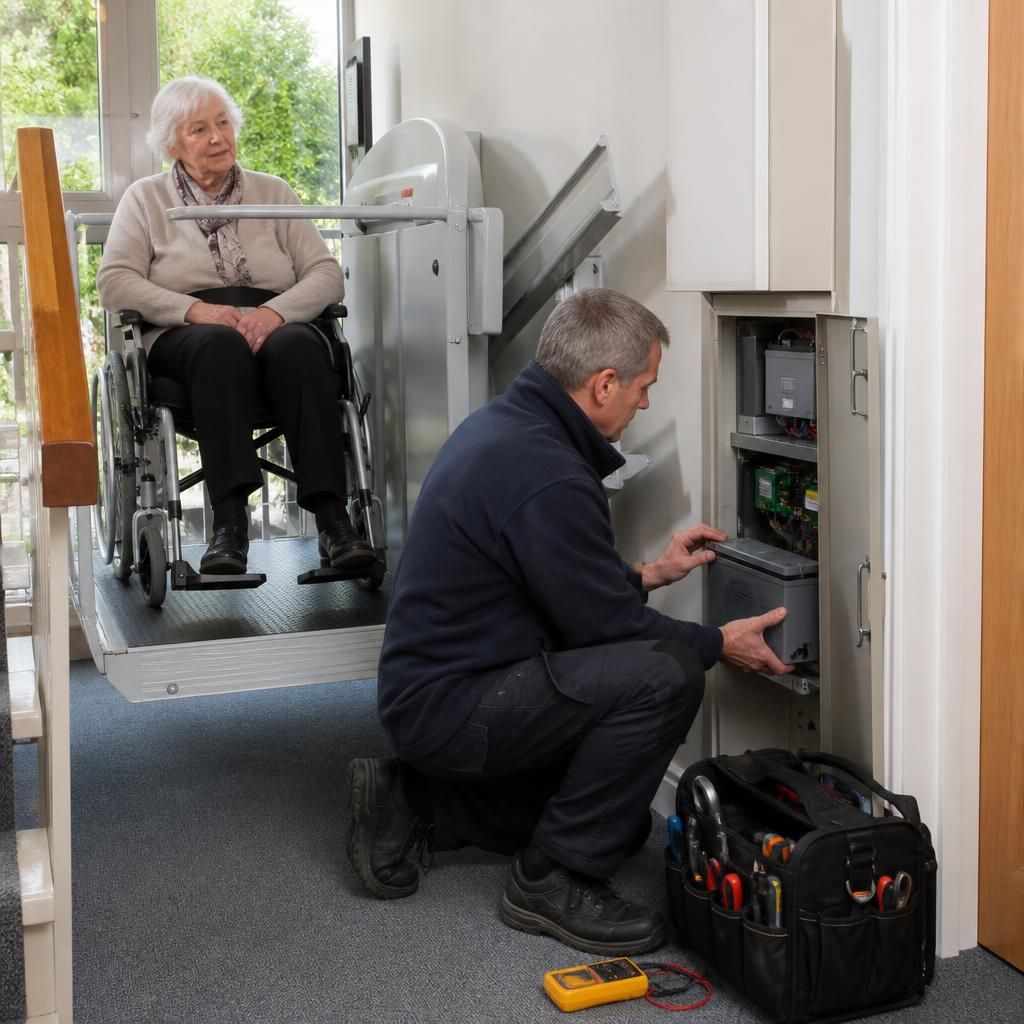
Ask Us to Check Your Emergency Backup
Ask Independent Stairlifts to check your platform stairlift’s battery backup, charging system and emergency controls, and explain the correct recovery procedure for your model.