
What types of wheelchairs are compatible with platform stairlifts?
Platform stairlifts are generally compatible with most manual wheelchairs and many powered wheelchairs, provided the chair and user fit safely within the platform’s size and weight limits. Compatibility depends on the wheelchair’s dimensions, turning space, total weight and secure positioning, so an assessment of the wheelchair and staircase is required before installation.
Platform stairlifts are generally compatible with most manual wheelchairs and many powered wheelchairs, provided the wheelchair and user fit safely within the platform’s size and weight limits. Compatibility depends on the chair’s overall dimensions, turning space, combined weight, ground clearance, seating position and how securely it can be positioned on the platform. A proper assessment should therefore consider the actual wheelchair, the staircase and the way the lift will be used.
Manual wheelchairs
Most standard manual wheelchairs can be used on a platform stairlift. This commonly includes rigid-frame and folding models, transit wheelchairs and self-propelled wheelchairs. The important checks are the chair’s width, length, height and total weight with the user seated in it. A folding wheelchair may be convenient for storage, but it must be fully opened and stable before the lift moves. Removable footrests, bags or other accessories may need to be repositioned if they extend beyond the platform or affect the safety barriers.
Some manual wheelchairs have large rear wheels, attendant handles, reclining backs or elevated leg rests. These features do not automatically prevent use, but they can increase the chair’s overall footprint or alter its centre of gravity. The wheelchair must remain within the platform’s boundaries, with the user seated in a stable position and the safety equipment able to close correctly.
Powered wheelchairs and powerchairs
Many powered wheelchairs and compact powerchairs can be carried on a platform stairlift. The assessment needs to include the wheelchair’s battery weight, motor and control equipment, turning radius and overall dimensions. A powered chair that is too long or wide may not turn safely at the top or bottom landing, even if it fits on the platform itself.
The chair should normally be switched off or placed in the appropriate transport setting before travel, according to the manufacturer’s instructions. Controls, joysticks and other projecting components must not interfere with the platform, ramp, barriers or surrounding walls. The wheelchair’s brakes should be applied, and any required restraint or anchoring system must be used as instructed. A powered wheelchair should never be driven onto a platform unless the lift has been designed for that method of access and the procedure has been explained by the installer.
Reclining, tilt-in-space and specialist wheelchairs
Specialist chairs, including tilt-in-space, reclining, bariatric and postural-support wheelchairs, require more detailed checking. Their larger frames, adjustable seating systems, head supports or elevated leg rests can affect the available height and platform clearance. Reclining or tilting functions should generally be secured in the position specified for travel, rather than adjusted while the platform is moving.
Heavy-duty wheelchairs may exceed the platform’s permitted load when the user and accessories are included. The relevant figure is the combined operating load, not the wheelchair’s unoccupied weight. If the chair has a detachable battery, it must only be removed if the wheelchair and lift manufacturers permit this and the remaining chair can still be safely secured.
Wheelchairs that may need additional consideration
- Very wide or long powered wheelchairs that leave insufficient clearance on the platform or landings.
- Chairs with large rear wheels, extended footplates, headrests or other parts that project beyond the platform.
- Heavy specialist or bariatric models that approach or exceed the lift’s permitted load.
- Wheelchairs with a high seat, reclining back or adjustable posture system that reduces overhead or side clearance.
- Three-wheeled or unusually configured mobility chairs that are difficult to position squarely on the platform.
- Chairs with damaged brakes, loose components or tyres that cannot hold the chair securely while travelling.
A platform may be suitable for the wheelchair but unsuitable for the user’s transfer needs. If the user transfers from a wheelchair before using the lift, the chair may need to be folded or transported separately. If the user remains seated throughout the journey, the platform must provide sufficient space for the wheelchair and allow the user to access the controls and safety features without leaning outside the protected area.
What is checked during an assessment?
The installer should measure the wheelchair in its normal travel configuration and consider the combined weight of the user, chair, battery and essential equipment. They should also check doorway widths, landing space, the approach to the platform, the position of handrails and obstacles such as radiators or doors. The platform’s usable area, ramp arrangement, side barriers and restraint system must work with the particular chair rather than just with an empty wheelchair.
Where more than one wheelchair is used in the home, each should be assessed. A compact manual wheelchair may fit a platform that cannot accommodate a larger powered model. Similarly, a temporary replacement wheelchair may have different dimensions from the chair originally assessed, so it should not be used on the lift until its suitability has been confirmed.
Compatibility should be confirmed before ordering or using the equipment. Provide details of the wheelchair model, measurements, accessories and battery configuration, and mention how the user intends to approach, board and leave the platform. Independent Stairlifts can then assess the complete arrangement and identify whether a standard platform, a different platform configuration or another accessibility solution is more appropriate.
Wheelchair compatibility with a platform stairlift depends on the complete travelling setup, not simply whether the chair is manual or powered. The installer must check the wheelchair’s width, length, height, weight and accessories, together with the user’s weight and the platform’s usable space and safe working load.
Particular care is needed with powered, reclining, tilt-in-space and bariatric wheelchairs. Batteries, elevated leg rests, head supports and larger frames can affect clearance, positioning and the combined load. The chair must sit securely within the platform barriers, with its brakes applied and any required restraints in use. An assessment using the actual wheelchair in its normal travel configuration confirms whether the platform, ramps and landing areas are suitable.
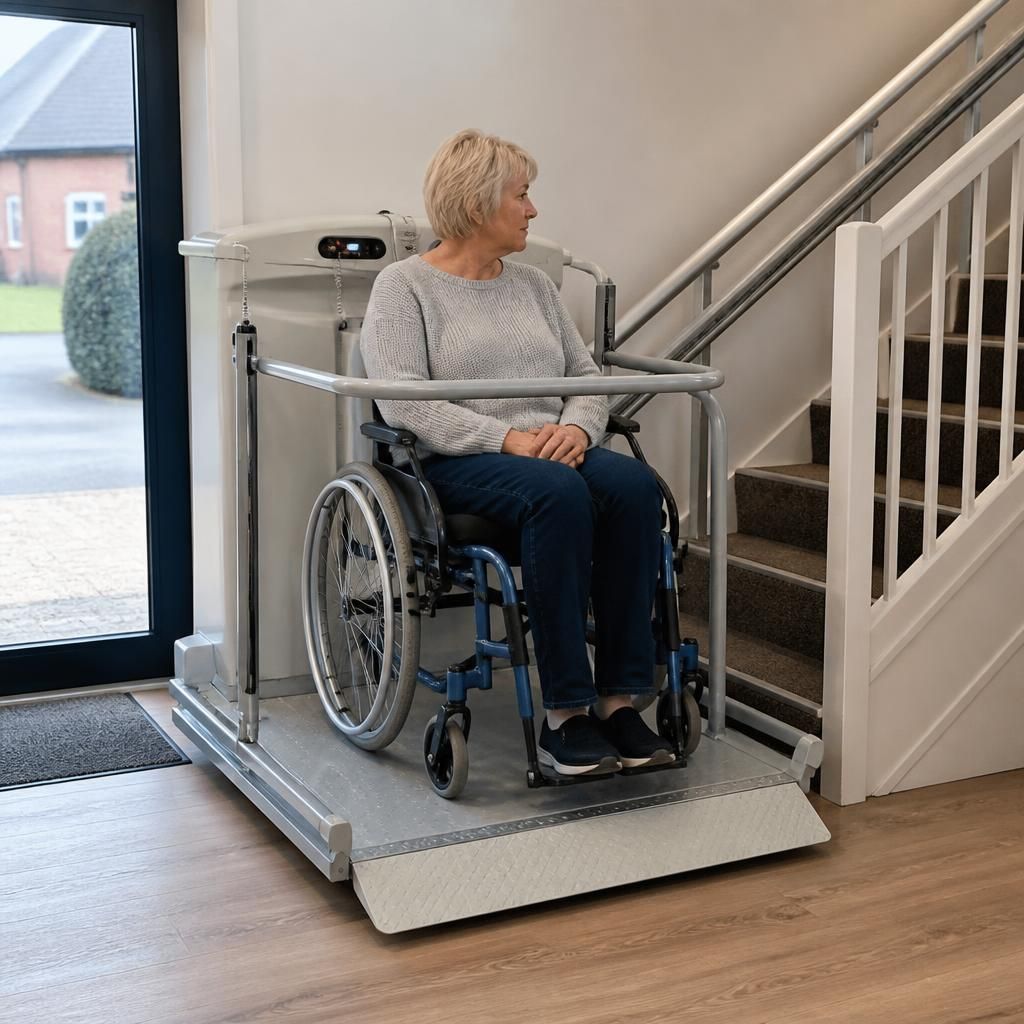
Arrange a platform stairlift compatibility assessment
Arrange a platform stairlift compatibility assessment with Independent Stairlifts to check your wheelchair, user weight, platform dimensions and access route. We can confirm whether the proposed setup is suitable before installation.