
What maintenance and servicing are required for platform stairlifts to ensure optimal performance?
Platform stairlifts should receive routine servicing by a qualified engineer in line with the manufacturer’s recommendations, including checks of the drive system, platform, safety edges, controls, batteries and charging equipment. Users should also carry out simple visual checks, keep the track and platform clear, and report unusual noises, movement or fault warnings promptly.
Platform stairlifts require routine servicing by a suitably qualified engineer, supported by simple checks and cleaning carried out by the user. Servicing should follow the manufacturer’s instructions and cover the drive system, platform, safety equipment, controls, batteries, charging equipment and any fixed ramps or gates. Regular maintenance helps identify wear before it affects safe operation, but it does not replace prompt attention to faults or damage.
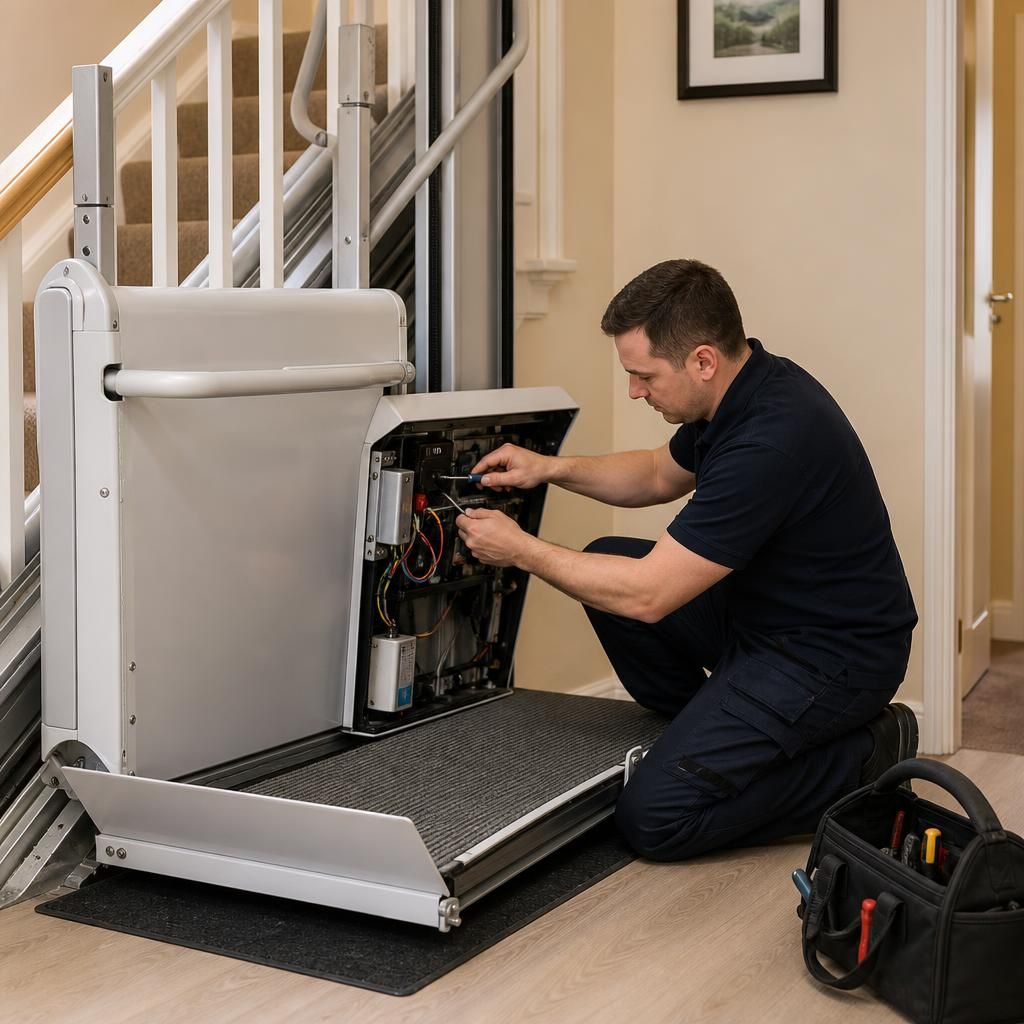
Professional servicing
An engineer should inspect and test the complete installation at the recommended intervals. The exact schedule depends on the model, how frequently it is used, the stairway environment and the manufacturer’s requirements. Heavier use, outdoor exposure or a demanding operating environment may justify more frequent checks.
A service normally includes:
- checking the motor, gearbox, drive mechanism and track for wear, damage, contamination or abnormal movement;
- testing the platform’s folding mechanism, deck, handrails, ramps, safety gates and any restraint or barrier system;
- checking safety edges, sensors, interlocks, limit switches and obstruction detection;
- testing the platform controls, remote controls, key switches, emergency stop controls and audible or visual warnings;
- inspecting batteries, charging contacts, charger operation and the electrical connections;
- checking fixings, guards and structural attachment points for looseness or damage;
- running the lift through its normal operating cycle and confirming smooth starting, stopping, levelling and travel; and
- cleaning, lubricating or adjusting components where the manufacturer’s procedure permits it.
Not every part should be lubricated by the user. Applying the wrong product, or applying lubricant where it can reach sensors, drive surfaces or electrical components, may impair operation. Engineers should use the specified methods and replacement parts appropriate to the stairlift.
Checks for users
Before use, keep the platform, track, landing areas and access route clear of objects, clothing, mobility aids and other obstructions. Check that the platform is fully open or folded as intended, that ramps and gates move correctly, and that the lift stops if a safety edge or interlock is activated. Make sure the charging point is accessible and that the stairlift is returned to its designated charging position when required by the model.
Wipe dirt and spills from accessible surfaces with a suitable slightly damp cloth, following the care instructions supplied with the lift. Do not hose or pour water over the equipment, use abrasive cleaners, or attempt to clean inside covers. Outdoor platform stairlifts need particular attention to leaves, grit, moisture and other debris around the track, platform and landing areas.
Battery and charging care
Most platform stairlifts use rechargeable batteries so they can operate during a mains power interruption. A battery may gradually lose capacity with age, and warning tones, reduced travel performance or difficulty completing a journey can indicate that inspection is needed. Keep charging contacts clean and do not disconnect the charger unless instructed. If the lift repeatedly fails to charge, shows a battery warning or stops sooner than expected, arrange an engineer’s assessment rather than replacing batteries without advice.
When to report a problem
Stop using the stairlift and contact the service team if it makes an unusual grinding, clicking or scraping noise; moves unevenly; jolts, stalls or travels more slowly; fails to stop accurately; displays a fault warning; or has damaged wiring, covers, ramps, gates or safety equipment. The same applies if the platform does not fold or deploy correctly, a safety edge does not respond, or the lift has been struck by an object. Do not bypass an interlock, hold down a safety switch, remove covers or try to repair the drive or electrical system yourself.
If the stairlift stops with a user on the platform, follow the operating and emergency instructions provided for that model. Use the emergency lowering or manual release procedure only if it is specifically designed for the installation and you have been shown how to use it. If there is immediate danger, contact the emergency services. Otherwise, keep the user in a safe position and contact the service team for instructions.
Keeping servicing records
Retain the installation information, operating manual and service records. A record should identify the date of the inspection, work completed, parts replaced and any recommendations for follow-up. Tell the engineer about changes in use, recurring fault messages, water exposure or any incident involving the platform. This information helps build an accurate maintenance history and supports safer diagnosis.
Routine user checks do not replace professional servicing, and a service visit cannot compensate for obstructed access or unsafe use. Following the manufacturer’s maintenance schedule, keeping the installation clean and clear, and reporting changes promptly are the main measures for maintaining reliable performance. Independent Stairlifts can advise on the appropriate servicing arrangements for the installed platform stairlift and its operating environment.
Professional servicing checks the complete platform stairlift to confirm that it operates safely, smoothly and reliably. A qualified engineer should inspect the drive system, track, platform, ramps, gates, safety edges, controls, batteries and charging equipment at the intervals recommended by the manufacturer.
Between service visits, users should keep the platform, track and landing areas clear, wipe accessible surfaces with a suitable slightly damp cloth, and make sure the lift returns to its charging position when required. Report unusual noises, jolting, slow movement, fault warnings, charging problems or damaged safety equipment promptly. Do not remove covers, apply unapproved lubricant or attempt to bypass safety switches.
Arrange professional platform stairlift servicing
If your platform stairlift is due a service or showing changes in noise, movement or charging performance, contact Independent Stairlifts to arrange professional servicing and advice.