Designed for a straight flight
A straight stairlift follows one uninterrupted run of stairs, providing a direct route between floors without the railwork required for bends or intermediate landings.

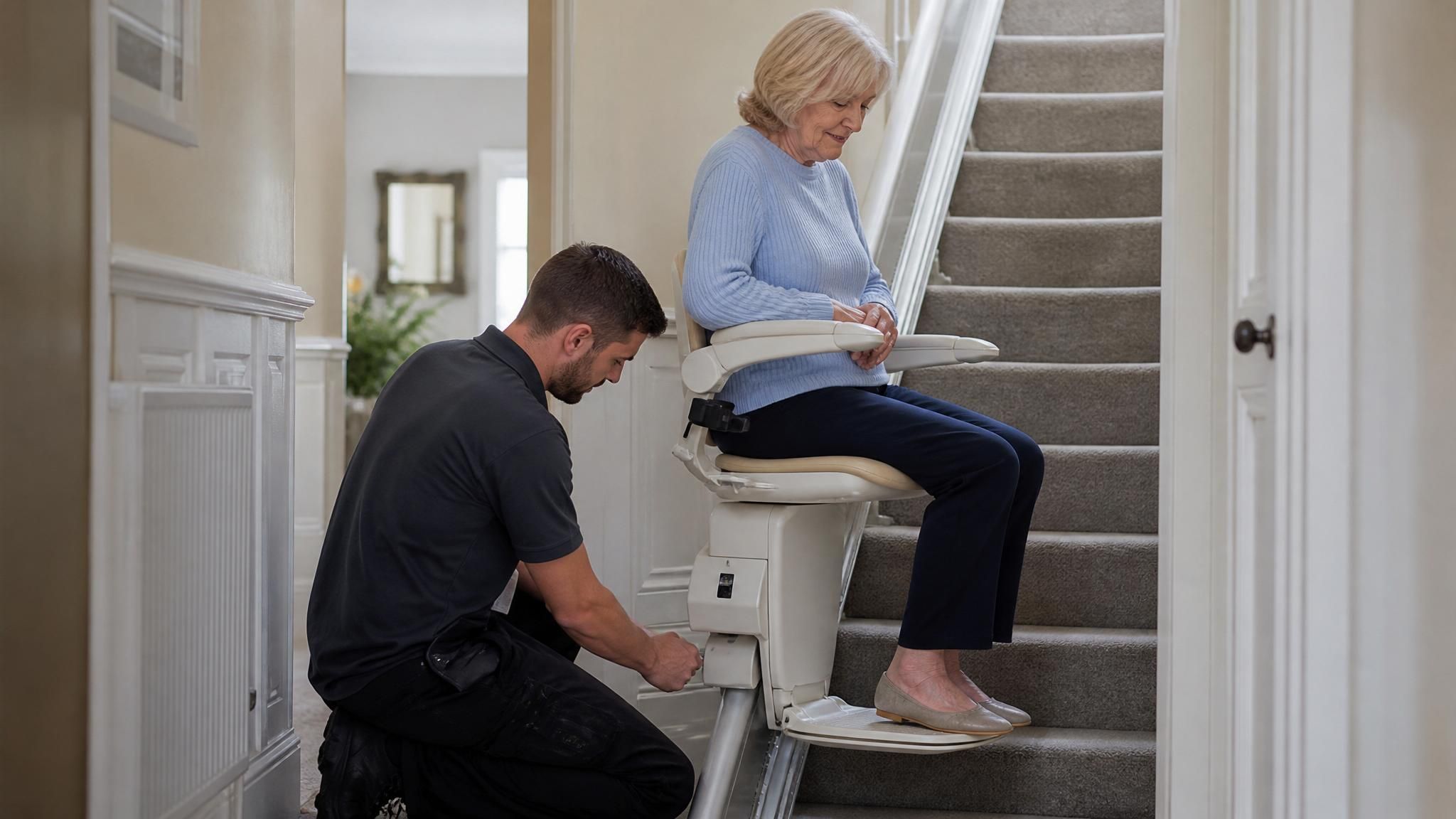
Straight stairlift installation involves securely fitting a rail to a single, uninterrupted staircase so a powered seat can carry a person between levels. A professional assessment checks dimensions, access, electrics, user needs and safe operation before installation.
Straight stairlift installation is the process of fixing a powered seat and rail securely to a single, uninterrupted staircase. A qualified installer will check the stair dimensions, landing clearance, structural condition, electrical supply and the user’s transfer needs before confirming the proposed fit.
Before work begins, ask what is included in the installation, guarantee and aftercare arrangements. Independent Stairlifts can explain the handover process, operating checks and available support, including what to do if the stairlift develops a fault or needs adjustment after fitting.
Installers should take reasonable precautions to protect flooring, walls and nearby furnishings while fitting the stairlift. The installation area should be left clear and safe when work is complete.
Before fitting begins, discuss access to the staircase and identify any surfaces or furnishings that need particular care. Installers normally use suitable tools and protective measures, keep fixings and packaging controlled, and remove installation waste. If the property has unusual flooring, narrow access or delicate finishes, raise this before the appointment so the fitting approach can be considered properly.
A stairlift should not be treated as ready for use until its key safety functions have been checked. This includes the movement of the seat, controls, safety features and charging arrangements.
After installation, the installer should run the stairlift through its intended route and check that it starts, stops and parks correctly. They should also demonstrate the seat belt, swivel or folding mechanisms where fitted, obstruction sensors, controls and any remote controls. Ask questions during the demonstration and do not use the stairlift independently until you understand how to start, stop and report a problem.
A guarantee sets out which parts and services are covered after installation and for how long. Its terms can differ, so request the written guarantee rather than relying on a general description.
Read whether the guarantee covers parts, labour, call-outs and adjustments, and check any exclusions or conditions that apply. It is also useful to confirm whether cover changes if the stairlift is moved, modified or used in a different property. Keep the installation paperwork and guarantee details together, as these may be needed when arranging support.
If a stairlift stops, behaves unexpectedly or shows a fault indication, stop using it unless the instructions specifically allow a safe reset. A clear reporting process helps the installer identify the problem and decide what assistance is needed.
Move away from the staircase if it is safe to do so, note what happened and record any message or indicator shown by the stairlift. Contact the support number provided with the installation and describe the symptoms, rather than attempting to remove covers or repair electrical components yourself. Ask how urgent faults are handled, what assistance is available outside normal hours and whether temporary arrangements are recommended while the stairlift is unavailable.
Minor adjustments may sometimes be needed after the user has operated the stairlift in normal conditions. Any change should be assessed and completed by a qualified installer.
Tell the installer if the seat position, controls, belt, swivel action or parking position feels difficult to use. They can check whether an adjustment, accessory or operating change is appropriate without compromising the stairlift’s safety systems. Do not alter the rail, seat or wiring yourself, and report any change in the user’s mobility or transfer ability so the setup can be reviewed.
Straight stairlift installation is the fitting of a powered seat and rail to one uninterrupted flight of stairs, enabling safer movement between floors. The rail is normally secured to the steps rather than the wall, with the position set to preserve access and landing clearance.
Assessment also checks electrics, transfers, controls and aftercare so the installation suits the home.
A straight stairlift follows one uninterrupted run of stairs, providing a direct route between floors without the railwork required for bends or intermediate landings.
The rail position and seat arrangement can be selected to leave practical space for other household members to use the staircase where the layout allows.
A folding seat, armrests and footrest can reduce the stairlift’s profile when it is parked, helping keep the staircase usable for walking.
Controls can be positioned on the armrest, with a separate call-and-send control available so the stairlift can be brought to the required end of the stairs.
The rail is normally fixed to the stair treads, allowing the installation to be assessed against the staircase structure rather than relying on the wall for support.
The stairlift charges through its parking position, so it can be ready for use when left correctly at the end of its rail.
Independent Stairlifts combines home assessments, bespoke fitting and nationwide installation for straight staircases. Its team considers staircase dimensions, user transfers, controls and aftercare, helping households compare suitable new or reconditioned equipment without separating installation from ongoing support.
Assessment of the complete staircase
Independent Stairlifts assesses the full route, including stair width, landing space, bends at the top or bottom, obstruction points and the position of nearby doors. This helps establish whether a standard straight rail is suitable and identifies any clearance issues before fitting.
Fitting tailored to the home
The rail position, seat configuration and control arrangement can be considered alongside the staircase layout and the user’s transfer method. This avoids treating every straight staircase as identical and supports a practical installation for the person using it.
Options for different mobility needs
A straight stairlift may be specified with features such as powered swivel seats, adjustable armrests, different control positions or a compact folded profile. Independent Stairlifts can explain which options are relevant rather than adding features that do not improve the intended use.
Careful installation with minimal disruption
Straight stairlift rails are normally secured to the stair treads rather than the wall, so installation can often be completed without major structural alteration. The installer checks the fixings, rail position, seat movement and clearances as part of the fitting process.
Choice of new or reconditioned equipment
Independent Stairlifts can discuss both new and reconditioned straight stairlifts where appropriate. Comparing these options involves more than the purchase price: the assessment should also consider condition, available features, warranty cover, suitability and future servicing.
Clear handover and ongoing support
After installation, the user is shown how to operate the controls, use the safety features, charge the stairlift and respond to a fault. Independent Stairlifts also provides information about guarantee terms, servicing and who to contact if the equipment needs attention.
Straight stairlift installation involves securing a rail to a staircase with no change of direction, then fitting a powered seat that travels between the floors. A professional installer first checks the stair width, steps, landings, fixings, power supply and the user’s ability to get on and off safely.
The rail is normally fixed to the stairs rather than the wall, so the installation does not usually require major structural alteration. However, tight landings, doors, radiators, unusual step dimensions or limited space at the top and bottom may affect the rail layout, seat choice or parking position. These points should be confirmed during a home assessment.
Before accepting a quotation, check that it includes fitting, testing, user instruction, warranty terms and support if the equipment needs adjustment. Independent Stairlifts can assess the staircase and explain whether a new or reconditioned straight stairlift is suitable for the property and the user’s current mobility needs.
Straight stairlift installation is the fitting of a powered seat and rail to a staircase that runs without a change of direction. An assessment checks the stair width, landing space, fixing points, electrical supply and the user’s ability to transfer safely on and off the seat.
The rail is generally secured to the steps rather than the wall, limiting the need for major structural work. Doors, radiators, narrow landings and limited parking space can still affect the layout, seat selection or controls, so these details should be reviewed before fitting.
Once installed, the stairlift should be tested through its full route and explained clearly to the user. Confirm that the quotation includes installation, instruction, warranty cover and support for any adjustment required after the stairlift becomes part of the daily routine.
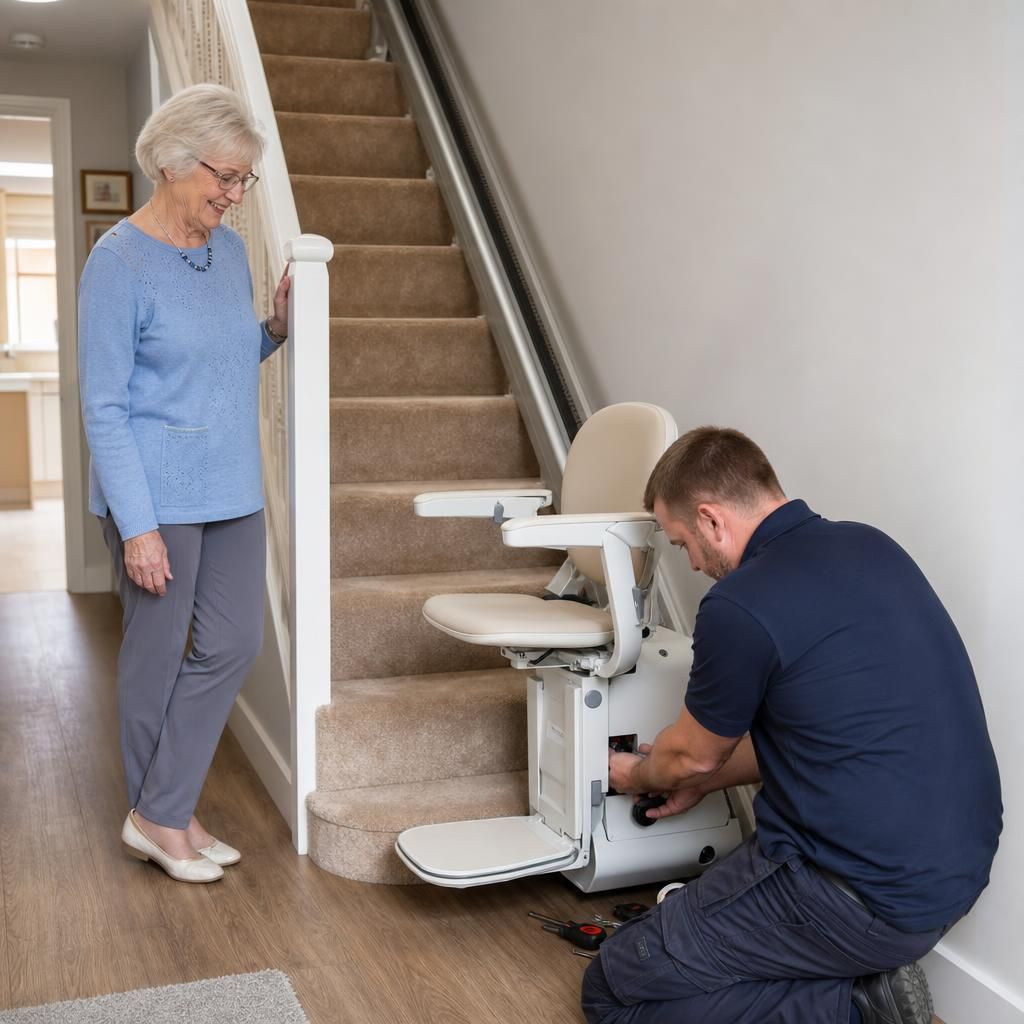
Ensuring a straight stairlift fits well involves securing a continuous rail along the staircase for smooth operation, starting from precise measurements to adhering to stringent safety standards during installation.
A straight stairlift installation generally takes one to three hours, influenced by factors such as staircase length, rail complexity, and home accessibility conditions, ensuring optimal performance and safety.
Safety features in a straight stairlift include seatbelts, obstruction sensors, and swivel seats. These ensure user security by preventing accidents during movement and facilitating easy access on and off the stairlift.
Expect minimal disruption; our team ensures a clean, efficient installation process with steps to protect your home, such as using dust sheets, while maintaining clear access to your stairs throughout.
Regularly check for obstructions along the rail, ensure moving parts are clean and lubricated, and schedule professional servicing annually to maintain optimal performance and safety of your straight stairlift.
A correctly fitted straight stairlift is tested along its full route before handover, with operating guidance provided. Ask for written guarantee terms and aftercare arrangements, so any adjustment or fault can be reported promptly to Independent Stairlifts.
Contact UsIndependent Stairlifts offers professional straight stairlift installations with a focus on precision and safety, ensuring your new stairlift operates smoothly and reliably in your home environment.
A dedicated power outlet near the stairs is recommended for safe operation. Our installers will ensure compliance with electrical requirements and suggest solutions if modifications are required.
Straight stairlift installations undergo rigorous testing for alignment, component integrity, and operational safety, ensuring compliance with industry standards and delivering reliable, hassle-free functionality tailored to your home.
Our assessment includes evaluating your staircase’s dimensions, identifying power source needs, and considering user mobility limitations, ensuring a custom fit that integrates seamlessly with your home's environment.
Our dedicated support ensures timely repairs and adjustments, focusing on restoring seamless operation and safety. We utilise high-quality parts and experienced technicians for all updates, safeguarding your mobility experience.
Arrange a free home assessment to discuss your staircase, mobility needs and suitable straight stairlift options. Independent Stairlifts can explain installation requirements, likely fit, costs and aftercare before you decide.
Contact Us