
Are there any specific maintenance practices I should follow after my straight stairlift is installed?
After your straight stairlift is installed, keep the track, seat and footrest clear of dust and obstructions, wipe surfaces with a soft dry or lightly damp cloth, and follow the manufacturer’s charging guidance. Arrange servicing at the recommended intervals, and contact Independent Stairlifts promptly if you notice unusual noise, jerky movement, warning lights or reduced battery performance rather than attempting repairs yourself.
After a straight stairlift is installed, regular cleaning, sensible daily checks, correct charging and scheduled servicing will help keep it safe and reliable. Follow the operating and maintenance instructions supplied with your particular model, as charging arrangements, service intervals and approved cleaning products can vary.
Keep the stairlift clean and clear. Wipe the seat, armrests, controls and footrest with a soft, dry or lightly damp cloth. Do not spray water or cleaning products directly onto the stairlift, and avoid abrasive or solvent-based products that could damage finishes or electrical components. Keep the rail free from dust, grit, pet hair and objects that could interfere with the carriage or wheels. Never place belongings on the steps or rail, where they could obstruct movement.
Check the lift before use. Make sure the seat is correctly positioned, the seat belt is available and the armrests and footrest are secure. Check that the track and staircase are unobstructed, and look for visible damage, loose covers or anything that appears out of alignment. If your model has a swivel seat, confirm that it locks into the normal travelling position before moving. Do not use the stairlift if a safety feature does not operate correctly.
Use the charging points as instructed. Park the stairlift at its designated charging position whenever it is not in use, unless your installation instructions state otherwise. Avoid switching off the stairlift’s power supply unnecessarily, because the batteries need a continuous supply to remain charged. If the lift gives a low-battery warning, return it to a charging point and follow the manufacturer’s guidance. Persistent charging warnings, reduced travel distance or a battery that no longer holds its charge should be reported to Independent Stairlifts.
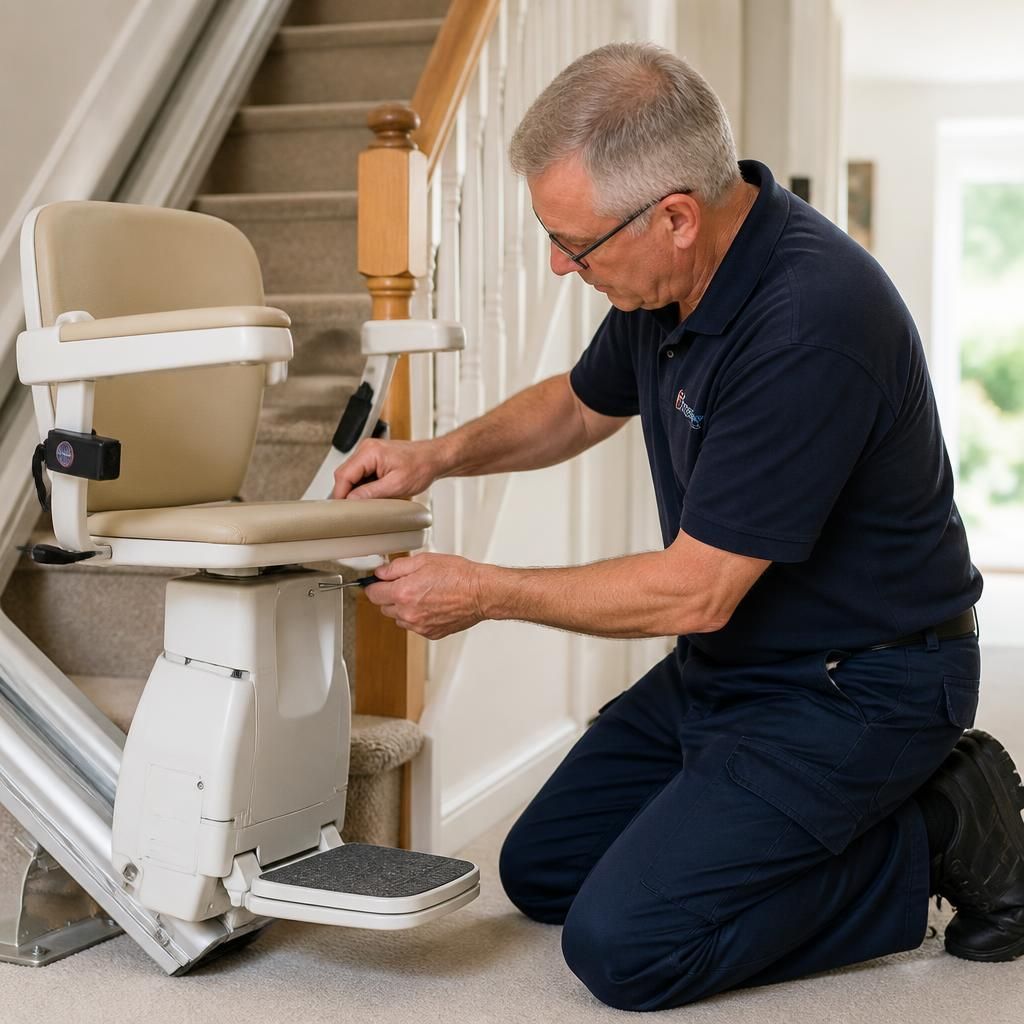
Arrange professional servicing. A service allows a trained engineer to inspect the rail, carriage, drive system, batteries, charging equipment, switches and safety devices. It can also identify wear or adjustment needs before they affect everyday use. Book servicing at the interval recommended for your model and installation, and keep any service records and warranty information available. A stairlift used frequently, in a demanding environment or by more than one person may need particular attention based on the engineer’s advice.
Report changes in performance promptly. Contact us if you notice:
- jerky, slow or unusually noisy movement;
- warning lights, error tones or repeated low-battery messages;
- the stairlift stopping unexpectedly or failing to start;
- difficulty operating the remote control or armrest controls;
- the seat, swivel mechanism, footrest or safety belt becoming loose or difficult to use;
- visible damage to the rail, carriage, wiring or covers; or
- the batteries losing charge more quickly than usual.
Stop using the stairlift if the fault could affect safe operation, and keep the staircase clear while waiting for advice. Do not attempt to bypass a safety switch, adjust the rail, open electrical covers, lubricate components or replace batteries unless this has been specifically authorised and explained by a qualified engineer. Incorrect adjustments or unsuitable parts can create a safety risk and may affect warranty cover.
Keep the area around the stairlift dry and protect it from impacts during decorating, moving furniture or other household work. Tell anyone carrying out work near the staircase that the stairlift must not be used or obstructed while they are working. If the stairlift is not going to be used for an extended period, ask us or consult the manufacturer’s instructions about isolation, battery care and recommissioning rather than simply leaving it switched off.
These simple practices do not replace professional maintenance. If you are unsure how to clean, charge or park your straight stairlift, refer to the handbook or contact Independent Stairlifts for model-specific guidance and help arranging any required repair or service.
Regular professional servicing is an important part of maintaining a straight stairlift after installation. A qualified engineer can inspect the rail, carriage, drive system, batteries, charging points and safety devices, identifying wear or adjustment needs that may not be visible during everyday use.
Arrange servicing in line with the interval recommended for your particular model and installation, and keep the service record and warranty information available. Between visits, report unusual noises, jerky movement, warning lights, repeated low-battery messages or difficulty starting the lift. Do not attempt to adjust the rail, bypass safety switches or open electrical covers yourself, as this can create a safety risk and affect warranty cover.
Need advice on straight stairlift maintenance?
If you need advice on cleaning, charging, servicing or troubleshooting your straight stairlift, contact Independent Stairlifts for model-specific guidance. We can also help arrange a professional inspection or any repairs and adjustments required.