
What is the typical timeframe for a straight stairlift installation, and will I need to make any structural changes to my home?
A straight stairlift installation is typically completed in a few hours, provided the staircase and access route are suitable. Structural alterations are not usually required, as the lift is secured to the stair treads; minor electrical work or adjustments may only be needed where the power supply or surrounding space requires it.
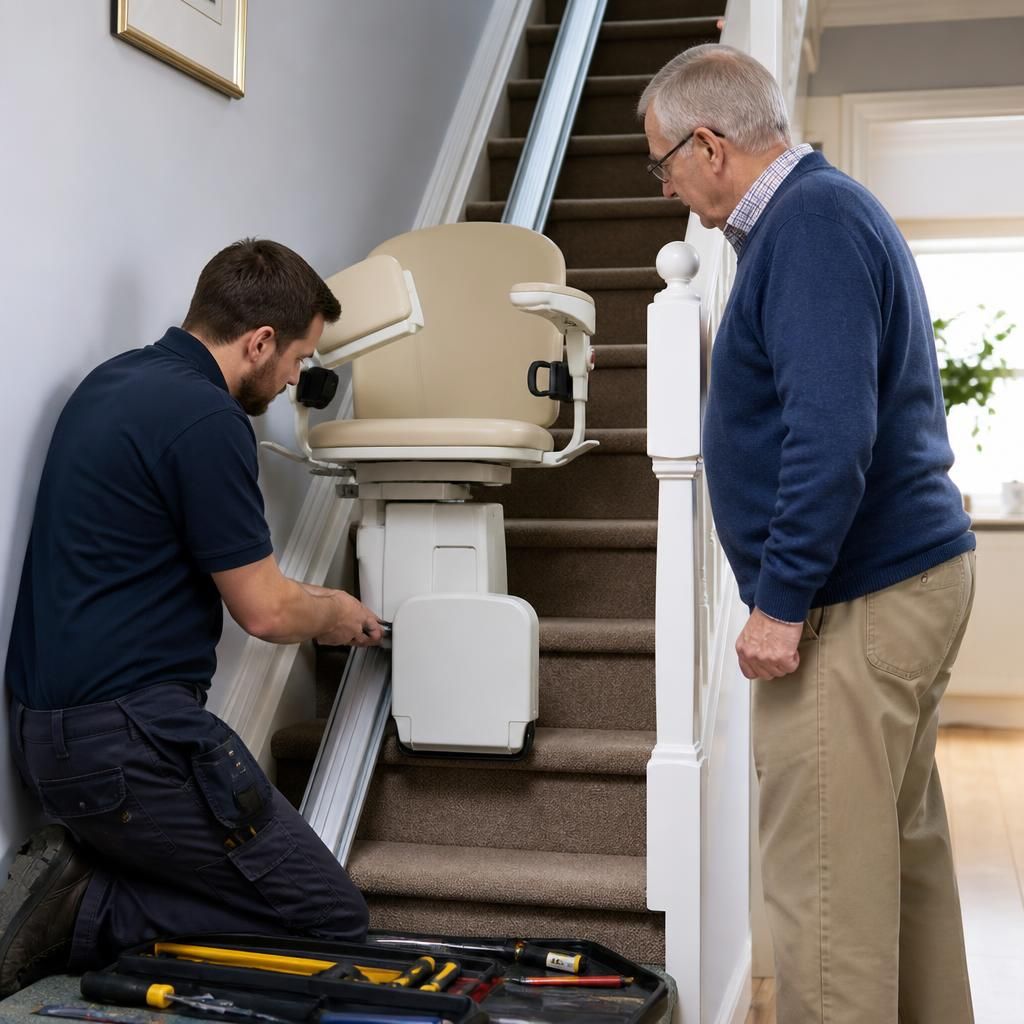
A straight stairlift installation is usually completed within a few hours, provided the staircase, access route and electrical supply are suitable. In most homes, structural alterations are not required because the rail is fixed directly to the stair treads rather than to the wall. The main work involves assembling the lift, securing the rail, connecting the power supply and testing the finished installation.
The installation appointment is separate from the assessment and, where applicable, the time needed to manufacture or prepare a stairlift for your staircase. During the assessment, the installer checks the staircase dimensions, the condition of the treads, the available space at the top and bottom, and the safest position for the lift when it is parked. These checks help confirm the correct equipment and identify any work that may be needed before installation.
What happens during a typical installation?
- The installer protects the relevant areas and brings the stairlift components into the property.
- The rail is positioned along the stairs and secured to the stair treads at suitable intervals.
- The carriage, seat, controls and safety features are fitted and adjusted.
- The charging point and power connection are installed or connected, where necessary.
- The stairlift is tested repeatedly, including its movement, stopping points, sensors, seat belt and controls.
- You are shown how to use the lift safely, including how to park it, use the swivel seat and respond to any warning indicators.
Most of the work takes place on the staircase itself. Fixing the rail to the treads normally avoids the need to remove walls, alter the stairs or create a supporting structure. Small fixing holes will remain in the treads if the stairlift is later removed, but this is different from a major structural modification.
When might additional work be needed?
Although major building work is unusual, the installer may recommend a minor adjustment if the existing layout or condition of the property affects safe operation. Examples include:
- Electrical work: a suitable socket or charging arrangement may be needed if there is no practical power supply near the stairlift. Any electrical work should be completed safely and in accordance with the relevant requirements.
- Stair tread repairs: damaged, loose or unusually weak treads may need attention before the rail can be securely fixed.
- Clearance at the top or bottom: furniture, doors, radiators or other obstructions may need to be moved. In some layouts, a different parking position or rail configuration may provide the necessary space.
- Changes to a handrail or obstruction: a handrail, cupboard or fitting may interfere with the stairlift or reduce the space needed to enter and leave the seat. The assessment will establish whether repositioning is advisable.
- Access and preparation: in some homes, items may need to be removed temporarily to provide a clear route for the installation team and equipment.
These are generally localised practical adjustments rather than structural changes to the home. You should be told about any additional work before it is undertaken, along with its purpose and any effect it may have on the installation.
What can affect the installation timeframe?
The appointment may take longer if the staircase is unusually narrow, the treads require preparation, access to the property is restricted, or the lift needs additional charging equipment or other adaptations. The condition of the staircase and the position of doors, landings and furniture can also affect how the rail is fitted and where the lift can be parked. If the installation involves removing an old stairlift, this may add to the work.
A straight stairlift is designed for a staircase that runs in one continuous direction. If the stairs include a bend, intermediate landing or change of direction, a curved stairlift may be more appropriate and will usually involve a different assessment and preparation process. The installer will confirm this before work begins rather than attempting to fit an unsuitable straight model.
Before the appointment, keep the stairs and nearby landings as clear as possible, arrange access to the electrical supply and identify any furniture or fittings that may need to be moved. If you are concerned about damage, decoration or a particular feature of your home, raise this during the assessment. Once installed, the stairlift should be checked with you present so that its operation, parking position and safety features are understood before the installer leaves.
A straight stairlift is normally installed without major structural changes because its rail is secured to the stair treads, not the wall. The installation team positions the rail carefully, fits the seat and carriage, connects the charging point, and tests the lift before showing you how to use it.
Minor practical work may be needed if the staircase or surrounding area is unsuitable. This could include repairing a damaged tread, moving furniture, adjusting an obstruction, or providing a suitable electrical supply. These localised adjustments are different from altering the structure of the home and should be discussed with you before installation.
Arrange your straight stairlift assessment
Arrange your straight stairlift assessment with Independent Stairlifts to confirm the installation timeframe, check your staircase and identify any practical adjustments needed before fitting.