
What safety features are included in a straight stairlift installation to ensure user protection?
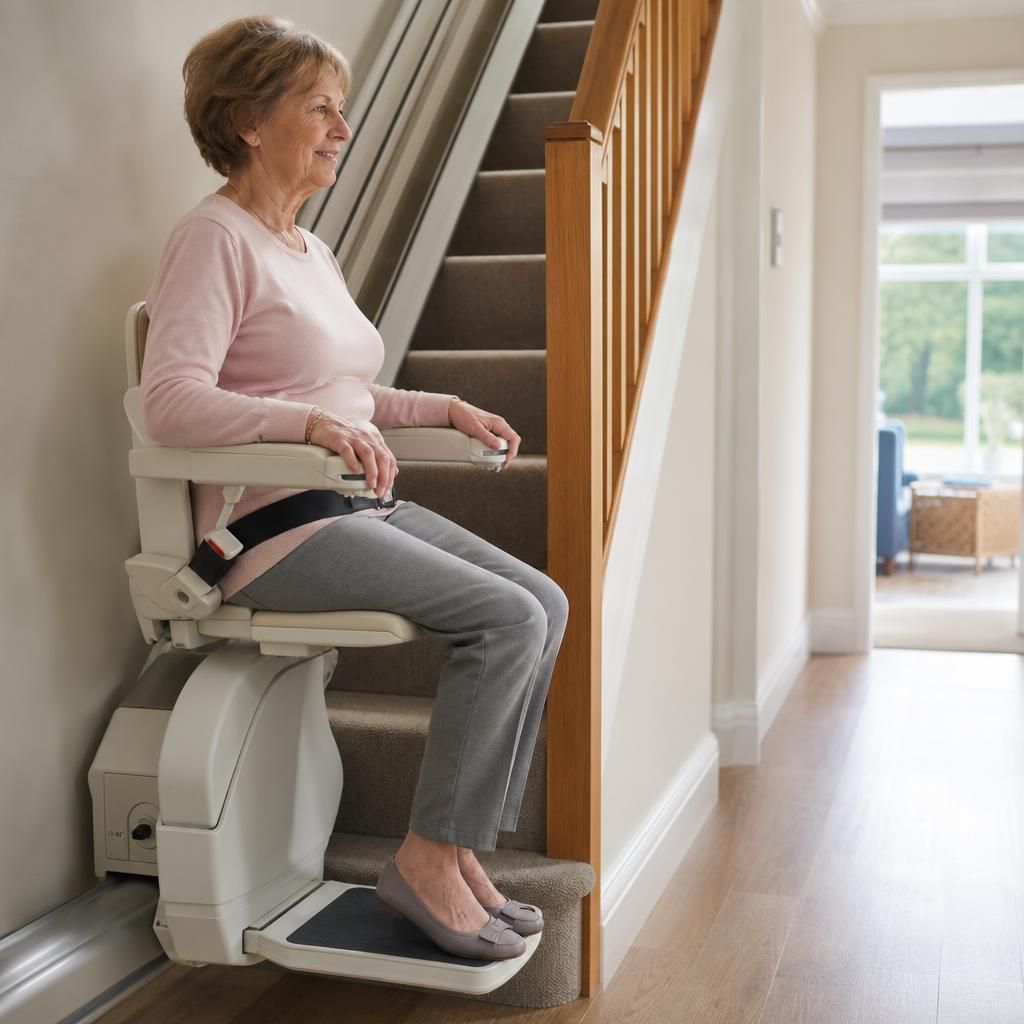
A straight stairlift installation typically includes a secure seat with armrests and a safety belt, obstruction sensors, controlled starting and stopping, and automatic braking to help protect the user. Battery backup and safety controls ensure the lift can be stopped safely and returned to a suitable position if the household power supply is interrupted.
A straight stairlift installation includes several safety features designed to keep the user secure while travelling, boarding and leaving the stairlift. These commonly include a supportive seat, safety belt, armrests, obstruction sensors, controlled acceleration and braking, automatic stopping, and a battery system that allows safe operation during a power cut. The exact specification depends on the stairlift model and the assessment of your staircase.
Secure seating and restraint
- The seat provides a stable, supported position for the journey, with armrests to help maintain balance.
- A seat belt or harness helps prevent the user from leaning or sliding forwards, particularly when starting, stopping or travelling on a steeper section of stairs.
- Many models include a swivel seat that turns towards the landing. This helps the user get on and off facing away from the edge of the stairs, rather than twisting in a confined position.
- A seat or swivel interlock prevents the stairlift from travelling unless the seat is correctly positioned and, where applicable, the swivel mechanism is returned to its travelling position.
The installer will demonstrate how to sit fully back in the seat, fasten the belt and use the swivel mechanism safely. The belt should be used on every journey, even when the user feels steady.
Controls and user-operated safety features
Controls are normally positioned on the armrest or handset so the user can operate the stairlift without reaching into the stairwell. A separate control may allow an authorised person or carer to call the lift to a different landing. Controls are designed to stop the stairlift when released, rather than allowing it to continue moving unattended.
Many installations also include a key switch or similar control to prevent unauthorised use. This can be useful where children, visitors or other household members might operate the lift without supervision. The installer will explain how to stop the stairlift immediately and how to use the controls from both ends of the staircase.
Obstruction sensors and automatic stopping
Sensors around the footrest, carriage or lower part of the stairlift detect objects in the travel path. If an obstruction is detected, the stairlift should stop or refuse to move, depending on its position and design. This helps reduce the risk of trapping items such as footwear, toys, loose rugs or household objects between the stairlift and the stairs.
Sensors are a safeguard, not a replacement for keeping the staircase clear. Items should not be stored on the steps, and trailing clothing, blankets and bags should be kept away from moving parts. If the stairlift stops unexpectedly, do not try to force it past the obstruction; follow the operating instructions and contact us if the cause is not obvious.
Controlled movement, braking and stopping
A properly installed stairlift is programmed to move at a controlled speed. Soft-start and soft-stop functions reduce sudden movement when the lift begins or ends its journey, which can make transfers more stable and comfortable. The drive system and automatic braking help prevent uncontrolled movement if the controls are released or the stairlift encounters a fault.
At the top and bottom of the rail, the stairlift stops in its intended position so the user can leave the seat safely. The installer checks the stopping points, clearances and access at each landing as part of commissioning. Where the staircase or landing has restricted space, the assessment may identify the need for a different seat configuration, a hinged rail or another suitable arrangement.
Battery backup and power protection
Most modern stairlifts are battery powered while travelling and recharge through charging points when parked correctly. This means the stairlift can usually continue to operate for a limited period if the household electricity supply fails. Battery backup can allow the user to reach a suitable landing rather than being left part-way up the stairs.
The battery does not provide unlimited operation during a power cut. The stairlift should be parked at its recommended charging point whenever it is not in use, and the mains supply to the charger should not be switched off. Warning tones or indicators may signal a low battery, charging problem or other issue. These warnings should be acted on promptly to prevent the stairlift becoming unavailable.
Installation checks that support safety
Safety depends on the installation as well as the stairlift itself. During fitting, the rail is secured to the stair treads or another approved fixing arrangement rather than relying on the wall alone. The installer checks that the rail, carriage, seat and footrest have appropriate clearance from the stairs, banister, doors and surrounding surfaces.
Once fitted, the stairlift is tested through its full route. This includes checking the controls, sensors, seat and belt interlocks, charging points, stopping positions, braking response and operation of any manual or powered swivel mechanism. The installer should also explain routine use, charging, cleaning and the procedure to follow if the lift stops or displays a warning.
What you should do after installation
- Keep the steps and landing areas clear, especially around the footrest and the top and bottom parking positions.
- Fasten the safety belt before moving and remain seated with your arms inside the armrests.
- Do not carry loads that obstruct your view, exceed the manufacturer’s guidance or could fall into the stairwell.
- Keep pets, children and other people clear of the stairlift while it is moving.
- Do not use the stairlift if the belt, seat, controls, sensors or braking system appear damaged or behave unusually.
- Report repeated stopping, unusual noises, reduced battery performance or warning indicators so the stairlift can be checked.
Before completing the installation, we will confirm the operating procedure with you and make sure the stairlift is suitable for the user’s mobility and the layout of the home. Safety features vary between models, so the supplied instructions remain important. If the user’s balance, strength, eyesight or ability to follow the controls changes, contact us for advice rather than continuing to use the stairlift in a way that may no longer be safe.
Safe operation depends on correct fitting as well as the stairlift’s built-in features. During installation, we secure the rail using an approved fixing method and check clearances around the stairs, banister, doors, landings and any nearby surfaces.
Before handover, we test the complete route, including the seat belt and swivel interlocks, controls, obstruction sensors, braking, stopping positions and charging points. We also demonstrate safe use, parking and the procedure to follow if the stairlift stops or displays a warning.
Arrange your straight stairlift safety assessment
Arrange a straight stairlift safety assessment with our team to review the user’s needs, staircase layout and the safety features required. We can explain the available options and confirm what will be checked during installation.