
What should I expect during a straight stairlift installation in terms of disruption to my home?
A straight stairlift installation is usually a quick, low-disruption process, as the rail is fitted directly to the stairs rather than the wall and major structural alterations are not normally needed. The installer will protect the surrounding area, fit and test the lift, then clean up and explain its safe operation before leaving.
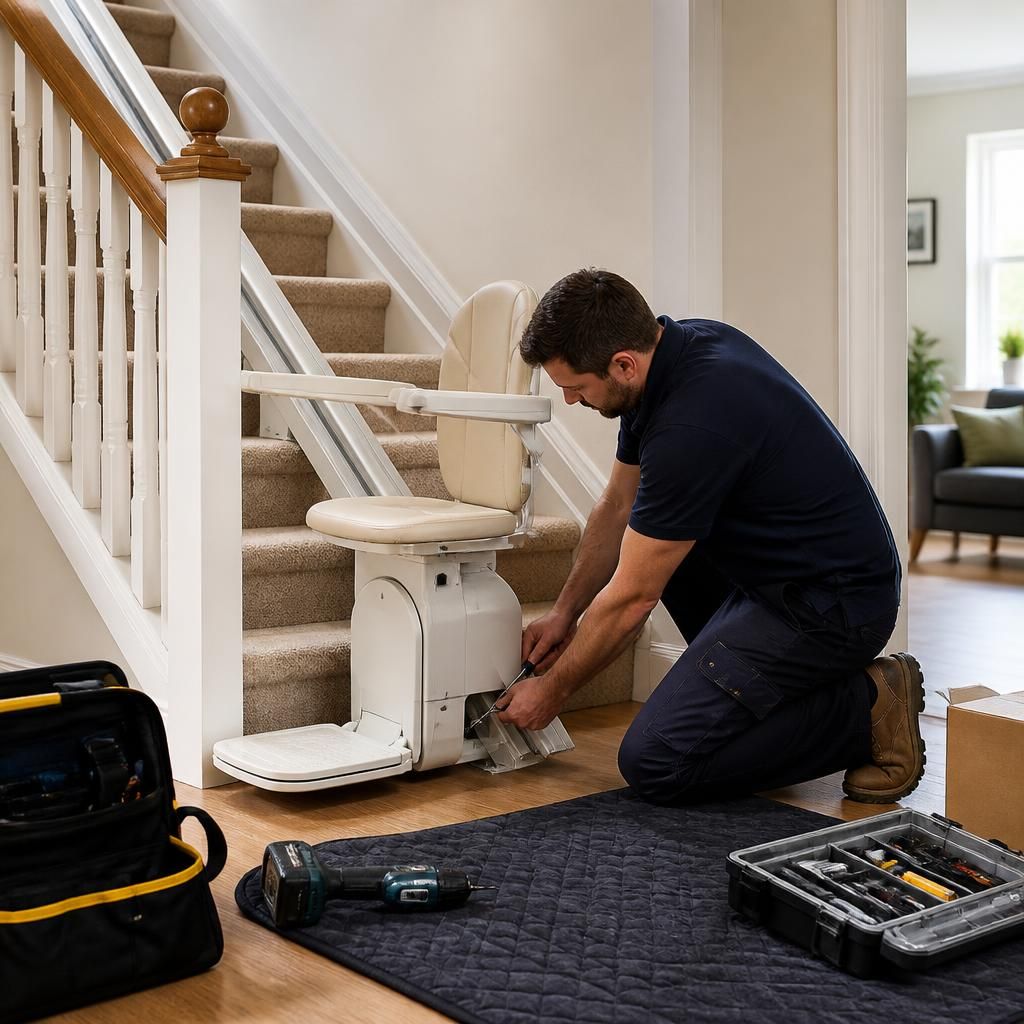
A straight stairlift installation is normally a quick, low-disruption job. The rail is secured to the stair treads rather than the wall, so major building work, plastering or changes to the staircase are not usually required. Most of the work involves bringing the equipment into the home, fixing the rail, connecting the power supply, testing the lift and explaining how to use it safely.
Before fitting begins
The installer will confirm the agreed layout and check the staircase, landing and nearby access areas. They may need to move small items from the stairs or clear space at the top and bottom so that equipment can be carried in and the lift can be tested safely. If anything differs from the original assessment, such as a cupboard, radiator or doorway affecting access, the installer will discuss the available options before proceeding.
You will not normally need to empty rooms or make extensive changes to your home. It is helpful to remove ornaments, loose rugs and other objects close to the staircase, particularly where they could be knocked or create a trip hazard. If the stairlift is being installed for someone who is at home, consider arranging a comfortable place for them to sit away from the work area while fitting takes place.
What the installation work involves
- The staircase and surrounding surfaces are protected where necessary.
- The rail is measured, positioned and fixed securely to the stair treads using suitable brackets.
- The stairlift carriage, seat, arms, footrest and controls are fitted to the rail.
- The charging point or power connection is installed in the agreed position. A suitable nearby socket is often sufficient, although the installer will confirm the requirements for your particular model and home.
- The lift is run up and down the full staircase and checked at the top and bottom parking positions.
There may be some drilling noise while the brackets are fixed to the stairs. You may also hear normal sounds from packaging, tools and the stairlift being operated during testing. This is generally localised to the staircase and should not involve extensive dust or debris. The installer should work carefully and keep disruption to the rest of the home to a minimum.
A straight stairlift does not normally require the wall to be removed, the staircase to be rebuilt or the floor to be altered. In most homes, the fittings are designed to work with the existing stairs. Any unusual requirement, such as an unsuitable stair tread, restricted access, an electrical issue or a need to adjust the agreed parking position, should be identified and explained rather than dealt with without your agreement.
Access during the fitting
The staircase will need to remain available to the installer while the rail and lift are being fitted. You may not be able to use the stairs safely during parts of the installation, so plan access to the rooms upstairs and downstairs accordingly. The installer will advise when the stairs can be used again. If other people, pets or children are in the home, keep them away from the work area until the installation and checks are complete.
Where the property has a narrow hallway, limited parking, shared access or difficult internal access, bringing the equipment into the home may take additional care. These factors do not necessarily prevent installation, but they can affect how the work is organised. Any access concerns should be raised with the installation team in advance.
After fitting is complete
The installer will carry out safety and operating checks, including the movement of the carriage, braking, controls, seatbelt, armrests, footrest, sensors and charging function. They will also check that the lift parks correctly and that the stairway remains as clear as possible for other household members.
Once testing is complete, packaging and installation materials should be removed and the immediate work area left tidy. The installer will explain the controls, charging routine, swivel seat or other relevant features, and what to do if the lift stops or displays a fault. You should have an opportunity to operate the stairlift yourself and ask questions before the installer leaves.
In practical terms, expect some short-term noise, restricted use of the staircase and a small amount of preparation, rather than major disruption to the home. If you have concerns about access, electrical connections, flooring, pets or the needs of the person using the stairlift, mention them before the appointment so the installation can be planned around your household.
Straight stairlift installation usually causes limited, short-term disruption rather than major changes to your home. The main impact is temporary restricted use of the staircase while the rail is secured to the stair treads and the lift is tested.
You may hear localised drilling and normal equipment noise, but extensive dust, plastering or structural work is not normally involved. The installer should protect nearby surfaces, keep tools and materials contained, and remove packaging when the work is complete. Keep children, pets and household members away from the stairs until the final safety checks are finished and the installer confirms that the staircase is safe to use.
Discuss your straight stairlift installation requirements
Discuss your straight stairlift installation requirements with our team so we can confirm access, preparation and any practical considerations before the fitting.