
How long does a straight stairlift installation typically take, and what factors might affect this duration?
A straight stairlift installation is typically completed within a few hours, often during a single visit, provided the staircase and power supply are ready. The duration may increase if access is restricted, electrical work is needed, an existing stairlift must be removed, or bespoke adjustments are required.
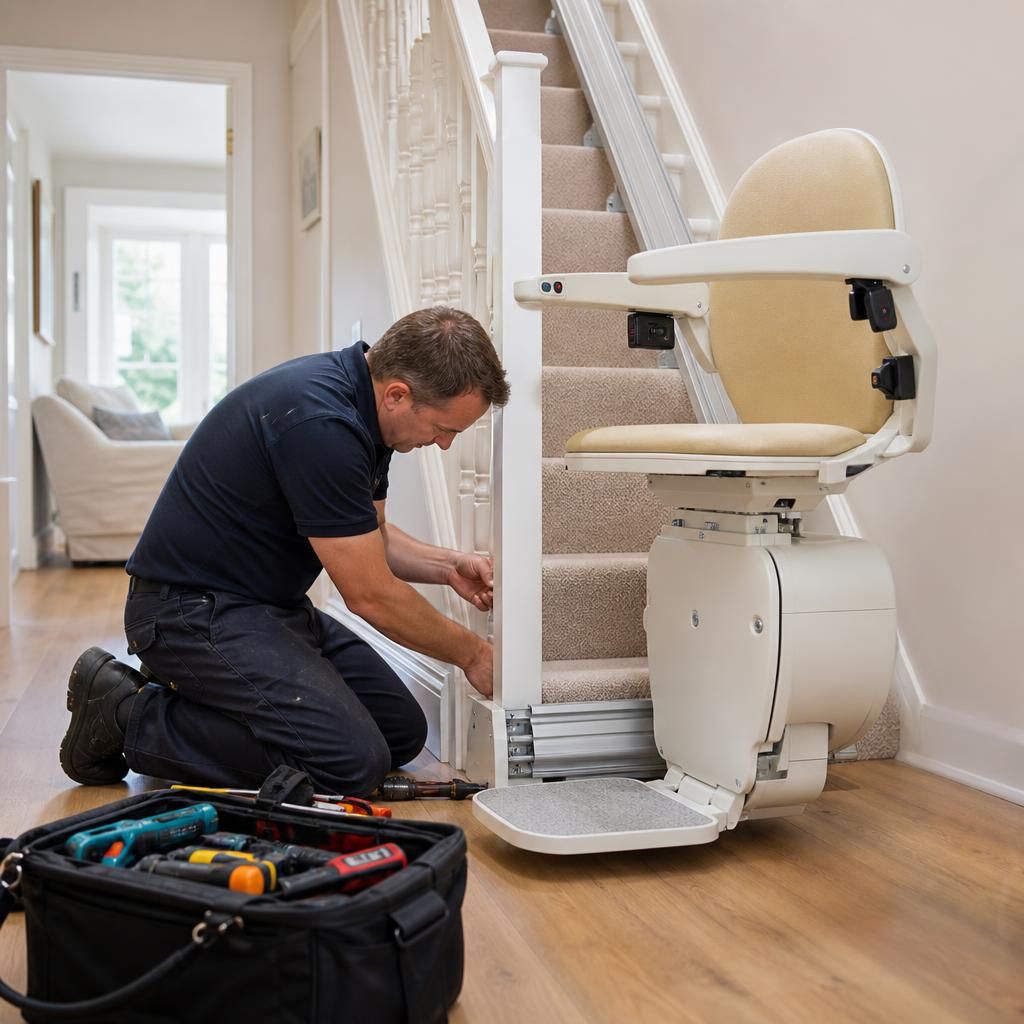
A straight stairlift installation is usually completed within a few hours during a single visit, provided the staircase is accessible and the required electrical supply is available. The engineer will fit the rail and lift, connect and check the system, and demonstrate its safe operation before leaving. The exact duration is confirmed after assessing your staircase and the particular stairlift being installed.
Most of the work involves fixing the stairlift rail securely to the stair treads rather than attaching it to the wall. The engineer will first protect the working area where necessary, check the staircase and installation measurements, and position the rail to provide safe access at the top and bottom. The carriage, seat, controls, charging points and safety features are then fitted and tested.
The main factors that can affect the installation time include:
- Staircase layout and access: A standard, unobstructed straight staircase is generally the quickest to work on. Narrow landings, restricted access, difficult parking or limited room to move equipment into the property may make preparation and installation take longer.
- The condition of the stairs: Loose, damaged or uneven treads may need attention before the rail can be fixed securely. The installer will discuss any work that is required rather than proceeding with an unsuitable installation.
- Power supply: Many stairlifts use a rechargeable battery system, but a suitable mains connection is still needed for the charging point. If the existing socket is poorly positioned or an electrical connection needs to be installed or altered, this may add time. Electrical work must be completed safely and, where appropriate, by a suitably qualified person.
- Removal of an existing stairlift: If an old stairlift is being replaced, it may need to be dismantled and removed before the new one can be installed. The condition of the old fixings and the way it was fitted can affect how long this takes.
- Equipment and configuration: A stairlift with a powered swivel seat, powered footrest, hinged rail or other optional feature may require additional fitting and testing. Bespoke adjustments may also be needed to achieve safe clearance around doors, landings or nearby furniture.
- Property-specific requirements: The installation may take longer if the staircase has unusual dimensions, if building access is complicated, or if additional safety work is identified during the visit.
Before installation, keeping the stairs and nearby landings clear gives the engineer safe working space and helps avoid unnecessary delays. Remove loose items, ornaments and furniture from the staircase and its immediate approaches. If an existing stairlift is still in use, agree in advance when it will be taken out and whether temporary alternative access is needed.
Once the stairlift has been fitted, the engineer should carry out operational and safety checks. These normally include checking the rail fixings, movement, stopping points, seat position, swivel or folding mechanisms, footrest, controls, sensors, battery charging and safety belt. The stairlift should be demonstrated to the user, including how to start and stop it, use the controls, charge the batteries and respond if it stops unexpectedly.
A longer installation does not necessarily indicate a problem. Taking time to check clearances, make careful adjustments and test every safety function is an important part of a reliable fitting. If the engineer finds that electrical work, repairs to the stairs or another alteration is necessary, this should be explained before any additional work is undertaken.
For the most accurate estimate, the installation team will assess the staircase, landing areas, power supply and access arrangements beforehand. If your circumstances change before the appointment, such as furniture being moved, building work taking place or an existing lift developing a fault, let Independent Stairlifts know in advance so the visit can be planned correctly.
The time needed to install a straight stairlift depends mainly on how ready the staircase, landing and power supply are before the engineer arrives. A clear, accessible staircase allows the rail, carriage, seat and controls to be fitted and tested efficiently, while restricted access or an existing stairlift to remove can extend the visit.
Before installation, clear ornaments, furniture and other loose items from the stairs and nearby landings. Tell Independent Stairlifts in advance about any narrow access points, damaged treads, planned building work or electrical changes. This helps the engineer bring the correct equipment, identify any additional requirements and give you a more accurate estimate of the installation time.
Arrange Your Straight Stairlift Installation Assessment
Arrange your straight stairlift installation assessment with Independent Stairlifts to confirm the likely fitting time and identify any access, electrical or staircase requirements in advance.