
What preparations are necessary before installing a straight stairlift in my home?
Before a straight stairlift is installed, keep the staircase, landings and access routes clear, remove or secure items that could obstruct the fitting team, and ensure the electrical supply is accessible. During the assessment, discuss any concerns about doors, furniture, pets or other household arrangements so the stairlift can be fitted safely with minimal disruption.
Preparing for a straight stairlift installation mainly involves making the staircase, landings and access route clear, confirming the stairlift will suit the user and checking that the fitting team can reach the required electrical supply. Most straight stairlifts are secured to the stair treads rather than the wall, so installation does not normally require major structural alterations. A home assessment will identify any site-specific issues before the installation date.
Before the assessment
- Keep the stairs and both landings as clear as possible. Remove shoes, baskets, ornaments, toys and other items that could restrict measuring, carrying equipment or using the stairlift.
- Move or secure furniture near the bottom and top of the stairs if it could obstruct the rail, seat, footrest or the user getting on and off.
- Check that doors, cupboards, radiators and handrails do not interfere with the proposed stairlift position. Do not remove anything yourself; discuss potential conflicts during the survey.
- Make sure the assessor can inspect the full staircase, including the top landing, bottom approach and any narrow areas beside the stairs.
- Tell us about carpets, flooring, recent alterations or planned building work. These details can affect the preferred fitting position and timing.
The assessment should also consider how the stairlift will be used, rather than just whether it fits the staircase. The user’s height, mobility, balance, ability to transfer on and off the seat, and preferred side of approach can affect the choice of seat, controls, armrests, footrest and optional safety features. If someone else will regularly operate the stairlift or help the user, they should be involved in the discussion where possible.
Discuss access and household arrangements
Tell the surveyor about anything that may affect safe installation or everyday use. This can include inward-opening doors, a narrow hallway, a wheelchair or walking frame, children, pets, or other people who need to use the stairs. A stairlift must not create an unsafe obstruction at the top or bottom of the staircase, and the user needs enough space to approach, sit down and dismount safely.
If the staircase is shared, rented or part of a managed property, check whether permission is required before work begins. The fitting team can explain what information may be needed, but responsibility for obtaining landlord, freeholder or management approval may depend on the property arrangement. It is also useful to mention any planned decoration, flooring replacement or other work so installation can be coordinated appropriately.
Check the electrical supply
A stairlift needs a suitable electrical supply to charge its batteries. The exact arrangement depends on the model and the property, but the connection is usually made near the top or bottom of the staircase, where it can be reached safely without creating a trip hazard. At the survey, identify nearby sockets and explain any concerns about the existing electrical installation. Do not rely on extension leads or trailing cables as a permanent solution.
Where the existing supply is unsuitable or inaccessible, the installation team will advise whether an electrical alteration is needed. Any electrical work should be completed safely by a suitably qualified person. Keep the relevant socket and consumer unit accessible on the installation day, and tell the installer about any known electrical faults or restrictions.
On the installation day
- Clear the staircase, landings and the route from the entrance to the work area.
- Remove fragile items from nearby surfaces and protect or move furniture if requested by the fitting team.
- Keep children and pets away from the work area while tools and components are being handled.
- Ensure an adult is available to answer questions, provide access and receive the operating instructions.
- Have any relevant keys, access arrangements or property permissions ready.
- Tell the installer about changes since the assessment, including new furniture, flooring or alterations to doors and handrails.
The installation team will normally protect the working area, position the rail securely, fit the stairlift and test its operation. They should also check clearances, charging, controls, safety sensors, seat belt and any swivel or folding functions fitted to the model. Once the installation is complete, the user should receive an explanation of safe operation, charging and what to do if the stairlift stops or shows a fault.
You do not usually need to empty the entire hallway or make decorative changes before a straight stairlift is fitted. The important preparation is to provide clear, safe access and to raise potential problems during the assessment. If you are unsure whether a door, handrail, socket, carpet or item of furniture will affect the installation, leave it in place and discuss it with the surveyor rather than making an alteration without advice.
Before a straight stairlift is installed, clear the staircase, both landings and the route to the work area. Remove loose items such as shoes, baskets and ornaments, and move furniture that could restrict access or interfere with the rail, seat or footrest.
Do not remove handrails, doors or other fittings yourself. Mention any possible obstruction during the home assessment so the fitting team can confirm the safest position. Keep children and pets away from the work area on installation day, and ensure the installer can reach the agreed electrical supply without trailing cables creating a trip hazard.
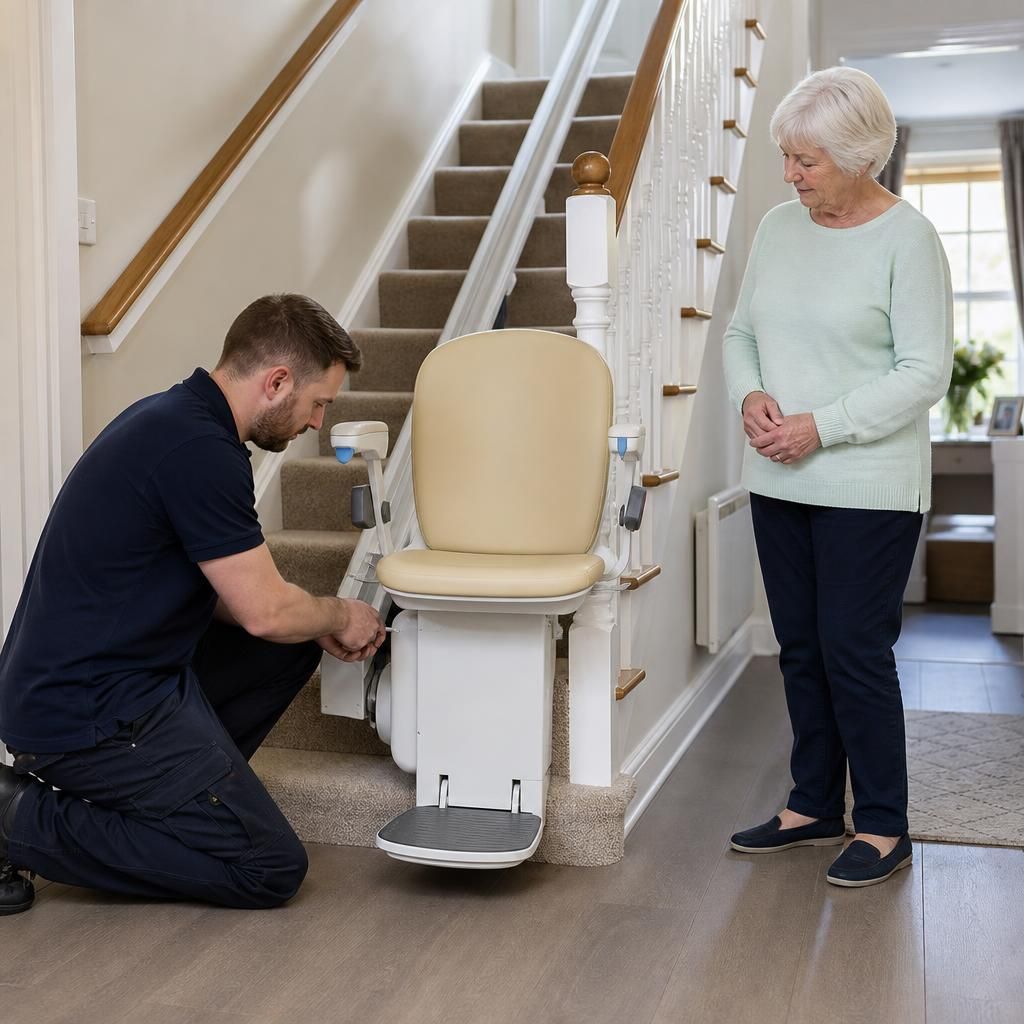
Arrange Your Straight Stairlift Assessment
Arrange your straight stairlift assessment with Independent Stairlifts so we can check your staircase, access arrangements and electrical supply. We will discuss the user’s needs and identify any preparation required before installation.