Uses less staircase space
A low profile stairlift keeps its seat and carriage close to the steps, helping preserve usable width on a narrow staircase.

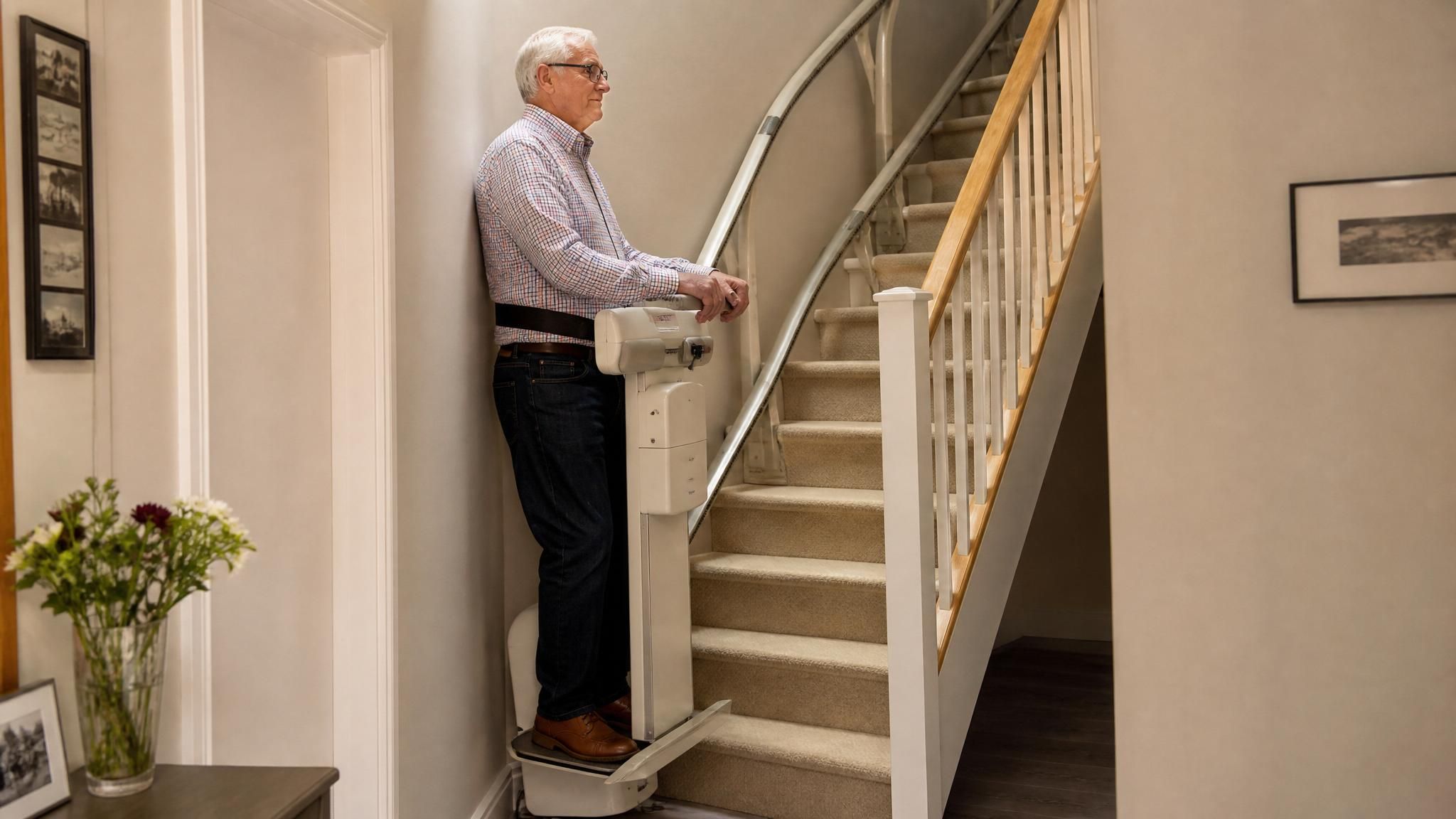
Standing and low profile stairlifts provide safer access on narrow staircases. A low profile stair lift keeps the seat and carriage close to the steps, while a stair lift stand up design supports users who prefer standing.
A standing or low profile stairlift is assessed against your staircase, landing space and mobility needs before installation. We explain the proposed layout, safety features, warranty terms and any limitations clearly, so you can make an informed decision before proceeding.
After installation, you receive guidance on safe use and information about ongoing support. Open the sections below to review our guarantees, what to do if an issue arises and how to arrange servicing or assistance when required.
Suitability depends on the staircase width, shape, landing space and the way you can safely transfer on and off the lift. A pre-installation assessment checks these points before any recommendation is made.
The assessment considers obstructions, available clearance, parking positions and whether a standing or low profile design provides a safe operating position. We explain the proposed rail route, seating or standing arrangement, controls and any practical limitations before installation. If the layout is unsuitable, this will be discussed rather than overlooked.
Standing and low profile stairlifts are designed to keep the user stable while travelling, but safe operation also depends on using the correct posture and controls. The relevant safety features are explained during the assessment and demonstration.
Depending on the model, safety features may include a secure seat or support arrangement, a seat belt, obstruction sensors, swivel or folding components and controls that stop the lift when necessary. You will be shown how to mount, position yourself, operate the controls and park the lift safely. Any user who cannot stand securely, keep their balance or follow the operating instructions should discuss alternative options with the assessor.
Guarantee and warranty cover depends on the stairlift model, its condition and the terms agreed at purchase. The applicable cover is provided in writing so you can check what is included before proceeding.
Your documentation should set out the period of cover, the equipment and parts included, and any exclusions or conditions that apply. Cover can differ between new and reconditioned stairlifts, so do not rely on a general statement about warranties. We can explain the relevant terms for your proposed stairlift and identify any servicing or usage requirements that affect the cover.
If a standing or low profile stairlift stops, behaves unusually or shows a warning, stop using it if continuing could be unsafe. Contact the support team using the details provided with the installation rather than attempting to repair the equipment yourself.
When reporting an issue, describe what happened, where the lift stopped and any display message or unusual sound. If it is safe to do so, leave the stairlift in place and keep the staircase clear while assistance is arranged. Never remove covers or alter electrical or mechanical components, as this can create a safety risk and may affect warranty cover.
Aftercare helps keep the stairlift safe and reliable once it is installed. The appropriate servicing and support arrangements depend on the model, its usage and the terms supplied with it.
You receive operating guidance and information on who to contact for support after installation. If your mobility or household circumstances change, ask for advice before continuing to use the stairlift in a different way; adjustments, repairs or further assessment may be needed. Keep the user instructions, warranty documents and support contact details accessible so assistance can be arranged without delay.
Standing and low profile stairlifts suit narrow staircases. A low profile stair lift stays close to the steps, while a stair lift stand up model supports travel in a raised position.
An assessment considers balance, knee movement, stair width and landing clearance, then confirms entry, exit and controls before installation. The boxes below explain the benefits of each design.
A low profile stairlift keeps its seat and carriage close to the steps, helping preserve usable width on a narrow staircase.
A standing or perch-style stairlift allows the user to travel with the hips raised, where this is suitable for their balance and mobility.
The streamlined layout can make it easier to use a narrow hallway, landing or staircase without adding unnecessary bulk.
Safety features such as a seat belt, obstruction sensors and controlled movement help support secure travel when used as instructed.
A suitable standing design may make getting on and off easier for people who find repeated sitting and standing difficult.
The lift configuration, controls and parking position are selected around the staircase layout and the user's preferred method of access.
Independent Stairlifts provides standing and low profile stairlift assessments for narrow, awkward or space-limited staircases. We compare suitable configurations, explain access and safety implications, and arrange bespoke installation, with options available for different mobility needs and home layouts.
Solutions for Very Narrow Staircases
Independent Stairlifts can compare compact stairlift configurations where a standard seated model would restrict walking space or obstruct a hallway. The recommended option is matched to the stair width, bends, landings and available clearance.
Standing and Perching Options
A standing or perching stairlift may suit someone who finds sitting down, standing up or bending the knees difficult. We consider posture, balance, transfer ability and the need for support before confirming whether this type of lift is appropriate.
Low Profile Carriage Design
Low profile stairlifts are designed to keep the carriage and seat closer to the staircase, helping preserve usable space on narrow steps. The final arrangement depends on the stairlift model and the geometry of the staircase.
Bespoke Rail Installation
Rails can be planned around straight sections, curves, tight turns and restricted landing areas rather than relying on a standard layout. This helps provide a practical route between floors while taking account of doors, radiators and other fixed features.
Clear Comparison of Suitable Models
We explain the practical differences between standing, perching and seated stairlifts, including transfer requirements, folded dimensions and how each option affects access. This makes it easier to select a system that fits both the staircase and the user.
UK-Wide Installation and Support
Independent Stairlifts serves customers across the UK, coordinating the assessment, supply and installation of suitable stairlift equipment. After fitting, customers can contact the team for servicing advice, operational support and help with future requirements.
A low profile stair lift is designed to keep its seat, carriage and rail close to the staircase, helping preserve usable space on narrow stairs and landings. A stair lift stand up model uses a supported perch or semi-standing position, which can suit people who find bending their knees or sitting fully difficult.
Suitability depends on more than the stair width. The staircase shape, available clearance, landing space, user’s height and mobility, and whether other household members need to pass safely must all be assessed. A standing model is not suitable for everyone, particularly where balance, leg strength or fatigue makes maintaining a supported standing position difficult.
An on-site assessment can confirm whether a standing or low profile stairlift is appropriate and identify any required rail or parking adjustments. Ask for the recommended configuration, folded dimensions, transfer arrangements and safety features to be explained before you decide, then arrange an assessment for your home.
A low profile stairlift keeps its rail, carriage and seat close to the staircase, reducing space when parked or folded. This can preserve walking room on narrow stairs and landings. A standing or perch stairlift uses a supported upright position instead of sitting, which may help people who struggle to bend their knees.
Suitability depends on stair shape, landing clearance, balance, leg strength and how safely you can stand during the journey. An assessment checks folded dimensions, parking position, transfer points and clear passage for others.
Ask for a clear recommendation based on your staircase and mobility needs. Before installation, confirm the safety features, controls, maintenance support and any limitations. Arrange an assessment to identify a practical low profile or standing stairlift solution.
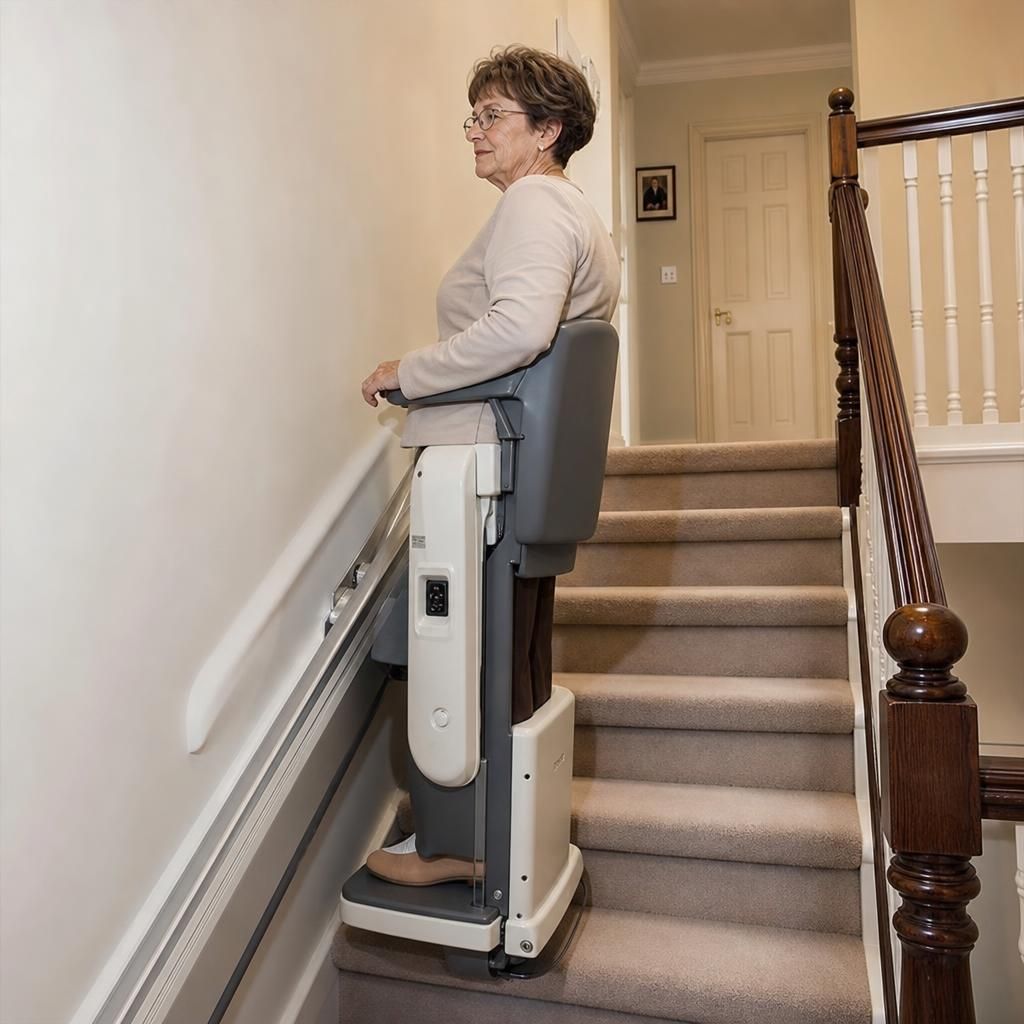
Standing and low profile stairlifts provide solutions for narrow staircases or areas with reduced headroom, offering mobility support without space sacrifice. They ensure safety and comfort in compact home settings.
Standing and low profile stairlifts adapt to complex stair configurations by utilising custom rails and pivot mechanisms, ensuring smooth operation and a precise fit around unique architectural challenges like spirals or irregularities.
Equipped with seatbelts, sensors, and smooth start-stop functions, these stairlifts ensure user stability. They detect obstacles to prevent accidents, offering reliable safety in everyday navigation of your home’s staircases.
Standing and low profile stairlifts offer substantial weight capacities and user-friendly controls, accommodating diverse needs while ensuring smooth operation for all users, including those with mobility restrictions or varying physical requirements.
Installation involves a detailed assessment of your staircase, followed by fitting customised rails and mechanisms. Typically completed within a few hours, it ensures a perfect, non-invasive integration into your home.
Before you proceed, we explain the recommended configuration, installation requirements, safety features and warranty coverage. Our aftercare guidance helps you use the stairlift correctly, while servicing and support are available if assistance is needed. Arrange your home assessment today.
Contact UsStanding stairlifts offer a practical solution for those with limited mobility or knee issues, allowing users to stand or lean while ascending or descending stairs, maximising space efficiency in narrow areas.
Our expert team conducts a thorough, personalised assessment to ensure a perfect fit for your specific staircase dimensions, addressing any constraints to provide a tailor-made mobility solution.
Prices for standing and low profile stairlifts vary based on features and specifications. We offer flexible financing options to help manage costs and ensure accessibility within your budget.
Yes, standing and low profile stairlifts are engineered to provide comparable safety and comfort to traditional models, offering stability, ergonomic support, and reliable features tailored to users' specific mobility needs.
Installation typically takes only a few hours, ensuring minimal disruption to your home. Our professional team guarantees a seamless setup process, allowing swift enjoyment of your new mobility solution.
Book a home assessment for a standing or low profile stairlift. We’ll check your staircase, landing clearance and mobility needs, explain suitable options and provide clear advice on installation, safety, warranty and ongoing support before you decide.
Contact Us