
What are the key safety features of standing and low profile stairlifts?
Standing and low profile stairlifts commonly include a secure seat or perch, safety belt, supportive armrests, obstruction sensors, automatic braking and battery backup for controlled travel during a power cut. Footrest and seat sensors, swivel or parking mechanisms and diagnostic alerts provide additional protection, while the exact features should be matched to the user’s mobility needs and staircase.
Standing and low profile stairlifts use several layers of protection to keep the user secure during boarding, travel and dismounting. These commonly include a restraint belt, supportive armrests or handholds, a stable seat or perch, obstruction sensors, controlled braking, safety switches and battery backup. The precise arrangement varies between models, so the features should be assessed against the user’s balance, strength, stair layout and preferred method of travel.
Secure positioning and restraint
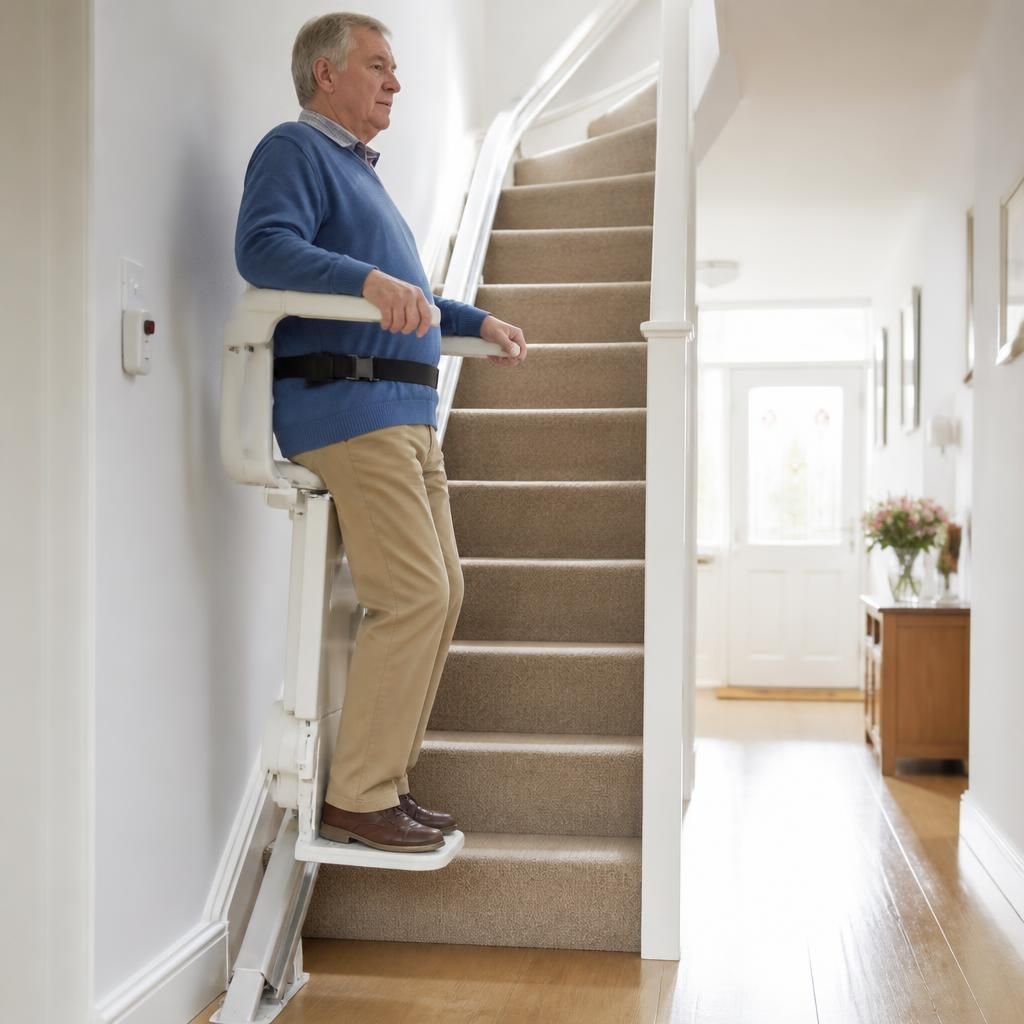
A standing stairlift usually provides a perch seat or supported standing position rather than a conventional full-depth seat. The user remains partially upright, with the perch, back support or knee support helping to maintain a consistent position while the lift moves. A safety belt is normally provided to prevent the user from shifting forwards or sideways. Depending on the design, the belt may include an interlock that prevents travel until it is fastened correctly.
Low profile stairlifts generally use a compact seated arrangement. A seat, backrest and armrests help maintain a stable posture, while a belt provides additional restraint. Some seats swivel at the top or bottom of the staircase so the user can turn towards the landing before standing up. This reduces the need to twist while close to the stair edge. The swivel mechanism should lock securely for travel and only release when the lift is in the appropriate position.
Controls designed to reduce errors
Controls are usually positioned on the armrest, handhold or control unit so the user can start and stop the lift without reaching awkwardly. Many models use a constant-pressure control, meaning the user must keep the control engaged for the stairlift to move. Releasing it stops the lift. This gives the user direct control and prevents continued movement if they become uncomfortable or need assistance.
Call and send controls at the landings allow the stairlift to be brought to the required level. Remote controls should be used carefully, particularly where another person is helping the user. A clear operating routine is important: the user should sit or position themselves fully, secure the belt, place their feet correctly and check that the route is clear before travelling.
Protection from obstacles
Obstruction sensors are fitted around areas such as the footrest, carriage or lower part of the stairlift. If the lift detects an object on the stairs, it should stop or prevent travel. This helps protect feet, pets, toys and other items, although sensors are not a substitute for keeping the staircase clear. Fold-away parts should also be secured when the stairlift is parked so that they do not create an avoidable obstruction.
On narrow or unusually shaped staircases, the installation position is especially important. A professional assessment checks clearances at bends, landings, doorways and the top and bottom of the stairs. This helps ensure that the user, the stairlift and other people in the home can pass safely when the lift is parked or in use.
Controlled movement and stopping
Stairlifts are designed to start and stop progressively rather than moving abruptly. A braking system holds the carriage securely when the controls are released and when the lift reaches its intended stopping point. Safety switches and travel limits help prevent the carriage from moving beyond its permitted route.
Some installations include additional parking positions or hinged rail sections where a doorway, hallway or landing could otherwise be affected. These components must be operated as intended and should never be forced. If a rail is folded or moved, the stairlift may include an interlock that prevents travel until the rail is correctly positioned.
Battery backup and fault protection
Most modern stairlifts are battery powered while travelling and recharge at designated points on the rail. This means they can usually complete a journey during a mains power cut, although the available travel depends on the battery’s condition and charge. Visual or audible alerts may indicate low battery power, a charging problem or another issue.
Diagnostic indicators help identify faults such as a poorly closed seat, an engaged safety edge or a charging interruption. If the stairlift stops unexpectedly, the user should remain calm, follow the supplied instructions and contact the service team rather than attempting to bypass a safety feature or move the carriage manually. Batteries and other safety-critical components should be checked and replaced in line with the manufacturer’s guidance.
Features particularly relevant to standing users
- A supportive perch or standing platform that suits the user’s height and balance.
- A correctly positioned belt, back support or knee support where provided.
- Handholds or armrests that allow the user to maintain a secure position without gripping the stair rail.
- A controlled speed and smooth stopping system to reduce instability during travel.
- A safe and practical position for boarding and leaving the lift at each landing.
Standing travel is not suitable for everyone. A person who has difficulty bearing weight, controlling their knees, maintaining balance or transferring at the landing may be safer with a seated model or a different mobility solution. The assessment should consider whether the user can remain in the required position for the whole journey, including while the stairlift starts and stops.
What to check before regular use
- The belt fastens correctly and is comfortable without restricting necessary movement.
- The seat, perch, armrests and footrest are fully deployed and locked before travel.
- The user’s feet, clothing and walking aids are clear of the stair edge and moving parts.
- The stairs, landing and parking area are free from objects, pets and other people.
- The stairlift is charging correctly when parked and shows no warning indication.
- The user knows how to stop the lift and who to contact if it develops a fault.
Standing and low profile designs are not inherently less safe than traditional stairlifts when the model, configuration and installation are appropriate for the user. Safety depends on correct fitting, suitable positioning, regular servicing and using the lift as instructed. If the user’s mobility or confidence changes, the stairlift should be reassessed rather than modified or used in a way its safety features were not designed to support.
Standing and low profile stairlifts are designed to reduce risk by keeping the user in a supported, controlled position throughout the journey. A standing model typically uses a perch, back or knee support and a safety belt, while a low profile model combines a compact seat, armrests, footrest and restraint belt.
Safety also depends on how the lift is used. The user should be fully positioned before travelling, keep their feet and clothing clear of moving parts, and use the control to stop immediately if they feel unstable. At the landing, a swivel seat or carefully positioned perch can make it easier to turn and leave the stairlift without twisting towards the stairs. An assessment should confirm that the chosen design suits the user’s balance, strength and ability to transfer safely.
Arrange a Stairlift Safety Assessment
Arrange a stairlift safety assessment with Independent Stairlifts to check that your standing or low profile stairlift is correctly suited to the user, staircase and transfer points.