
How long does the installation process take for a standing or low profile stairlift?
Once the assessment is complete and the stairlift is ready, installation of a standing or low profile stairlift usually takes a few hours and can often be completed in one day. More complex staircases, bespoke requirements or custom-built equipment may extend the timescale.
A standing or low profile stairlift is usually fitted in a few hours and can often be installed and tested within one day once the assessment is complete and the equipment is ready. The overall timescale can be longer where the stairlift requires a bespoke rail, the staircase has unusual features, or additional electrical or building work is needed.
The installation time is separate from the time needed to assess your staircase and prepare the stairlift. A typical process involves the following stages:
- Assessment: A surveyor checks the staircase, available standing and transfer space, landing areas, entrances and exits, and the most suitable parking positions. They also discuss how you intend to use the lift and any difficulties with balance, bending or transferring.
- Specification and preparation: The measurements and user requirements are used to confirm the appropriate model, rail arrangement and controls. A straight stairlift may be prepared relatively quickly, while a curved or specially configured lift may need a rail made to match the staircase.
- Installation: The engineer installs the rail, drive unit, seat or standing platform, controls and charging points. Most stairlifts are fixed to the staircase rather than the wall, so extensive structural work is not normally required.
- Testing and handover: The completed stairlift is tested on the full route. The engineer checks the movement, stopping points, safety sensors, seat or platform operation, controls and charging system before explaining how to use it safely.
For a straightforward staircase, the engineer can generally complete the fitting during a single visit. The exact duration depends on the layout and the equipment being installed rather than simply whether the stairlift is standing or low profile. A compact design may be quicker to position in a confined area, but careful adjustment is still required to provide safe access at the top and bottom of the stairs.
Installation may take longer when the staircase includes a curve, a tight turn, an irregular landing, restricted headroom or limited space beside a doorway. Spiral staircases and stairs with unusual geometry require particularly careful assessment because the rail and parking positions must allow the user to get on and off safely without obstructing other routes through the home. A bespoke rail can also add preparation time before the fitting appointment.
The engineer may need to consider more than the staircase itself. The location of the charging point, the position of the controls, access to the power supply and the route into the home can all affect the work. If a minor electrical adjustment or another preparatory change is necessary, this should be explained during the assessment rather than being unexpected on installation day.
On the day of fitting, it is helpful to keep the staircase, landings and working areas clear. The installation team may need access to both ends of the stairs and to nearby sockets or storage areas. Removing loose items and arranging for someone to be available for the handover can make the visit more efficient. Existing stairlifts may require additional time if they need to be removed before the replacement is installed.
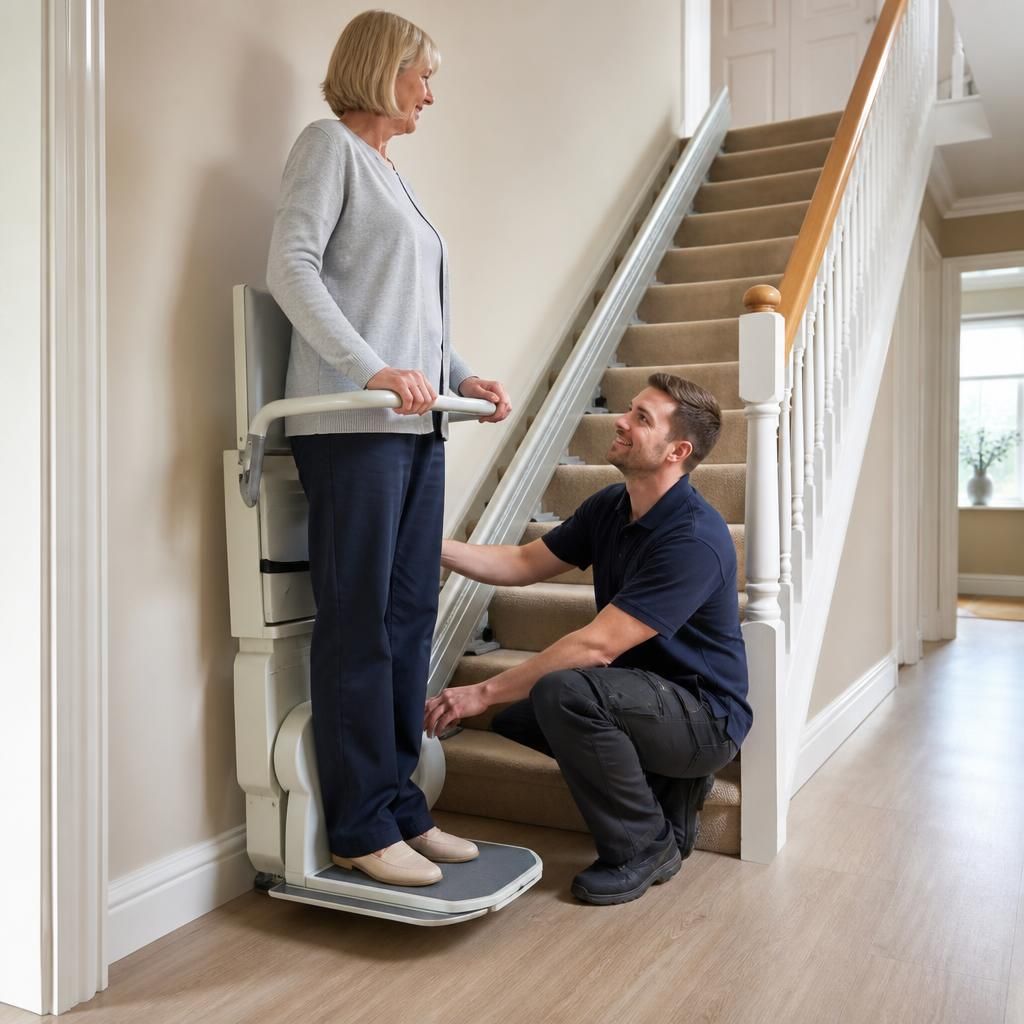
After fitting, allow time for a proper demonstration rather than treating the installation as complete as soon as the lift moves. You should be shown how to operate the controls, use the seat belt or other restraint where fitted, position the stairlift for charging, respond to an obstruction and stop the lift in an emergency. Standing models also need a clear explanation of the recommended standing position and how to hold the supports while travelling.
If your circumstances change before installation, tell the team promptly. A change in the intended user, transfer method, mobility level or preferred boarding position may affect the specification. Likewise, mention any concerns about doorways, furniture, pets, carers or other people using the stairs so these can be considered before the fitting is finalised.
In summary, the fitting itself is commonly completed within a few hours, often during one day, but the full timescale runs from the initial assessment through equipment preparation, installation and handover. The assessment will provide the most reliable estimate for your home and will identify whether a standard installation or a more bespoke arrangement is required.
The installation of a standing or low profile stairlift usually takes a few hours once the equipment has been prepared, but the visit also includes full testing and a user handover. The engineer checks the rail, drive system, controls, safety sensors, charging point and stopping positions before the stairlift is put into regular use.
Allow time for a practical demonstration after fitting. You should be shown how to board and leave the lift safely, use the controls, respond to an obstruction and position it for charging. With a standing model, the engineer will also explain the recommended standing position and how to use the support handles. Keeping the stairs and landings clear helps the installation proceed efficiently.
Arrange your stairlift assessment
Arrange a stairlift assessment to confirm the suitable standing or low profile model, installation requirements and expected timescale for your staircase.