Designed around your staircase
A professional assessment identifies the safest rail position, seat arrangement and controls for your staircase and mobility needs.

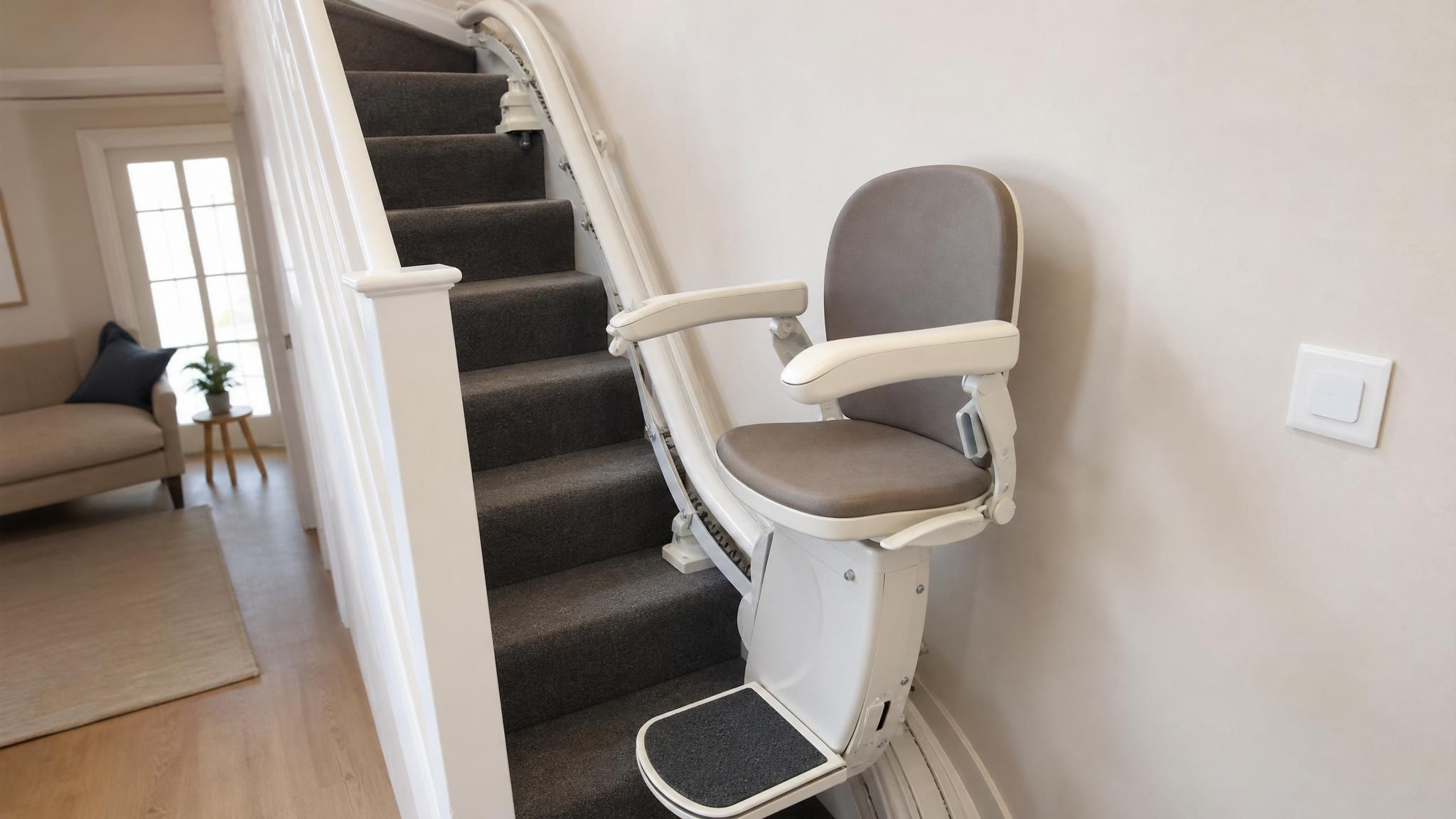
Stair lifts for narrow steep stairs use compact seats, carefully positioned rails and controlled movement to provide safe access where standard installations may not fit. Curved stairlifts can be custom-made to follow bends, landings and changing gradients in your home.
Safety for a stairlift on narrow, steep or curved stairs depends on the correct assessment, rail position, seat configuration and installation. An assessor will check the staircase, landings, access points and the user’s mobility needs before recommending a suitable solution, including whether a bespoke curved rail or compact design is appropriate.
After installation, you should have clear information about the warranty, controls, charging and ongoing support available. Independent Stairlifts can explain the cover provided, arrange servicing or repairs when needed, and help you take the next step with a free home assessment.
Safety on a narrow or steep staircase depends on selecting equipment that suits the available width, gradient and landing space. The installation must also leave enough room for the user to sit, stand and transfer safely.
A suitable stairlift may use a slimline seat, folding arms, a compact footrest or a rail positioned close to the steps. On steep stairs, the seat and carriage must maintain a stable travelling position, while curved installations require accurate measurements around bends and landings. The assessor should explain any access limitations before you decide to proceed.
The guarantee provides cover for specified parts and labour for the period stated in your quotation or warranty documents. Its terms can differ between new, reconditioned, straight and bespoke curved stairlift systems.
Ask which components are included, how long the cover lasts, and whether call-outs, labour or replacement parts are subject to exclusions. Keep the warranty information and installation records in a safe place, as these details help the support team deal with a fault efficiently. Any limits or conditions should be explained before you accept the quotation.
If the stairlift stops working or begins operating unusually, stop using it if it is unsafe and contact the support team for advice. A fault can often be assessed by telephone before an engineer visit is arranged.
Have the stairlift model, the location of the fault and any warning shown on the controls ready when you call. Do not attempt to remove covers or repair the mechanism yourself. The engineer can identify whether the issue involves the power supply, charging point, controls, rail or carriage, then explain the repair and any applicable charge before work is carried out.
A stairlift should be configured for the person using it, not selected on staircase dimensions alone. Seat height, swivel operation, armrest position, footrest controls and safety belt access can affect everyday use.
During the assessment, discuss how the user approaches the stairs, transfers into the seat and operates switches or remotes. If strength, balance, joint movement or memory is a concern, ask for the simplest practical control arrangement. The installer should demonstrate the completed stairlift and make sure the user and their carer understand the basic operating procedure.
After installation, support should cover operation, routine checks and contact arrangements if the stairlift needs attention. This is particularly important where a bespoke rail or restricted staircase makes replacement or alteration more involved.
You should receive instructions for using and charging the stairlift, along with guidance on keeping the track and surrounding steps clear. If your circumstances change, contact Independent Stairlifts before adapting the staircase or moving the equipment. The team can advise whether servicing, adjustment, relocation or a different configuration is appropriate.
Narrow, steep and curved stairlifts are designed for restricted stairways, sharper gradients and changes of direction. Compact seats, folding parts and correctly positioned rails help preserve space, while a made-to-measure curved rail follows bends, landings and intermediate levels.
A home assessment confirms the safest layout and identifies features suited to your staircase and daily needs.
A professional assessment identifies the safest rail position, seat arrangement and controls for your staircase and mobility needs.
Compact seats, slim rails and folding components can help maintain usable space on restricted stairways.
Curved stairlifts use a made-to-measure rail to follow changes in direction, intermediate landings and varying gradients.
The correct stairlift configuration can provide controlled travel on steeper stairs, subject to a full survey of the staircase.
Installation planning considers doorways, hallways, landings and access points so the stairlift fits into everyday movement around your home.
You can receive guidance on operation, charging and warranty cover, with servicing and repairs available when required.
Independent Stairlifts combines home assessments, bespoke curved-rail design and compact stairlift options for narrow or steep staircases. Its advice considers staircase shape, landing space, user mobility and transfer needs before recommending installation, support and ongoing servicing.
Bespoke curved stairlift design
A curved stairlift can be designed around bends, intermediate landings and changes in direction, rather than relying on a standard straight rail. This allows access on staircases where a straight lift would not provide a practical route.
Solutions for restricted staircase width
For narrow stairs, the assessment can consider compact seating, folded dimensions and rail positioning. The aim is to provide a usable stairlift while preserving as much stairway and landing space as the layout allows.
Suitable options for steep gradients
Steep staircases require careful checking of the rail angle, seat position, footrest clearance and the user’s ability to get on and off safely. Independent Stairlifts can identify suitable configurations instead of assuming a standard stairlift will fit.
Assessment based on the whole staircase
The recommendation takes account of bends, doorways, radiators, bannisters, landings and available transfer space. Reviewing these details at home helps prevent unsuitable equipment being proposed for a challenging staircase.
Consideration of changing mobility needs
Seat shape, swivel operation, controls and transfer arrangements can be discussed alongside the staircase design. This helps match the lift to the user’s balance, strength, height and ability to reach the controls.
Installation and support from one provider
Independent Stairlifts can guide you from the initial home assessment through to installation and aftercare. The team can explain operation, charging, warranty cover and servicing arrangements before you decide to proceed.
A stair lift for narrow steep stairs can often be fitted, but the right solution depends on the staircase width, gradient, landings and available space at the top and bottom. A compact seat, folding arms and footrest, or a rail positioned close to the steps may help preserve access for other household members.
Curved stairlifts are made to follow bends, intermediate landings and changes in direction, while steep staircases may require a model designed for a sharper gradient and controlled movement. The installer should also assess safe transfers, seating position, headroom, doorways and whether the user can operate the controls comfortably.
A home assessment is the practical next step because measurements and photographs alone may not show every installation issue. Independent Stairlifts can review your staircase, explain whether a straight, curved or reconditioned option is suitable, and provide advice on installation, safety, warranty and ongoing support before you decide.
A stairlift for narrow steep stairs is a compact mobility system designed for restricted staircases with a pronounced gradient. It uses a close-fitting rail, folding components and controlled travel to maintain movement without unnecessarily reducing access.
A curved stairlift follows bends, landings and changes in direction on a made-to-measure rail, unlike a straight model, which travels along one flight. The assessment should consider headroom, transfer space, doorways and whether the user can operate controls comfortably.
Independent Stairlifts can assess your staircase and recommend a straight, curved or reconditioned option. A home visit confirms measurements, seating position, parking and charging arrangements before installation. Arrange a free assessment to discuss a stairlift for narrow steep stairs suited to your home.
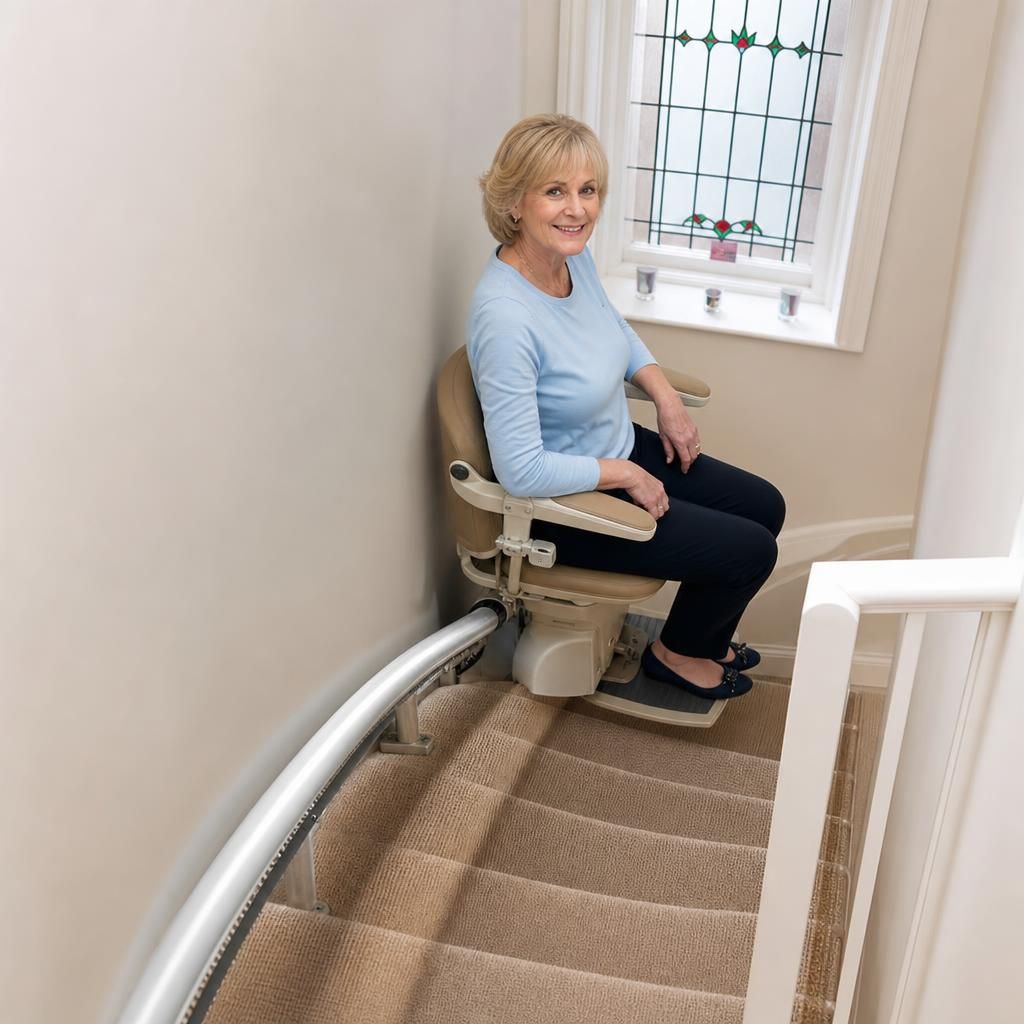
Our stairlifts for narrow, steep, and curved stairs are designed to handle challenging layouts with precision engineering, ensuring safe, reliable mobility tailored to your home's unique staircase configuration.
Safety features include seat belts, pressure-sensitive edges for obstacle detection, battery backup for power outages, and smooth start-stop technology to ensure comfort and security during navigation of narrow, steep, and curved stairs.
Installation requires a detailed site assessment to evaluate staircase dimensions and architectural nuances. Expert engineers customise fitting procedures to ensure optimal safety, unobtrusive presence, and reliable functionality across all stair configurations.
Stairlifts are customised using precise measurements and advanced technology to navigate narrow, steep, and curved stairways smoothly, ensuring they integrate seamlessly with your home's architectural features and aesthetic.
Regular maintenance includes cleaning the stairlift rails and seat, checking moving parts for wear, and ensuring the safety features are operational. Annual servicing by a qualified technician is recommended for optimal safety.
Every installation is assessed for safe operation on your staircase, with warranty information and aftercare explained clearly. Arrange a free home assessment to confirm whether a suitable narrow, steep or curved stairlift can be installed in your property.
Contact UsYes, stairlifts can be fitted to narrow, steep, or curved stairs using custom rail systems to precisely follow the stairs' contours, ensuring safe and smooth operation.
Bespoke stairlifts are engineered to follow specific staircase designs, offering tailored rails and seats that adapt seamlessly to curves, narrow spaces, and steep angles, ensuring optimal functionality and safety.
There might be constraints, but with our adaptive designs, most narrow and complex staircases can be accommodated, ensuring a safe and effective solution tailored to your specific needs.
Choose models with safety belts, swivel seats for easy access, and sensors to detect obstructions or sudden movements. These features augment safety and usability on narrow, steep, and curved stairs.
Yes, integration is possible, enhancing convenience by allowing stairlift control via smart devices, enabling users to operate their stairlift remotely or program specific functions for ease and flexibility.
Book a free home assessment to check whether a stairlift for narrow steep stairs or a bespoke curved model suits your staircase. Receive clear advice on seating, rail position, installation and aftercare before you decide.
Contact Us