
Can stairlifts for narrow, steep, and curved stairs be integrated with smart home systems to enhance user convenience?
Yes, stairlifts for narrow, steep, and curved stairs can often work alongside smart home systems, although the lift itself usually operates through its dedicated controls and safety features. Depending on the equipment and your home setup, options may include compatible alerts, lighting controls, voice-assistant routines, or remote notifications, which should be assessed by a qualified installer before installation.
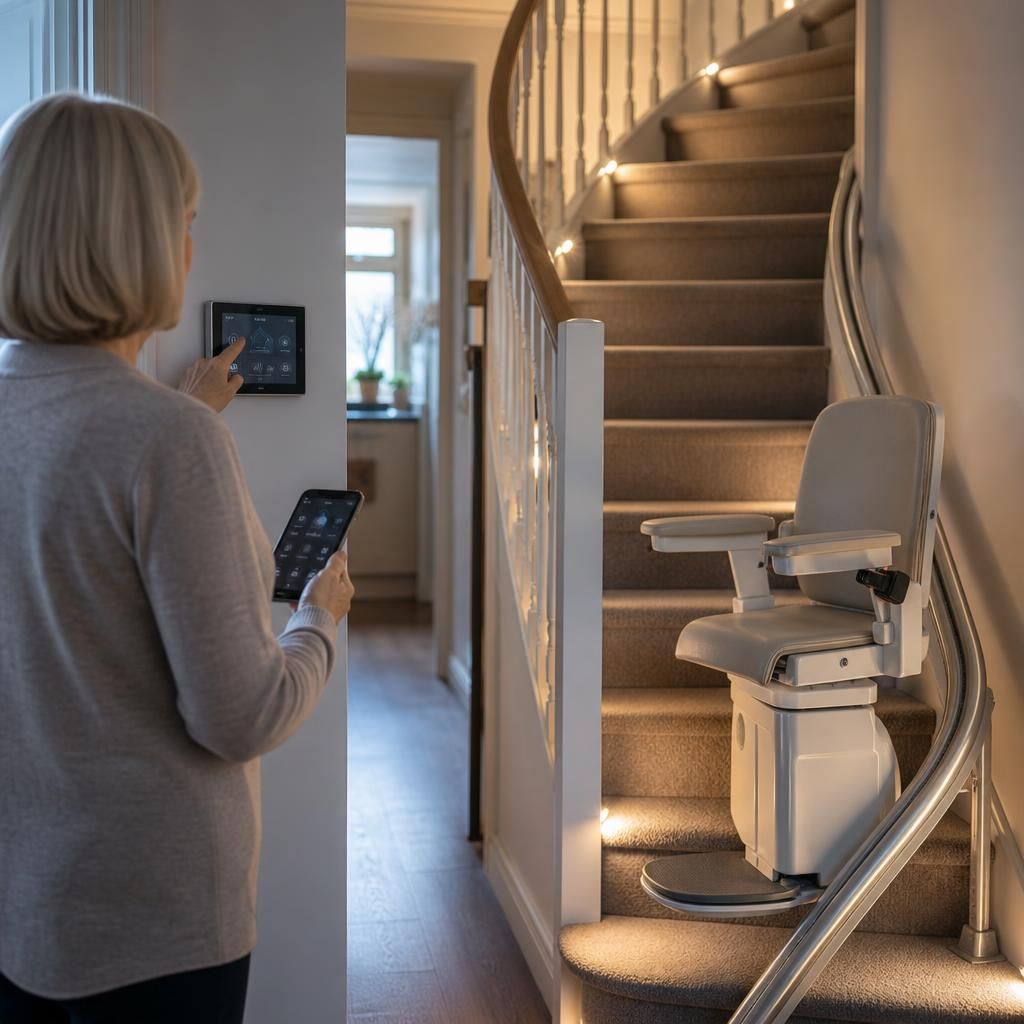
Stairlifts for narrow, steep and curved stairs can often be used alongside smart home systems, but integration is usually supplementary rather than a replacement for the stairlift’s own controls and safety systems. The lift should continue to operate safely from its dedicated arm control and remote controls, even if the internet, Wi-Fi or another connected service is unavailable. Smart technology can make surrounding tasks easier by coordinating lighting, sending notifications or supporting selected voice commands.
What can be integrated? The available options depend on the stairlift model, the smart home equipment already installed and the type of connection supported. Common possibilities include:
- Automatic lighting on the stairs, landing or hallway when movement is detected near the lift.
- Lighting routines that provide clearer visibility before a journey or when the stairlift arrives at the top or bottom.
- Notifications to a nominated contact if the lift has a fault, loses power or requires attention, where the equipment provides a suitable connected service.
- Voice-assistant routines for related tasks, such as switching on lights or calling a family member before using the stairlift.
- Integration with broader home-care or monitoring systems, subject to compatibility and the appropriate privacy arrangements.
Direct voice control of the stairlift itself is less common and may not be advisable for safety-critical movement. A stairlift needs reliable, deliberate control and must respond correctly to its sensors, armrest controls, safety edges, seat position and obstruction detection. For this reason, connected features should not bypass the manufacturer’s operating controls, safety circuits or manual emergency procedures.
How this applies to narrow and steep staircases Smart home integration does not alter the physical requirements of the stairlift. A narrow staircase still needs a suitable rail position, adequate clearance and a safe way to board and leave the seat. On a steep staircase, the lift must continue to manage its travel angle, braking and level seating through its dedicated control system. Connected lighting can improve visibility, but it cannot compensate for insufficient space, an unsuitable landing or an unsafe transfer position.
For a curved staircase, the rail is normally made to follow the individual bends, landings and changes in gradient. Any smart features must be installed around this bespoke design without interfering with the rail, carriage, charging points, sensors or access areas. Lighting sensors, cables and other connected devices should be positioned so they cannot obstruct the seat, catch clothing or affect the lift’s movement.
Safety and reliability should come first A properly configured system should leave the essential stairlift functions independent of the smart home network. The lift should have its normal controls, charging arrangements and safety devices available during a router failure, power interruption or software problem. Depending on the model, battery operation may allow the stairlift to complete journeys during a mains failure, but the specific behaviour should be confirmed during the assessment.
Smart lighting is often one of the most practical additions. Sensors can illuminate the route at the top and bottom of the stairs, while switches should remain available in familiar positions in case the automated system does not activate. Lights should be bright enough to show the steps, rail and boarding areas without creating glare. A lighting routine must also avoid switching off while the user is travelling or standing near the stairlift.
Notifications can be useful when a relative or carer needs to know that assistance may be required. However, a notification service should not be treated as an emergency alarm unless it has been specifically designed, tested and agreed for that purpose. The user should still have an accessible way to summon help, and nominated contacts need to understand what an alert means and how to respond.
Assessment and installation considerations Before installation, discuss the proposed integration with the stairlift surveyor and any smart home installer involved. They may need to check:
- Whether the stairlift and connected equipment use compatible communication methods.
- Where power supplies, sensors, hubs and control devices can be positioned safely.
- Whether Wi-Fi coverage is reliable in the stairwell, landings and relevant rooms.
- How the system behaves if the internet, mains electricity or a connected hub fails.
- Whether voice commands are appropriate for the user’s hearing, speech, dexterity and confidence.
- How alerts will be routed and who is responsible for responding to them.
- Whether any wiring or equipment could restrict the stairway, reduce clearance or interfere with servicing.
Following installation, the stairlift and connected features should be tested together. This includes normal travel, parking, boarding and leaving the seat, obstruction detection, lighting activation, loss of network connection and any notification process. The user and family members should be shown which functions belong to the stairlift and which depend on the smart home system.
Connected devices also require ongoing updates, maintenance and sensible privacy settings. Access to remote notifications should be limited to appropriate people, and passwords should not be shared unnecessarily. If the home network or smart home equipment is changed later, check that the stairlift’s optional functions still work and that no new device has been placed where it could affect safe access.
In practice, the most dependable arrangement is usually a stairlift with its full dedicated safety controls, supported by well-positioned lighting and carefully selected alerts. During your assessment, we can review the narrowness, steepness and curves of the staircase together with your existing smart home equipment, then identify which features are genuinely compatible and useful for the person using the lift.
The most practical smart home addition for a stairlift on a narrow, steep or curved staircase is usually automated lighting. Motion sensors or scheduled routines can illuminate the steps, boarding areas and landings before the user approaches the lift, improving visibility without changing the stairlift’s dedicated controls.
Lighting should remain available through ordinary switches if the sensor, hub or internet connection fails. It must also stay on for the full journey and be positioned to avoid glare, shadows or interference with the rail, seat and access areas. Smart lighting supports safe use, but it cannot replace the stairlift’s built-in controls, sensors or safety features.
Discuss Smart Home Options for Your Stairlift
Speak to our team about your existing smart home equipment and stairlift requirements. We can assess your narrow, steep or curved staircase and explain which connected features are compatible and safe to use.