
How do I maintain and service my stairlift for narrow, steep, and curved stairs?
Maintain your stairlift by keeping the rails, seat and controls clean, checking for visible damage or unusual noises, and following the manufacturer’s servicing schedule. Narrow, steep and curved stairlifts need professional inspection because their bespoke rails, drive systems and safety sensors must be checked and adjusted to suit the staircase.
Regular cleaning, simple user checks and servicing by a qualified stairlift engineer keep a stairlift safe and reliable on narrow, steep and curved stairs. These installations require particular attention because the rail is often made to measure, the drive system follows a non-standard route, and safety components must remain correctly positioned in relation to the staircase.
Follow the manufacturer’s maintenance instructions first. The manual supplied with your stairlift explains the recommended servicing interval, charging arrangements, permitted cleaning products and what to do if a fault occurs. If you are unsure which instructions apply to a reconditioned or older stairlift, contact us or the original installer before carrying out any work.
Carry out routine visual and operational checks. Before using the lift, look along the rail and the steps for objects that could obstruct the carriage, footrest or safety edges. On a curved stairlift, check around bends and at the top and bottom landings, where items can be less visible from the seated position. Make sure the seat, armrests, footrest and swivel mechanism appear secure, and report any looseness, damage or change in movement.
- Check that the seat belt latches and releases correctly.
- Make sure the controls respond normally and that the direction control is not sticking.
- Listen for new grinding, clicking, scraping or straining sounds.
- Watch for juddering, hesitation, unexpected stops or a change in travelling speed.
- Check that the stairlift stops when an obstruction is encountered, without deliberately placing a person or object in its path.
Do not continue using the stairlift if it moves unpredictably, fails to stop, shows visible damage or produces an unusual smell or noise. Park it safely, switch it off if the manufacturer’s instructions permit this, and arrange professional advice. Do not attempt to bypass a safety switch, sensor, seat belt or interlock.
Keep the stairlift and rail clean. Use a soft, slightly damp cloth to remove dust from the seat, armrests, controls and footrest, then dry the surfaces. Clean the rail with the method recommended for your model. Avoid soaking electrical controls, spraying liquid directly onto components or using abrasive cleaners. On narrow stairs, dust and household items can collect close to the rail and interfere with the footrest or carriage, so keep the full travel route clear.
Do not apply oil, grease or other lubricant unless the manufacturer or servicing engineer specifically instructs you to do so. Some stairlift drive systems are designed to operate without user-applied lubrication, and the wrong product can attract dirt or affect the drive components. Never remove covers or attempt to adjust the rail, drive unit or safety sensors yourself.
Use the charging points correctly. When the stairlift is not in use, leave it at the designated charging position recommended for the model. This allows the batteries to recharge and helps prevent the lift being unavailable when needed. If the lift gives a low-battery warning, does not charge when parked, or repeatedly loses power, arrange an inspection rather than repeatedly operating it until it stops. Battery replacement and electrical testing should be carried out by a competent engineer.
Curved stairlifts need specialist checks because their bespoke rails contain bends, transitions and stopping points that must remain accurately aligned. During a service, an engineer may inspect the rail fixings, carriage rollers, drive components, seat swivel, speed control, limit switches and charging system. They will also check that the lift follows the intended route smoothly and that it stops in the correct position at landings and parking areas.
Steep staircases place particular importance on seat positioning, levelling and restraint systems. The engineer should confirm that the seat remains appropriately level while travelling, that the swivel and locking mechanisms engage correctly, and that the safety belt and sensors operate as intended. On a narrow staircase, clearances between the stairlift, walls, banisters and doorways should be checked, particularly if the surrounding area has changed since installation.
Arrange servicing at the interval specified for your stairlift. Servicing is different from cleaning: it involves functional testing, inspection and, where necessary, adjustment or replacement of components. A professional service can identify gradual wear before it becomes a breakdown. It is especially important after a long period without use, following building work, if the stairlift has been exposed to damp conditions, or when a new user notices a change in comfort or operation.
Outdoor stairlifts need additional care. Keep the seat, controls and charging points protected as instructed, remove leaves or debris from the rail and check for signs of corrosion, water ingress or weather damage. Do not use an outdoor stairlift in conditions or with covers that conflict with the manufacturer’s instructions. Any damage to weather seals, wiring or protective covers should be reported promptly.
If the stairlift stops on the stairs, ask the user to remain seated with the belt fastened unless there is an immediate danger. Use the approved emergency procedure in the manual, such as the handset or manual lowering facility where fitted, and contact the service team. Do not try to lift, push or force the stairlift along the rail. If there is smoke, burning, exposed wiring or another immediate hazard, move away if it is safe to do so and seek urgent assistance.
Keep a record of servicing, reported faults, battery changes and any alterations near the staircase. Tell the engineer about changes such as new flooring, carpets, banisters, doors or furniture, as these can affect clearances on a narrow, steep or curved installation. Promptly reporting small changes in sound, movement or stopping position gives the engineer useful information and helps keep the stairlift matched to the staircase.
Professional servicing keeps a stairlift on narrow, steep or curved stairs safe, correctly aligned and reliable. Unlike routine cleaning, a service includes functional testing, inspection and any necessary adjustment of the rail, carriage, drive system, seat, sensors, controls and charging equipment.
Arrange servicing at the interval recommended for your model, and contact a qualified engineer sooner if you notice juddering, unusual noises, hesitation, altered stopping positions or charging problems. Curved stairlifts need particular attention because their bespoke rails include bends and transitions, while steep or narrow installations require checks on seat levelling, clearances, swivel locks and restraint systems.
Do not remove covers, lubricate components or adjust safety sensors yourself unless the manufacturer or engineer specifically instructs you to do so. Keep the staircase and rail clear, follow the cleaning guidance in your manual and report changes such as new flooring, carpets, banisters or furniture that could affect the stairlift’s clearance.
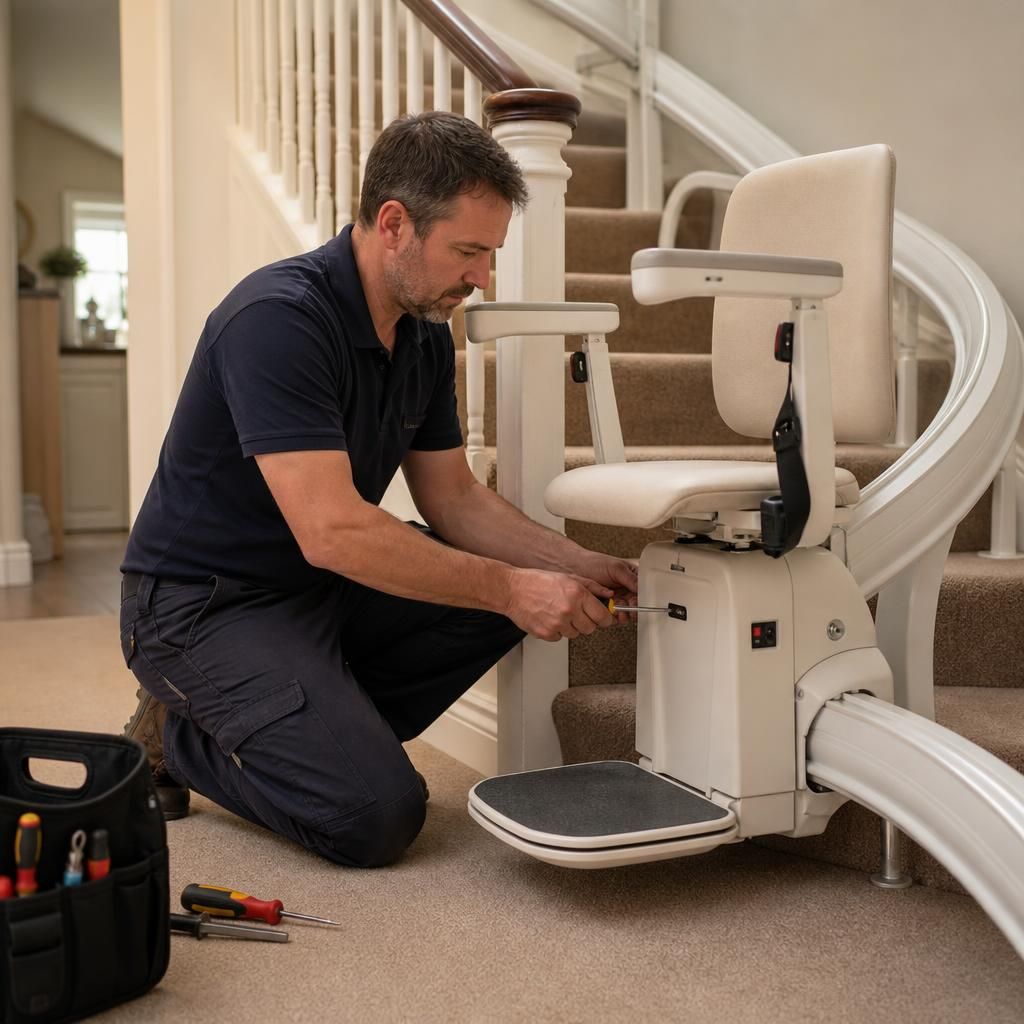
Arrange professional stairlift servicing
Arrange professional stairlift servicing at the interval recommended for your model, or contact our team sooner if you notice unusual noises, juddering, charging problems or changes in stopping position. An engineer can inspect and adjust the rail, carriage, safety systems and charging equipment to keep your stairlift operating safely.