
What safety features are included with stairlifts for narrow, steep, and curved stairs?
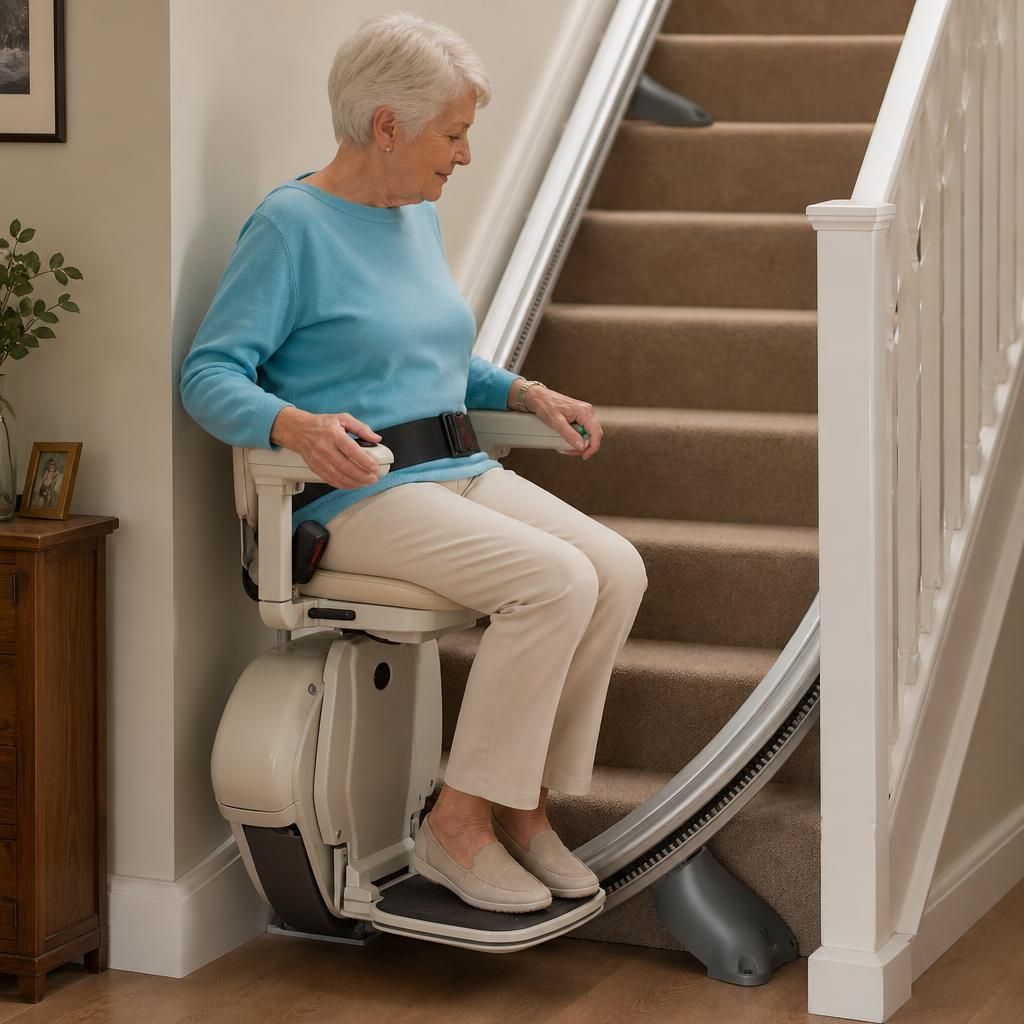
Stairlifts for narrow, steep and curved stairs typically include a secure seat belt, powered swivel seat, obstruction sensors, automatic braking and battery backup for controlled, reliable travel. Their rails, seats and controls can also be configured to suit the staircase layout, helping maintain safe access where space, steep gradients or tight curves create additional challenges.
Stairlifts for narrow, steep and curved stairs use a combination of restraint, positioning, sensing and control features to keep the user secure throughout the journey. The exact specification depends on the stairlift model, the staircase survey and the user’s mobility needs, but the safety system normally includes the following features.
- Seat belt or safety harness: A seat belt helps keep the user correctly positioned while the stairlift is moving. It should be fastened before travel and kept secured until the stairlift has stopped at the landing.
- Powered swivel seat: On a narrow, steep or curved staircase, getting on and off can be more difficult than travelling along the rail. A powered swivel seat turns the user towards the landing, reducing the need to twist or step across the stairs. The lift is designed not to travel unless the seat is correctly positioned and locked, depending on the model.
- Level or adjustable seat positioning: Steep stairs can alter the user’s position in relation to the steps. A stairlift may use a level seat, adjustable seat angle or another positioning system to keep the user upright and supported as the lift follows the gradient. This is assessed during the survey rather than assumed from the staircase alone.
- Obstruction sensors: Sensors around the footrest and lower carriage detect objects such as footwear, toys, furniture or other items left on the stairs. If an obstruction is detected, the stairlift should stop or prevent travel, depending on its design. The stairs must still be kept clear, as sensors are an additional safeguard rather than a substitute for good housekeeping.
- Controlled braking and stopping: The drive system includes braking and travel controls to help the stairlift start, slow and stop in a controlled way. Limit switches and position controls stop the lift at the intended points on the rail, including where a curved rail reaches a landing or parking position.
- Battery backup: Most modern stairlifts are battery-powered while travelling and recharge at designated charging points. This allows continued use during a mains power cut, provided the batteries have been maintained and have sufficient charge. A low-battery warning may be provided, but it is important to return the lift to its charging position after use.
- Secure armrests and footrest: Armrests provide support when boarding and travelling, while a suitably sized footrest helps keep the feet away from the steps and moving parts. Folding or retractable components can help where the staircase is narrow, but they must be fully positioned before travel.
- Controls suited to the user: Controls are usually available on the armrest, with remote controls often provided for calling or sending the stairlift between landings. A simple hold-to-run control can require the user to keep pressure on the switch, allowing travel to stop when the control is released. Controls should be positioned so they can be operated without leaning into the staircase.
- Safety edges and carriage protection: Protective edges and covers help reduce the risk of contact with parts of the rail or carriage. On a curved staircase, the rail is measured and manufactured to follow the bends, while the carriage is controlled to negotiate those changes in direction safely.
- Rail and parking design: A narrow staircase may require a compact seat, a close-fitting rail position or a folding rail at the bottom. A hinged or powered hinge rail can help prevent the rail from obstructing a doorway or walkway, provided the parking arrangement leaves a safe route around the equipment. Curved stairlifts may also be designed with extended parking positions to keep the seat away from a landing, doorway or staircase junction.
Stair width and steepness affect how these features are specified. On a narrow staircase, the priority is usually maintaining sufficient clearance for the user, their knees, feet and arms, while also avoiding interference with doors, handrails and anyone using the stairs. A narrower seat or folding armrests may help, but the available space must be checked with the user seated, not just measured between the walls.
On steep stairs, seat stability and boarding position become particularly important. The assessment should consider whether the user can sit down and stand up safely at both ends, whether the seat remains suitably level during travel, and whether a powered swivel or other transfer aid is needed. The stairlift should not be used to carry more than its specified load or to transport another person, unless the equipment has been specifically designed and approved for that purpose.
Curved staircases require additional control over the route and stopping points. A bespoke rail follows the staircase profile, including changes in direction, intermediate landings and variations in width. The installation should provide stable travel through each curve and leave the seat in a safe position when parked. Where the rail passes close to a wall, balustrade or doorway, the survey must also check that the moving seat, arms and footrest have adequate clearance.
Safety features work properly only when the stairlift is correctly installed, used and maintained. Before each journey, check that the seat is facing the correct direction, the belt is fastened, the footrest is clear and doors or obstructions are not in the travel path. Do not allow children, pets or other people to remain on the stairs close to the moving lift, and do not carry loose items that could fall or become trapped.
Regular servicing checks the batteries, charging points, drive system, brakes, sensors, rail fixings, seat swivel, belt and controls. Arrange an inspection if the lift stops unexpectedly, makes an unusual noise, moves unevenly, fails to charge or shows a warning light. Do not bypass a sensor or continue using a stairlift that appears unsafe.
A home assessment is therefore essential for a narrow, steep or curved staircase. It confirms which safety features are compatible with the layout and the user, identifies possible pinch points or transfer risks, and establishes suitable parking and charging positions. The final recommendation should be based on the staircase dimensions, the user’s posture and mobility, the position of doors and landings, and how the stairlift will be used day to day.
A powered swivel seat helps make boarding and leaving a stairlift safer on narrow, steep or curved stairs. When the lift reaches the landing, the seat turns towards the safe access area, so the user does not need to twist or step sideways across the staircase. The seat belt should remain fastened until the stairlift has stopped and the seat is in its locked position.
During the survey, the installer checks whether the swivel seat, armrests and footrest provide enough clearance from walls, doors and balustrades. On some staircases, a compact seat or alternative parking position may be needed. The stairlift should only travel when the seat and other safety components are correctly positioned, subject to the design of the model selected.
Arrange a stairlift safety assessment for your stairs
Arrange a stairlift safety assessment for your narrow, steep or curved stairs to confirm the right safety features, seating position and parking arrangement for your home. Contact Independent Stairlifts to discuss your requirements with the installation team.