
What considerations should I keep in mind when choosing a heavy duty stairlift for my home?
When choosing a heavy duty stairlift, consider the user’s weight and mobility needs, the width and shape of the staircase, available seating space, safety features and the lift’s suitability for your home. A professional assessment is essential to confirm the correct capacity, configuration and installation requirements before you decide.
Choosing a heavy duty stairlift requires more than checking the maximum user weight. The lift must provide an appropriate safety margin for the user’s weight and mobility needs, fit the staircase and landing, offer stable and comfortable seating, and allow safe transfers at the top and bottom. A professional home assessment is the most reliable way to confirm the correct model, rail design, installation method and available options.
Assess the user’s needs first. The quoted capacity of a heavy duty or bariatric stairlift is a strict operating limit, not a target. The assessment should take account of the user’s current weight, any likely changes, clothing or items carried during use, balance, leg strength and ability to sit down and stand up. If more than one person may use the lift, the specification must suit every intended user. Do not assume that a standard stairlift is suitable simply because the user is close to its stated limit.
Consider how the user will approach the lift and transfer onto the seat. A swivel seat, powered swivel, adjustable seat height or powered footrest may make a significant difference where bending, twisting or weight-bearing is difficult. The seat should provide adequate width, depth and support without making it harder to reach the controls or maintain a stable posture. Armrests should help the user remain secure, while still allowing a carer to assist when necessary.
Check the staircase and surrounding space. A heavy duty stairlift is usually larger and heavier than a standard model, so the available width must be measured with doors, radiators, handrails, skirting boards and other obstructions taken into account. The assessment should cover:
- the width of the stairs at their narrowest point;
- the shape of the staircase, including straight sections, bends, half-landings and intermediate landings;
- the space available for the user’s feet, knees and arms while travelling;
- clearance from walls, doorways and adjacent furniture;
- the room needed to board and leave the lift safely at both ends; and
- the position of the rail, charging points and any parking area when the lift is not in use.
On a narrow or steep staircase, the challenge is not only whether the rail can be installed. The lift must also leave enough room for safe passage by other household members and must allow the user to sit and dismount without contact with the wall or surrounding fixtures. A tailored rail position, compact parking arrangement or alternative access solution may be considered where the layout is restricted.
Choose the correct capacity and configuration. Heavy duty stairlifts are designed with stronger components and a higher rated load than standard lifts, but specifications vary between models. Ask for the usable seat width, maximum permitted load, seat height range and any restrictions caused by the staircase design. The relevant capacity should be confirmed in writing as part of the quotation and should not be increased by modifying the lift or adding unsupported accessories.
Weight capacity is only one part of the specification. A heavier user may require a reinforced seat, a wider or deeper seating option, stronger armrests, a larger footplate or a different belt arrangement. These choices can affect the amount of room required on the stairs, so they should be agreed before installation rather than added after the rail has been fitted.
Prioritise safe and manageable operation. The controls should be easy to reach and operate, with a control arrangement that suits the user’s hand strength, dexterity and vision. Important features to discuss include a correctly positioned safety belt, dependable braking, obstruction sensors, secure armrests, a stable footplate and controls that stop the lift if an unsafe condition is detected. If the user has reduced sensation, poor balance or a tendency to move during travel, the seating and restraint arrangement should be reviewed particularly carefully.
Consider whether the user can operate the lift independently or will need assistance. Remote controls can allow a carer to move the lift when it is parked at the opposite end of the stairs, while powered functions may reduce the effort needed to swivel the seat or fold the footrest. These features are useful only when their controls are simple and positioned within easy reach, so they should be demonstrated during the assessment.
Review comfort and positioning. The user may spend longer on the lift than expected if stairs are difficult to negotiate, making posture and support important. Look at the seat height, cushioning, back support, armrest position and footplate size. The user should be able to sit upright, keep their feet supported and avoid pressure from the belt or surrounding surfaces. If pain, swelling, limited hip movement or reduced circulation is a concern, mention this during the assessment so the seating can be configured appropriately.
Consider the electrical supply and what happens during a power cut. Most stairlifts use rechargeable batteries and charge at designated points on the rail. The installation plan should identify a suitable power socket and confirm that the lift can be parked where it will charge correctly. Ask how the lift behaves during a power interruption, how battery condition is monitored and what the user should do if the lift stops away from a charging point. A reliable charging routine and prompt reporting of battery or performance changes help prevent avoidable disruption.
Plan the installation around the home. The installer should check access to the property, the condition of the staircase, fixing points and any work needed around landings or doorways. Where the user has limited mobility, plan for how the stairs will be used while installation is taking place and whether furniture or household items need to be moved. The finished installation should leave the lift secure, maintain practical access through the home and avoid creating new trip or collision risks.
For a curved staircase, the rail is made to follow the individual route, and the lift may need to park around a bend or on a landing. For a straight staircase, the rail may still require careful positioning at the top and bottom to provide a safe transfer area. Outdoor or damp locations require equipment specifically designed for those conditions; an indoor heavy duty model should not be used outside without confirmation that it is suitable.
Include servicing and future support in the decision. Ask what routine checks are recommended, how faults are reported, what is covered by the warranty and whether replacement batteries or other wearing components can be supplied. Regular servicing should examine the drive system, rail, brakes, seat, belt, sensors, controls and batteries. The user or carer should also know how to keep the rail and charging areas clear and which signs require attention, such as unusual noise, jerky movement, repeated stopping or a belt that no longer locks correctly.
Finally, compare complete installed quotations rather than looking only at the lift price. The quotation should identify the model, rated capacity, seat and control options, rail design, electrical work, installation, demonstration, warranty and ongoing service arrangements. An in-home assessment allows these details to be matched to the actual staircase and the user’s abilities. It also gives you an opportunity to test the seat, controls and transfer position before committing to a heavy duty stairlift.
A professional home assessment is essential when choosing a heavy duty stairlift because the lift must suit both the user and the staircase. The assessment checks the user’s weight, posture, transfer ability and seating requirements, while also measuring the staircase, landings, obstructions and available clearance.
This allows the correct capacity, seat configuration and rail design to be specified before installation. It also confirms where the lift will park and charge, whether other people can still use the stairs safely, and which options—such as a powered swivel seat, adjustable seat height or larger footplate—may be appropriate.
Ask for these details to be included in the quotation and take the opportunity to try the seat, controls and transfer positions. A properly assessed installation is safer and more practical than choosing a lift based on weight capacity alone.
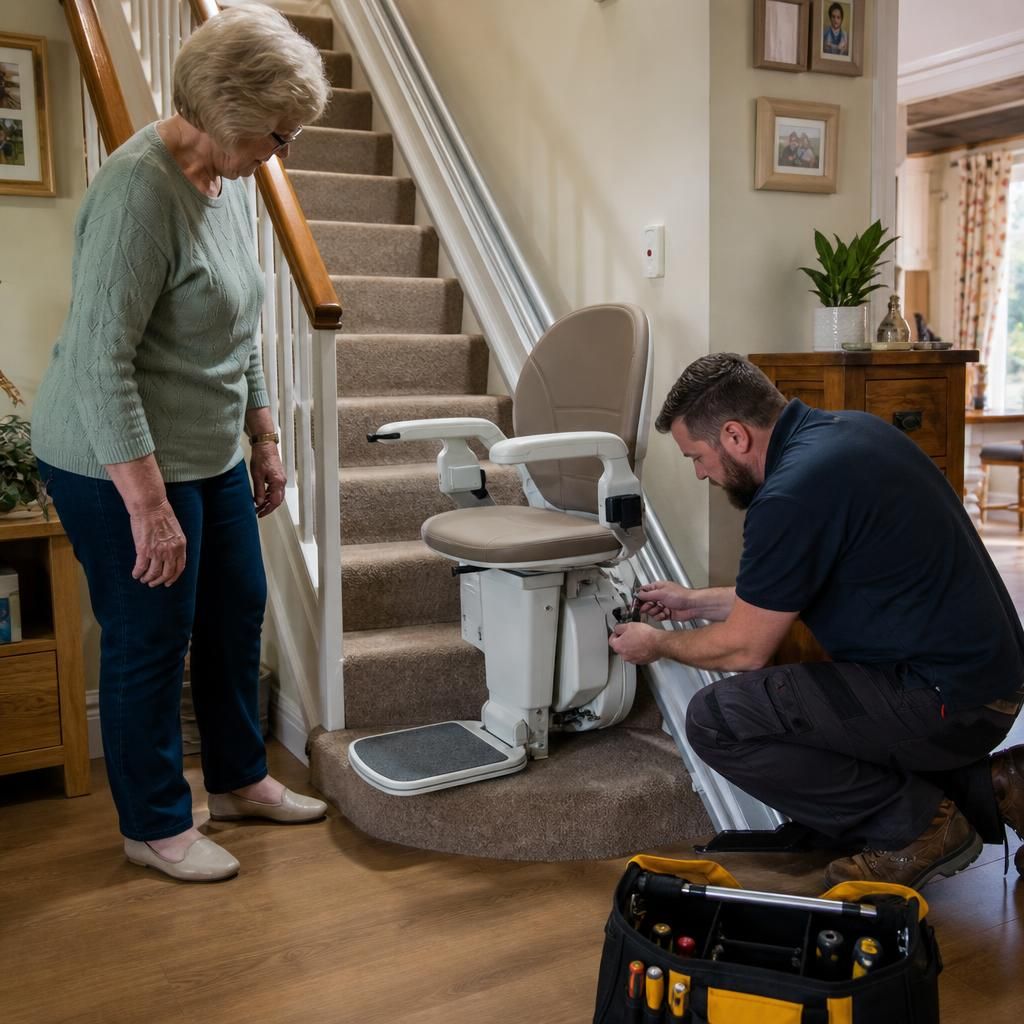
Book Your Heavy Duty Stairlift Home Assessment
Book a home assessment with Independent Stairlifts to confirm the right heavy duty stairlift capacity, seating configuration and rail design for your needs. We will assess the user, staircase, transfers, clearance and charging arrangements before providing a complete quotation.