
How do I choose the right stairlift features for my specific mobility needs?
Choose stairlift features by considering how you transfer, sit, stand and control the lift, alongside your staircase layout and any specific safety or comfort needs. An in-person assessment can then match options such as powered swivelling seats, adjustable controls, harnesses, folding parts and weight capacity to your mobility and home.
The right stairlift features are those that support the way you transfer, sit, stand and operate the lift, while also fitting the staircase and space available in your home. A proper assessment should consider your current mobility, likely changes over time, body shape and weight, posture, grip strength, vision, and the layout of the stairs before specific options are recommended.
Start with how you use the stairs
Think about what makes your current journey difficult or unsafe. You may need support because of pain, weakness, balance problems, breathlessness, reduced flexibility, or difficulty lifting your feet. You may also need the stairlift to accommodate a walking frame, wheelchair, stick or other equipment at the top or bottom of the stairs.
- If sitting down or standing up is difficult, a powered swivel seat can turn the seat towards the landing, reducing the need to twist or reach while transferring.
- If your knees or hips do not bend comfortably, a perch or semi-standing seat may be suitable in some situations. This depends on your balance, posture and ability to remain supported throughout the journey.
- If you have limited trunk stability, a supportive backrest, suitable armrests and a secure seat belt or harness may be important.
- If you have swelling, reduced sensation or difficulty maintaining one position, seat padding, armrest spacing and footrest design should be assessed carefully.
- If you are tall, broad-framed or have difficulty bending your legs, the seat, footrest and available clearance must provide sufficient room without obstructing the staircase.
Choose controls you can use reliably
Controls should match your hand strength, reach, coordination and vision. A standard armrest control may be appropriate if you can operate a small switch comfortably. If grip or finger movement is limited, a larger or differently positioned control may be easier. A remote control can allow the stairlift to be called to the required floor, although it should be positioned where you can reach it safely.
Consider whether you can release the control at the end of the journey without losing balance. Controls should not require you to lean forward, stretch across the armrest or turn awkwardly. If another person may operate the lift for you, they should also be able to understand and use the controls safely.
Give priority to transfer and positioning features
Many accidents happen during transfers rather than while the stairlift is travelling. The seat should stop in a position that gives you enough room to stand, with the armrests and footrest supporting a stable transfer. Depending on the staircase, a powered swivel seat, manual swivel seat, hinged or powered footrest, and adjustable seat height may help.
At the top of the stairs, a suitable swivel or extended-rail arrangement may be needed to place you safely on the landing rather than directly beside the stair edge. At the bottom, check that the footrest and seat do not create an obstruction in a hallway or doorway. These details are particularly important where the landing is small or other people use the stairs regularly.
Match safety features to your abilities
Safety equipment should address the risks associated with your mobility, not simply be selected as a standard package. Relevant features may include:
- A seat belt or harness to help maintain a secure position during travel.
- Safety sensors that stop the lift if an obstruction is detected on the stairs.
- Locking or interlocking features that prevent travel until the seat, armrests or footrest are correctly positioned.
- Swivel-seat safety mechanisms that prevent the lift from travelling when the seat is turned away from the stairs.
- Suitable armrests and a stable backrest to support posture.
- Battery backup so the lift can normally complete a journey or return safely during a temporary power interruption.
- Clear audible or visual indicators where these are useful for your hearing or vision.
A harness may provide additional support for someone with poor balance or reduced trunk control, but it must be easy to fasten and release. If you have cognitive, visual or hearing difficulties, the controls and alerts should be assessed with you rather than selected without testing.
Check the staircase and surrounding space
The staircase determines which features can be used and how the lift will park. Straight and curved stairlifts have different installation requirements, while narrow, steep or interrupted staircases may limit seat width, footrest size, rail position or swivel options. Doorways, radiators, handrails, newel posts and furniture can also affect the available clearance.
Ask for the lift to be assessed at every transfer point, not just along the stairs. There must be enough room to approach the seat, sit down, place your feet on the footrest and leave the lift at the top. If another person assists you, the assessment should allow space for them to stand safely without blocking the staircase.
Where space is restricted, folding armrests, a retractable or hinged rail, a compact seat design or a different parking position may help. These features are only suitable where they leave adequate clearance and do not create a new trip or obstruction risk.
Consider weight capacity and body support
The stairlift must be rated for the user’s weight, clothing and any items carried during travel. Heavy-duty or bariatric models may provide a higher weight capacity, a wider or stronger seat, reinforced components and additional support. The correct model should be selected using the manufacturer’s stated limit and the actual staircase conditions, rather than by appearance alone.
Seat width, armrest position, footrest size and the ability to maintain an upright posture are just as important as the maximum capacity. Do not carry heavy shopping, walking aids or other loads on the stairlift unless the equipment has been designed and approved for this purpose. A separate assessment may be needed if you need to transport mobility equipment between floors.
Allow for changes in your mobility
Your needs may change because of an operation, a progressive condition, reduced strength or increased reliance on a walking aid. Discuss likely changes during the assessment. A feature that is adequate now may become difficult if you later need more transfer support, a harness, a powered swivel or assistance from a carer.
This does not mean choosing every available option. Additional powered functions can add controls and require maintenance, so they should be included when they solve a specific problem. The best specification is practical for your present abilities and has enough flexibility to remain useful if your mobility changes.
Review operation, charging and maintenance
Ask how the lift is charged, where it parks, what happens if it stops, and how to contact the servicing team. Charging points are normally built into the parking positions, so the lift needs to be left correctly parked. If you are likely to forget this, a clear routine and accessible indicators are important.
Keep the rail, seat, footrest and sensors free from clothing and household items. Do not bypass safety switches or continue using the stairlift if it is making unusual noises, stopping unexpectedly or showing a fault indication. Arrange inspection or repair in line with the manufacturer’s guidance and the service plan agreed for your installation.
Use an assessment to confirm the specification
Before making a decision, demonstrate how you transfer on and off the seat, operate the controls, fasten the belt and position your feet. Tell the assessor about pain, dizziness, falls, fatigue, involuntary movements, breathing difficulties or any assistance you receive. It is also useful to involve the person who may help you, provided the final arrangement still allows you to use the lift as independently as possible.
Independent Stairlifts can assess the staircase and discuss the available options with you, including heavy-duty solutions where weight capacity, seat support or clearances require them. The recommendation should explain which features are essential, which are optional, and how each one relates to your mobility and home layout.
The most important stairlift features are those that make getting on and off the seat safe and manageable. If you have difficulty standing, turning or keeping your balance, a powered swivel seat can turn towards the landing so you do not need to twist beside the stairs. A suitable seat height, supportive armrests and an easy-to-fasten belt can also improve stability during transfers.
These features must be assessed with your staircase, because a small landing, doorway or nearby furniture may affect how the lift parks and how much room you have to stand. During an assessment, demonstrate your usual transfer and explain any pain, weakness, dizziness or assistance you need. This helps Independent Stairlifts recommend features that address a specific risk without adding controls or powered functions you do not need.
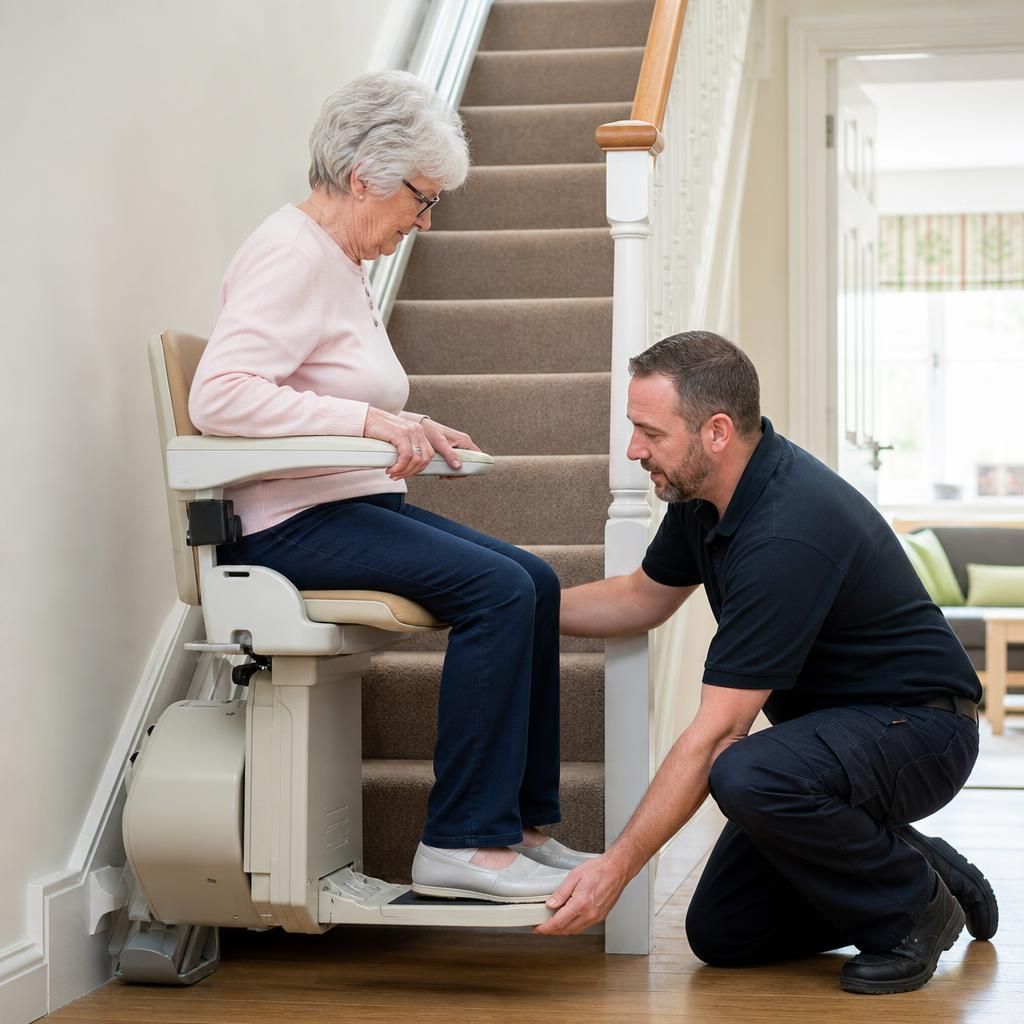
Arrange a stairlift assessment tailored to your mobility needs
Arrange a stairlift assessment tailored to your mobility needs, so we can review your transfers, controls, safety requirements and staircase layout. Contact Independent Stairlifts to discuss the features that will provide the most practical support.