Safety-led assessment
The chair, controls, wiring and mechanism are checked systematically before any repair is advised.

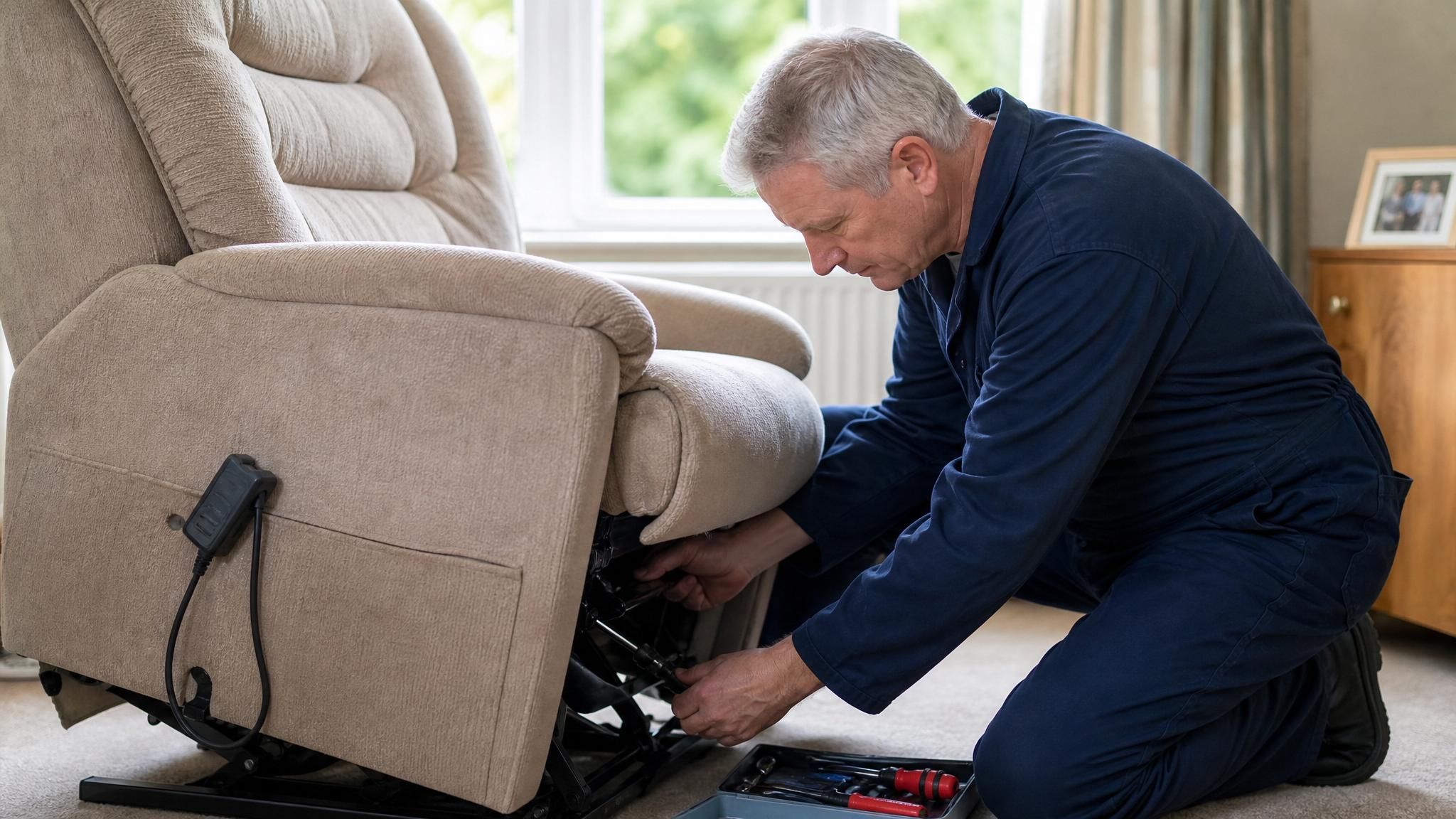
Lift chair maintenance covers inspection, repairs and safety checks for powered recliner chairs that help users sit and stand. If yours is stuck or unresponsive, qualified servicing can identify electrical, mechanical or battery faults safely.
Lift chair maintenance is the inspection, adjustment and repair of a powered recliner that raises and lowers the user between sitting and standing. It includes the handset, motor, wiring, frame, footrest and battery, where fitted.
If your lift chair has stopped working, will not go down, moves unevenly or makes unusual noises, stop using it until checked. Confirm the socket is switched on, the plug is secure and the handset connection is firm, but do not force the footrest or remove electrical covers.
During a professional visit, the fault is tested before repairs or parts are recommended. Independent Stairlifts can assess the mechanism, cables and battery, then explain whether repair is practical or replacement would better support safe, reliable use.
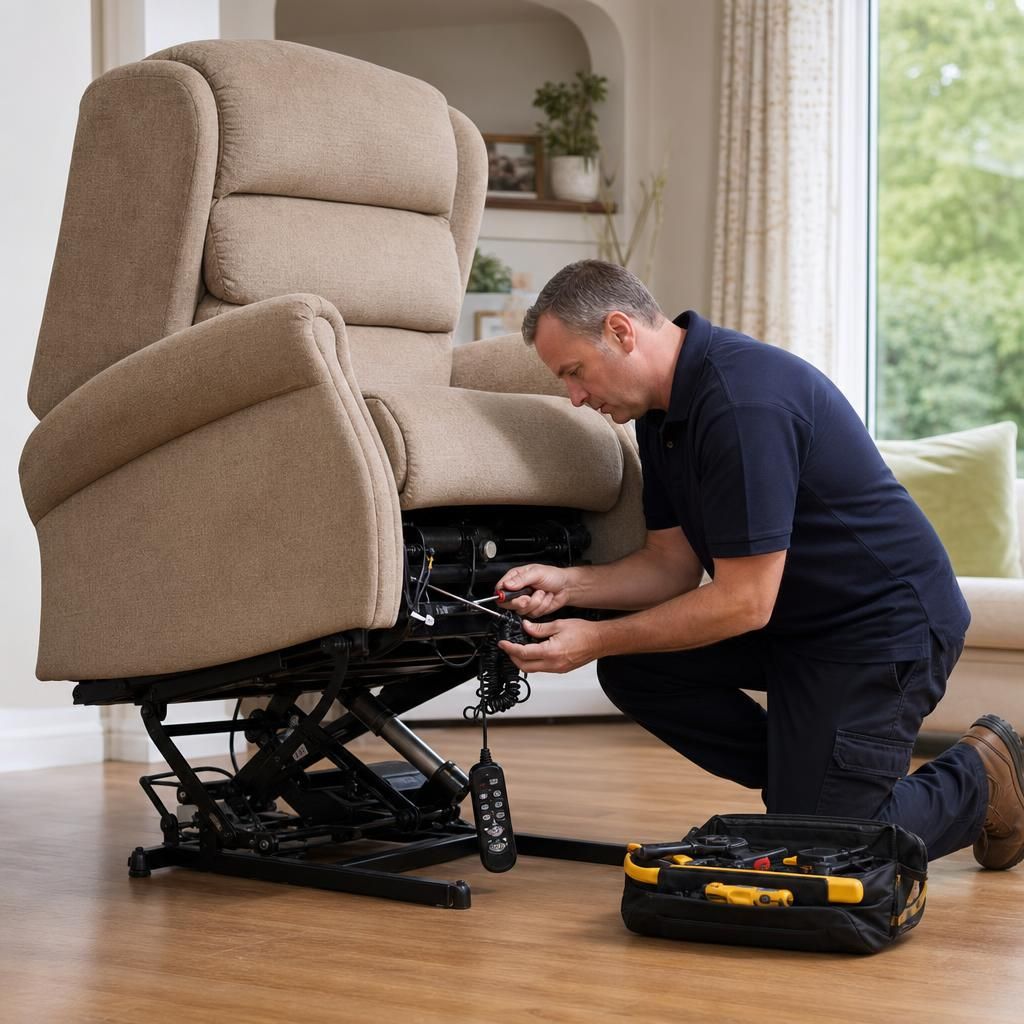
Lift chair maintenance is the inspection, adjustment and repair of powered riser recliner chairs that help a person sit down and stand up. It can address handset faults, electrical problems, worn mechanisms, battery issues, unusual noises and a chair that has stopped moving or will not go down.
The answers below explain safe checks, when professional lift chair repair is needed and what to consider before replacing a faulty chair. If the chair is stuck or behaving unpredictably, stop using it and arrange an assessment rather than forcing the footrest or opening electrical components.
A lift chair should be checked whenever its movement, controls, seating position or electrical operation changes. Regular servicing is also sensible for chairs used frequently or by someone who relies on them for safe transfers.
A professional inspection can assess the lifting and reclining mechanism, handset, cables, motor, frame, footrest and power supply. The technician can identify wear before it causes a complete failure and advise whether routine adjustment, a replacement component or further repair is appropriate.
Unusual clicking, grinding, buzzing or straining noises can indicate wear, an obstruction or a problem with the motor or mechanism. Do not continue using the chair if the noise is accompanied by uneven movement, jerking or a burning smell.
A technician can test the chair through its lifting and reclining movements to locate the source of the noise. Loose fittings, worn gears, a damaged mechanism or an overloaded motor may require different solutions, so lubricating parts or forcing the chair to move without a proper inspection may make the fault worse.
If a lift chair will not move, check that the power socket is switched on and that the plug and handset connection are secure. Stop if these basic checks do not resolve the problem, particularly if the chair is occupied or stuck in an unsafe position.
Keep clear of the footrest and lifting mechanism, and do not remove covers or attempt to bypass the controls. A qualified repair assessment can establish whether the cause is the handset, wiring, motor, battery or control system, while also considering how to help the user leave the chair safely.
Some powered recliner chairs use batteries to provide movement during a power interruption, while others operate directly from the mains. A chair that loses movement quickly, operates slowly or fails during a power cut may have a battery or charging fault.
Battery performance depends on the chair design and how its backup system is maintained. A technician can test the battery, charger, connections and control circuit rather than replacing parts unnecessarily; if a battery is swollen, leaking or damaged, discontinue use and arrange professional attention.
Many lift chair faults are repairable, but the practical option depends on the chair’s condition, the availability of suitable parts and the extent of the mechanical or electrical damage. A repair assessment should establish the fault before any work is agreed.
Repair may be appropriate when the frame and main mechanism remain sound and the fault is limited to a replaceable component. Replacement may be more suitable when several systems are worn, parts are no longer available or the chair cannot provide reliable support; an assessment can compare these options with the user’s needs and the chair’s condition.
Basic care can reduce avoidable wear on a lift chair, although it does not replace professional servicing. Keep the chair clear of objects, use the handset as intended and avoid placing weight on the raised footrest.
Keep cables away from moving parts, check that the chair has enough clearance to recline and lift, and follow the manufacturer’s cleaning instructions. Do not spill liquid near the controls or motor, and arrange an inspection if movement becomes slow, uneven or noisy rather than continuing until the chair fails.
Lift chair maintenance is professional inspection and repair of powered riser recliners, including the handset, motor, wiring, frame and battery system. It helps identify why a chair has stopped working or will not go down, without unsafe forcing or dismantling.
Independent Stairlifts assesses the fault, explains suitable repair or replacement options, and provides clear advice before any work is undertaken.
The chair, controls, wiring and mechanism are checked systematically before any repair is advised.
Professional lift chair servicing helps identify electrical and mechanical faults without unsafe dismantling or forced movement.
You receive an explanation of the fault and the available options before repair work is undertaken.
Suitable repairs and replacement parts can be considered when they support safe, reliable everyday use.
If repair is not practical, the assessment can help you compare replacement options suited to the user and chair position.
Lift chair maintenance is the inspection and repair of powered riser recliners, covering the handset, motor, wiring, footrest and battery. It helps identify why a chair has stopped working or will not go down, without unsafe forcing or dismantling.
Independent Stairlifts tests the fault first, then explains whether repair or replacement is more suitable for the chair, user and home.
Independent Stairlifts considers the user’s mobility, transfer technique and daily routine alongside the chair fault, helping ensure any repair supports practical use.
The chair is assessed systematically so the cause of a problem can be identified before parts or adjustments are recommended.
Electrical, mechanical and structural concerns are considered together, with clear guidance on whether the chair should remain out of use.
The assessment takes account of the room, available space and how the chair is positioned, rather than treating the fault in isolation.
You can discuss whether repairing the existing lift chair is practical or whether replacement offers a more suitable long-term option.
As a mobility specialist, Independent Stairlifts can consider lift chair needs alongside other access equipment used in the home.
National coverage makes it easier to request lift chair support from a provider serving customers across varied domestic environments.
Lift chair maintenance options depend on the fault, the chair’s condition and the user’s needs. These situations show when to try basic checks, arrange professional repair, replace a part or consider a new chair for safe use.
If the lift chair moves unpredictably, stops part-way, tilts unevenly or shows damaged wiring, stop using it and arrange a professional inspection. Independent Stairlifts can assess the chair before advising whether repair is suitable.
A chair that does not respond may have a fault with the handset, connection, power supply or control system. A qualified technician can test these components rather than replacing parts without confirming the cause.
Some lift chairs use batteries for continued operation during a power interruption. If movement is weak or the battery no longer holds charge, ask for the battery and charging system to be checked before considering wider repairs.
Grinding, clicking or uneven movement can indicate wear in the motor, linkage, frame or reclining mechanism. Professional servicing can identify the worn component and establish whether adjustment, lubrication or part replacement is appropriate.
Repair is often worth considering when the chair is otherwise comfortable, correctly sized and structurally sound, and the fault is limited to a replaceable component. Independent Stairlifts can explain the expected repair and any relevant parts requirement.
A replacement chair may be more practical where faults are extensive, essential parts are unavailable, or the existing chair no longer provides suitable support. Compare the chair’s condition, repair scope, comfort and user needs before deciding.
Our lift chair maintenance ensures functionality by inspecting electrical systems, testing for smooth operation, and cleaning components. This comprehensive approach prolongs chair life and prevents unexpected issues.
Lift chair maintenance should be performed every 6 to 12 months, depending on usage frequency and manufacturer guidelines, to ensure efficient operation and prevent wear-related issues.
To maintain your lift chair, regularly inspect and clean its surfaces, ensure electrical connections are secure, lubricate moving parts, and operate the chair smoothly to check for any unusual noises or resistance.
Look for inconsistent functionality, unusual noises, stiffness, or controls failing to respond promptly. These issues suggest mechanical or electrical problems needing professional attention to ensure safe and reliable operation.
Professional maintenance ensures thorough inspections, access to specialised tools, and trained technicians who identify and resolve issues efficiently, leading to reliable performance and extending the chair’s lifespan beyond basic DIY care.
Independent Stairlifts assesses powered lift chairs, identifies electrical and mechanical faults, and explains repair or replacement options. Its approach combines practical fault-finding, suitable parts advice and safety-focused support for older users and families comparing local or nationwide service.
Assessment around the user and room
A lift chair needs to suit the user’s height, transfer ability and available space, not just operate correctly. Independent Stairlifts considers how the chair is positioned and used so maintenance advice relates to everyday access and safe movement.
Repair or replacement explained clearly
A fault does not automatically mean a new chair is needed. Independent Stairlifts can explain the condition of the existing chair, the likely repair route and when replacement may be the more suitable option, helping families compare the practical implications.
Support beyond stairlift equipment
Lift chairs are assessed as part of a wider range of mobility equipment, including stairlifts, recliners, beds and bath lifts. This broader understanding helps when a chair forms part of a person’s overall plan for moving safely around the home.
Suitable advice for older users and families
Controls, transfer movements and reliability all affect how confidently a lift chair can be used. Advice is provided in clear terms so the chair user and the family member arranging support can understand the issue and the recommended next step.
Help available across the UK
Independent Stairlifts provides national coverage, making it a practical option for households comparing local and wider-service providers. Availability can be discussed according to the property, chair and type of assistance required.
Safety-led recommendations
Powered lift chairs combine electrical controls with moving mechanisms, so testing should be carried out without bypassing safety features or forcing a jammed component. Independent Stairlifts keeps safe use central when advising on continued operation, repair and replacement.
Opt for experts who ensure your lift chair’s electrical systems, mechanical operations, and upholstery are regularly checked and serviced, maximising performance and preventing unexpected breakdowns.
Regularly inspecting electrical connections, cleaning mechanism parts, and testing functionality can prevent malfunctions. Schedule professional check-ups to ensure your lift chair remains reliable and tailored to your mobility needs.
Regular maintenance by approved professionals ensures warranty compliance, as they follow required protocols and manufacturer specifications. Always keep service records to validate any claims, safeguarding your lift chair’s coverage.
Select a service that offers comprehensive checks, including electrical and mechanical assessments, is experienced with various lift chair brands, and provides reliable documentation and clear communication to ensure optimal care.
Dust and vacuum your lift chair regularly, keep its upholstery clean, and ensure no liquids seep into electrical components. Test all functions weekly to catch issues early.
Arrange a professional lift chair assessment if your power chair has stopped working, will not go down or shows unusual movement. Independent Stairlifts can identify the fault, advise on suitable repairs and help you choose a safe, practical solution.
Contact Us