
What proactive measures can be taken to prevent common lift chair issues before they escalate?
Prevent common lift chair issues by carrying out regular visual checks, keeping the mechanism and power connections clear, using the chair as intended and arranging professional servicing when early warning signs appear. Promptly reporting unusual noises, uneven movement, loose components or intermittent operation can help prevent minor faults from becoming safety or reliability problems.
Preventing common lift chair issues starts with regular visual checks, safe operation, a clear space around the chair and prompt attention to early warning signs. Keeping the power supply, handset, cables and moving mechanism in good condition can reduce avoidable faults, while professional servicing should be arranged when the chair becomes noisy, uneven, slow or intermittent.
Check the chair before use. Look for loose covers, damaged upholstery, exposed wiring, displaced components or anything trapped beneath the footrest or seat. Confirm that the chair is stable and that it is not touching furniture, walls or other objects that could obstruct the lift or recline movement. Do not use the chair if a component appears damaged or if its movement has suddenly changed.
Keep the operating area clear. Lift chairs need sufficient space to raise, recline and return to their normal position. Keep rugs, footstools, pets, cables and personal items away from the base and footrest. Objects caught in the mechanism can place extra strain on the motor, prevent the chair from completing its movement or create a trip hazard.
Protect the power connection. Make sure the mains plug is fully inserted and that the cable is not stretched, crushed, twisted or routed where it can be caught by the mechanism. Avoid using an unsuitable extension lead or connecting several high-powered appliances through one adaptor. If the plug, cable, socket or power supply becomes hot, smells unusual or shows signs of damage, switch the chair off safely and arrange an inspection.
Use the handset and controls correctly. Operate the chair with short, deliberate inputs and avoid pressing several buttons at the same time. Keep the handset where it cannot be sat on or pulled from its cable. If a button becomes stiff, sticks or only works intermittently, do not repeatedly press it in an attempt to make the chair move. The handset, cable or control system may require professional attention.
Use the chair within its intended limits. Sit centrally and avoid leaning heavily over one arm while the chair is moving. Do not allow anyone to sit on the footrest, arms or back of the chair, and do not place heavy objects on the seat while operating the lift or recline function. Following the manufacturer’s instructions helps prevent unnecessary loading of the motor, frame and lifting mechanism.
Keep the chair clean without introducing moisture. Remove dust and debris from accessible surfaces with a suitable dry or lightly damp cloth, following the care instructions for the upholstery. Do not pour cleaning products into gaps, spray the motor or control box, or attempt to lubricate moving parts unless the manufacturer or a qualified technician specifically advises it. Incorrect lubrication can attract debris or affect components that require specialist adjustment.
Pay attention to early warning signs. Arrange advice before a minor fault develops into a complete failure if you notice:
- clicking, grinding, squeaking or knocking during movement;
- jerky, slow or uneven lifting or reclining;
- the chair stopping before it reaches its normal position;
- intermittent operation or controls that respond inconsistently;
- unusual heat, burning smells or repeated power interruptions;
- visible movement, looseness or damage around the frame, footrest or arms; or
- the chair failing to return fully to its upright position.
Do not continue using the chair if it moves unpredictably, emits a burning smell, exposes wiring or presents a risk of trapping or falling. Switch it off if this can be done safely, keep clear of the mechanism and contact the appropriate support service. Avoid forcing the chair back into position or attempting to release a trapped mechanism by hand.
Arrange routine professional maintenance. A qualified technician can inspect the frame, motor, actuator, electrical connections, handset, control system and moving parts more thoroughly than a visual home check. Servicing can also identify wear that is not yet affecting everyday operation. Follow the recommended service interval for the specific chair and arrange an earlier inspection if it is used heavily, has been moved, has been exposed to damage or has developed any new symptom.
Keep useful information available. Retain the chair’s model details, instruction manual, service records and warranty information. When reporting a concern, describe which movement is affected, whether the fault is constant or intermittent, any unusual noise and what happens when the controls are used. This helps the technician assess the problem and determine whether parts, adjustment or further testing may be required.
Home checks should be limited to safe observation, keeping the area clear and confirming straightforward power connections. Do not remove covers, bypass safety features, alter wiring or dismantle the lifting mechanism. Electrical and mechanical repairs should be completed by a suitably qualified professional, both to protect the user and to avoid causing further damage or affecting warranty terms.
Regularly checking the lift chair’s movement, power supply and surrounding space can prevent minor faults from developing into complete failures. These simple checks should be part of normal use and should be followed by professional advice when anything changes.
- Keep the area beneath and around the chair clear of rugs, cables, pets and furniture that could obstruct the footrest or lifting mechanism.
- Check that the power cable is not stretched, crushed or trapped, and that the plug and socket show no signs of heat or damage.
- Listen for new clicking, grinding, squeaking or knocking noises when the chair lifts or reclines.
- Stop using the chair and arrange an inspection if its movement becomes slow, jerky, uneven or intermittent.
Do not remove covers, lubricate internal parts or attempt to release a trapped mechanism yourself. If you notice a burning smell, exposed wiring, unpredictable movement or visible damage, switch the chair off safely, keep clear of moving parts and contact the appropriate support service.
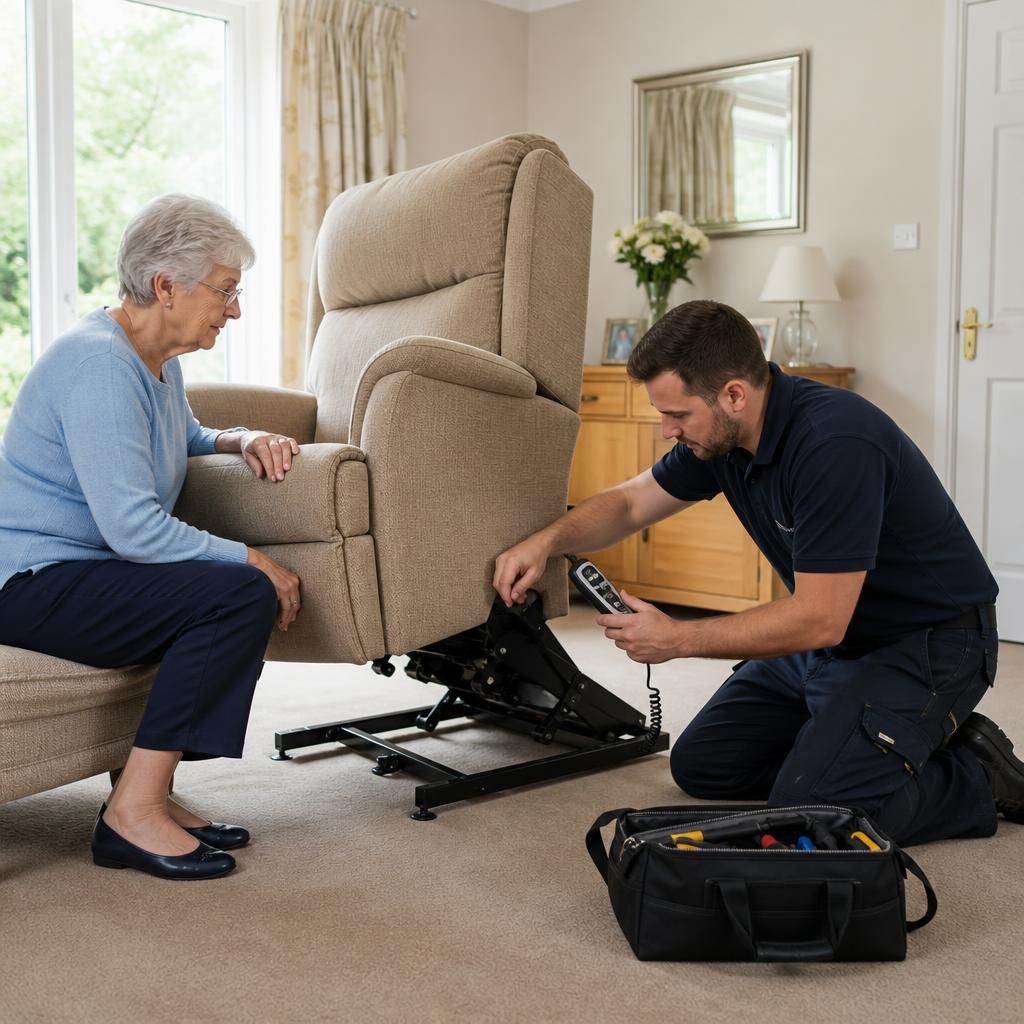
Book a lift chair maintenance check
Book a lift chair maintenance check to identify wear, electrical issues or movement problems before they affect safe, reliable use. Contact Independent Stairlifts to arrange an assessment by a qualified technician.