
What are the key indicators that my lift chair requires professional maintenance?
Your lift chair requires professional maintenance if it moves slowly or unevenly, makes unusual noises, struggles to lift or recline, stops unexpectedly, or shows signs of loose wiring, damaged upholstery or mechanical wear. Arrange an inspection promptly if the chair becomes unsafe, fails to reach its usual position, or develops an electrical fault, and stop using it until it has been checked.
Your lift chair requires professional maintenance when its movement, electrical operation, structure or safety appears to have changed. Important indicators include slow or uneven lifting, difficulty reclining or returning upright, unusual noises, sudden stops, repeated loss of power, damaged cables, loose components, or upholstery that could affect safe use. If the chair becomes unstable, smells of overheating, shows visible electrical damage or fails to reach a safe position, stop using it and arrange an inspection promptly.
Lift chairs combine an electric motor, lifting mechanism, reclining parts, control handset and power connections. A small change in performance can indicate wear, an obstruction, a loose connection or a developing mechanical or electrical fault. Continuing to use the chair without identifying the cause may place additional strain on the mechanism and could increase the risk of injury or further damage.
- Slower or uneven movement: The chair may take longer than usual to lift or recline, pause during operation, tilt unevenly or move in a jerky manner. This can indicate mechanical wear, an obstruction, a failing motor or a problem with the power supply.
- Difficulty lifting or reclining: If the chair struggles to raise you to a standing position, does not recline fully or cannot return to its normal upright position, professional assessment is advisable. Do not force the controls or attempt to push the chair into position.
- Unusual sounds: Grinding, clicking, knocking, squeaking or humming that was not present previously may point to worn moving parts, loose fixings or motor strain. A brief sound caused by normal operation is different from a new, persistent or worsening noise.
- Unexpected stops or intermittent operation: A chair that cuts out, works only in certain positions or operates inconsistently may have a fault with the handset, wiring, control system, motor or power connection. Intermittent faults should not be ignored simply because the chair starts working again.
- Electrical warning signs: Arrange professional help if you notice a burning smell, heat around the motor or power supply, sparking, damaged insulation, exposed wires, scorch marks or repeated tripping of a household circuit. Disconnect the chair from the mains if it is safe to do so, and do not use it until it has been checked.
- Handset or control problems: Buttons that stick, fail to respond, require repeated pressing or activate the wrong movement may indicate a faulty handset or control connection. Keep the handset dry and avoid opening it or bypassing its controls.
- Loose, damaged or trapped cables: Power leads and handset cables can become caught beneath the chair, stretched, pinched or damaged during movement. A cable that is warm, frayed or pulled out of position requires attention. Keep cables clear while waiting for an engineer, but do not splice or repair them yourself.
- Instability or changes in the chair’s structure: Rocking, excessive movement, loose armrests, a loose footrest, damaged frame parts or fixings that no longer hold securely can affect safe transfers and seating. Stop using the chair if it feels unstable when rising or lowering.
- Damaged upholstery or padding: Torn fabric is not always a mechanical fault, but damaged or compressed padding can expose sharp edges, affect posture or interfere with moving parts. Professional advice can establish whether the upholstery needs repair and whether the chair remains safe to operate.
- Reduced battery performance: If a battery-powered model loses charge quickly, operates weakly or stops before completing a movement, the batteries, charger or charging connection may need checking. Use only the specified charger and replacement batteries, where applicable.
Professional maintenance is also appropriate when the chair has been moved, stored for a prolonged period, exposed to damp conditions or subjected to an impact. These circumstances can affect alignment, wiring and the lifting mechanism even when there is no obvious fault. A service may also be sensible if the chair has not been inspected for some time, particularly where it is used frequently or supports someone with limited balance or strength.
Before arranging an appointment, note what the chair does when the fault occurs, whether it happens during lifting or reclining, whether the problem is constant, and whether any unusual sound or smell is present. Check that the plug is firmly connected and that the handset cable has not been pulled or trapped, but do not remove covers, lubricate internal parts or work on the electrical system. These checks can help identify a simple external issue, but they do not replace professional inspection.
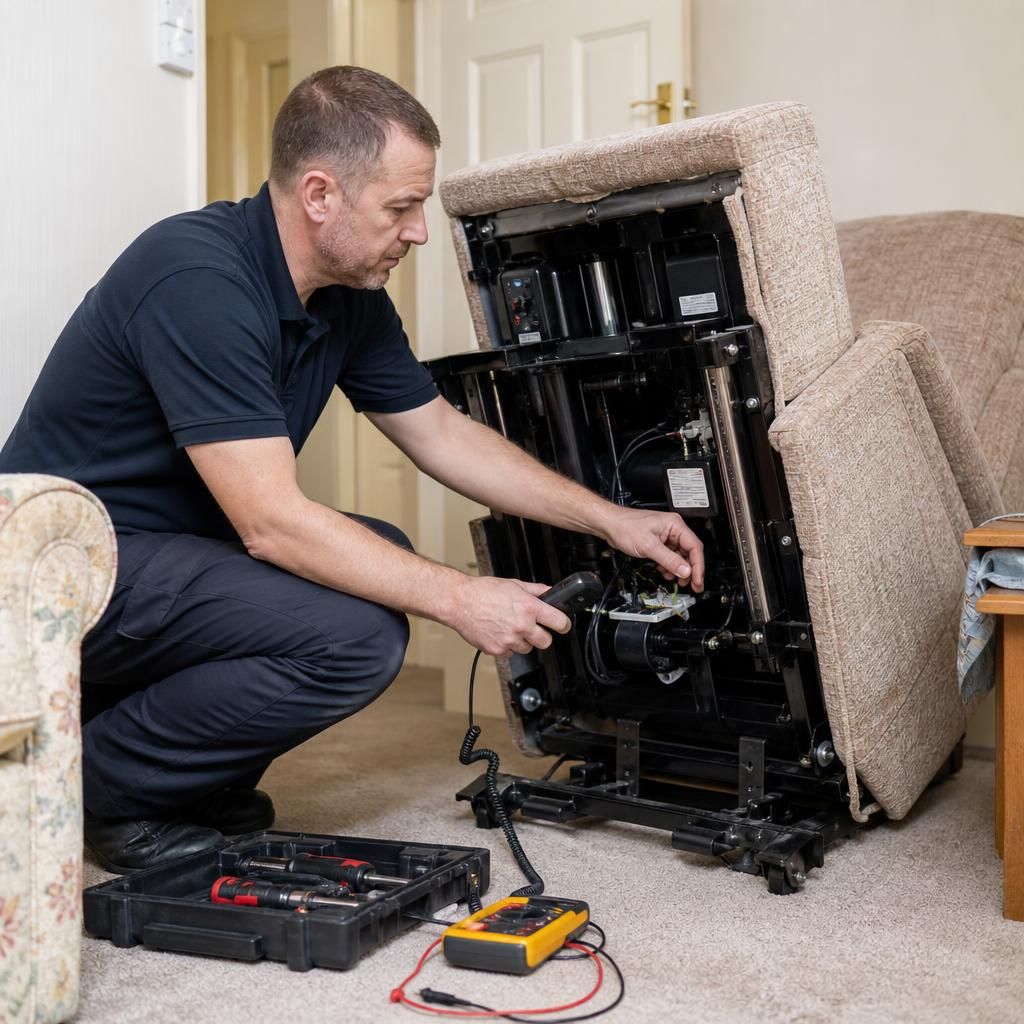
During a professional maintenance visit, the technician can assess the frame, lifting and reclining mechanism, motor, handset, wiring, power supply, fixings and safety-related movement. They can identify worn parts, clear or advise on obstructions, test operation and explain whether adjustment, repair or replacement is appropriate. If a component needs replacing, it should be compatible with the chair and fitted correctly rather than improvised from a general-purpose part.
Do not use the lift chair if it tips, does not stop correctly, moves without the control being operated, leaves you unable to stand safely, or has an electrical fault. Keep children and pets away from the moving mechanism, and avoid trying to lift or reposition a heavy chair while it is occupied. Contact the service team for advice and tell them the exact symptoms so the appropriate support can be arranged.
Prompt professional maintenance can restore reliable operation and identify faults before they cause a complete breakdown. It also provides a safer way to deal with issues that involve the motor, lifting frame, electrical connections or structural components—areas where DIY repairs can create additional risks and may affect the manufacturer’s warranty.
Electrical warning signs are a clear indicator that your lift chair needs professional maintenance. Stop using the chair if you notice a burning smell, sparking, scorch marks, unusual heat, exposed wires, damaged insulation or repeated tripping of the household circuit.
If it is safe to do so, switch off and unplug the chair, then keep it out of use until it has been inspected. Do not open the motor or control box, splice cables or fit an unapproved replacement part. A technician can check the power supply, handset, wiring, motor and control system, identify the fault and confirm whether the chair can be safely returned to service.
Arrange professional lift chair maintenance today
If your lift chair is moving unevenly, making unusual noises or showing electrical or structural problems, stop using it and contact Independent Stairlifts to arrange a professional maintenance inspection.