Lift Chair Maintenance & Servicing

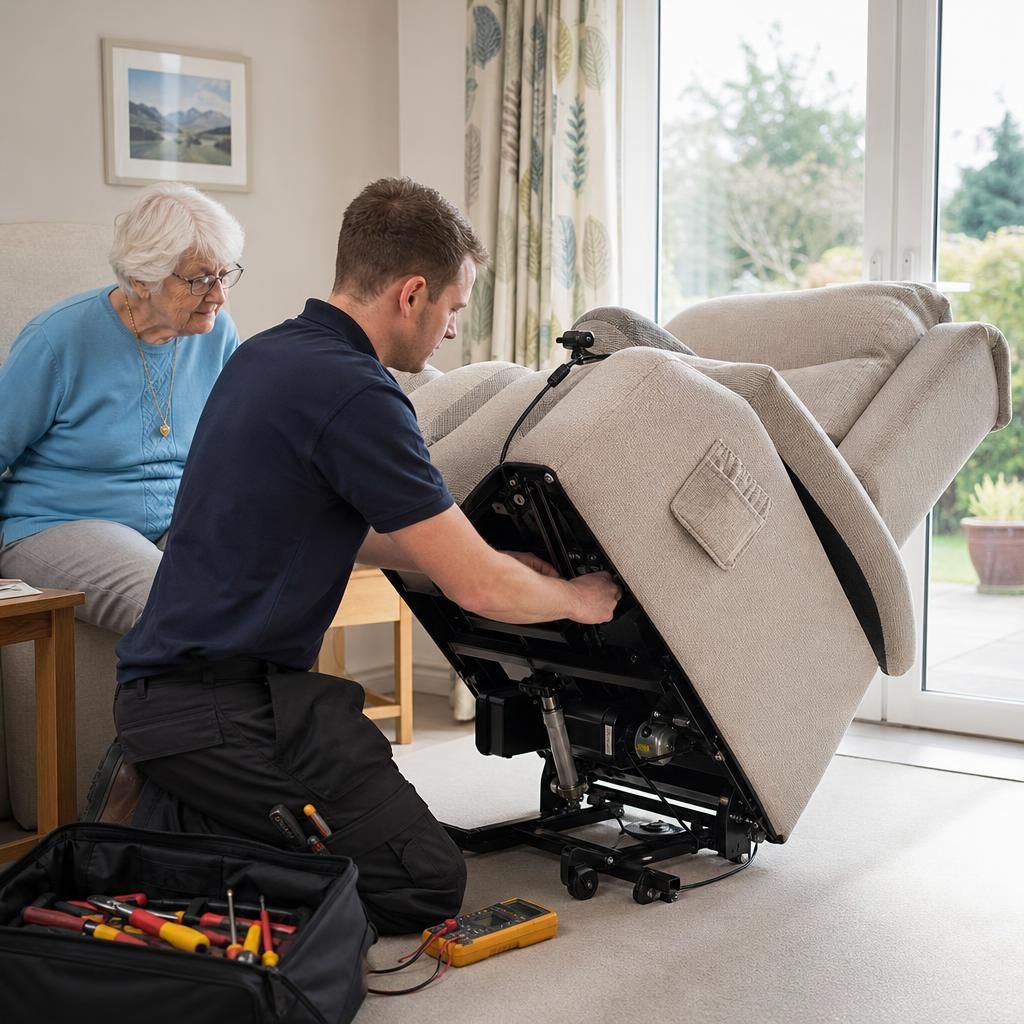
Lift chair maintenance and servicing keeps the lifting, reclining and electrical systems of a riser recliner operating safely and reliably. Professional checks identify wear, secure connections and faults before failure. Arrange an assessment if movement becomes noisy, uneven or unreliable.

Book a free assessment

What Professional Lift Chair Servicing Helps Maintain

Lift mechanism inspection

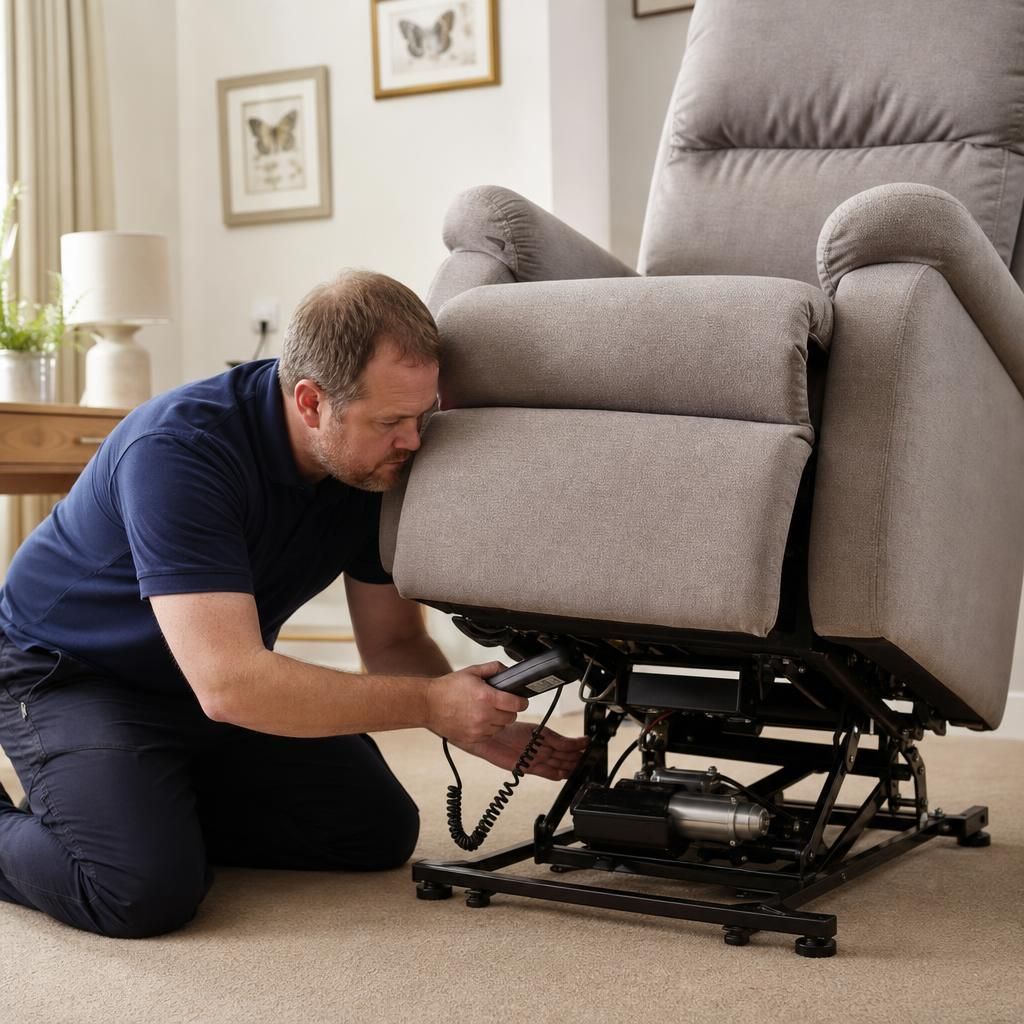
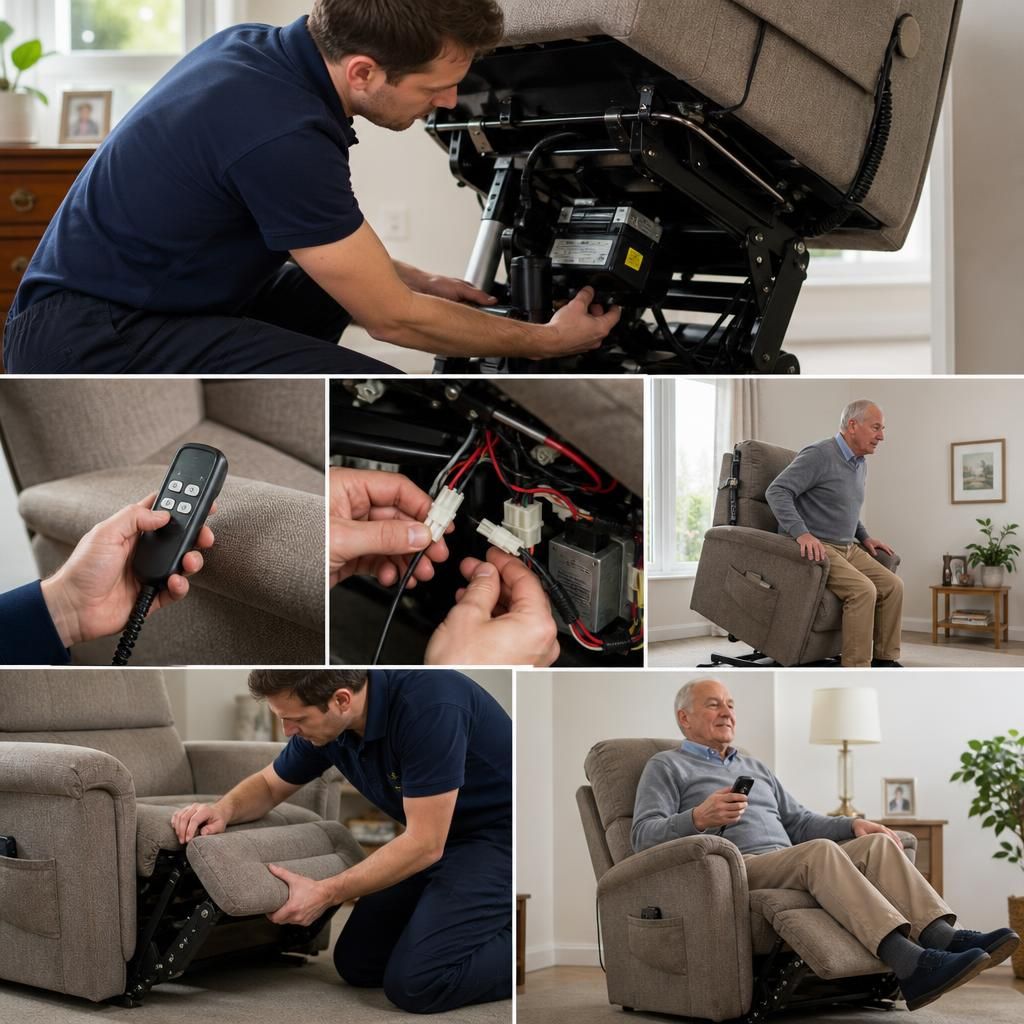
A service inspection examines the lifting frame, motor and moving joints for wear, obstruction or damage. Identifying a developing mechanical fault early can help prevent uneven movement and reduce the risk of the chair stopping during operation.

Handset and control checks

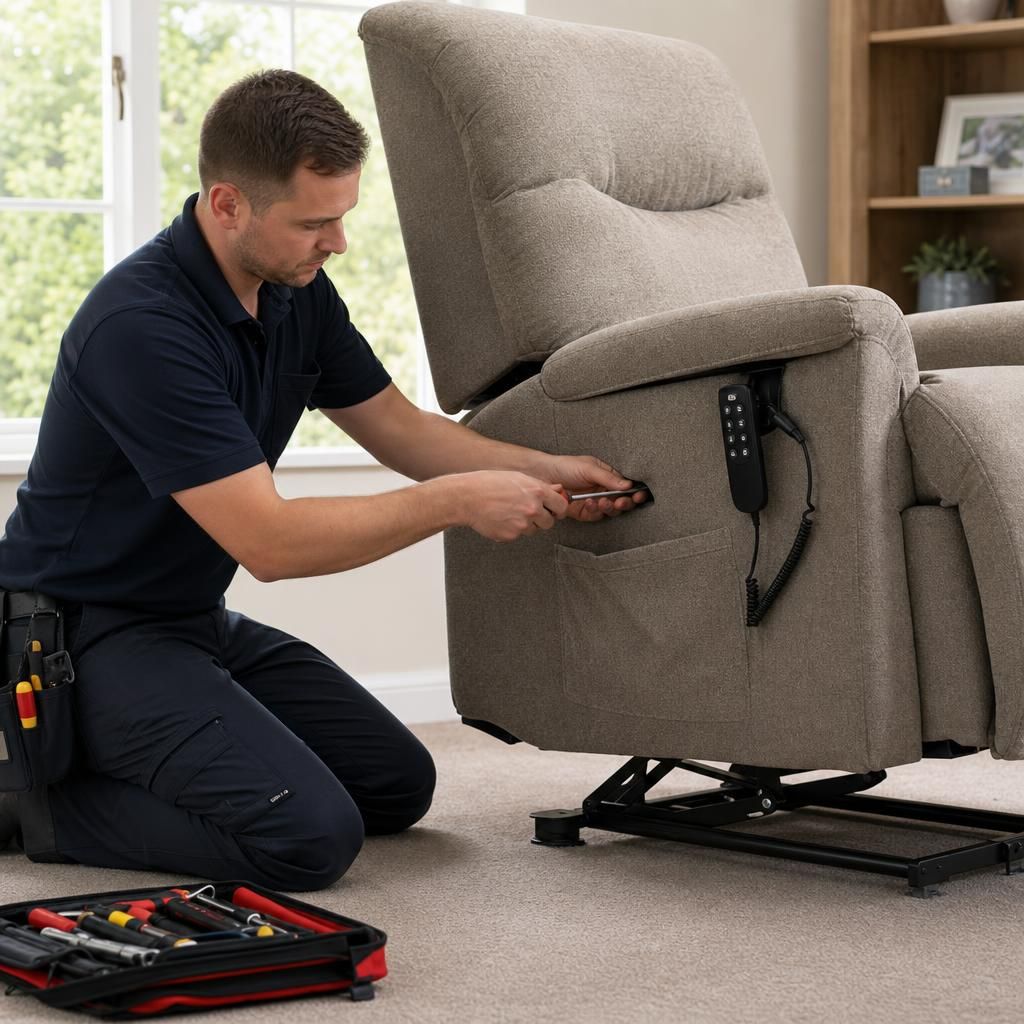
The handset should respond consistently to each control, with no sticking buttons or delayed movement. Servicing can identify faults in the controls and confirm that lifting and reclining functions operate as intended.

Electrical safety checks

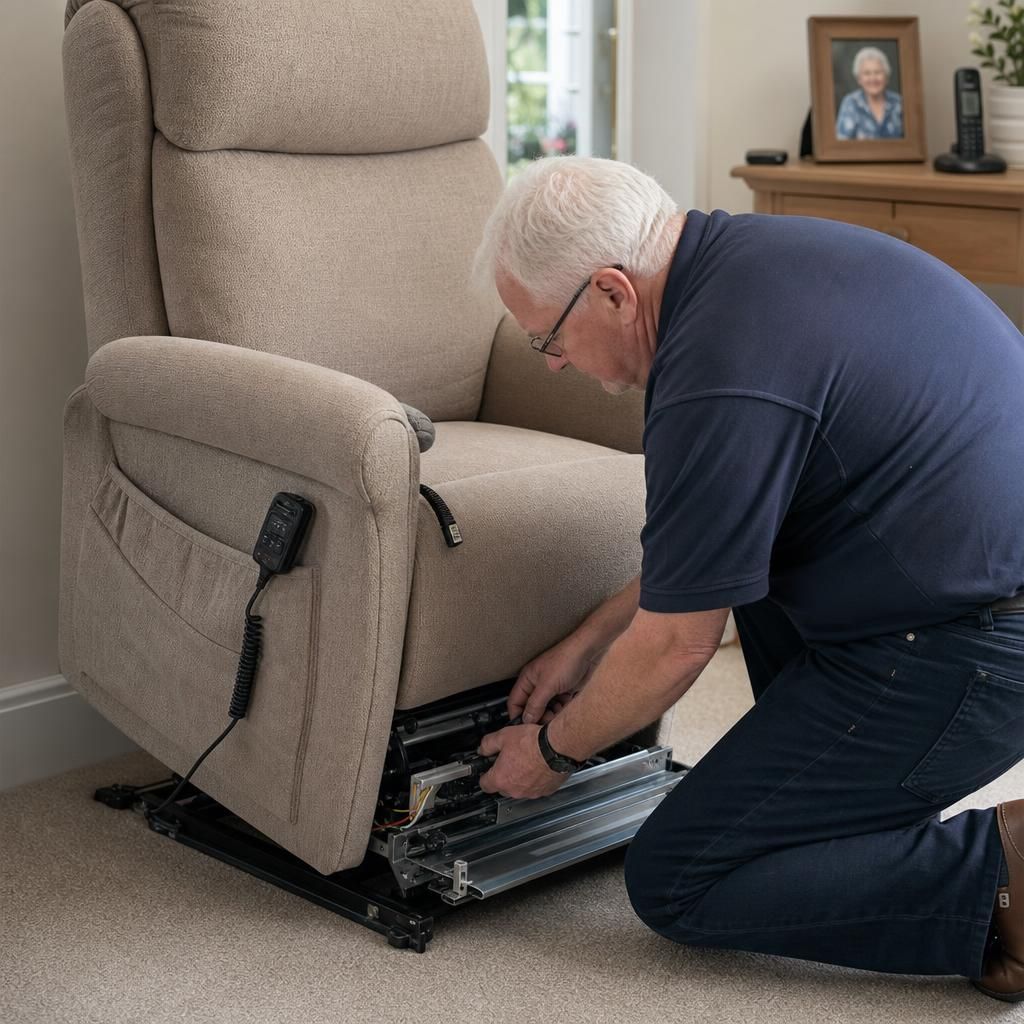
Wiring, plugs, connectors and the power supply are checked for looseness, damage or signs of overheating. Secure electrical connections help the chair operate reliably and reduce avoidable interruptions.

Smooth standing assistance

A properly maintained lift chair should raise and lower in a controlled, even manner without unusual noise or hesitation. A service can assess movement that has become slower, jerky or less predictable.

Reclining and footrest operation

The reclining system and footrest are checked for restricted movement, unusual resistance and alignment issues. Correct operation supports comfortable positioning and helps limit additional strain on the chair.

Reliable everyday use

Maintenance helps keep essential lift, recline and control functions dependable between services. If the chair is intermittently failing or behaving differently, arrange an assessment rather than continuing to use it without checks.

What to Expect from Professional Lift Chair Servicing

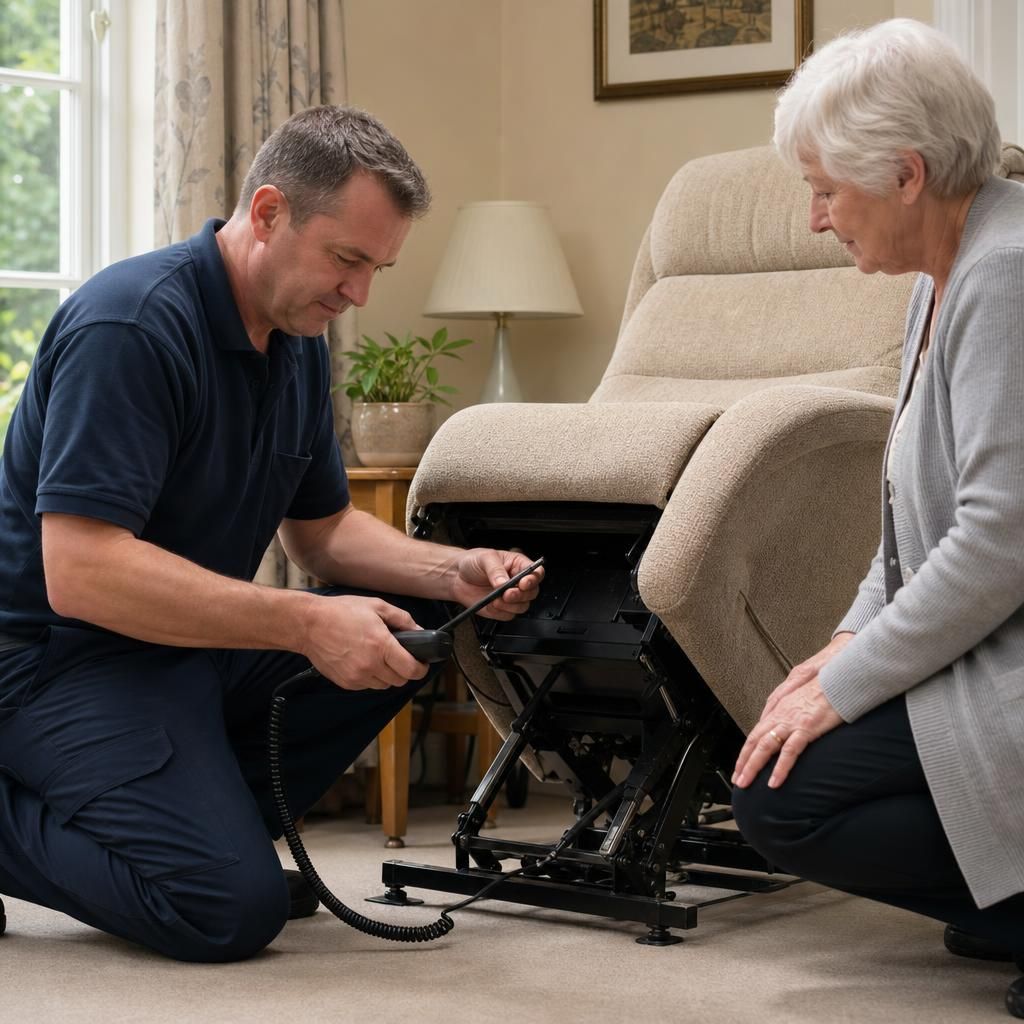
Professional lift chair servicing involves checking the chair’s lifting and reclining mechanisms, motors, handset, wiring, power supply and frame for safe operation. The technician should explain any faults or wear found, advise whether servicing or repair is appropriate, and identify safety concerns before further use.

Before repair work or replacement parts are fitted, ask for a clear explanation of the recommended work and any costs involved. Keep service records and follow the manufacturer’s maintenance instructions, as warranty cover can depend on using suitable parts and approved servicing procedures. If the chair develops a fault, stop using it if movement is unsafe and arrange an assessment.

Safety checks before work

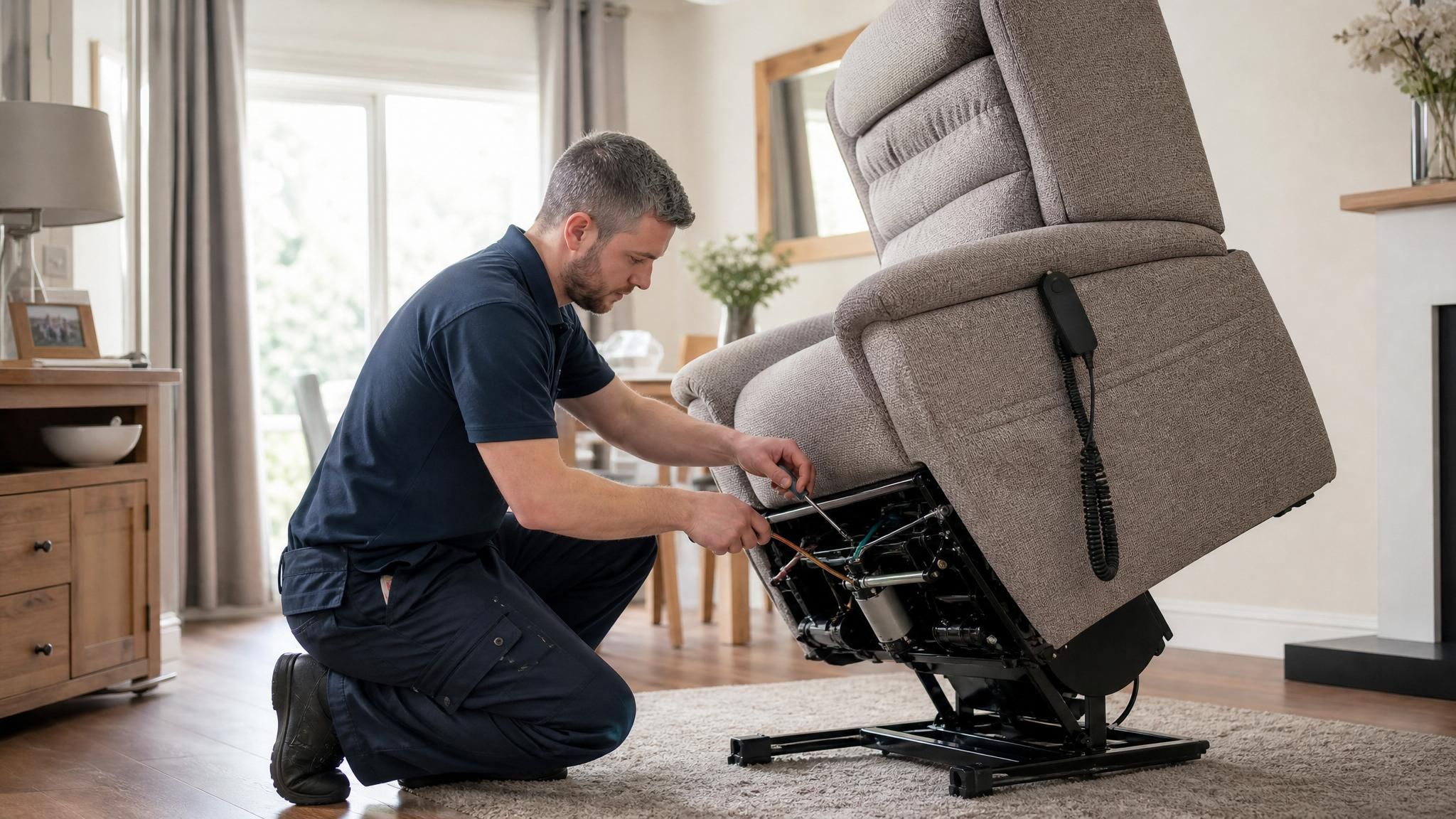
A service should begin with a safety assessment of the lift chair and its immediate surroundings. This helps determine whether the chair can remain in use while maintenance or repair is arranged.

When should a lift chair be taken out of use?

Stop using the chair if it moves unpredictably, does not reach its intended position, gives off a burning smell, shows damaged cables or has exposed electrical parts. Keep the handset and power cable clear of trapping points, and do not attempt to bypass safety features. A qualified technician can assess the fault and advise whether the chair is safe to operate.

Clear service recommendations

You should receive a clear explanation of any work recommended after the assessment. This allows you to distinguish routine maintenance from a repair or replacement that is necessary for safe operation.

What should a service quotation include?

The quotation should describe the fault or worn component, the proposed remedy and whether parts, labour or a further visit are included. Ask whether the chair will be tested after the work and whether any removed parts will be returned. Do not authorise additional work until you understand the revised cost and the reason it is needed.

Parts and compatibility

Lift chairs rely on compatible motors, control systems, power supplies and structural components. Using an unsuitable part can affect movement, safety and the validity of applicable warranty cover.

Are replacement parts covered?

Parts and repair work may have separate warranty terms, so check what is covered, for how long and what exclusions apply. Warranty protection can depend on the chair’s age, the manufacturer’s conditions and whether approved or compatible parts were used. Keep the service invoice and part details, and contact the servicing provider promptly if the same fault returns within the stated coverage period.

Handling faults after servicing

A fault that returns after servicing should be reported promptly rather than treated as normal chair behaviour. Early information can help the technician identify whether the original issue remains or a separate component has developed a problem.

What information should you provide?

Describe what the chair does, when the fault occurs and whether it affects lifting, reclining, stopping or the handset. Note any unusual sound, smell or change in speed, and tell the technician whether the fault is intermittent. Avoid repeated testing if the movement is unsafe, and provide the service paperwork so the previous work and fitted parts can be reviewed.

Service records and ongoing care

A written service record provides useful evidence of the chair’s maintenance history and helps identify recurring faults. It also supports informed decisions about future repairs or replacement.

What should you keep after a service?

Keep the service report, invoices, warranty information and details of fitted parts together with the manufacturer’s instructions. Follow the recommended cleaning and operating guidance, avoid placing excessive weight on the chair and keep the area around the lift mechanism clear. Arrange further advice if the chair becomes stiff, noisy or unreliable rather than waiting for complete failure.

Questions to Ask Before Booking Lift Chair Servicing

What regular maintenance should be performed to keep my lift chair functioning optimally?

Regular maintenance prevents mechanical failures and extends the lifespan of your lift chair, ensuring reliable mobility support and avoiding costly emergency repairs or replacements in the future.

How often should a lift chair be professionally serviced to ensure maximum longevity and performance?

Lift chairs should be professionally serviced annually to maintain optimal functionality and safety. Regular servicing helps identify wear and tear early, ensuring uninterrupted performance and extending the chair's life.

What should I do if I notice unusual noises or movements from my lift chair?

Immediately discontinue use and inspect for visible issues. If none are apparent, professional evaluation is essential to prevent further damage or safety risks. Contact a service expert for assessment.

What are the potential risks of neglecting routine lift chair maintenance?

Neglecting maintenance can lead to operational failures, increased wear, and compromised safety, potentially resulting in costly repairs or replacements. Regular upkeep safeguards functionality and elevates user safety and satisfaction.

What indicators suggest my lift chair battery may need replacement?

A sluggish lift operation, dimming lights, or repeated error codes indicate battery issues. Prompt replacement is crucial to maintain smooth lift chair functionality and avoid unexpected interruptions in service.

Stop using an unsafe or unreliable lift chair and arrange professional servicing

Lift chair maintenance and servicing is a professional inspection of the lift mechanism, reclining system, motors, handset, wiring and power supply. It identifies wear and faults that could make movement unsafe or unreliable.

Stop using the chair if it moves unevenly, makes unusual noises or fails to lift safely. Arrange an assessment before further use, and follow the manufacturer’s instructions.

Stop using an unsafe lift chair

If the chair moves unevenly, makes unusual noises or fails to lift or recline reliably, switch it off and arrange professional servicing before using it again.

Have the complete system checked

A proper service should assess the lift and recline mechanisms, motors, handset, wiring, power supply, frame and visible signs of wear.

Do not ignore electrical faults

Intermittent movement, damaged cables, burning smells or repeated power issues require prompt assessment rather than continued use.

Ask what the service includes

Before work starts, request a clear explanation of any fault, recommended repair, replacement parts and associated costs.

Keep the service record

Retain service details and follow the manufacturer’s maintenance instructions, as suitable parts and approved procedures may affect warranty cover.

Benefits of professional lift chair maintenance and servicing

Professional lift chair maintenance and servicing can confirm that the lifting, reclining and electrical systems operate safely, identify wear before it causes failure, and provide clear advice on repairs, parts, servicing intervals and safe use.

  1. 01

    Safer sit-to-stand transfers

    A properly serviced riser recliner should provide controlled movement through the lifting cycle, helping the user transfer between sitting and standing without relying on sudden or inconsistent motion.

  2. 02

    Fewer avoidable interruptions

    Routine servicing can address developing issues such as stiffness, unusual sounds or intermittent controls before they leave the chair unavailable for everyday use.

  3. 03

    A clearer repair decision

    A technician can distinguish between an adjustment, a replaceable component and a more serious mechanical or electrical fault, helping you avoid replacing the entire chair unnecessarily.

  4. 04

    Correctly matched replacement parts

    When a part is needed, professional servicing helps confirm that the replacement is compatible with the chair’s motor, handset, wiring and frame, rather than relying on an unsuitable generic component.

  5. 05

    More predictable ongoing costs

    A written assessment separates essential repairs from optional work, so you can decide what to authorise now and what may be monitored or planned for later.

  6. 06

    Practical advice for continued use

    After servicing, you should know which controls and features are safe to use, what warning signs to watch for and when to stop operating the chair and request further help.

Questions about lift chair maintenance and servicing

What are the most common maintenance issues with lift chairs?

Regular maintenance, like checking the power source and inspecting for wear, prevents costly repairs and ensures your lift chair's optimal function, reliability, and safety.

How often should a lift chair be serviced to ensure longevity?

Lift chairs should generally be serviced annually to maintain peak performance and safety. Regular checks of motor function, upholstery, and mechanical components ensure your chair remains reliable and comfortable.

What can I do at home to maintain my lift chair regularly?

Regularly clean your lift chair, inspecting cables and connections for signs of wear. Lubricate moving parts if recommended by the manufacturer, and test the controls to ensure they function correctly.

What should I do if my lift chair makes unusual noises during operation?

Unusual noises might indicate loose or worn components. Turn off the chair, check for visible issues, and tighten any loose screws. If noise persists, consult a professional for further inspection.

What safety checks should I perform if my lift chair has been unused for a prolonged period?

Before using a lift chair that has been idle, ensure the battery is charged, test all controls, inspect for visible damage, and confirm all connections are secure.

Book Your Lift Chair Service

Arrange a professional lift chair maintenance and servicing assessment with Independent Stairlifts. A technician can check the chair’s lifting, reclining and electrical systems, explain any faults, and recommend appropriate repairs or parts before you commit.

Contact Us

Request a free assessment

No obligation. We will talk through your staircase and options.

Ease of Use Commendation — Arthritis FoundationAll of our stairlifts carry the Ease of Use Commendation.