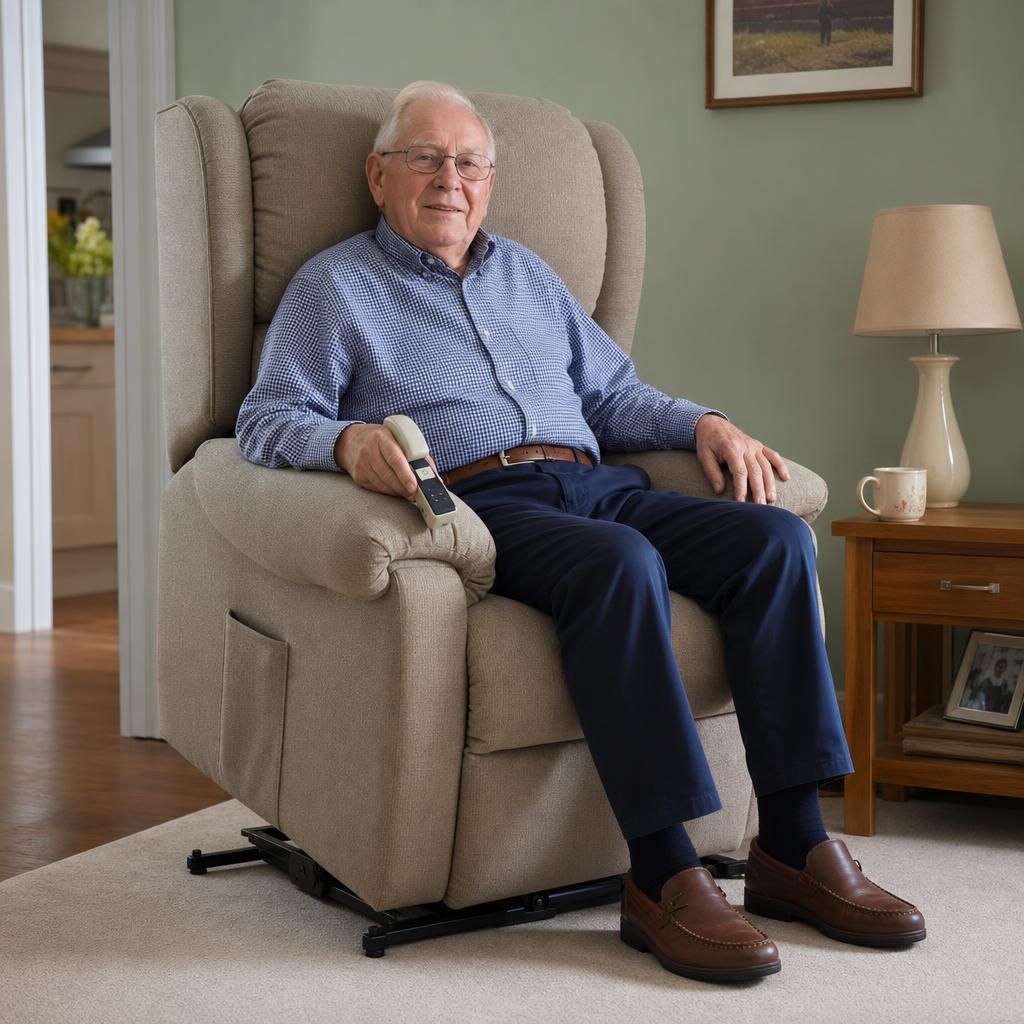
Restore safer standing support
A correctly repaired lift chair should raise and tilt smoothly, helping the user move from sitting to standing without relying on unstable furniture or another person for support.


If your lift chair has stopped working, check its power supply, handset, connections and safety cut-outs. A chair that will not go down may need a reset or obstruction check; electrical faults and damaged wiring require professional repair.
A correctly repaired lift chair should raise and tilt smoothly, helping the user move from sitting to standing without relying on unstable furniture or another person for support.

Once the fault is resolved, the backrest and footrest should respond predictably to the handset, allowing the chair to provide the intended support for sitting, resting and reclining.
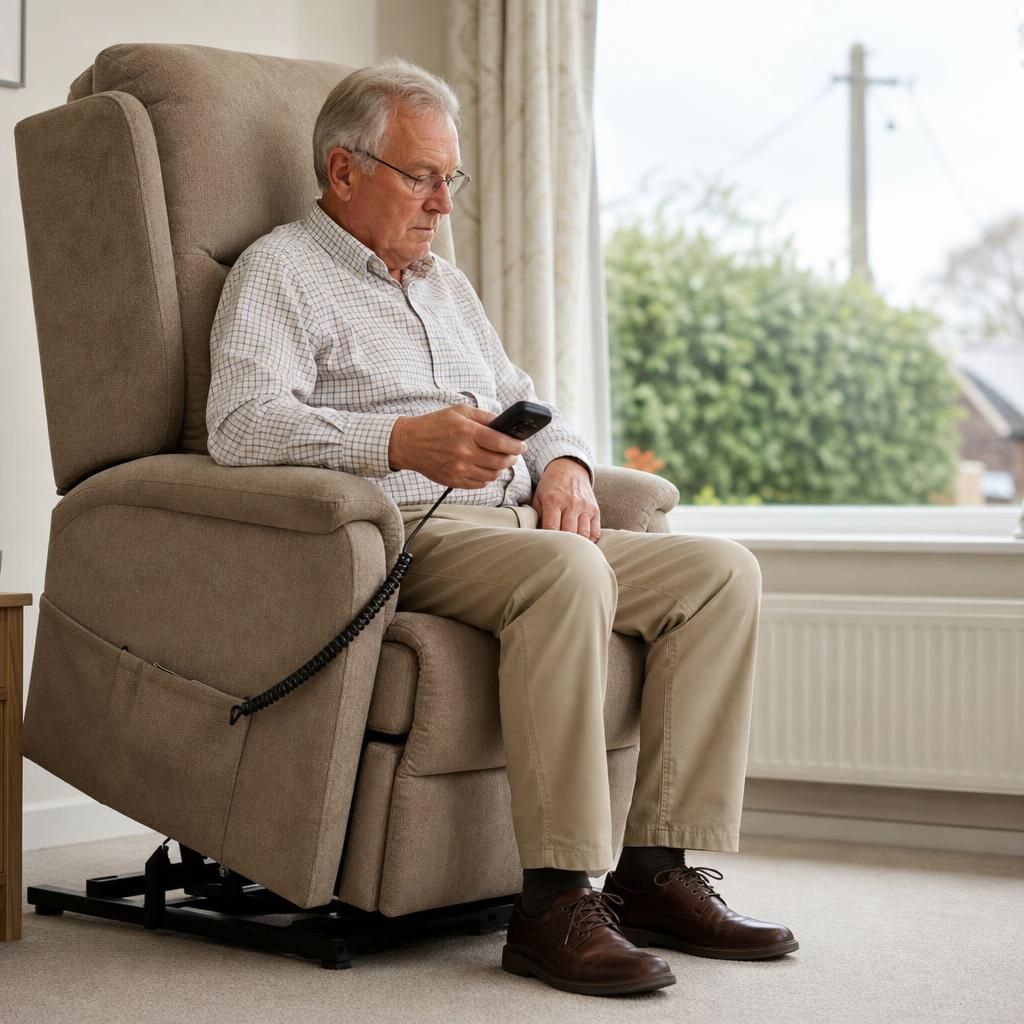
A responsive handset and secure connection make it easier to adjust the chair independently. If buttons work intermittently or only in certain positions, the handset and cable need checking.

The chair needs enough clear space to raise, recline and extend its footrest. Removing nearby furniture, rugs or objects can help prevent repeat stoppages and protect the moving parts.
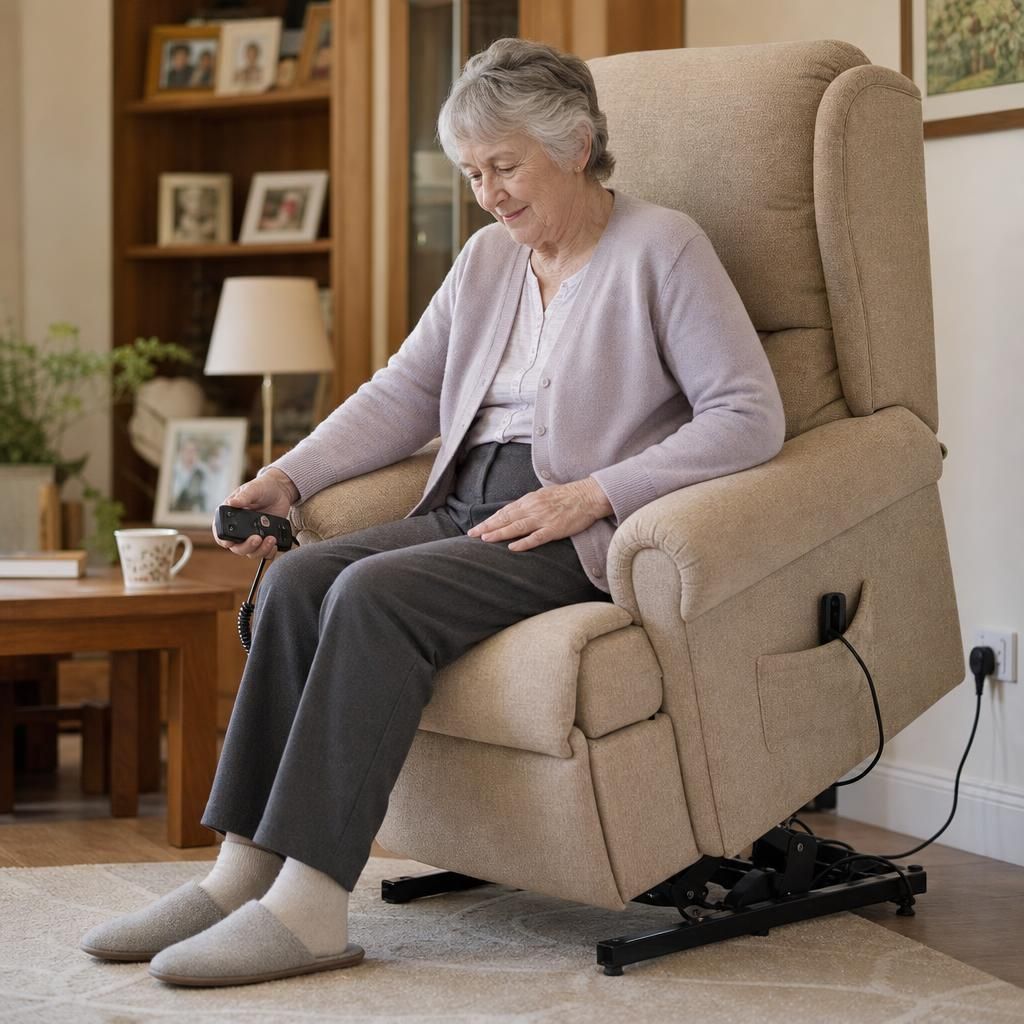
If basic checks do not restore operation, a trained technician can assess the motor, wiring, handset and safety controls. Professional attention is the safest route for electrical faults or a chair that remains stuck.
If your lift chair has stopped working, start with safe external checks: confirm the plug and power switch, inspect the handset connection and remove any obstruction around the footrest or lifting mechanism. Do not remove covers or work on the motor, wiring or control box, as these components can present an electrical and mechanical risk.
If the chair remains stuck, will not go down, makes unusual noises or shows signs of damaged wiring, arrange a professional assessment. The fault can then be identified safely, with suitable repair or parts support recommended for the chair’s make, model and condition.
A non-working lift chair is assessed by checking its electrical supply, handset, control system, motor and moving parts in a safe sequence.
The technician will establish what the chair does and does not do, inspect accessible components and test the relevant controls. This helps distinguish a straightforward fault from a failed motor, control box, handset or wiring issue, without dismantling parts unnecessarily.
Many lift chair faults can be repaired, but the suitable option depends on the chair’s condition, fault and availability of compatible parts.
After assessing the chair, you will be told whether repair is practical and which parts may be required. If the chair is heavily worn, unsafe or uneconomical to repair, the alternatives can be explained clearly so you can make an informed decision.
Electrical faults, damaged wiring and unexpected movement can make a lift chair unsafe to use until it has been assessed.
Where a chair presents a safety risk, it should be switched off and left unused until professional advice is available. Covers, motors and control boxes should not be opened at home, as they contain electrical and mechanical components that require appropriate knowledge and precautions.
Replacement parts must match the lift chair’s make, model and control system; a visually similar component is not necessarily compatible.
Parts availability and suitability are checked before work is recommended. Any warranty applying to supplied parts or completed work should be explained at the time of quotation or repair, including what is covered and any conditions that affect the cover.
A repair is not complete until the chair’s relevant functions have been checked and its safe operation has been explained.
Following repair, the chair should be tested through the affected movement and controls, with attention to smooth operation and safe stopping. You will receive practical guidance on use and should report any recurring fault, unusual noise or change in movement promptly rather than continuing to use the chair.
Check all connections, ensuring the lift chair is plugged in and receiving power, to quickly identify any electrical issues hindering its operation.
Check the motor for wear or misalignment, and examine tracks and gears for obstructions. If unfamiliar with these mechanics, contact a professional to ensure safe and accurate repairs.
Inspect the power source by tracing the cable and verifying connection integrity. If intact, try a different outlet or test the motor function, indicating an electrical or mechanical issue, respectively.
Ensure the chair is stable to prevent tipping, disconnect power to avoid electrical risks, and refer to the user manual for emergency instructions or contact a professional for assistance.
Replace remote batteries and check its infrared signal using a phone camera to detect the light emission. If ineffective, consult your user manual for resetting instructions or seek professional help.
If your lift chair has stopped working, check the power supply, handset and visible connections. If it will not go down, look for an obstruction, but never force the mechanism.
Unplug it if you notice damaged wiring, a burning smell or unusual noises. Do not dismantle the motor or control box; arrange professional lift chair repairs if these checks do not restore safe operation.
Unplug the lift chair if you notice a burning smell, smoke, damaged cable, sparking or unusual mechanical noise. Do not use it again until it has been professionally assessed.
Confirm the plug is fully inserted, the wall socket is switched on and any accessible chair power switch is in the correct position. Avoid using extension leads or a socket that shows signs of damage.
If the chair will not rise, recline or return to its normal position, do not push, pull or sit in it while it is moving irregularly. Forcing the mechanism may worsen the fault or cause an injury.
Remove loose items from beneath the footrest and around the chair base, but only carry out checks that are visible and accessible without removing covers or panels.
If external checks do not restore safe operation, contact a lift chair repair specialist. Provide the chair make and model, describe the fault and explain any sounds or warning signs.
When a lift chair stops working, a safe fault-checking process helps identify whether the issue is power, handset, wiring, an obstruction or the lifting mechanism, and whether professional repair or parts support is required.
A clear fault diagnosis
A technician will assess the chair’s controls, motor, wiring, power supply and lifting mechanism to identify why it has stopped working, rather than replacing parts without confirming the cause.
Safe recovery if the chair is stuck
If the chair is raised, reclined or unable to return to its usual position, the fault can be assessed and the chair made safe without forcing the mechanism or attempting unsafe manual movement.
Repair of the failed component
Where practical, the faulty control, handset, transformer, motor, wiring or other component can be repaired or replaced with a suitable part for the chair’s make and model.
Advice when parts are no longer available
Older or discontinued lift chairs may not support a straightforward repair. You can be advised whether compatible parts, specialist repair or replacement is the most sensible option.
Checks for underlying wear or damage
The assessment can identify worn mechanisms, trapped cables, loose connections or repeated faults that may cause the chair to stop working again if left unresolved.
A clear recommendation before work proceeds
Once the cause and condition of the chair are understood, you can receive a practical recommendation on the available repair options and any further support needed.
Check if the power cable is securely connected and the outlet functions properly; a loose cable or non-working outlet can often cause operational issues in lift chairs.
Ensure the chair isn't overloaded and that all mechanical components, including the motor and lift mechanism, are functioning without obstruction. Professional assessment may be required for persistent issues.
Inspect the power source, including the plug and any connections, ensuring all are securely attached. Check for blown fuses or tripped circuit breakers affecting your home's electrical system.
Ensure the footrest is not blocked, and the remote control is correctly set. Inspect for possible obstruction in the mechanism and verify no buttons are inadvertently activated causing temporary malfunction.
Check if any objects are obstructing the chair's mechanism. Ensure the motor is operational, and reset the control system if needed. Professional evaluation may be required for persistent faults.
If your lift chair has stopped working, contact Independent Stairlifts for practical advice or a professional assessment. We can help identify the fault, arrange suitable repairs or parts, and restore safe, reliable operation without risking DIY work.
Contact Us