
What steps can I take at home to maintain my lift chair between professional services?
Between professional services, keep your lift chair clean and dry, check the upholstery, handset, cable and footrest for damage, and ensure the chair has clear space to operate safely. Do not attempt electrical repairs or alter the mechanism; report unusual noises, movement, overheating, damaged cables or repeated faults to a qualified engineer.
Between professional services, maintain your lift chair by keeping it clean and dry, checking the upholstery and controls, keeping the operating area clear, and reporting any change in performance promptly. These simple checks help identify developing faults, but they do not replace servicing or authorised repairs. Never remove the chair’s covers, alter the lifting mechanism or attempt electrical work yourself.
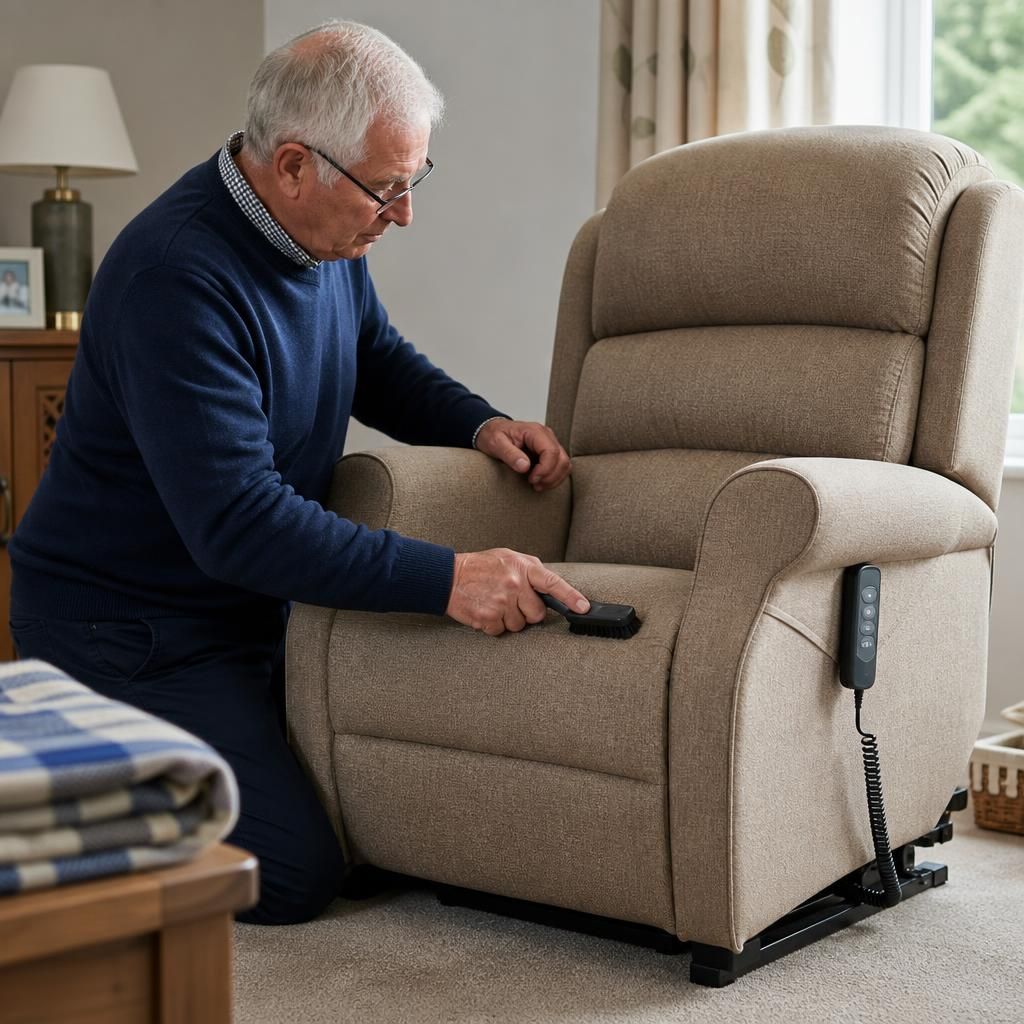
Keep the chair clean and dry. Remove dust, crumbs and pet hair from the seat, back, armrests and accessible areas around the base using a soft brush or vacuum attachment. Follow the upholstery manufacturer’s cleaning instructions and test any cleaning product on an inconspicuous area first. Avoid soaking the fabric or leather, spraying liquid near the handset or motor, and using abrasive or solvent-based products. Allow any cleaned area to dry fully before using the chair.
Do not place the chair in a position where it is exposed to rain, condensation, radiators or prolonged direct sunlight unless it has been specifically designed for that environment. Moisture and excessive heat can damage upholstery, wiring and electrical components.
Inspect the visible parts regularly. Look for:
- Loose stitching, torn upholstery, exposed padding or damaged arm covers.
- Cracks, looseness or unusual movement in the frame, footrest or reclining sections.
- Scuffing, trapping or stretching around the power cable and handset lead.
- Damaged plugs, sockets, switches or cable insulation.
- Objects, fabric or pet hair caught beneath the chair or around its moving sections.
Do not continue using the chair if a cable is frayed, a plug is cracked, a component is loose, or the mechanism appears to be catching. Keep children and pets away from moving parts and never place hands, feet or objects beneath the chair while it is operating.
Check the handset and controls. Keep the handset where it cannot be sat on, dropped or pulled by its cable. Confirm that the buttons respond normally and that the chair moves smoothly in both directions. A sticking button, delayed response, intermittent operation or handset that becomes unusually warm should be reported rather than investigated by dismantling the control.
Use only the handset supplied or approved for your chair. Do not substitute a control unit, charger, battery or power supply unless its compatibility has been confirmed by the manufacturer or a qualified engineer. If your chair has a battery backup system, follow the instructions for checking or replacing its batteries. Do not open the battery compartment or handle damaged or leaking batteries without appropriate advice.
Keep the operating area clear. The chair needs enough room to recline, rise and return to its normal position without striking walls, tables, footstools or other furniture. Check that rugs, cables, blankets, walking aids and other items cannot become trapped under the footrest or base. Make sure the chair remains on a stable, level surface and has not been moved into a position that restricts its movement.
Before operating the chair, ensure that anyone nearby is clear of the footrest and lifting mechanism. Do not sit on the footrest, stand on it, or place heavy items on the chair while it is moving. Use the chair only for its intended purpose and within the operating guidance provided for your model.
Observe how the chair operates. During normal use, pay attention to changes such as:
- Grinding, clicking, scraping or knocking noises that were not present previously.
- Jerky, uneven or unusually slow lifting, lowering or reclining.
- The chair stopping part-way through a movement or needing repeated button presses.
- Unexpected movement, rocking, overheating or a burning smell.
- Loss of power, repeated fuse trips or signs that the plug or socket is becoming hot.
Stop using the chair and contact a qualified engineer if any of these symptoms occur, particularly if there is smoke, a burning smell, exposed wiring, fluid near an electrical component or uncontrolled movement. Switch off the power and unplug the chair only if it is safe to do so and you can reach the plug without moving the chair or placing yourself at risk. Do not force the chair into position or repeatedly operate the controls to overcome a fault.
Do not lubricate or adjust the mechanism unless the manufacturer’s instructions specifically allow it. Applying oil or grease to the wrong part can attract dust, damage components or affect the chair’s safety controls. Similarly, do not tighten accessible fixings, remove covers or attempt to reset internal electrical parts unless this is expressly covered by the approved user instructions.
Keep the manufacturer’s manual and service information available, and follow any model-specific cleaning, charging and operating guidance. If you notice a fault, record what happened, which control was being used and whether the chair was occupied. This information can help the engineer diagnose the problem efficiently. Keep details of previous servicing and repairs, and use approved parts so that safety and warranty requirements are not compromised.
Home maintenance should remain limited to cleaning, visual checks, safe housekeeping and reporting concerns. Arrange professional attention when the chair is not operating normally, has suffered impact or liquid damage, or requires work on its motor, wiring, frame, lifting mechanism or electrical controls. A qualified engineer can carry out safety checks and repairs without exposing you to avoidable electrical or mechanical risks.
Between professional services, the safest maintenance you can carry out at home is routine cleaning, visual inspection and keeping the lift chair’s operating area clear. These checks can help you identify developing problems without interfering with the electrical or lifting mechanism.
- Remove dust, crumbs and pet hair from accessible surfaces and around the base using a soft brush or vacuum attachment.
- Check the upholstery, footrest, frame, handset and visible cables for tears, looseness, trapped objects or damage.
- Make sure rugs, blankets, cables and furniture cannot obstruct the chair as it rises, reclines or lowers.
- Listen for new grinding, clicking or knocking noises, and watch for jerky movement, delayed responses or overheating.
Stop using the chair and contact a qualified engineer if you notice exposed wiring, a damaged plug, a burning smell, uncontrolled movement or any fault that repeatedly returns. Do not remove covers, lubricate the mechanism or attempt electrical repairs unless your manufacturer’s instructions specifically permit it.
Book Your Lift Chair Service
Book your lift chair service with our team to arrange a professional inspection, maintenance and safety check. Contact us if you have noticed any change in the chair’s movement, controls or electrical operation.