Direct travel between floors
A straight stairlift follows one continuous rail, providing a consistent route between the lower and upper levels where the staircase has no bends or intermediate landings.

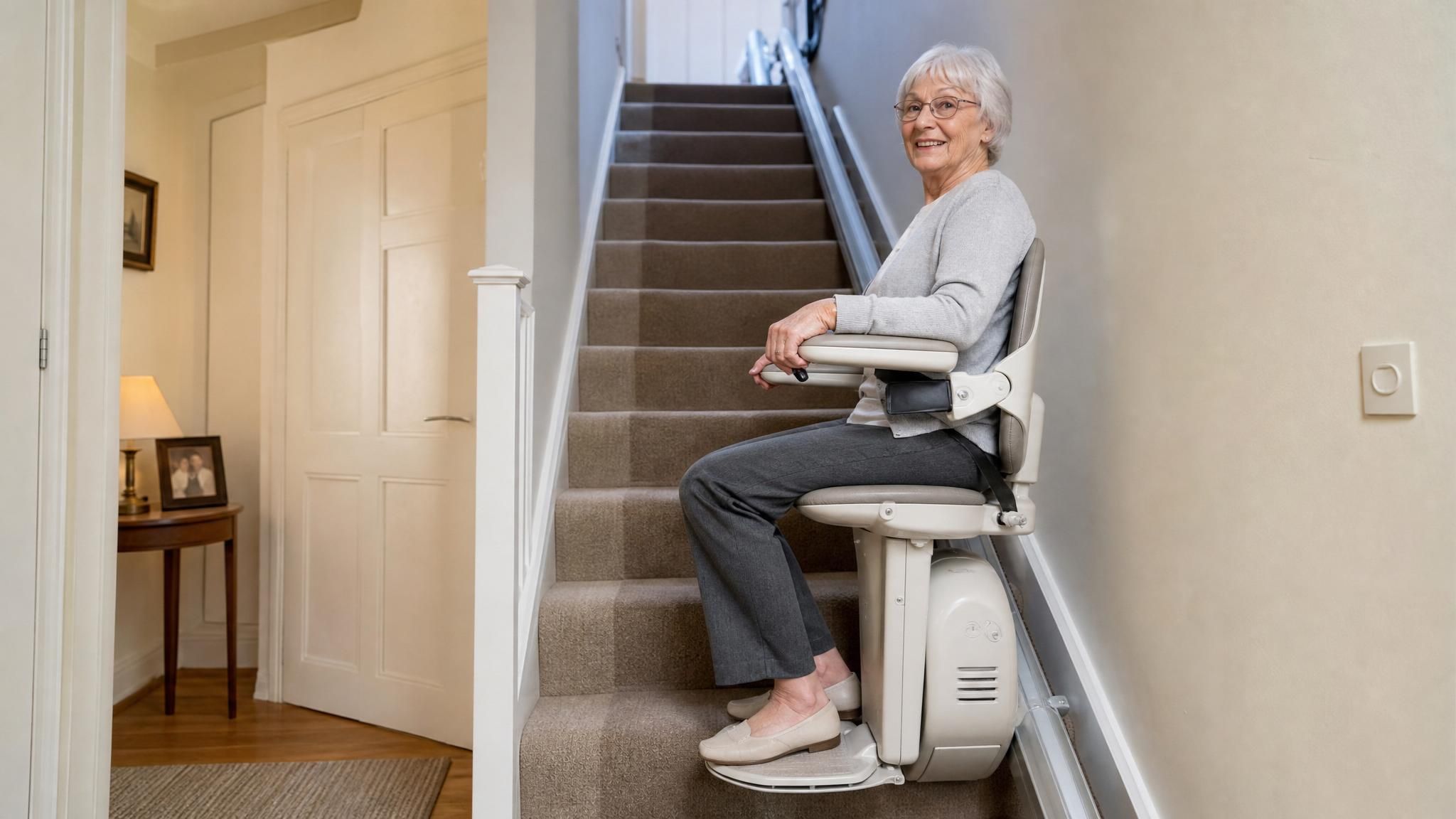
Straight stairlifts are motorised seats that travel along a single, continuous rail fixed to the staircase. Available new or reconditioned, they can provide a practical option for safer access between floors, subject to a professional home assessment.
A straight stairlift guarantee normally covers specified parts and labour for an agreed period, subject to the manufacturer’s terms and proper use. Before choosing a stairlift, check what is included, how to report a fault, whether call-out charges apply, and what support remains available after the guarantee ends.
Independent Stairlifts can explain the cover provided with new and reconditioned straight stairlifts, arrange professional installation and advise on servicing or repairs. Ongoing support may include fault diagnosis, replacement parts, safety checks and practical guidance to help keep the stairlift operating reliably.
A stairlift guarantee sets out which components, labour and repair work are covered for a stated period. The exact protection depends on the manufacturer, model and terms supplied with the lift.
Ask for the guarantee terms before committing to a stairlift. They should explain the cover period, included parts, labour arrangements and any conditions relating to servicing, user weight, misuse or changes to the installation. Independent Stairlifts can clarify the cover available for the straight stairlift selected and help you understand what is excluded.
A fault-reporting process explains who to contact when a stairlift stops working or develops an operating problem. Clear instructions can help distinguish an issue that needs an engineer from a simple loss of power or obstruction.
Use the contact details provided with the stairlift and describe what the lift is doing, including any warning lights, unusual sounds or movement problems. If the stairlift is not operating safely, stop using it and keep the staircase clear until advice is provided. Support arrangements, response times and possible call-out charges should be confirmed in the guarantee or service agreement.
Aftercare can include operating guidance, fault diagnosis, safety checks, servicing and access to replacement parts. The available support depends on the equipment and the agreement in place.
Professional installation should include checks that the rail, seat, controls and charging points are correctly fitted and that the user understands safe operation. Keep the operating instructions and service records available, and ask how to arrange future maintenance or repairs. Independent Stairlifts can advise on suitable aftercare for new or reconditioned straight stairlifts.
A reconditioned stairlift may come with guarantee cover, but its terms can differ from those offered with a new model. The cover should be confirmed for the specific lift and installation rather than assumed from its reconditioned status.
Check which parts have been inspected or replaced, whether the guarantee covers labour as well as components, and how faults will be handled after installation. It is also sensible to ask whether the guarantee can be extended through a service agreement and whether replacement parts remain available. A professional assessment helps establish whether the reconditioned lift is appropriate for the staircase and intended user.
A guarantee ending does not necessarily mean that support stops, but future repairs and servicing may become chargeable. Planning for ongoing maintenance can make the costs and responsibilities clearer.
Ask about service plans, engineer call-outs, replacement batteries and commonly required parts before the guarantee expires. Regular checks can identify wear or charging problems, although they do not remove the need to report safety concerns promptly. Independent Stairlifts can explain the available repair and servicing arrangements for the installed stairlift.
Straight stairlifts use a powered seat on one continuous rail, making them suitable for staircases without bends or changes in angle. Their benefits include straightforward installation, consistent travel between floors and a choice of seating, controls and safety features to suit the user.
The boxes below explain how these options may affect comfort, access, installation and ongoing ownership.
A straight stairlift follows one continuous rail, providing a consistent route between the lower and upper levels where the staircase has no bends or intermediate landings.
With no curved rail sections to manufacture, a straight stairlift can usually be assessed and installed using a simpler system, subject to the staircase layout and the installer’s survey.
Straight models can be considered for a range of domestic staircases, including narrower layouts, provided there is enough room for safe travel, boarding and dismounting.
Available options may include different seat shapes, armrests, controls and swivel mechanisms, helping the stairlift accommodate the user’s mobility, balance and transfer needs.
Depending on the model, safety features can include a seat belt, armrest controls, sensors that detect obstacles and a swivel seat to support safer access at the top of the stairs.
A new or reconditioned straight stairlift may be suitable depending on the required features, available budget and expected period of use. Condition, warranty cover and servicing should be checked before purchase.
Independent Stairlifts provides straight stairlifts for single-flight staircases, with options for new or reconditioned equipment, tailored seating, professional fitting and aftercare. Its assessment-led approach helps identify suitable safety features and practical arrangements for each home.
New and reconditioned options
Independent Stairlifts can discuss both new and reconditioned straight stairlifts, helping you compare equipment condition, features, warranty cover and expected costs before making a decision.
Assessment for the actual staircase
A professional assessment considers the staircase layout, available landing space, user’s mobility and transfer ability, and any access concerns. This helps identify whether a straight stairlift is suitable rather than relying on a standard specification.
Seating matched to the user
Seat style, armrests, controls, swivel arrangements and safety features can affect how easily the user gets on and off the lift. These details can be reviewed alongside the person’s balance, posture and everyday routine.
Professional installation
Straight stairlifts are fitted to the staircase using a rail designed for that particular flight. Correct positioning and testing are important for safe travel, comfortable transfers and reliable operation.
Support beyond installation
The service can include guidance on operation, servicing, fault diagnosis and replacement parts. Knowing how faults are handled and what support is available after installation makes it easier to plan for ongoing use.
Support across the UK
Independent Stairlifts provides a UK-wide service, which can be useful when arranging an assessment, installation or follow-up support for a straight staircase in a different part of the country.
Advice on wider mobility needs
If a straight stairlift is only one part of making the home easier to use, the assessment can be considered alongside other mobility equipment such as recliner chairs, adjustable beds or bath lifts.
Straight stairlifts are designed for staircases with a single, uninterrupted flight and a consistent direction of travel. They usually have a rail fitted to the stair treads or alongside the staircase, allowing a powered seat to carry the user between floors without changing direction.
They may not be suitable where the stairs include a bend, intermediate landing, spiral section or another obstruction that prevents a continuous rail. Space at the top and bottom also needs checking, particularly where the user must transfer safely or where doors and walkways are close to the staircase. Narrow stairs, unusual layouts and limited parking space can affect the choice of seat, rail position and controls.
A professional home assessment should confirm whether a straight stairlift can be installed safely and whether a new or reconditioned model is appropriate. The assessment should consider the user’s balance, movement, weight, transfer ability and likely future needs, as well as the staircase structure and available clearance. Independent Stairlifts can explain the options and identify any practical adjustments needed before installation.
Straight stairlifts are powered seats that travel along a single, continuous rail beside or on a staircase, providing seated access between floors without requiring the user to climb each step. They are generally suitable where the stairs have no bend, landing or change in direction.
A professional assessment checks rail position, clearance and safe transfer space at the top and bottom. It also considers balance, leg strength, weight, seating posture and control use. Nearby doors, narrow stairs and limited parking space can affect the installation arrangement.
New and reconditioned straight stairlifts may offer folding seats, armrests, belts and swivel mechanisms, subject to individual suitability. Independent Stairlifts can explain the available options, arrange fitting and outline aftercare for reliable day-to-day use.
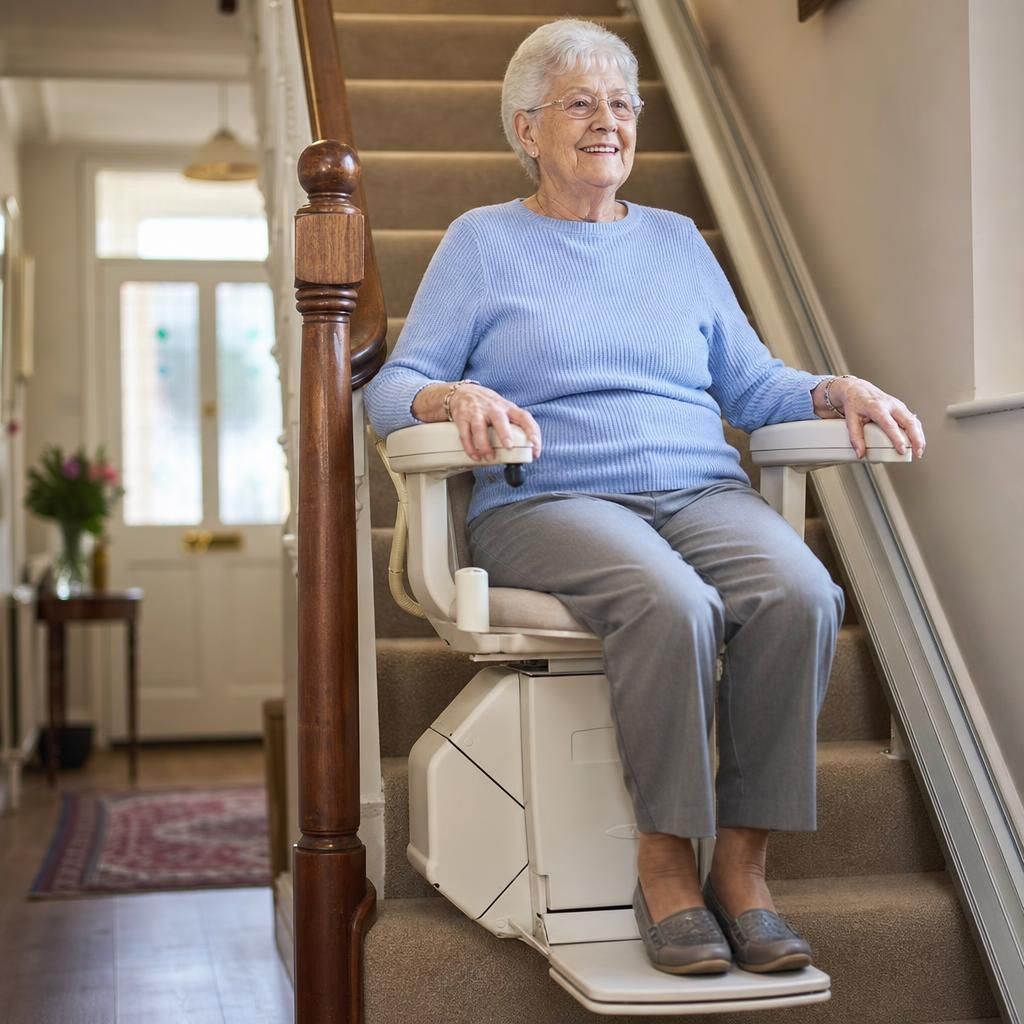
Straight stairlifts are designed for staircases without bends, offering straightforward installation and operation. They include safety features like swivel seats and battery backups, ensuring reliable home accessibility.
Straight stairlifts include advanced safety features such as seat belts, sensors to detect obstacles, and smooth start-stop mechanisms. Swivel seats help reduce the risk of falls when getting on or off.
Regular cleaning, checking battery functionality, and annual servicing by professionals are essential for maintaining straight stairlifts. Lubricating tracks and inspecting safety features ensure continued optimal performance and safety.
Straight stairlifts can be tailored with features like custom rail lengths, seat colours, and upgradeable safety components, ensuring they fit seamlessly into various domestic settings while meeting user-specific requirements.
Yes, straight stairlifts can be installed outdoors with weatherproof materials and finishes to withstand various elements while ensuring safe and reliable outdoor mobility solutions.
A straight stairlift should be professionally installed and supported with clear guarantee terms and accessible aftercare. Independent Stairlifts can explain cover for new or reconditioned models, arrange servicing and provide guidance if a fault occurs.
Contact UsStraight stairlifts are engineered specifically for staircases without curves, ensuring a smooth ride along a direct path. They offer practicality and safety for users seeking straightforward home mobility solutions.
Yes, straight stairlifts can often be customised to fit narrower staircases, but it's crucial to conduct a professional assessment to ensure safe and effective installation.
Schedule regular maintenance according to the manufacturer's guidelines, clean the rail and moving parts monthly, and promptly address any performance issues with professional assistance to ensure ongoing reliable operation.
Reconditioned stairlifts are cost-effective and environmentally friendly, but may lack the warranty length and customisation of new models. New stairlifts offer the latest technology and design flexibility, enhancing personal comfort.
Straight stairlifts are generally not designed for outdoor use. Instead, specialised outdoor stairlifts are available that are weather-resistant and equipped to handle external conditions effectively.
To discuss your straight stairlift requirements, contact Independent Stairlifts for a professional home assessment. You can compare new and reconditioned options, review safety features and understand installation and aftercare before making a decision.
Contact Us