
Are straight stairlifts suitable for outdoor installation?
Yes, straight stairlifts can be suitable for outdoor installation when they are specifically designed and protected for external conditions. An assessment is needed to check the staircase, exposure to weather, power supply and suitable weatherproof features before choosing and installing the right model.
Yes, straight stairlifts can be suitable for outdoor installation, provided the lift is specifically designed for external use and the staircase is suitable. Outdoor models use weather-resistant materials and protective features to cope with rain, cold, sunlight and changing conditions. An indoor stairlift should not be installed outside unless the manufacturer has explicitly approved it for that environment.
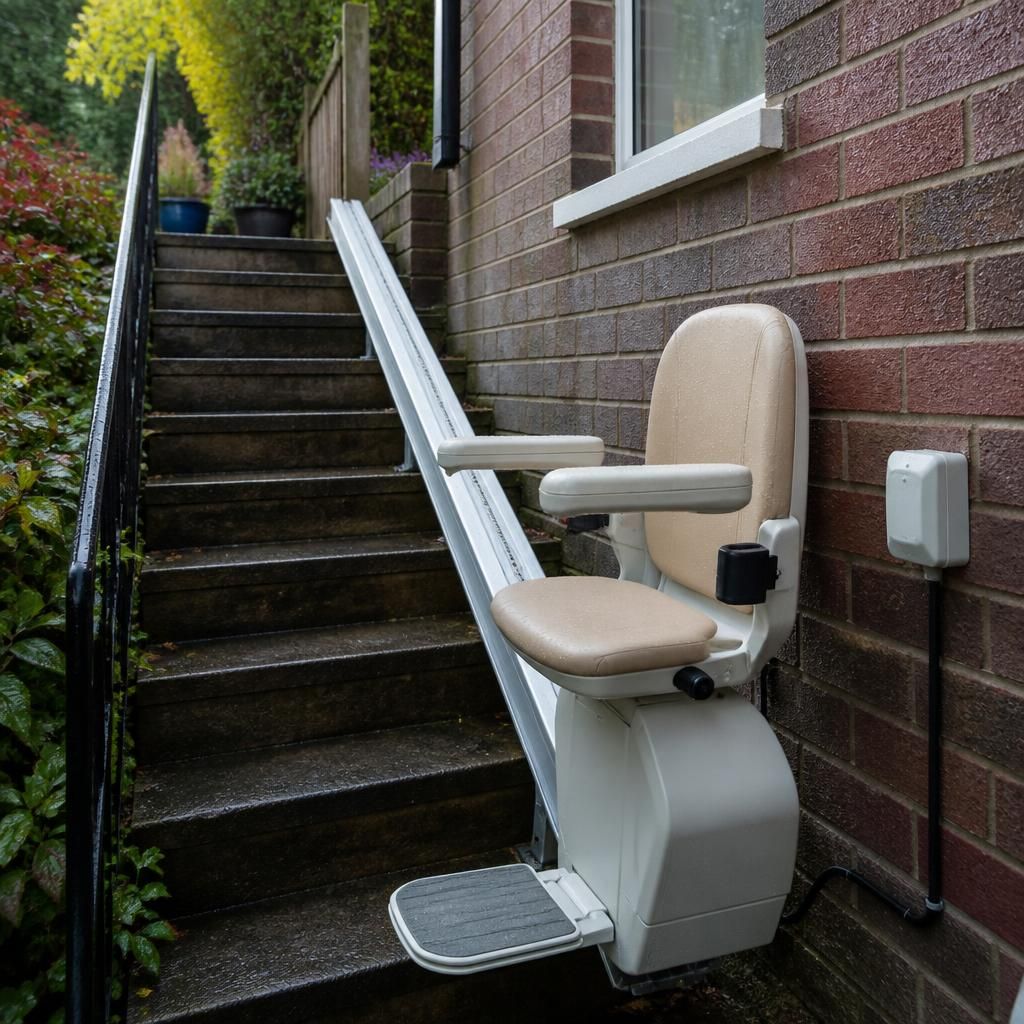
An outdoor straight stairlift is generally considered for a single, straight flight of steps leading to a garden, entrance, patio or another external area. The rail follows the staircase in the same way as an indoor straight stairlift, but the equipment must be selected and installed with additional protection against the weather and possible exposure to dirt, moisture and temperature changes.
What makes an outdoor stairlift different?
- Weather-resistant components: The seat, controls, motor, batteries and other electrical parts need protection suitable for outdoor conditions.
- Durable materials: External rails and fittings should resist corrosion, particularly where the stairlift may be exposed to rain, coastal air or de-icing products.
- Protective covers: A cover can help protect the seat and controls when the stairlift is not being used. It is important that the cover is designed for the model and does not interfere with moving parts.
- Suitable charging arrangements: The stairlift needs a safe, weather-protected charging point. This may require careful positioning of the charging station and electrical supply.
- Outdoor safety features: Features such as secure footrests, safety belts, obstruction sensors and weather-resistant controls remain important when using the lift outside.
Where can an outdoor straight stairlift be installed?
Outdoor straight stairlifts may be suitable for steps with a straight, consistent route and enough room for the seat, rail and user. They can be installed on different types of external staircases, subject to an assessment of the structure, surface and surrounding space. The stairs must be stable, appropriately constructed and able to support the required fittings.
External conditions also need to be considered. A staircase that is partly sheltered may present different requirements from one that is fully exposed. Overhanging roofs, nearby walls, drainage, prevailing weather, falling leaves and the risk of ice or standing water can all affect the choice of equipment and its installation position.
Important points to check before installation
- Whether the staircase is completely straight or includes a bend, landing or change in direction.
- Whether there is sufficient clearance at the top and bottom of the stairs for safe access and exit.
- Whether the surface and structure can securely support the rail brackets and fixings.
- Whether the stairlift and its charging point can be protected from direct exposure to rain and snow.
- Whether the route is likely to become slippery because of frost, moss, leaves or accumulated water.
- Whether an electrical supply is available in a suitable, safe location.
- Whether the user can approach, sit on and leave the stairlift without stepping into an unsafe area.
A professional survey is particularly important outdoors because the surrounding environment can change with the seasons. The assessment should consider how the lift will be used, where the user will enter and exit, and how the equipment can be kept protected and accessible throughout the year.
Maintenance and everyday care
Outdoor stairlifts usually need more frequent visual checks than indoor models. Keep the rail and steps clear of leaves, mud, grit, snow and other obstructions. Do not use the stairlift if ice, water or debris could affect traction or safe access. Check that protective covers are secure, controls remain clean and the charging point is not damaged.
Routine servicing should be carried out in line with the manufacturer’s guidance. A service can identify wear, corrosion, battery issues or damage to weather seals before these problems affect reliability. Avoid using household cleaners, lubricants or improvised covers unless they have been recommended for the specific stairlift.
If the external staircase is particularly exposed, a different access solution may be more appropriate. Depending on the layout, this could include a curved stairlift, a platform lift or another accessibility aid. The right option will depend on the shape of the route, available space, the user’s mobility and the level of protection available.
Independent Stairlifts can assess the outdoor staircase and explain which equipment and protective measures are appropriate. This helps ensure that the proposed straight stairlift is compatible with the route, the property and the conditions in which it will be used.
Outdoor straight stairlifts are suitable only when the lift, charging equipment and installation are designed to withstand external conditions. An indoor model should not be used outside, even if the staircase is sheltered, because moisture, temperature changes and corrosion can affect its electrical and mechanical components.
During an assessment, the staircase is checked for exposure to rain, snow, frost, direct sunlight, leaves and standing water. Weather-resistant materials, protected controls, suitable covers and a safe charging position may all be required. The rail and fixings must also be appropriate for the external surface and able to resist corrosion.
Everyday care is important too. Keep the steps and rail clear of mud, leaves, ice and other debris, and do not use the stairlift if access is slippery or obstructed. Protective covers should be made for the specific model, while servicing should follow the manufacturer’s guidance so that wear, corrosion, battery problems or damaged seals can be identified early.
Arrange an outdoor stairlift assessment
Arrange an outdoor stairlift assessment with Independent Stairlifts to check your staircase, weather exposure, charging requirements and the most suitable equipment.