
What happens if my straight stairlift stops working unexpectedly?
If your straight stairlift stops unexpectedly, stop using it, check that the seat, armrests and safety belt are correctly positioned, and make sure the power supply is switched on. If it still does not operate, leave it safely in place and contact Independent Stairlifts for advice or an engineer visit rather than attempting repairs yourself.
If your straight stairlift stops working unexpectedly, stop using it, remain seated with the safety belt fastened, and check the basic controls only if it is safe to do so. Make sure the seat, armrests and swivel seat are in their normal travelling positions, then check the power supply and handset. If the lift does not restart, leave it in a safe position and contact Independent Stairlifts for advice or an engineer visit. Do not remove covers, bypass safety features or attempt electrical repairs yourself.
If the stairlift stops between floors
Remain calm and avoid trying to climb on or off the stairlift on the stairs. Keep the belt fastened and keep your hands, feet and clothing clear of the rail and moving parts. If the stairlift has stopped because of a power interruption, it may continue to operate from its batteries, but do not repeatedly operate the controls if it does not respond normally. Contact Independent Stairlifts for guidance, particularly if you cannot reach a landing safely.
If you are in immediate danger or have a medical emergency, use your usual method of calling for help. Do not attempt to get around a stairlift that is obstructing the staircase unless you can do so without risk of falling.
Safe checks you can make
- Check that the key switch, isolation switch or mains supply has not been turned off accidentally.
- Check that the charger is connected correctly and that the stairlift is parked on its designated charging point, if applicable.
- Make sure the seat is facing the correct direction for travel, the armrests are lowered and the safety belt is securely fastened.
- Check that the controls on the armrest or remote handset are being used correctly. If you have more than one handset, try the other one only if the stairlift is stationary and it is safe to do so.
- Look for an obvious obstruction on the stairs or rail. Do not reach underneath the carriage or near the drive mechanism; only remove an item if it can be done from a safe standing position and without touching the stairlift.
- Listen for warning beeps or look for indicator lights, and note what happened before the failure. This information can help the engineer identify the problem.
Some stairlifts will not move if a safety sensor is activated, the swivel seat is not locked, an armrest is raised or the lift is not correctly positioned on its charging contacts. Other causes can include a discharged battery, a mains power fault, a problem with the handset or a mechanical issue affecting the carriage or rail. The exact checks and warning signals vary by model, so follow the instructions supplied with your stairlift rather than applying a reset procedure found elsewhere.
When to stop troubleshooting
Do not continue operating the stairlift if it moves unevenly, stops repeatedly, makes an unusual noise, gives a burning smell or shows signs of damage. Do not bridge a failed safety switch, disconnect the battery, open the motor or charger housing, or use tools on the rail. These actions can create an electrical or mechanical hazard and may make the fault more difficult to diagnose.
Contact Independent Stairlifts and explain whether the stairlift stopped at a landing or mid-staircase, whether it has power, any beeps or warning lights, and whether the fault occurs with the armrest control, remote handset or both. If the stairlift is under a service agreement or warranty, have the relevant details available so the correct support can be arranged. An engineer can inspect the power supply, batteries, safety circuits, controls, drive system and rail, and advise whether a repair or replacement component is required.
After the fault has been resolved
Ask what caused the failure and whether any follow-up action is needed. Keep the charging points clear, leave the stairlift on its recommended charging position when it is not in use, and avoid placing objects on the stairs or rail. Regular servicing and prompt attention to warning noises, slower movement or repeated stopping can help identify developing problems before the stairlift becomes unusable.
If your straight stairlift stops between floors, remain seated with the safety belt fastened and do not try to climb off onto the stairs. Keep your hands, feet and clothing clear of the rail and moving parts, then contact Independent Stairlifts for guidance. A power interruption may leave the stairlift able to move on its batteries, but do not repeatedly use the controls if it does not respond normally.
Tell the adviser where the stairlift stopped, whether warning beeps or indicator lights appeared, and whether the controls have any response. Do not remove covers, bypass safety switches or attempt to reach the drive mechanism. If you are in immediate danger or have a medical emergency, use your usual method of calling for help.
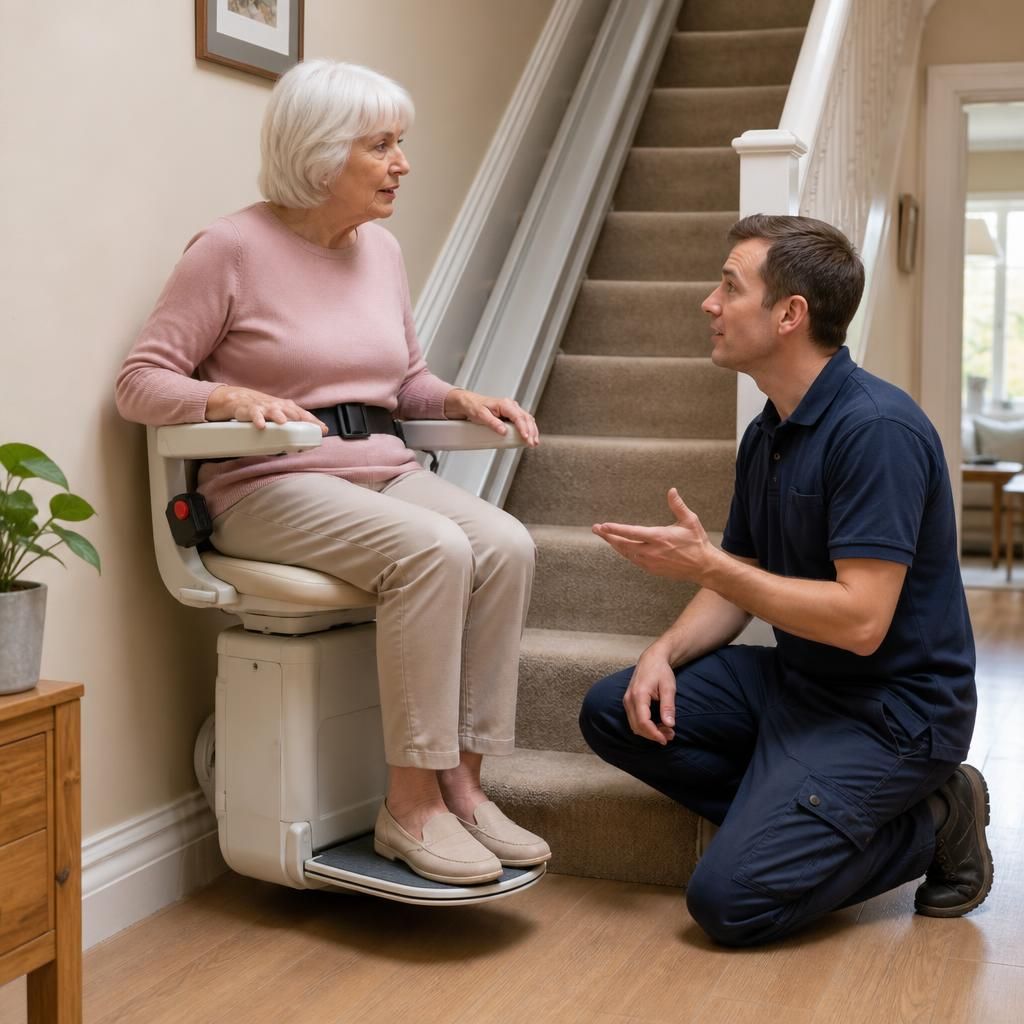
Need help with a faulty straight stairlift?
If your straight stairlift is not working, stop using it and contact Independent Stairlifts for practical advice or an engineer visit. Tell us where it stopped and describe any warning lights, beeps or unusual sounds so we can arrange the appropriate support.