
What factors should I consider when choosing a straight stairlift for my home?
When choosing a straight stairlift, consider the exact layout and length of your staircase, available space at the top and bottom, user comfort, safety features, weight capacity, controls, warranty and total cost. A professional home assessment will confirm whether a straight model is suitable and help match the seat, controls and installation to your needs.
The main factors when choosing a straight stairlift are the layout of your staircase, the available space at the top and bottom, the user’s mobility and physical needs, seat comfort, safety features, weight capacity, controls, power supply, installation requirements and total cost. A professional home assessment is important because it confirms whether a straight stairlift is suitable and identifies the configuration that will work safely in your home.
Check that your staircase is suitable
A straight stairlift is designed for a staircase that runs in one continuous direction without a bend, intermediate landing or change of angle. The rail is normally fitted to the stair treads rather than the wall, so the condition and construction of the stairs must also be considered. If your staircase includes a turn or curved section, a straight model may not provide continuous access and a curved stairlift could be more appropriate.
Measure the full route as well as the width of the stairs. The usable width can be reduced by banisters, radiators, doorways, dado rails or furniture near the staircase. The lift must leave enough room for other people to use the stairs where required, particularly in a shared household. An installer will also check the slope, the position of the top and bottom steps, nearby doors and the strength of the surfaces used for fixing.
Consider how the stairlift will be used
The right model depends on the user’s mobility, balance, strength, height and confidence. Think about whether the user can safely sit down and stand up from the seat, whether they need support while transferring, and whether they may use the stairlift while carrying a walking aid. If the user has stiff joints, limited knee movement or difficulty bending, the seat height and swivel mechanism become particularly important.
Consider who will use the stairlift and whether the user’s needs may change over time. A straightforward seat may be suitable for one person, while another may need greater support, a powered swivel seat or a different seating position. The user should be able to operate the controls without stretching, twisting or relying on someone else unless assistance is always available.
Prioritise comfortable, secure seating
The seat should provide stable support without making it difficult to get on or off. Check the padding, seat width, back support and armrests, along with the position of the footrest. A powered or manual swivel seat can help turn the user towards the landing before standing, reducing the need to twist while getting off the stairlift.
Seat belts or harnesses should be easy to fasten and release, while still keeping the user secure during travel. The best restraint arrangement depends on the user’s movement and posture. If more than one person may use the stairlift, make sure the seat and controls are practical for everyone rather than selecting equipment based only on the needs of the most mobile user.
Review safety features
Look for safety systems that help prevent the stairlift from operating when the seat, armrests or footrest are not correctly positioned. Obstacle sensors can stop the lift if an object is detected on the stairs, and a reliable braking system helps control movement during travel. A seat belt, lockable controls and a clear emergency stop facility are also important.
Ask how the stairlift behaves if the power supply fails. Most domestic stairlifts use rechargeable batteries so that they can usually complete journeys during a temporary power cut, but the batteries need to remain charged and maintained. Find out how the lift indicates a low battery and whether it can be parked at a charging point without obstructing the staircase.
Check the weight capacity
Every stairlift has a specified maximum user weight. This must include the user and anything they routinely carry while travelling. Do not assume that a lift designed for a standard user will be suitable for everyone; exceeding the stated capacity can affect safety, performance and the equipment’s warranty conditions.
If the user’s weight or mobility is likely to change, mention this during the assessment. The installer can advise whether a model with a higher capacity, a wider seat or additional support is necessary.
Think about controls and access
Most straight stairlifts can be operated from controls on the armrest and may also have remote controls at the top and bottom of the stairs. Remote controls are useful when more than one person uses the lift or when the stairlift needs to be called to another floor. Controls should be large enough to identify and operate easily, particularly for someone with reduced hand strength, limited dexterity or impaired vision.
Consider whether the user can hold the control comfortably throughout the journey. A simple control that operates in the direction of travel may be easier to use than a small button-based handset. Ask about left- or right-hand positioning and whether the controls can be adapted to suit the user.
Allow for space at the top and bottom
The folded seat, armrests and footrest should not block a doorway, corridor or the normal route through the house. At the bottom, consider whether the stairlift needs to park beyond the first step or whether a folding or retractable rail would prevent it from obstructing a hallway, door or entrance. At the top, the user needs sufficient landing space to turn, stand and move away safely.
Some homes require the stairlift to park in a particular position when it is not in use. Discuss this before choosing the equipment, especially if the stairs are close to a front door, room entrance, radiator or narrow passageway.
Compare installation requirements
Installation is usually more straightforward when the staircase is structurally sound and the route is clear, but every home is different. Banisters, skirting boards, uneven treads, glazed panels and unusual wall or floor finishes can affect the installation method. A professional survey should identify these issues before a final recommendation is made.
Ask how long the installation is expected to take, what preparation is required and whether any minor alterations will be needed. The installer should explain where the rail will sit, how it will be fixed and how the finished installation will affect the remaining stair width and appearance.
Decide between a new and reconditioned stairlift
A reconditioned straight stairlift may provide a lower-cost option where the available equipment matches the staircase and the user’s requirements. It should be professionally inspected, refurbished where necessary and supplied with appropriate support. A new stairlift may offer a broader choice of seat styles, controls, finishes and optional features, which can be useful when the user has specific needs.
Compare the complete cost rather than the initial equipment price. Confirm what is included in the survey, fitting, removal of existing equipment, servicing, batteries, call-outs and warranty cover. The cheapest option may not be the most suitable if it compromises comfort, access or future support.
Include running costs and aftercare
Ask about ongoing battery replacement, servicing and what to do if the stairlift stops working. Find out how faults are reported, whether telephone support is available and what parts and labour are covered during the warranty period. Clear aftercare arrangements are particularly important if the user depends on the stairlift every day.
Keep the charging points clear and follow the manufacturer’s instructions for cleaning and use. Do not place items on the stairs, rail or footrest, and report unusual noises, repeated stopping or reduced battery performance rather than continuing to use a lift that may need attention.
Use a home assessment to make the final choice
A home assessment brings these factors together. It should consider the staircase, landing areas, entrances, the user’s transfer ability and the way the lift will fit into daily routines. The user should be encouraged to try the seat, controls and belt where possible and to raise concerns about comfort, privacy or using the stairs alongside other household members.
Before agreeing to an installation, ask for a clear explanation of the recommended model, its capacity, safety features, parking position, total price, warranty and aftercare. Choosing on the basis of the user’s needs and the actual home environment will help ensure that a straight stairlift is safe, practical and comfortable to use.
A professional home assessment confirms whether a straight stairlift will fit safely and comfortably in your staircase and landing areas. The survey should cover the full rail route, remaining stair width, top and bottom parking positions, nearby doors and the user’s ability to get on and off the seat.
During the assessment, discuss:
- whether the staircase runs in one continuous direction without a bend or change of angle;
- how banisters, radiators, doorways or furniture may affect usable space;
- whether a swivel seat, powered controls or a folding rail would make everyday use easier;
- where the stairlift can park without blocking a hallway, doorway or other access route; and
- the user’s weight, balance, strength and likely need for support when transferring.
These checks help identify the most suitable configuration before you commit to a model. They also allow the installer to explain the fitting process, total cost, warranty and aftercare based on the actual conditions in your home.
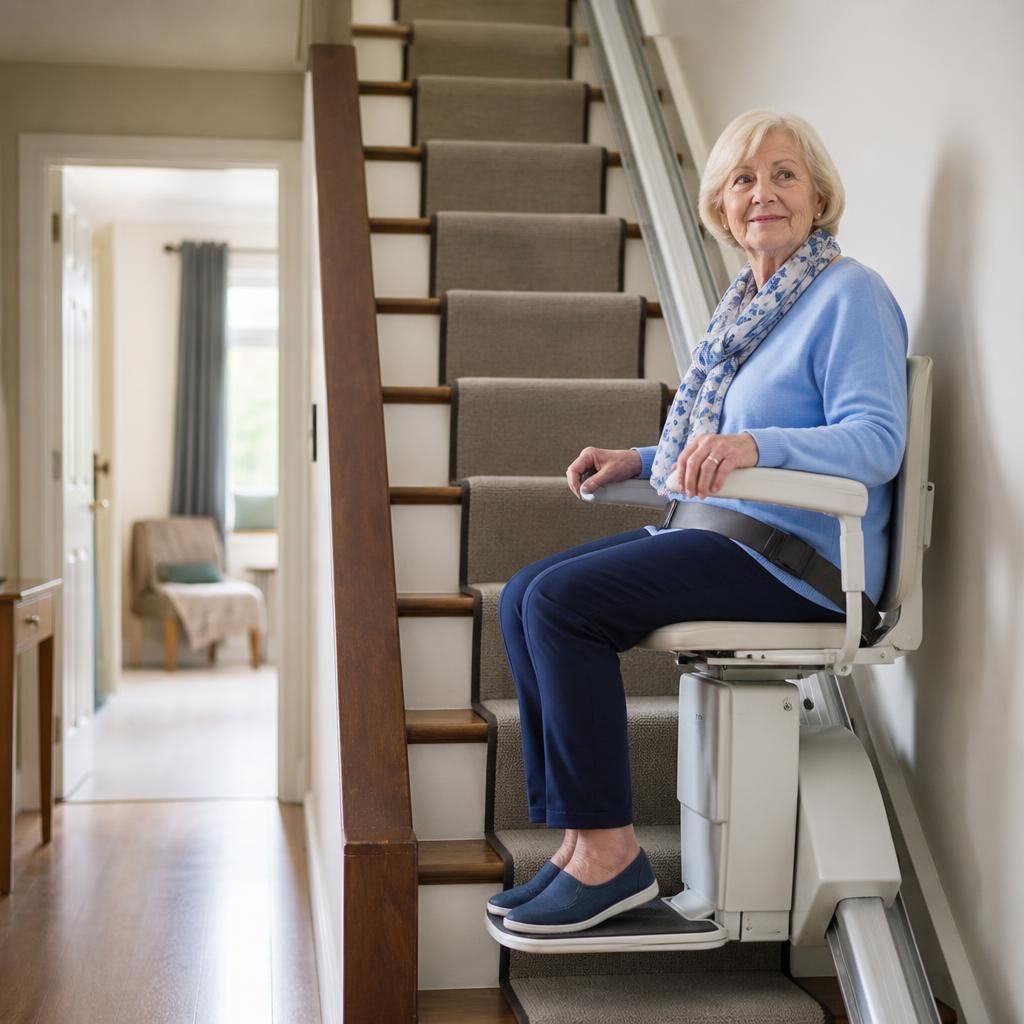
Arrange a home assessment for your straight stairlift
Arrange a home assessment for your straight stairlift so we can check your staircase, available space and seating requirements. We will explain the suitable options, total cost, installation and aftercare.