
How do I ensure my straight stairlift remains in good working condition over time?
Keep your straight stairlift in good working condition by following the manufacturer’s care guidance, keeping the rail and seat area clean and clear, charging the batteries correctly, and arranging regular professional servicing. Check for changes such as unusual noises, jerky movement, reduced battery performance or a loose safety feature, and contact Independent Stairlifts promptly rather than continuing to use the lift if a fault develops.
Keep your straight stairlift in good working condition by following the manufacturer’s care instructions, keeping the rail and seat area clean and unobstructed, charging the batteries correctly, and arranging professional servicing when recommended. Regularly check for changes such as unusual noises, jerky movement, reduced battery performance or a loose safety feature. If a fault develops, stop using the stairlift and contact Independent Stairlifts or the appropriate service team rather than attempting to continue with a potentially unsafe lift.
A straight stairlift is designed for regular domestic use, but its reliability depends on routine care. Dust, pet hair, spilled liquids, incorrect charging and items left on the stairs can all affect safe operation. Simple checks carried out by the user, combined with professional inspection, can help identify wear before it develops into a more serious problem.
Keep the stairlift and staircase clear
- Keep the stairlift rail free from clothing, bags, toys, cleaning equipment and other objects that could obstruct the carriage.
- Do not leave items on the steps or near the top and bottom parking positions, particularly where they could catch the footrest or obstruct the user when getting on or off.
- Keep pets and other people away from the stairs while the lift is moving.
- Make sure the stairlift is parked in its designated position when it is not in use, following the instructions provided during installation.
Use a soft, dry or slightly damp cloth to remove dust from accessible surfaces. Avoid pouring or spraying cleaning products onto the rail, controls, motor, charging points or other electrical components. Do not use abrasive cleaners, solvents or excessive water, as these may damage finishes and electrical parts. If cleaning around the rail or steps, switch the stairlift off where the model allows this and keep the area dry.
Look after the batteries
Most modern stairlifts use rechargeable batteries, allowing the lift to operate during a mains power interruption. The batteries charge when the stairlift is correctly positioned at a charging point, so avoid leaving the lift permanently parked away from its charging position unless the manufacturer’s instructions specifically allow this.
- Check that the stairlift reaches its charging point and that any charging indicator behaves as described in the user guide.
- Do not disconnect the power supply or switch off the relevant electrical circuit unnecessarily.
- If the lift gives a low-battery warning, return it to the charging position as soon as it is safe to do so.
- Do not attempt to remove, test or replace the batteries yourself unless you have been specifically instructed and are competent to do so.
Reduced travel distance, repeated low-battery warnings, slow movement or a failure to operate after charging may indicate that the batteries or charging system need attention. Battery performance can decline with age, and replacement should be carried out using the correct parts by a qualified technician.
Carry out sensible visual and operational checks
Before travelling, check that the seat is correctly positioned, the armrests and footrest are secure, and the seat belt or other restraint is available and undamaged. Make sure the swivel seat is locked in the travel position before setting off, if your model has this feature. Check that the controls respond normally and that the stairlift stops when the control is released, as intended.
Pay attention to changes in operation rather than waiting for a complete breakdown. Contact the service team if you notice:
- unusual grinding, scraping, clicking or knocking noises;
- jerky, hesitant or unusually slow movement;
- the lift stopping unexpectedly or failing to start consistently;
- a safety belt, armrest, seat, swivel mechanism or footrest becoming loose;
- an error message, warning tone or indicator that does not clear;
- visible damage to the rail, wiring, controls or carriage; or
- reduced battery life or difficulty reaching a charging point.
Do not ignore a fault because the stairlift continues to move. A change in sound, movement or control response can indicate wear or an electrical issue that needs assessment. If the stairlift stops between floors, follow the emergency procedure supplied with the lift. Do not try to climb out at height, move the carriage manually or dismantle covers.
Arrange professional servicing
Professional servicing is important because some components cannot be assessed safely through routine cleaning. A qualified engineer can inspect the drive system, rail, batteries, charging points, safety sensors, switches, seat mechanisms, wiring and fixings. They can also identify wear that may not yet be obvious during normal use and confirm that the lift is operating as intended.
Follow the servicing schedule and care instructions supplied for your particular model. The appropriate frequency can depend on the stairlift, how often it is used, the installation environment and its condition. Keep any service reports and note recurring faults, battery replacements or repairs. This information helps the engineer understand the lift’s history and can be useful if you contact us about a developing problem.
Use the stairlift as intended
Only use the lift within its stated weight limit and for the purpose for which it was installed. Sit facing in the correct direction, keep your hands and feet clear of the rail and moving parts, and use the restraint provided. Do not carry bulky objects that could catch on the staircase or prevent you from holding the controls safely. Children should not operate the stairlift without suitable supervision, and passengers should not allow another person to ride on the footrest or with them unless the equipment has been specifically designed for that use.
If your home is being decorated, renovated or subject to building work, protect the stairlift from dust, paint and impact. Do not cover vents or controls, and do not allow tradespeople to use the rail or seat as a support. Tell the installation or service team about any changes to the staircase, electrical supply or surrounding environment, since alterations can affect safe access and operation.
For any uncertainty about cleaning, charging, error messages or safe use, refer to the lift’s user guide or contact Independent Stairlifts for advice. Prompt reporting, correct battery care, a clear rail and staircase, and planned professional servicing are the most effective ways to preserve reliable operation over time.
Correct battery care is essential to keeping a straight stairlift reliable, because the batteries power the lift during normal use and can also provide operation during a mains power interruption. Park the stairlift at its designated charging point whenever possible, as this allows the batteries to recharge correctly.
- Check that the charging indicator shows the expected status described in your user guide.
- Return the lift to its charging point after use if it gives a low-battery warning.
- Do not switch off the relevant power supply or disconnect the charger unnecessarily.
- Contact the service team if the lift repeatedly reports a low battery, moves more slowly than usual or no longer reaches the charging point reliably.
Battery performance naturally reduces over time, but batteries should not be removed or replaced without suitable technical advice. A qualified engineer can check the batteries, charger and connections, then fit the correct replacement parts if required.
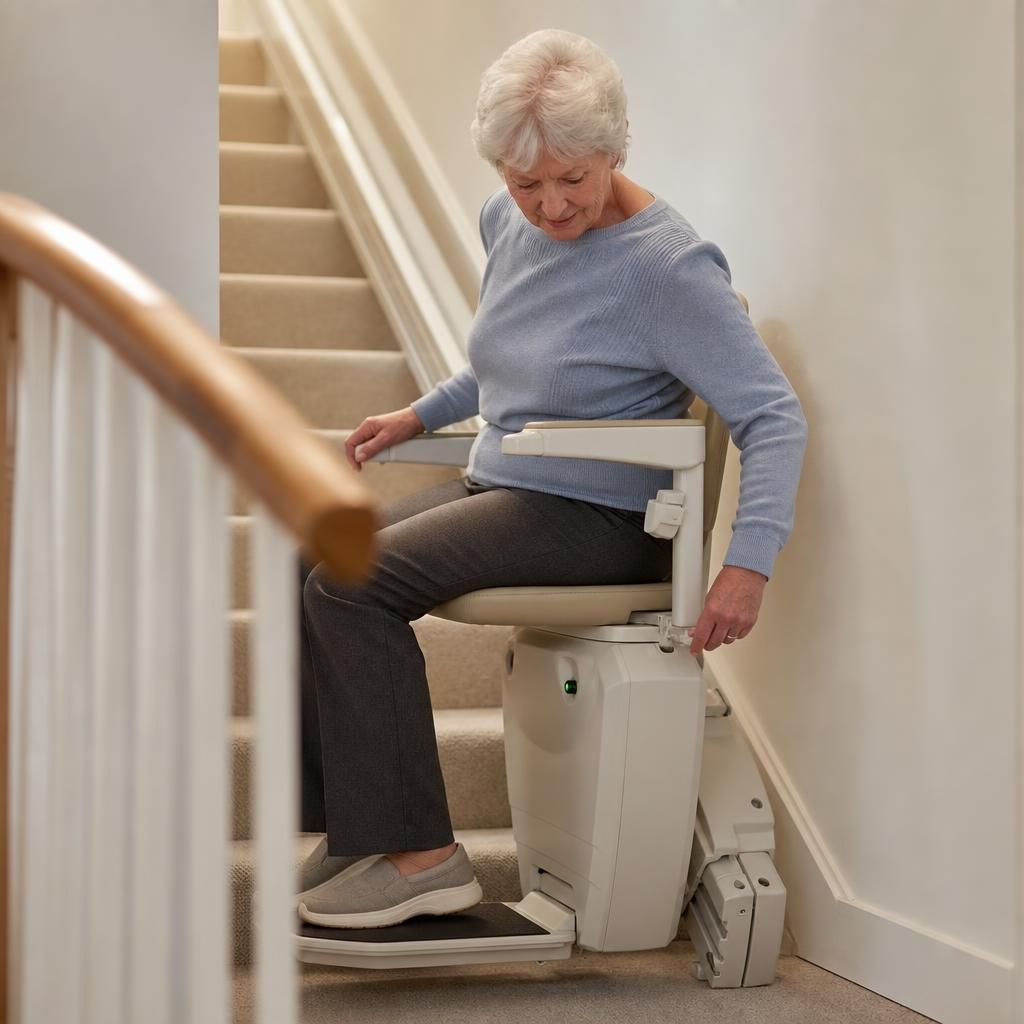
Arrange expert stairlift servicing and support
If your straight stairlift needs servicing, shows signs of a fault or you need advice about its ongoing care, contact Independent Stairlifts to arrange expert support. Our team can help assess the issue and advise on the appropriate next step.