
Are straight stairlifts suitable for outdoor use?
Yes, straight stairlifts can be suitable for outdoor use when they are specifically designed and installed to withstand rain, damp, temperature changes and outdoor conditions. Standard indoor stairlifts should not be installed outside; an assessment is needed to confirm the staircase, power supply and protective measures are suitable.
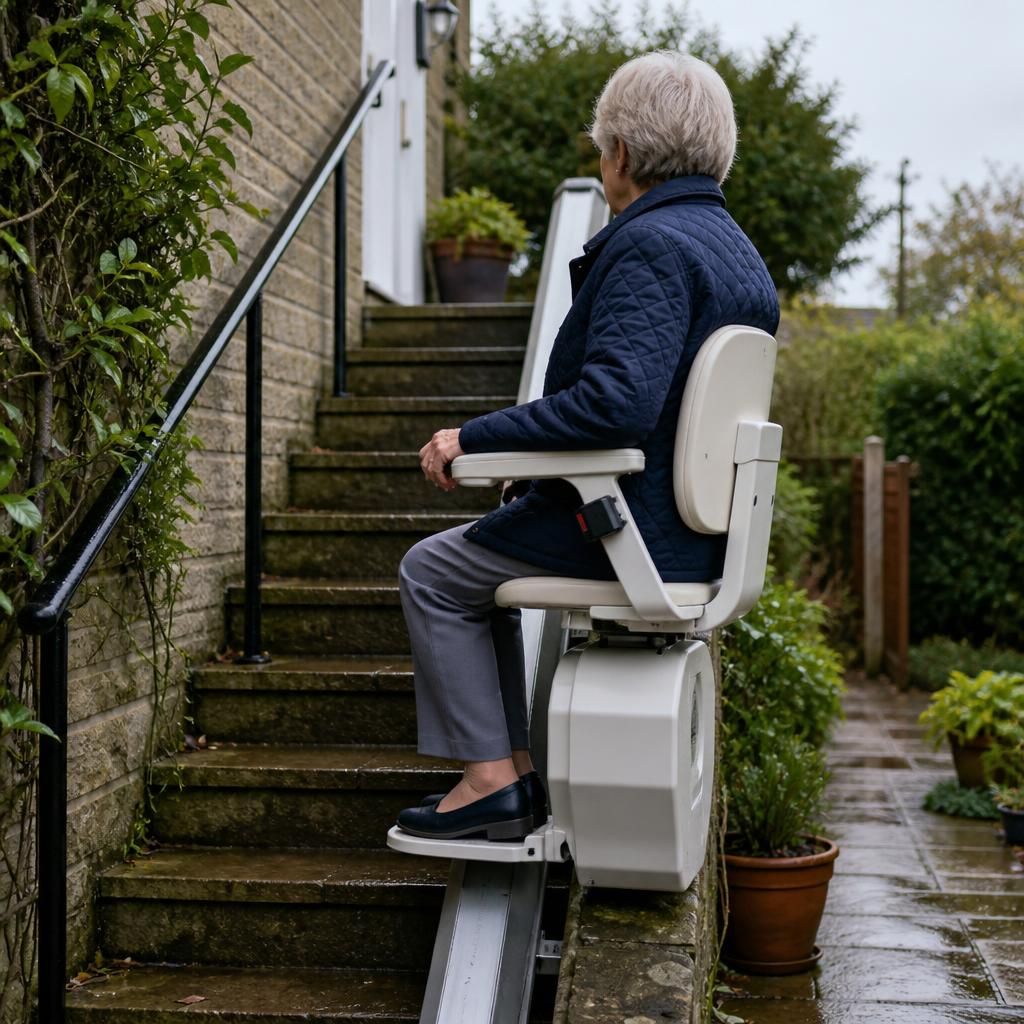
Yes, straight stairlifts can be suitable for outdoor use, but only when the stairlift is specifically designed and approved for external installation. Outdoor models use weather-resistant materials and protected electrical components to cope with rain, damp, sunlight, frost and changing temperatures. A standard indoor stairlift should not be installed outside, as moisture and corrosion can affect its controls, charging points, motor and safety systems.
Suitability depends on both the stairlift and the staircase. An outdoor straight stairlift may be appropriate for steps leading to a garden, raised patio, front entrance or another external level where the staircase runs in a straight line. If the staircase has a bend, intermediate landing or change of direction, a curved outdoor solution may be more suitable.
What makes an outdoor stairlift different?
Outdoor stairlifts are built to provide additional protection against the conditions they are likely to encounter. Depending on the model, this can include:
- Weather-resistant upholstery and casing
- Materials and finishes that help limit rust and corrosion
- Protected switches, sensors and charging connections
- Sealed or shielded electrical components
- A durable cover to protect the seat and controls when the stairlift is not being used
- Safety features designed to operate reliably in damp or colder conditions
Weather resistance does not mean that the stairlift can be left entirely unprotected. Keeping the seat, arm controls and charging points covered when possible helps reduce exposure to rain, frost, bird activity and general outdoor debris.
Points considered during an outdoor assessment
A site assessment is important because external staircases vary considerably. The installer will usually consider the condition, width and gradient of the steps, as well as the available space at the top and bottom. Safe access is needed for getting on and off the stairlift, particularly where the lower landing may become slippery or where there is limited room to manoeuvre.
The assessment should also check:
- Whether the proposed rail can be securely fixed to the steps or structure
- How rainwater drains from the staircase and whether water can collect around the rail or charging points
- Whether the power supply is suitable, safely positioned and protected for external use
- How the stairlift will be parked and covered when it is not in use
- Whether gates, doors, paths or other access routes could obstruct the chair
- How the installation will remain safe during frost, heavy rain or poor visibility
- Whether lighting, handrails and other access features need attention alongside the stairlift
Where the steps are exposed to prevailing weather, the location of the charging points and the position of the parked chair are particularly important. The stairlift should not be installed in a way that leaves electrical connections sitting in standing water or places the user at risk when transferring on or off the seat.
Safety and everyday use
Outdoor steps can become wet, icy, muddy or covered in leaves. These conditions can make the staircase and landing unsafe even when the stairlift itself is operating correctly. Users should keep the steps clear, use suitable lighting and take care when sitting down or standing up. The stairlift cannot remove hazards caused by slippery surfaces or poor access around the installation.
Use the seat belt and follow the operating instructions supplied with the stairlift. The controls, sensors and footrest should be kept clear of leaves, grit, snow and other debris. Do not use the stairlift if there is visible damage, unusual noise, water ingress or a fault warning; contact the service team for advice instead.
Maintenance requirements
Outdoor models generally need more frequent visual checks than indoor stairlifts because they are exposed to dirt and weather. Keep the rail and running surfaces clean in accordance with the manufacturer’s instructions, and check that the protective cover is intact. Avoid using harsh cleaning products or directing a hose or pressure washer at the stairlift, as this can force water into electrical or mechanical components.
Regular servicing helps identify corrosion, worn parts, battery issues and problems with charging before they affect reliability. Batteries may also perform differently in very cold conditions, so report reduced travel, slow charging or repeated low-battery warnings promptly.
Can a stairlift be used under a canopy?
A canopy, porch or other shelter can reduce exposure to rain and sunlight, but it does not automatically make an indoor stairlift suitable for outdoor use. Damp air, temperature changes and wind-driven rain can still affect the equipment. The stairlift must be approved for the location by its manufacturer, and the installation must still meet the relevant electrical and safety requirements.
In some situations, improving the shelter or drainage around an external staircase may help, but this should be considered as part of the assessment rather than used as a substitute for an outdoor-rated stairlift.
Choosing the right solution
When discussing an outdoor installation, explain how often the stairlift will be used, who will use it, and whether the staircase is exposed or partially sheltered. It is also useful to mention any mobility difficulties that could affect transfers, such as reduced balance or difficulty bending the knees. These details help determine the most suitable seat, controls, safety features and parking position.
An outdoor straight stairlift can provide dependable access when the equipment, staircase and surrounding environment are all suitable. The key requirements are an outdoor-rated model, a properly assessed installation, appropriate protection from the elements and ongoing care. Independent Stairlifts can assess the external staircase and explain whether a straight outdoor stairlift is appropriate or whether another access solution would provide safer, more practical use.
A straight stairlift can be installed outdoors only if it is specifically designed and approved for external use. Outdoor models have weather-resistant components and protected electrical connections to help withstand rain, damp, frost and changing temperatures. A standard indoor stairlift is not suitable, even if the staircase is covered by a porch or canopy.
An assessment will also consider how securely the rail can be fixed, whether water drains away properly, and where the stairlift can be parked and charged safely. Outdoor steps may become slippery or obstructed by leaves, mud or ice, so the surrounding access must remain clear and well lit. Regular cleaning, protective covering and servicing are important for maintaining reliable operation.
Arrange an Outdoor Stairlift Assessment
Arrange an outdoor stairlift assessment with Independent Stairlifts to confirm whether your external staircase, power supply and surrounding access are suitable. We can advise whether a straight outdoor model or an alternative solution is appropriate.