Space-conscious when parked
A compact design can reduce the amount of staircase occupied when the lift is folded or parked, helping other household members use the stairs where clearance allows.

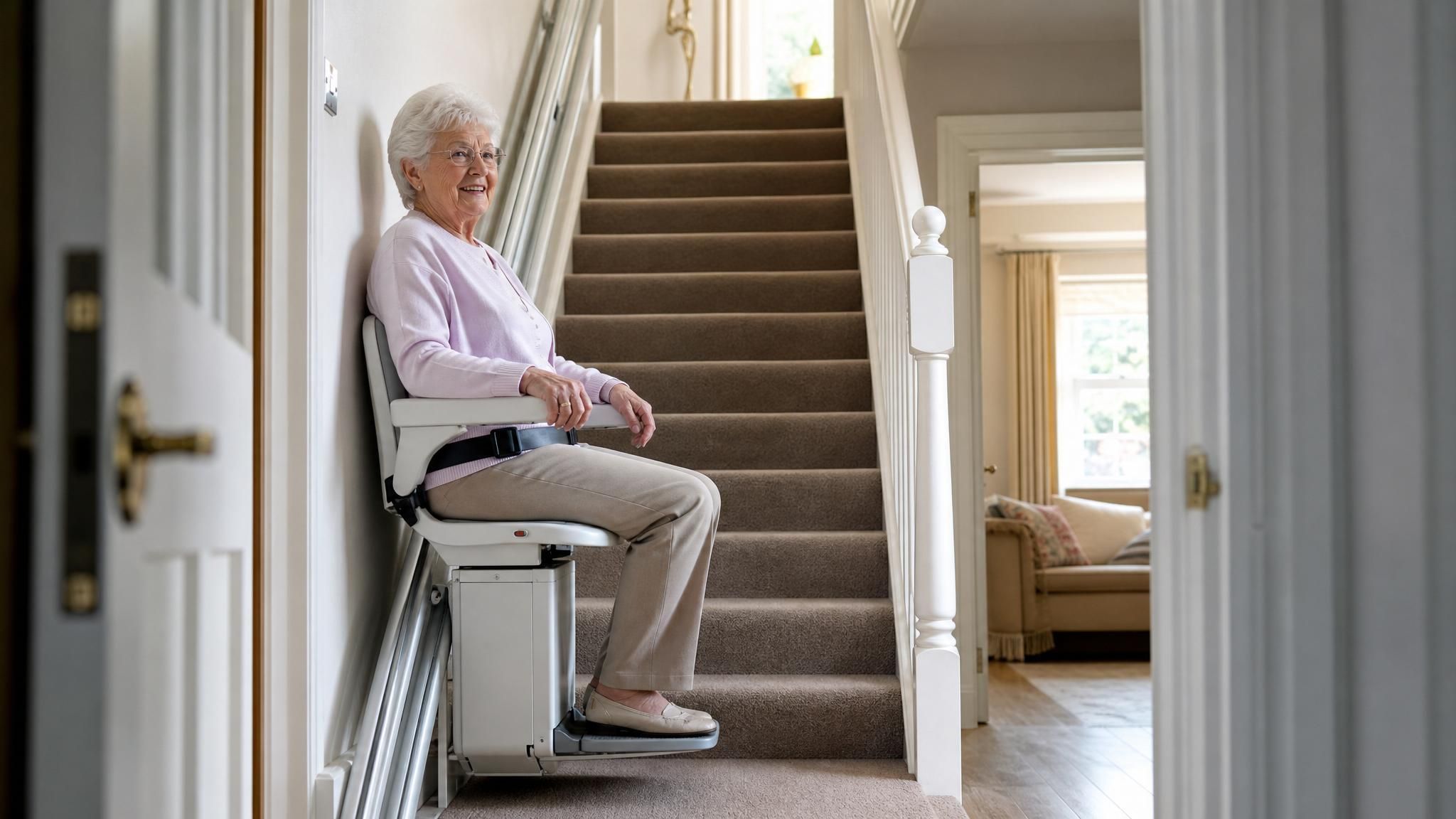
Slimline and compact stairlifts are designed to provide powered access on narrower staircases while limiting obstruction for other users. They may use folding seats, arms and footplates, but suitability depends on stair width, layout and user needs.
Installation, warranty and aftercare cover the practical support provided when a slimline or compact stairlift is assessed, fitted and maintained. A trained installer should check the staircase, confirm the lift is suitable for the user and explain its operation, while warranty terms should set out what is covered and for how long.
Open the sections below to understand how the installation process works, what to check in the warranty documentation and how servicing or faults are handled. Independent Stairlifts can discuss the requirements of your staircase and explain the available support before you decide on a solution.
A slimline stairlift is not suitable for every narrow staircase, so the assessment should consider both the available space and the person who will use it. The layout, stair width, bends, landings and access at the top and bottom all affect the recommendation.
A trained adviser should measure the staircase and check for obstructions such as radiators, doors, bannisters and changes in floor level. They should also discuss the user’s height, mobility, balance, ability to transfer on and off the seat and whether other household members need to use the stairs. Ask for a clear explanation of any compromise involved, such as a folded footplate position or reduced landing clearance, before agreeing to an installation.
A stairlift should be installed securely and tested on the actual staircase rather than selected by width alone. Correct positioning helps the user board, travel and exit the lift without creating unnecessary obstruction for others.
The installer should secure the rail in line with the manufacturer’s instructions, check the seat, arms, footrest and controls, and test the lift through its full route. Where the staircase is tight, the installer should confirm that the folded components leave reasonable passage space and that the lift stops safely at the required positions. You should receive operating guidance and have the opportunity to raise concerns before the installer leaves.
The warranty sets out which parts and labour are covered, the length of cover and any conditions that apply. It should be read alongside the quotation so that the difference between included support and chargeable work is clear.
Check whether the warranty covers the motor, batteries, controls, rail and other supplied components, and whether call-outs or replacement parts are included. Confirm when the cover starts, whether servicing is required to maintain it and what exclusions apply, such as accidental damage, misuse or unauthorised alterations. Keep the warranty documents and ask who to contact if a fault develops.
If a slimline stairlift stops working, the immediate priority is to leave it in a safe position and follow the supplied fault guidance. Do not attempt to remove covers or repair electrical and mechanical components yourself.
Use the handset or controls only as described in the operating instructions and check simple issues such as whether the lift is correctly parked and charging. If the problem remains, contact the installer or warranty provider with the lift location and any displayed fault information. Ask how urgent faults are prioritised, whether an engineer visit is covered and what temporary advice is available if the user cannot safely use the stairs.
Regular checks can help identify wear in moving parts, batteries, charging points and safety systems, although the required maintenance depends on the model and how it is used. Everyone who may operate the lift should receive clear instructions suited to their ability.
Ask what servicing schedule the manufacturer recommends and whether maintenance can be arranged through the original installer. Good aftercare should include guidance on charging, cleaning, parking the lift and responding to a power cut, as well as advice for a change in the user’s mobility or seating needs. If the stairlift becomes uncomfortable or difficult to operate, request a review rather than modifying it independently.
Slimline and compact stairlifts are designed for staircases where a standard lift may restrict walking space. Reduced proportions and folding components can preserve access, but suitability depends on stair width, layout and the user’s mobility.
Benefits may include a smaller folded footprint and easier movement around the lift. These must be balanced with seating comfort, transfer safety and clearance, confirmed through a professional home assessment.
A compact design can reduce the amount of staircase occupied when the lift is folded or parked, helping other household members use the stairs where clearance allows.
Armrest controls and simple operating switches can make everyday use more manageable, although the control position should be checked against the user’s hand movement and dexterity.
Many modern stairlifts use rechargeable batteries, allowing continued use during a temporary power interruption. Battery condition and charging performance should be included in routine servicing.
Seat height, support and belt arrangements can affect comfort and transfer safety. A suitable configuration should be selected around the user’s posture, strength and method of getting on and off.
Compact stairlift designs can be considered for hallways, landings and shared staircases where space is limited, subject to measurements, turning areas and safe clearance checks.
A slimline model is not automatically suitable for every narrow staircase. An installer should assess the staircase, obstructions, parking position and user transfers before recommending a specific lift.
Independent Stairlifts combines UK-wide coverage with bespoke assessments for slimline and compact installations. Experienced advisers consider staircase dimensions, transfers, user posture and everyday access, then explain suitable equipment, installation requirements, warranty and aftercare options clearly.
Staircase-led recommendations
Independent Stairlifts assesses the staircase itself rather than relying on a standard slimline specification. The adviser can consider available width, bends, landings, clearances and the way other household members use the stairs before discussing suitable options.
Solutions for different layouts
Narrow stairs are not all the same. The team can discuss compact stairlift arrangements for straight flights as well as curved staircases, where the track needs to follow changes in direction and may require more detailed planning.
Attention to folded dimensions
A stairlift can affect the usable space on the staircase even when it is not carrying a passenger. Independent Stairlifts can explain how the folded seat, arms, footrest and track position may affect access, helping you compare equipment on more than seat width alone.
Assessment around the user
Suitability depends on how the user approaches the lift, transfers onto the seat, sits during travel and gets off at the destination. These practical considerations form part of the discussion, rather than treating the staircase dimensions as the only deciding factor.
Choice across stairlift types
Independent Stairlifts supplies and installs straight, curved, outdoor and reconditioned stairlifts. This broader experience can help identify whether a compact model, a different configuration or another stairlift type is more appropriate for the property.
UK-wide service
The company provides stairlift support across the UK, including for households that need a solution fitted to an unusual or space-limited domestic staircase. Local access arrangements and the property layout can be considered as part of the assessment.
Advice before a decision
Independent Stairlifts can explain the equipment, likely installation requirements, operation and available support in practical terms. This gives you information to compare options and check that a proposed slimline stairlift is suitable before proceeding.
A slimline stairlift may fit a narrow staircase, but suitability depends on more than the width of the steps. The installer must assess the staircase shape, available headroom, landings, bends, obstructions and the space needed for the user to get on and off safely. A compact design can reduce obstruction, but it cannot remove the clearance required for safe operation.
Features such as a folding seat, arms and footrest can help keep the stairway usable when the lift is parked. On particularly restricted stairs, a standing or low-profile model may be considered, provided the user can transfer and travel securely in that position. The best option also depends on posture, mobility, weight capacity and whether anyone else needs to use the stairs.
A home assessment is therefore essential before choosing a slimline stairlift. Independent Stairlifts can review the staircase and discuss suitable layouts, including compact solutions for straight or curved stairs, without assuming that one model will suit every property. The assessment should also cover installation access, parking positions, controls, warranty and ongoing servicing.
A slimline stairlift is a powered seat on a rail beside the stairs, designed for access where staircase width is restricted. Its compact form can preserve more usable space, but safe clearance is still required around the seat, arms, footrest and passenger.
Folding seats, arms and footplates reduce the lift’s footprint when parked. This helps where a doorway, landing or walking route is close to the stairs. Standing or low-profile models may provide another option, but only when the user can transfer, balance and travel securely.
A proper assessment checks the staircase, parking positions, obstructions and user posture before a model is selected. It should also consider who else uses the stairs and whether controls can be reached easily. Independent Stairlifts can explain these trade-offs and identify a suitable compact arrangement for the home.
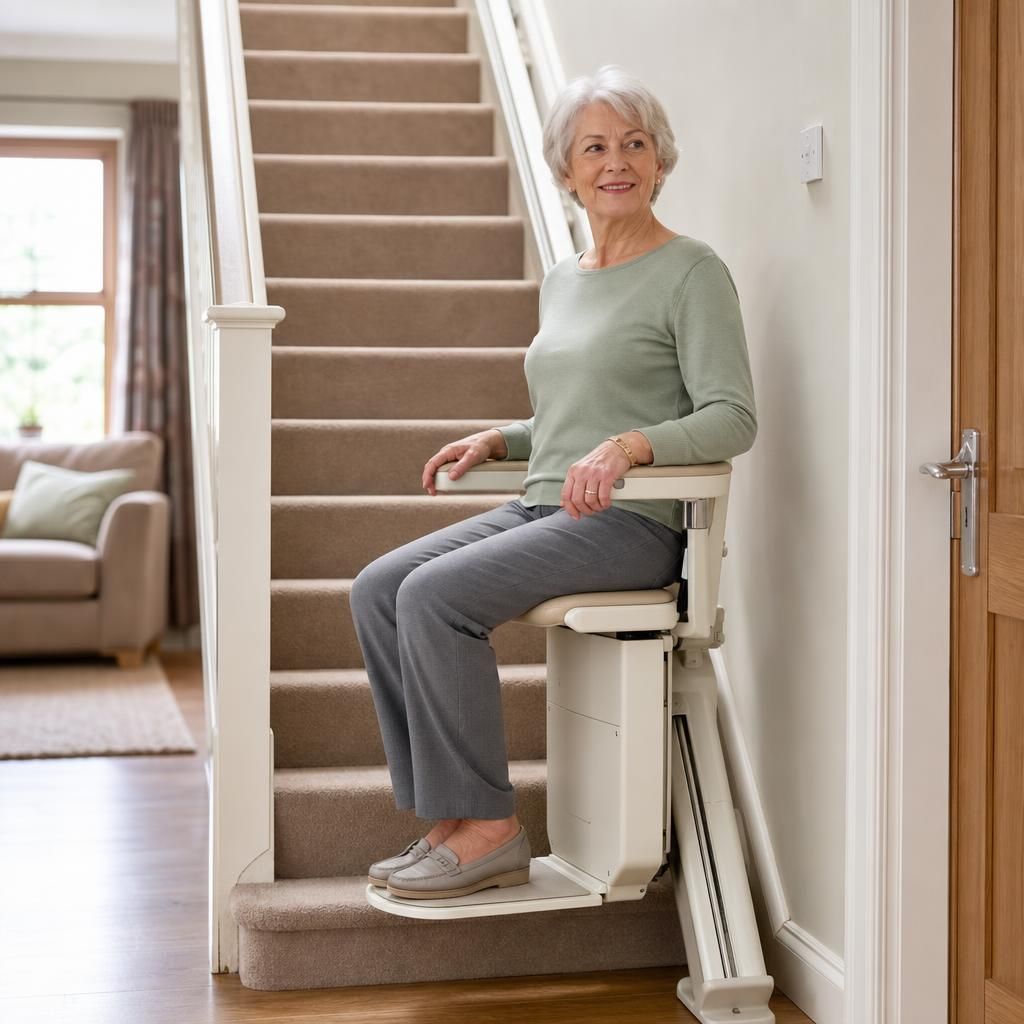
Slimline stairlifts combine a reduced design with advanced functionality, perfect for narrow spaces, offering a streamlined fit without compromising on safety or ease of use.
Slimline stairlifts incorporate advanced safety features like obstruction sensors, secure seat belts, and slip-resistant footrests, ensuring secure navigation on narrow staircases while prioritising user safety and peace of mind.
Consider the staircase dimensions, the stairlift's weight capacity, customisation options for tight curves, and installation compatibility for steep inclines. Prioritise models with foldable features to maximise space efficiency.
Regular maintenance ensures slimline stairlifts remain reliable and safe. Our expert technicians provide routine inspections, emergency repairs, and ongoing support, safeguarding optimal performance and longevity for your mobility solution.
Slimline stairlift installation requires unobstructed staircase width, secure power access, and bespoke measurements to fit compact spaces, ensuring a seamless and efficient integration that accommodates existing architectural constraints.
A proper assessment, professional installation and clear warranty terms help ensure your slimline stairlift is suitable and supported after fitting. Independent Stairlifts can explain servicing arrangements and what to do if a fault occurs, before you proceed.
Contact UsSlimline stairlifts are designed to fit narrow and steep staircases while offering all necessary safety features and comfort, ensuring accessibility without compromising on the space or usability of your stairs.
Slimline stairlifts are adaptable to most narrow staircases, including straight and curved configurations, ensuring reliable operation while maintaining safety and ease of use in restricted spaces. Expert assessments guarantee optimal installation.
Regular maintenance ensures longevity and optimal performance. Schedule annual servicing with a certified professional to inspect mechanical parts, clean components, and address any wear and tear issues promptly.
Yes, slimline stairlifts can be customised with various upholstery and rail colour options to complement your home decor, ensuring a seamless integration into your living space while maintaining functionality.
Slimline stairlifts can be comparable in price to regular models, depending on customization, installation complexities, and model features. Consulting with a specialist ensures you receive a solution tailored to your budget.
Discuss your staircase with Independent Stairlifts to understand whether a slimline or compact stairlift is suitable. An assessment can clarify clearance, seating, parking and installation requirements, helping you compare practical options before making a decision.
Contact Us