
Are slimline stairlifts more expensive than regular models?
Slimline stairlifts are not necessarily more expensive than regular models; the price depends mainly on the stairlift type, rail design, stair configuration, features and installation requirements. A compact model may cost more where specialist design or a curved rail is needed, while a straightforward slimline lift for a narrow, straight staircase can be competitively priced.
Slimline stairlifts are not automatically more expensive than regular models. The total price is usually determined by whether the lift is for a straight or curved staircase, the design of the rail, the amount of installation work required and the features selected. A slimline lift for a narrow, straight staircase can be competitively priced, whereas a compact lift with a bespoke curved rail may cost more because it is designed specifically for the staircase.
Why a slimline model may cost more
Slimline stairlifts are designed to occupy less space when parked or in use. Achieving this may require a narrower seat, compact drive unit, folding arms or a rail positioned carefully against the stairs. These design features can involve specialist components and more precise fitting than a standard model.
- Bespoke rail design: A curved or multi-level staircase requires a rail made to follow the individual bends, landings and changes in direction. This is generally more involved than fitting a standard straight rail.
- Restricted installation space: Narrow stairs, limited clearance at the top or bottom, and nearby doors or hallways may require careful positioning and additional adjustments.
- Selected features: Powered swivel seats, powered folding rails, automatic footrests, different upholstery options and remote controls can all affect the final price. These features are separate from the basic slimline design.
- Structural or electrical work: Most stairlifts are installed using supports fixed to the stairs rather than the wall, but unusual layouts may require extra preparation. Any necessary electrical work or alterations should be identified during the assessment.
When the price may be similar to a regular stairlift
On a straightforward staircase, the difference between a slimline and a conventional model may be relatively small. Both may use a similar installation process, and the main variation may be the size of the seat, carriage and folded components. A compact design can also be the more practical option where preserving access to the staircase is important, even if its purchase price is not the lowest available.
It is useful to compare stairlifts on a like-for-like basis. A basic regular model and a fully featured slimline model are not equivalent quotations. Check whether each price includes the rail, delivery, installation, demonstration, warranty and removal of any existing equipment. For a curved stairlift, confirm that the quotation is based on a survey of the actual staircase rather than a general guide price.
Do curved slimline stairlifts cost more than straight models?
Usually, a curved slimline stairlift costs more than a straight model because the rail is individually measured and manufactured. The price can be influenced by the number and sharpness of bends, the number of floors served, intermediate landings and whether the rail needs to finish in a particular position. A compact curved design may also include features that allow the seat or rail to fold away where the staircase is especially restricted.
This does not mean that every narrow staircase needs a curved stairlift. If the stairs are straight, a straight slimline model may be sufficient. If the staircase changes direction, an assessment is needed to establish whether one continuous curved lift or separate lifts would be more suitable. The most appropriate option depends on the layout, transfer points and how much clear space needs to be retained.
Can a reconditioned slimline stairlift reduce the cost?
A reconditioned stairlift may provide a lower-cost alternative, particularly where a suitable straight model is available. Its suitability depends on the staircase, the user’s mobility needs, the equipment’s condition and whether the specification provides the required seat width, weight capacity and safety features. Curved reconditioned lifts are less straightforward because their rails are made for particular staircases and may need modification or replacement.
When considering reconditioned equipment, ask what inspection, servicing and testing have been completed, what warranty is provided and whether installation is included. A lower initial price should not come at the expense of correct fitting, safe operation or suitable ongoing support.
What is included in the overall cost?
The purchase price is only one part of the decision. A proper comparison should consider:
- the stairlift and rail;
- the site survey and design of the installation;
- delivery, fitting and commissioning;
- instruction on safe use and day-to-day charging;
- warranty cover and what it includes;
- future servicing, repairs and battery replacement; and
- removal or adaptation of an existing stairlift, where applicable.
Some staircases require a powered or manual folding rail to keep a doorway, corridor or landing clear. This can add to the cost, but it may prevent the need for wider building alterations. Similarly, a swivel seat or powered controls may be worthwhile where the user has difficulty turning or standing, even if they are not necessary for every installation.
How to get an accurate comparison
A home assessment is the reliable way to establish whether a slimline stairlift will cost more than a regular model in a particular property. The assessment should consider the staircase dimensions, bends and landings, available clearance, parking positions, power supply and the user’s ability to transfer on and off the seat. It should also identify any access issues that could affect fitting.
Ask for a written quotation that separates the equipment, installation and any optional features. This makes it easier to compare a slimline model with a regular or reconditioned alternative without overlooking important costs. If the user may qualify for VAT relief because of a disability or long-term health condition, discuss the relevant requirements with the installer before placing the order; eligibility and the necessary declaration must meet the applicable rules.
In summary, slimline stairlifts can be priced similarly to regular models when the staircase is simple and the specification is comparable. They are more likely to cost extra when the installation involves a bespoke curved rail, restricted access, additional safety or convenience features, or unusual fitting requirements. The right comparison is therefore based on the complete installed solution and the needs of the staircase user, not on the word “slimline” alone.
Slimline stairlift prices should be compared with regular models on a like-for-like basis, because the total cost includes more than the lift itself. A narrow straight staircase may need only a compact seat and carefully positioned rail, while a curved staircase requires a rail designed specifically for its bends and landings.
When reviewing a quotation, check whether it includes:
- the stairlift, rail and necessary controls;
- the home assessment, delivery, installation and commissioning;
- demonstration and user instructions;
- warranty cover and ongoing support; and
- any optional features, electrical work or removal of existing equipment.
A slimline model may therefore be similarly priced to a regular model when the staircase and specification are straightforward. Additional cost is more likely when the installation needs a bespoke curved rail, folding rail, powered seat or other features to preserve access around the stairs.
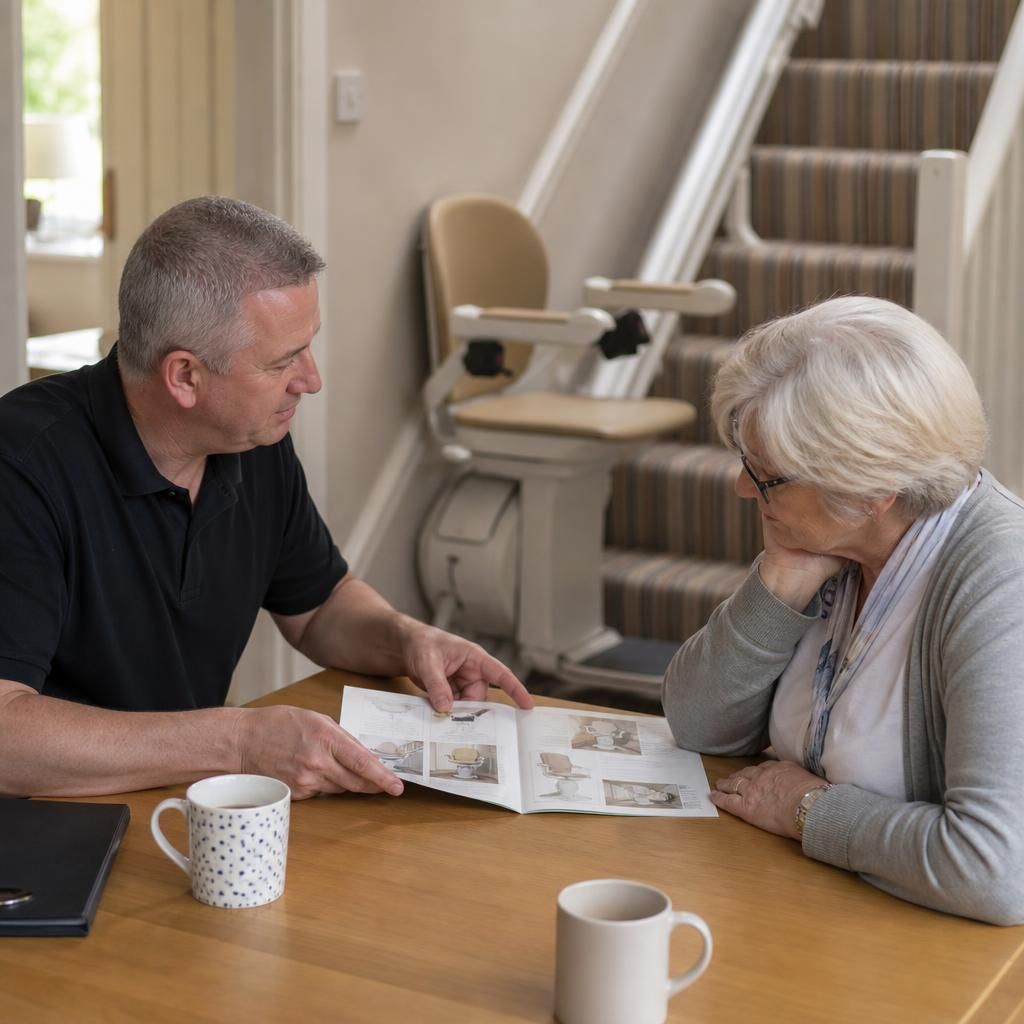
Request a tailored slimline stairlift assessment
Contact Independent Stairlifts to arrange a tailored assessment and compare slimline, regular and reconditioned options for your staircase. We’ll explain the complete installed cost, available features and any fitting considerations before you decide.