
How do slimline stairlifts handle weight capacity compared to traditional models?
Slimline stairlifts can provide a similar weight capacity to many traditional models, but their narrower design may limit the range of heavy-duty options available. The correct capacity depends on the specific model, seat design, track layout and user’s measurements, so a professional assessment is essential to confirm safe, comfortable operation.
Slimline stairlifts can offer a weight capacity comparable with many traditional models, but capacity is determined by the individual lift rather than by its appearance alone. A narrower design may reduce the choice of seat widths, heavier-duty configurations or track layouts available, so the correct model must be selected around the user’s weight, measurements, staircase and day-to-day needs.
A traditional stairlift usually has a wider seat and may provide more scope for reinforced components or a higher-capacity configuration. Slimline models prioritise a compact folded profile, allowing more usable space for other people on the stairs. This does not automatically mean that they are less strong. The lift’s rated capacity is established by the manufacturer and relates to its motor, carriage, seat, footrest, track and braking systems working together.
When comparing models, it is important to check the specified user capacity rather than judging suitability by seat size or the width of the rail. The assessment should consider:
- the user’s current weight, including normal clothing and anything routinely carried on the lift;
- the available seat width, depth and height, and whether the user can sit securely without feeling restricted;
- the user’s ability to transfer on and off the seat and maintain a stable seated position;
- the staircase gradient, bends, landings and available clearance;
- the condition and fixing points of the stairs or supporting structure; and
- whether a powered swivel seat, larger footrest, harness or other options affect the overall configuration.
Capacity is not the same as comfort. A lift may technically support a user’s weight but still be unsuitable if the seat is too narrow, the armrests do not provide adequate support, or the user’s posture makes the journey uncomfortable. For this reason, a professional assessment should measure the user as well as the staircase. Where appropriate, trying a suitable seat or discussing the available seating options can help confirm that the slimline design provides enough support.
Curved staircases require particular care because the track is made to follow the staircase and the carriage may negotiate changes in direction or gradient. The lift must be assessed as a complete system, including its route, turning position and loading points. A slimline curved stairlift may have a different capacity from a slimline straight model, and two lifts with a similar folded width may not have the same seating or weight specifications.
Safety features are designed to work within the lift’s stated limits. The motor, braking system, sensors, seat belt and charging system should not be expected to compensate for overloading or for an unsuitable seating position. The user should sit facing the correct direction, use the seat belt where fitted and keep bags or other items within the permitted areas. Heavy or awkward objects should not be carried on the seat, footrest or armrests unless the manufacturer’s instructions specifically allow it.
It is also worth allowing for future requirements. A user’s weight, balance or ability to transfer may change, so choosing the narrowest available seat solely to preserve stair width may not be appropriate. If a higher-capacity seat or additional support is needed, the installation may require a wider model, a different seat configuration or an alternative layout. These options should be discussed before installation rather than treated as an afterthought.
Do not rely on a general capacity stated for a product range, an older quotation or an online description. Confirm the rated capacity of the exact model and configuration being proposed, along with any restrictions for a particular track or seat. Independent Stairlifts can assess the staircase and the intended user together, explain the available slimline and traditional options, and confirm whether the chosen lift provides the required capacity, clearance and comfort. Never exceed the manufacturer’s stated limit or attempt to modify the lift to carry more weight.
A slimline stairlift is not automatically lower-capacity than a traditional model. Its safe user weight is set by the manufacturer for the complete configuration, including the motor, carriage, seat, footrest, track and braking system. Some slimline models provide a capacity comparable with standard lifts, while traditional models may offer a wider choice of reinforced or higher-capacity seating.
When comparing options, check the rated capacity of the exact model and track layout rather than judging suitability from the folded width or seat appearance. The assessment should also consider seat width, posture, transfers, staircase shape and any options such as a powered swivel seat or larger footrest. A lift must never be used above its stated limit, even if it appears to operate normally.
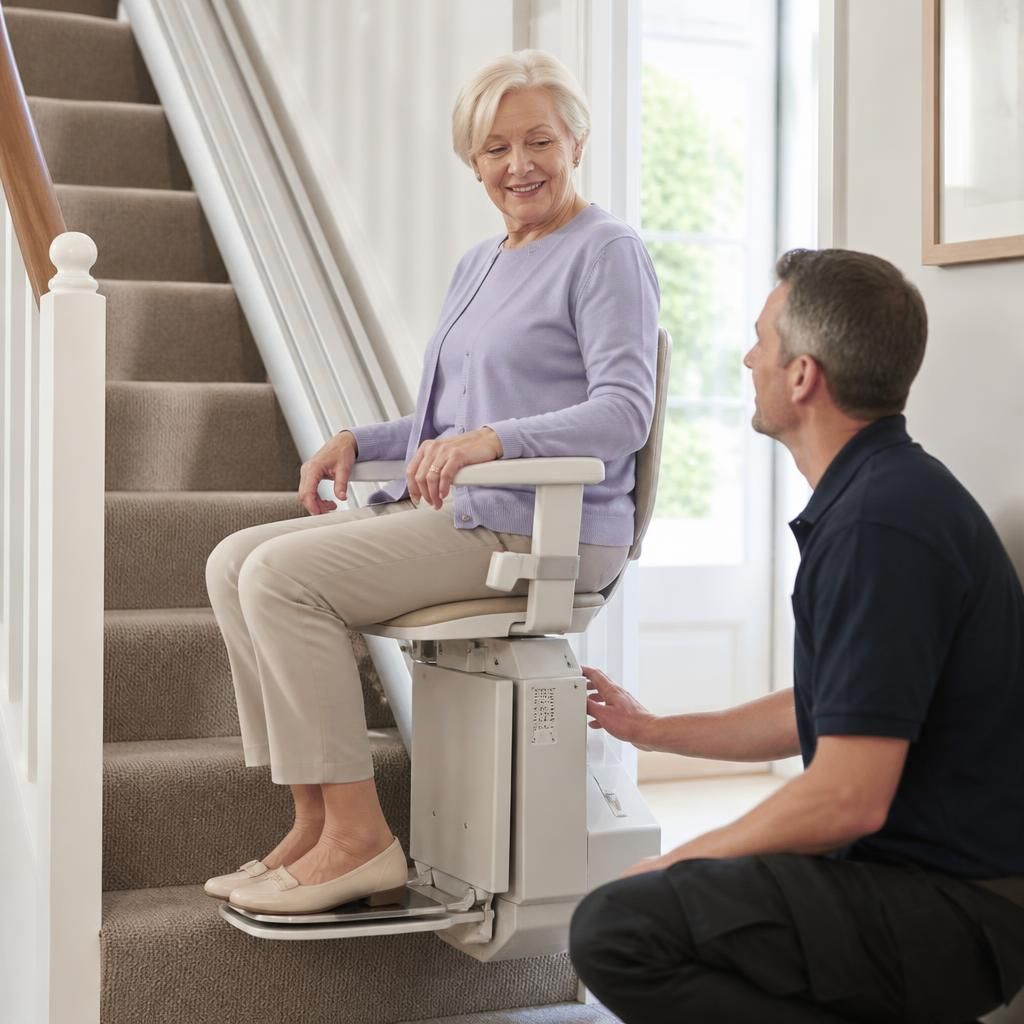
Arrange a Slimline Stairlift Assessment
Arrange a professional slimline stairlift assessment to confirm the exact weight capacity, seating configuration and staircase clearance required for safe, comfortable use.
Independent Stairlifts can compare suitable slimline and traditional options for your home and explain the next steps.