
What types of maintenance and support are available for slimline stairlifts?
Slimline stairlift support typically includes scheduled servicing, safety inspections, battery and component checks, fault diagnosis, repairs and replacement parts. Independent Stairlifts can also provide practical advice and responsive assistance when your lift needs attention, helping keep it safe, reliable and suitable for your home.
Maintenance and support for a slimline stairlift normally includes scheduled servicing, safety inspections, battery and charging checks, fault diagnosis, repairs and replacement parts. Independent Stairlifts can assess the lift in its actual installation environment and provide practical advice or engineer support when attention is needed, helping keep the equipment safe, dependable and suitable for the staircase.
Routine servicing and safety inspections
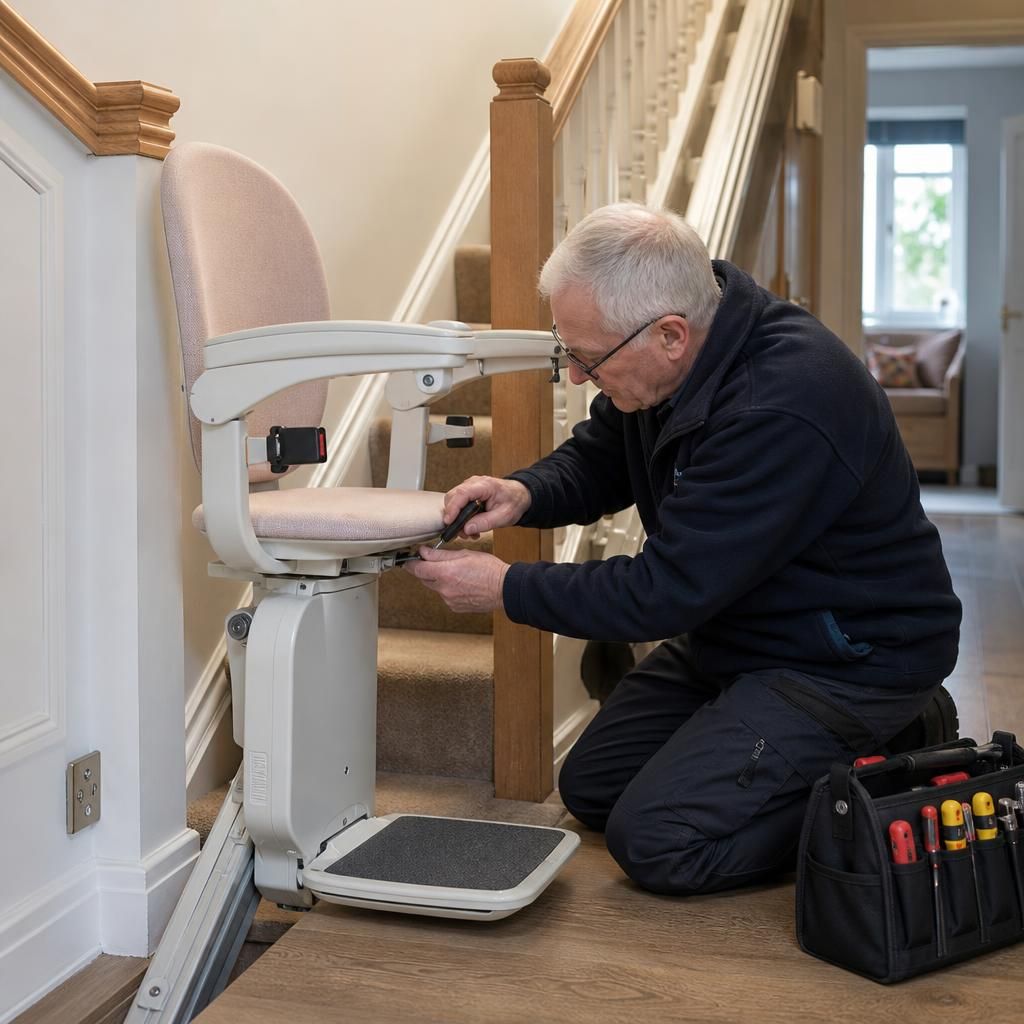
A service visit checks the complete stairlift rather than focusing only on whether it is moving. The engineer may inspect the carriage, rail, seat, armrests, footrest, controls, sensors, safety edges, swivelling or folding mechanisms and charging points. Fixings and moving components are checked for wear, damage or looseness, and the lift is operated through its normal functions to identify anything affecting smooth and controlled travel.
Slimline models are designed to occupy less space, so particular attention may be given to clearances around the rail, seat and footrest. Items such as rugs, furniture, walking aids or stored belongings can interfere with a compact installation even when they were not a problem previously. An engineer can also advise if changes to the home or the user’s routine have affected safe use.
Battery and charging support
Most stairlifts use rechargeable batteries so they can continue to operate during a power interruption. Servicing includes checking that the lift reaches its charging points correctly and that the batteries are holding charge as expected. Batteries are consumable components and may eventually need replacing, particularly if the lift is used frequently, left away from a charging point or begins to travel more slowly than usual.
Useful signs that a battery or charging system needs attention include repeated low-battery warnings, reduced travel distance, the lift stopping before reaching its destination or a charger that does not appear to be working. Keeping the lift parked at its designated charging point when not in use and following the operating instructions can help avoid unnecessary battery problems.
Fault finding and repairs
Support is available when the lift will not start, stops during travel, makes an unusual noise, reports a fault or does not respond to a control. Fault diagnosis should identify the underlying cause rather than relying on repeated resets. Potential issues can involve the power supply, batteries, charging contacts, controls, sensors, drive system, rail or safety circuits.
Where a repair is required, the engineer can explain the problem and advise whether an adjustment, replacement component or more substantial repair is appropriate. Parts should be compatible with the specific stairlift model and installation. This is especially important with slimline lifts, where the carriage, rail and safety features are selected to work within restricted space.
Replacement parts and adjustments
Common maintenance work may include replacing batteries, worn rollers or other moving components, adjusting charging contacts, securing fixings and replacing damaged controls or safety-related parts. A seat, armrest, footrest or control position may also need adjustment if the user’s needs have changed. Any change should preserve the manufacturer’s safety requirements and the available clearance on the staircase.
Do not attempt to bypass a safety sensor, alter the drive system or dismantle the carriage or rail yourself. If the lift behaves unexpectedly, switch it off if the instructions allow this, keep the staircase clear and contact Independent Stairlifts for advice. A fault that appears minor can affect braking, charging or safe travel.
Planned support and ongoing advice
The appropriate service interval depends on the manufacturer’s guidance, the model, how often it is used and the conditions in the home. Regular users, lifts in busy households and outdoor installations may require closer monitoring than a lift used occasionally in a dry indoor setting. Independent Stairlifts can advise on a suitable maintenance arrangement and explain what is included in any service or support agreement.
Support can also cover everyday operating questions, cleaning guidance, charging practices, safe use of the controls and what to do if the lift stops. If the stairlift is reconditioned, its service history and current condition should be considered when arranging future maintenance. Keep any service records, user instructions and details of reported faults available, as they can help an engineer diagnose issues efficiently.
Regular servicing cannot prevent every fault, but it helps identify wear before it affects normal operation and confirms that the lift remains appropriate for its user and surroundings. If you notice a change in speed, noise, braking, battery performance or the way the seat and footrest move, arrange an assessment rather than waiting for the lift to stop completely.
Routine servicing checks that a slimline stairlift remains safe, reliable and correctly adjusted within the limited space around the staircase. An engineer examines the rail, carriage, seat, footrest, controls, sensors, safety edges, charging points and moving parts, then tests the lift through its normal operation.
Because compact installations leave less clearance, the assessment should also consider changes around the stairs. Rugs, furniture, walking aids or stored items can obstruct the footrest or affect safe travel. The engineer can identify these issues, check for wear or loose fixings and explain any adjustments or repairs needed before they develop into a more serious fault.
Arrange Slimline Stairlift Servicing or Support
If your slimline stairlift needs servicing, is showing signs of a fault or has reduced battery performance, contact Independent Stairlifts to arrange an assessment or repair. We can advise on the appropriate support for your model and installation.