
How do slimline stairlifts ensure safety in compact spaces?
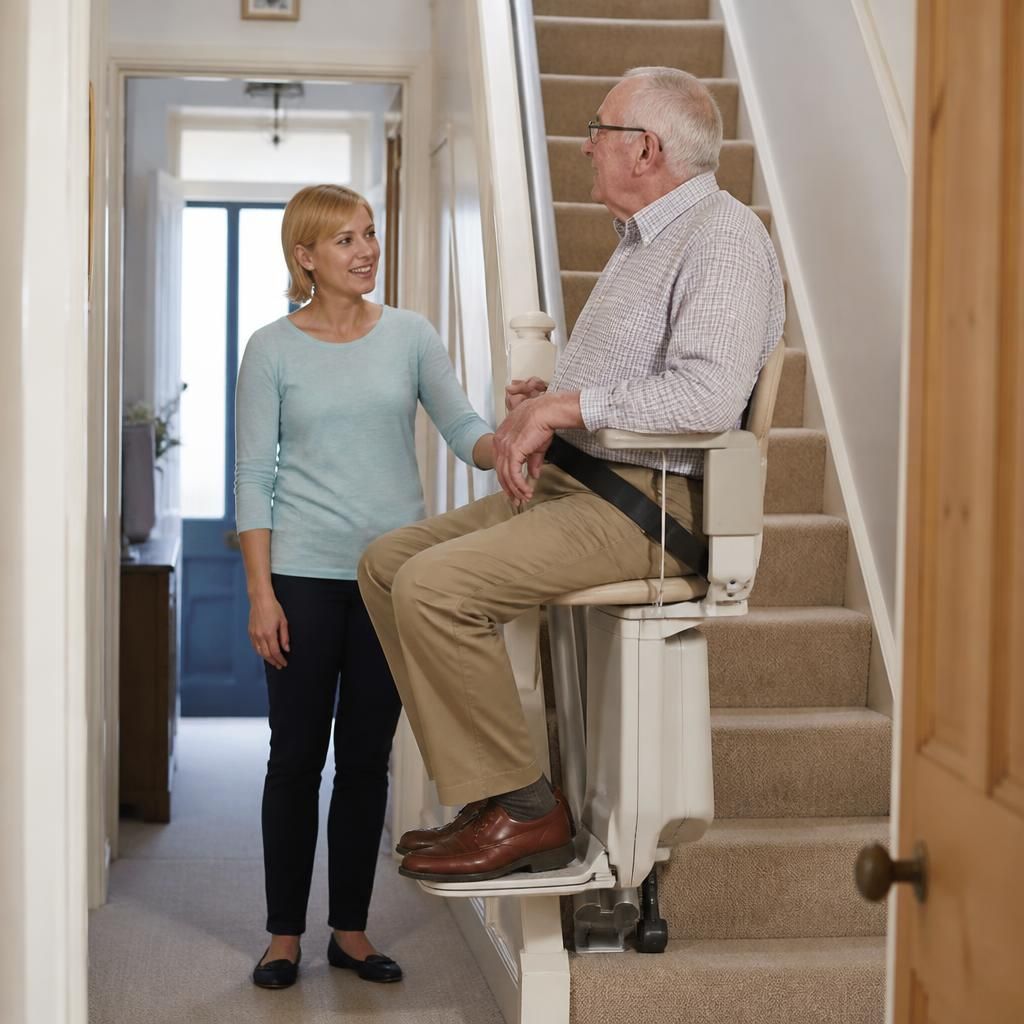
Slimline stairlifts improve safety in compact spaces by combining a narrow, space-saving design with features such as a secure seat belt, powered swivel seat, smooth start-and-stop controls and obstruction sensors. Professional assessment and installation ensure the lift fits the staircase correctly while leaving safe access for other users.
Slimline stairlifts improve safety in compact spaces by combining a narrow, space-conscious design with safety features that secure the passenger, control the journey and help detect hazards. A proper survey and professional installation are equally important: the lift must suit the staircase, leave practical access for other users and be adjusted to the needs of the person using it.
In a narrow hallway or staircase, safety depends on more than the overall width of the stairlift. The position of the rail, the folded size of the seat and the space available at the top and bottom of the stairs all affect how safely people can move around the installation. An assessment considers these details before a suitable model and layout are recommended.
Key features that support safe use include:
- A compact folded profile: When the stairlift is not in use, the seat, armrests and footrest can usually be folded away. This helps preserve usable space on the stairs and reduces the likelihood of someone catching against the equipment while walking past.
- A secure seat belt: The belt helps keep the passenger correctly positioned during travel. It should be fastened before the lift moves and used in accordance with the manufacturer’s instructions.
- Powered or manually operated swivel seating: At the landing, a swivel seat can turn the passenger away from the staircase before they stand up. This reduces the need to twist or step sideways towards the stairs, which is particularly useful where the landing is small.
- Safety sensors: Obstruction sensors can stop the stairlift if the footrest or another protected part of the unit encounters an object on the stairs. The staircase should still be kept clear, as sensors are an additional safeguard rather than a replacement for good housekeeping.
- Controlled acceleration and braking: A smooth start and stop can make the ride more predictable and reduce sudden movement, helping passengers feel stable while the lift begins or ends its journey.
- Simple controls: Controls on the armrest or handset allow the passenger or a carer to operate the lift without reaching awkwardly. Controls should be easy to identify and used only when the passenger is seated correctly.
- Safety arms and footrest design: Armrests provide support while seated, while a properly positioned footrest helps keep the feet away from the steps and rail during travel.
The rail is normally fitted close to the staircase, but its route must be planned carefully. On a straight staircase, this may be relatively straightforward. On a curved staircase, the rail is made to follow the individual bends, landings and changes in direction. In either case, the installer checks that the lift can travel without striking walls, doors, radiators or other fixtures and that it stops in a suitable position at each end.
Clearance is especially important in a compact home. The installation should allow the stairlift to be folded when it is not being used and should avoid creating an unnecessary obstruction at doorways, landings or corridors. Where space is restricted, a parking position may be planned so that the stairlift is kept away from a frequently used entrance or passage. The best position depends on the layout of the home and the direction in which the passenger needs to leave the seat.
At the top of the stairs, the passenger needs enough room to swivel, release the belt and stand safely. At the bottom, they need a stable area in which to get on and off. If the existing landing is particularly short or awkward, the assessment may identify the need for a powered swivel, a hinged rail or another configuration designed for the property. These options are not suitable for every staircase, so they should be confirmed during the survey rather than assumed from photographs or measurements alone.
A professional installation also checks the condition of the stairs and the strength of the surfaces used to support the rail. The stairlift must be secured correctly, aligned with the staircase and tested through its full route. The installer should demonstrate the controls, seat belt, swivel mechanism, emergency stop and charging arrangements, and explain what to do if the lift stops unexpectedly.
Most stairlifts include rechargeable batteries so that the lift can complete a journey if there is a temporary interruption to the household electricity supply. Charging points are positioned along the rail or at designated parking points, depending on the model. The lift should normally be left in an appropriate charging position when it is not being used. If it repeatedly fails to charge, travels more slowly than usual or displays a warning, it should be reported rather than used until the cause is understood.
Safe operation also depends on using the lift within its intended limits. The passenger should sit back in the seat, keep their feet on the footrest, fasten the belt and avoid carrying loose or bulky items that could fall onto the stairs. Other people should not ride on the footrest, stand on the steps while the lift is moving or attempt to pass the stairlift in a confined section of the staircase.
A slimline model is designed to use less space, but it cannot remove every risk associated with a narrow staircase. The suitability of a particular lift depends on the staircase width, its shape, landing arrangements, the passenger’s mobility and the required weight capacity. A narrow lift may also have different seating or armrest dimensions from a larger model. The person who will use it should therefore be included in the assessment wherever possible, so that they can try the controls and confirm that they can transfer on and off safely.
Regular servicing and prompt reporting of faults help preserve these safety functions. Keep the rail and steps clear, follow the cleaning guidance, avoid spilling liquid near the controls and do not attempt to alter the rail or repair electrical components yourself. If the seat belt, swivel, sensors, controls or braking action does not work as expected, stop using the stairlift and contact the service team for advice.
In short, safety in a compact space comes from the combination of a reduced folded profile, secure passenger positioning, controlled movement, obstruction protection and a layout that has been professionally planned. A home assessment is the most reliable way to confirm that the chosen slimline stairlift will leave suitable access while providing a safe, practical route between floors.
In a compact staircase, safe stairlift use depends on having enough clearance to board, travel and leave the seat without twisting or stepping into the stairwell. A slimline design helps preserve this space, but the rail position, folded dimensions and landing layout must be assessed together.
A swivel seat is particularly useful where the top or bottom landing is short. Once the stairlift has reached its stopping position, the seat can turn the passenger away from the stairs before they release the belt and stand. This reduces sideways movement and helps create a more stable transfer, provided there is sufficient room for the seat to swivel fully.
During the home assessment, the installer checks:
- Whether doors, radiators or other fixtures restrict the stairlift’s route.
- How much space remains for other people to use the staircase when the lift is folded.
- Whether the passenger can comfortably reach the controls, fasten the belt and transfer at each landing.
- Whether a swivel seat, hinged rail or alternative parking position is appropriate for the property.
These checks are essential because a slimline stairlift cannot make an unsuitable landing safe by itself. The final arrangement should be tested with the intended user before installation is completed.
Arrange Your Slimline Stairlift Assessment
Arrange your slimline stairlift assessment with Independent Stairlifts so we can check the staircase, landing space and your individual access needs. We’ll recommend a suitable configuration and explain the installation requirements before any work begins.