
What ongoing support and maintenance services are available after my stairlift installation?
After your stairlift is installed, ongoing support can include servicing, safety checks, repairs, troubleshooting and practical advice on using the equipment. Independent Stairlifts can help arrange the appropriate assistance if your lift develops a fault or its needs change.
After installation, ongoing stairlift support usually includes user advice, fault diagnosis, repairs, safety checks and planned servicing. Independent Stairlifts can help you identify the right type of assistance for your lift, whether you need guidance over the telephone, an engineer visit, replacement parts or advice about changing mobility needs. The exact support available depends on the stairlift model, its age, warranty or service agreement, and the nature of the fault.
Servicing and safety checks
Routine servicing helps identify wear before it affects reliability or safe operation. During a service, an engineer may inspect the track, carriage, seat, armrests, footrest, swivel or folding mechanisms, safety sensors, seat belt and charging points. They can also check the lift’s movement, braking, controls and battery performance, then make adjustments or recommend parts where necessary.
The appropriate servicing interval varies according to the model, how often it is used and the environment in which it is installed. Outdoor stairlifts may need particular attention because they are exposed to moisture, temperature changes and dirt. If your stairlift is used frequently, or if you notice a change in its performance, contact the service team rather than waiting for the next planned check.
Repairs and fault diagnosis
If the lift stops, moves unevenly, makes an unusual noise or displays a warning, support normally begins with a description of the symptoms and any indicator lights or error messages. You may be asked to check simple points such as whether the lift is correctly parked on a charging point, whether the key is inserted and switched on, or whether an obstruction is affecting a safety sensor.
Do not bypass a safety feature, force the stairlift to move or attempt electrical repairs yourself. If the problem cannot be resolved safely, the lift should be left unused until it has been assessed. An engineer can diagnose the cause, explain the repair required and replace compatible parts where needed. Some repairs may be completed during the visit, while others may require a further appointment or a specific part to be obtained.
Warranty and service agreement support
Your paperwork should explain what is covered by the manufacturer’s warranty or any service agreement, including the relevant duration, exclusions, call-out arrangements and treatment of replacement parts. Coverage can differ between a new and a reconditioned stairlift. Accidental damage, misuse, unauthorised modifications and routine wear may be treated differently from a manufacturing or installation fault.
Keep your installation documents and service information available when you contact Independent Stairlifts. Providing the lift model, installation details and a clear description of the issue can help the team determine the appropriate next step. If you are unsure whether a problem is covered, ask before authorising chargeable work.
Advice on day-to-day use
Aftercare is not limited to repairs. You can also ask for practical advice if you are unsure about operating the controls, using the swivel seat, folding the footrest or parking the lift correctly. If more than one person uses the equipment, everyone should understand the basic controls and safety instructions.
- Keep the track, seat and footrest clear of clothing, toys, pets and other obstructions.
- Use the seat belt and sit fully back in the seat while travelling.
- Charge the stairlift as instructed by parking it in the correct position.
- Keep hand controls and remote controls dry and report damaged buttons or casings.
- Do not allow anyone to stand on the footrest or travel with items that could interfere with the track or sensors.
Battery condition is particularly important. Batteries gradually lose capacity, and signs such as reduced travel, repeated charging warnings or the lift stopping away from its normal charging position should be reported. Avoid buying or fitting replacement batteries unless the correct specification has been confirmed.
Support when your circumstances change
Your requirements may change after installation. A new health condition, reduced strength, changes in balance or a different main user may affect how the stairlift should be used. Independent Stairlifts can advise whether further instruction, an adjustment, an accessory or a reassessment is appropriate. Do not alter the seat, controls or safety equipment yourself, as modifications may affect safe operation and warranty coverage.
If the stairlift becomes unsafe, smells of burning, shows signs of electrical damage or moves without the controls being operated, switch it off if this can be done safely, keep clear of the equipment and request urgent advice. For less urgent issues, record what happened, when it occurred and whether the problem is intermittent. This information helps the service team arrange the most suitable response and minimise disruption.
Regular attention, sensible daily checks and prompt reporting of faults are the main ways to keep a stairlift dependable after installation. Your service documents and the Independent Stairlifts team can confirm the support available for your particular model and circumstances.
Ongoing stairlift maintenance consists of planned servicing, safety checks and prompt repairs to keep the equipment operating reliably after installation. An engineer can inspect the track, carriage, seat, footrest, safety sensors, controls, brakes, charging points and batteries, then identify wear or adjustments before they affect safe use.
The appropriate service interval depends on the stairlift model, how often it is used and where it is installed. Outdoor stairlifts may need particular attention because moisture, dirt and temperature changes can affect components. Contact Independent Stairlifts if you notice unusual noises, uneven movement, reduced travel, warning lights or charging problems rather than continuing to use the lift or attempting repairs yourself.
Keep your warranty and service documents available, as they explain what is covered and whether call-outs, parts or routine wear are treated differently. If a fault occurs, provide the model details and describe when the problem started. This helps the service team arrange suitable advice, replacement parts or an engineer visit.
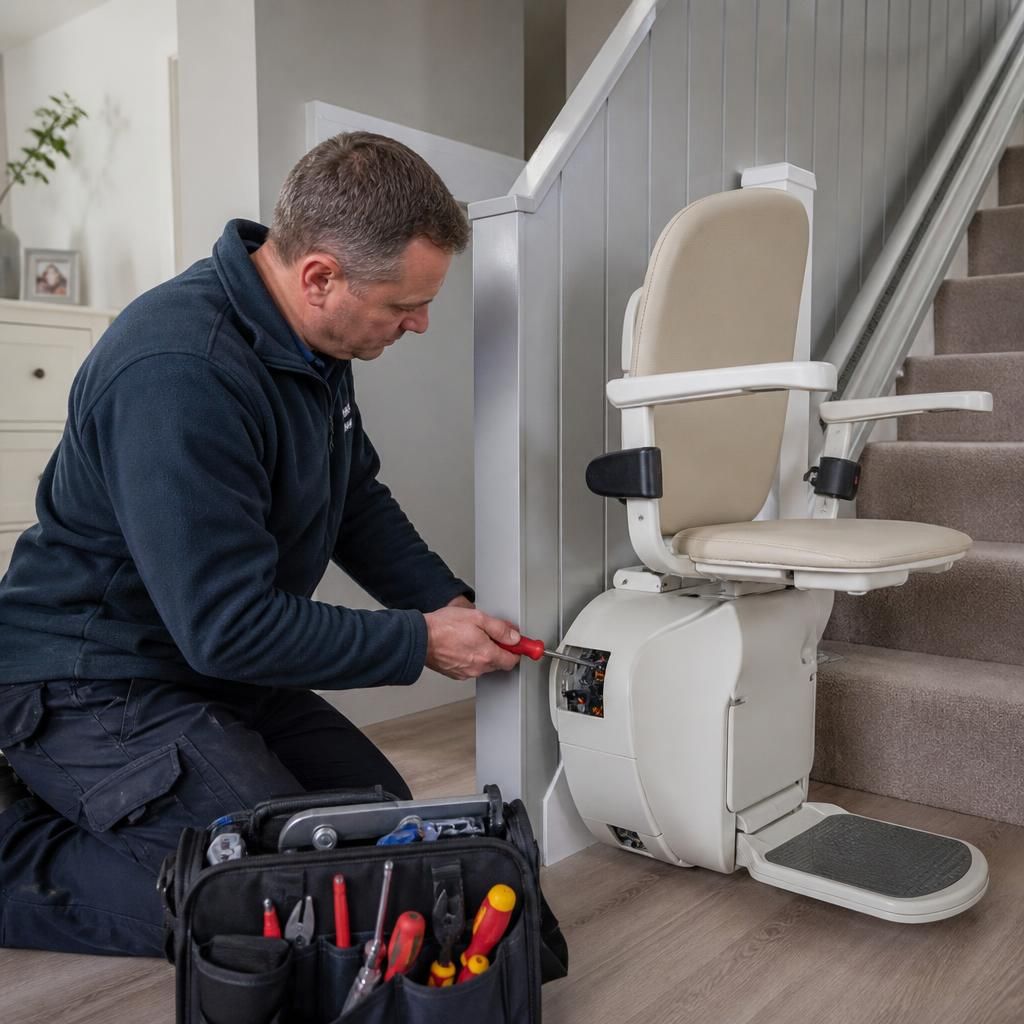
Need help with your stairlift maintenance or repairs?
If your stairlift needs servicing, repair or practical advice, contact Independent Stairlifts with the model details and a description of the issue. We can help arrange the appropriate support and explain the next steps.