
What should I expect during the installation and aftercare of my stairlift?
During installation, a trained engineer fits the stairlift to the staircase, checks its operation and explains how to use it safely. After fitting, you can rely on guidance about day-to-day use, servicing and repairs, with ongoing support available if your needs or the equipment change.
Stairlift installation is the process of securely fitting the lift to your staircase, connecting and testing its controls, and showing you how to use it safely. After installation, aftercare covers user guidance, fault reporting, servicing, repairs and any adjustments needed as your circumstances change.
What happens before the installation? The information gathered during your assessment is used to prepare the installation. The engineer checks the agreed stairlift model, rail design, seating position, controls, charging points and any access requirements. If anything has changed since the assessment, such as a change in your mobility, the layout around the stairs or the availability of a carer, tell the team before fitting begins.
You should also make sure the staircase and the areas at its top and bottom are reasonably clear. The engineer needs safe access to the steps, landings and nearby electrical points. You do not normally need to remove the staircase or make major structural alterations, because stairlift rails are generally fixed to the stair treads or suitable structural parts of the staircase rather than the wall. Any property-specific requirement should have been discussed during the assessment.
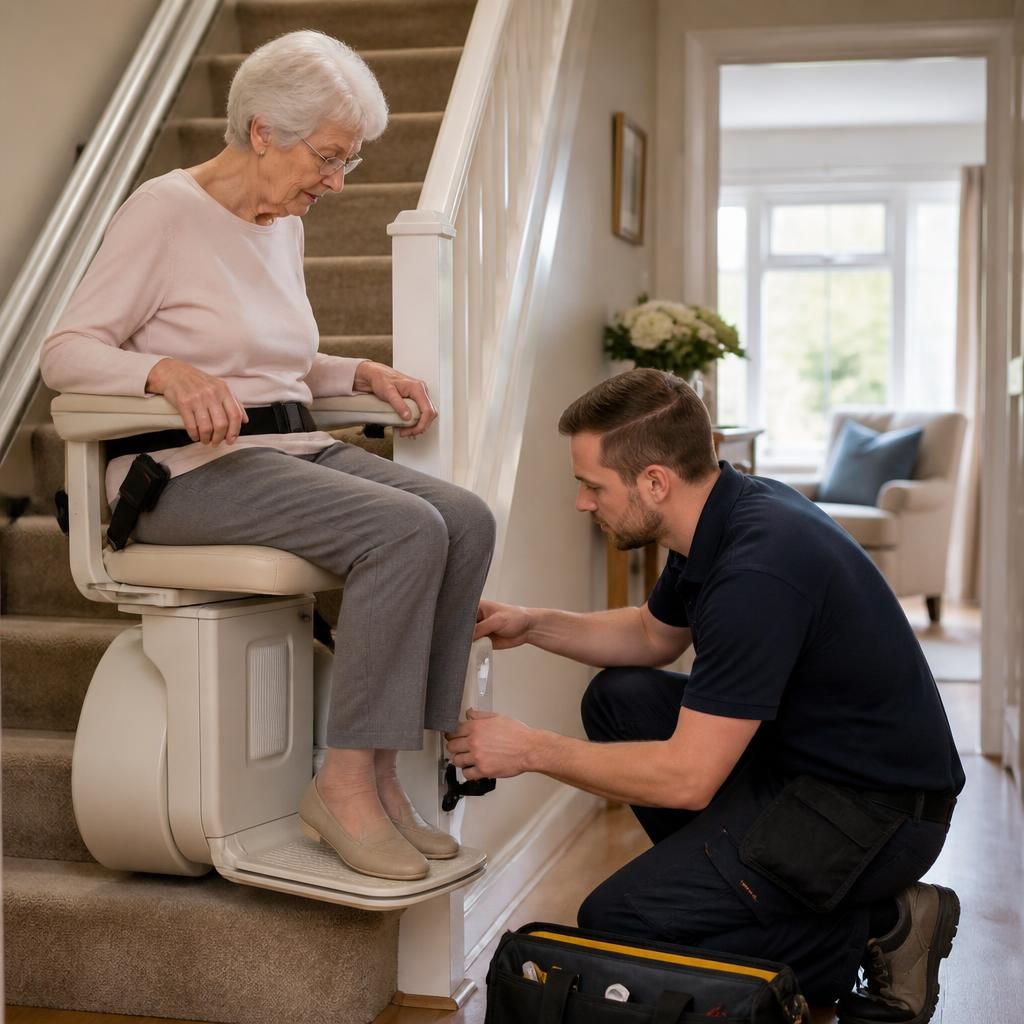
What happens on installation day? A trained engineer will confirm the planned position and explain the work before starting. They will fit the rail, attach the carriage and seat, install the necessary charging equipment and position the controls. For a curved stairlift, the rail is made to follow the individual staircase; for a straight stairlift, the fitting is usually more straightforward. Outdoor installations require equipment and positioning suitable for the external environment.
The engineer will work carefully around your home and should explain any temporary restrictions while the fitting is taking place. There may be some drilling and normal installation noise, but the work is confined to the staircase and associated equipment. You should not use the lift until the engineer has completed the checks and confirmed that it is ready.
Testing and handover are essential parts of the installation. The engineer checks that the lift travels smoothly, stops correctly, charges properly and operates safely at the top and bottom of the stairs. They should also check features such as the seat belt, swivel seat, footrest sensors, arm controls, remote controls, safety edges and any powered or hinged rail, where fitted.
Before leaving, the engineer should demonstrate the controls at a pace you can follow and allow you to practise. This normally includes:
- Starting and stopping the stairlift safely.
- Using the seat belt, swivel seat and arm or footrest controls.
- Calling the lift to another floor with the remote control, where applicable.
- Placing the seat and footrest safely when getting on and off.
- Charging the stairlift and recognising its charging position.
- Responding to an obstruction, warning tone or loss of power.
- Using any manual lowering or emergency features that apply to your model.
Ask questions and practise more than once if necessary. A family member or regular carer should also receive the explanation if they will help you use or maintain the stairlift. Keep the operating instructions, warranty information and service details somewhere accessible.
Using the stairlift safely after fitting means sitting fully back in the seat, fastening the belt and keeping hands, feet, clothing and loose items clear of the moving parts. Do not carry more weight than the equipment is designed for, and do not allow another person to travel with you unless the stairlift has specifically been designed for that use. Keep the stairs and landing clear, particularly around the rail, footrest and any hinged section.
If the stairlift stops, sounds an alert or does not respond, check the straightforward points explained at handover. The lift may not be fully parked on its charging point, a safety edge may be pressed, the power switch may be off, or the seat may not be in its travel position. Do not try to dismantle the lift or bypass a safety device. If the issue does not resolve, contact the aftercare team using the details provided.
Aftercare and maintenance help keep the stairlift safe and dependable. Follow the recommended servicing arrangements and report unusual noises, reduced battery performance, jerky movement, damaged upholstery, loose components or repeated warning tones. Routine checks can identify wear before it affects normal use, although you should not wait for a scheduled service if the lift develops a safety-related fault.
Support may include troubleshooting, engineer visits, repairs, replacement parts and advice about batteries or other consumable components. The exact response time, warranty cover and any charges depend on your agreement, the stairlift model and the nature of the fault. When reporting a problem, describe what happened, when it occurred, any warning message or sound, and whether the lift is stopped at the top, bottom or midway along the stairs. This helps the team assess the urgency and send the appropriate assistance.
New and reconditioned stairlifts should both be supplied with appropriate operating guidance and aftercare arrangements, but the terms can differ. Check what is included for parts, labour, batteries, servicing and call-outs, particularly if the stairlift was supplied as a reconditioned model. Your paperwork should set out the relevant cover.
Aftercare can also support changing needs. If your mobility changes, a different person begins using the lift, or you need an adjustment to the controls or seating position, contact Independent Stairlifts rather than attempting to alter the equipment yourself. The team can advise whether an adjustment, accessory, repair or reassessment is appropriate. If you move home, notify the company before arranging removal, as a stairlift may need specialist dismantling, assessment and refitting.
Installation is complete when the equipment has been tested, you understand its operation and the relevant documents and support contacts have been provided. If anything is unclear, or if the stairlift does not perform as demonstrated, report it promptly so it can be investigated and resolved safely.
Stairlift installation includes a full safety check and handover, not just fitting the equipment to the staircase. Before the engineer leaves, the lift should be tested for smooth travel, correct stopping, charging and operation of its safety features.
You should be shown how to:
- fasten the seat belt and use the swivel seat safely;
- start, stop and call the stairlift using its controls or remote;
- park the seat and footrest correctly at the top or bottom of the stairs;
- recognise warning tones, obstructions and charging problems; and
- contact the aftercare team if the lift develops a fault.
Practise using the stairlift during the handover and ask the engineer to repeat anything that is unclear. A family member or carer who helps you should also receive the demonstration. Keep the operating instructions, warranty details and support contact information somewhere easy to find.
Talk to us about your stairlift installation and aftercare
If you have questions about your stairlift installation, user guidance or aftercare arrangements, talk to the Independent Stairlifts team. We can advise on support, servicing, repairs or changes to your needs.