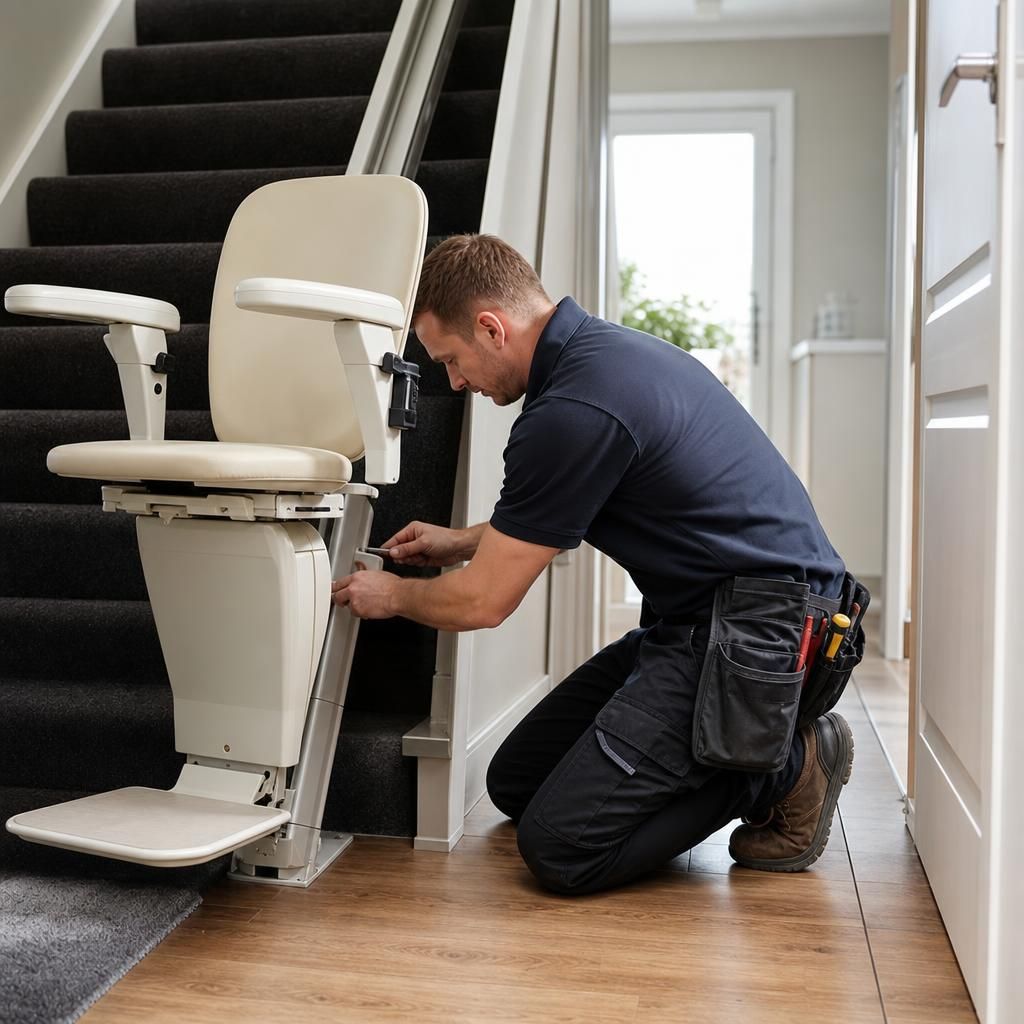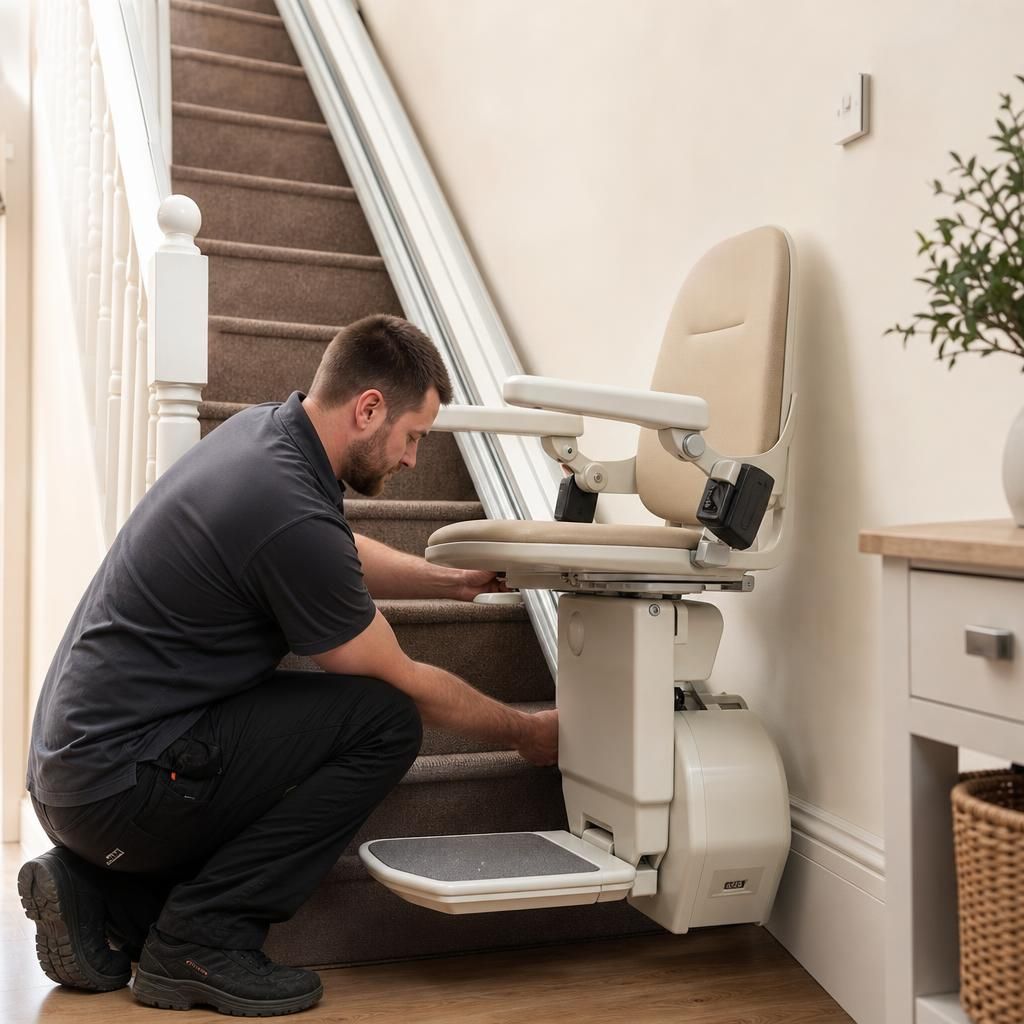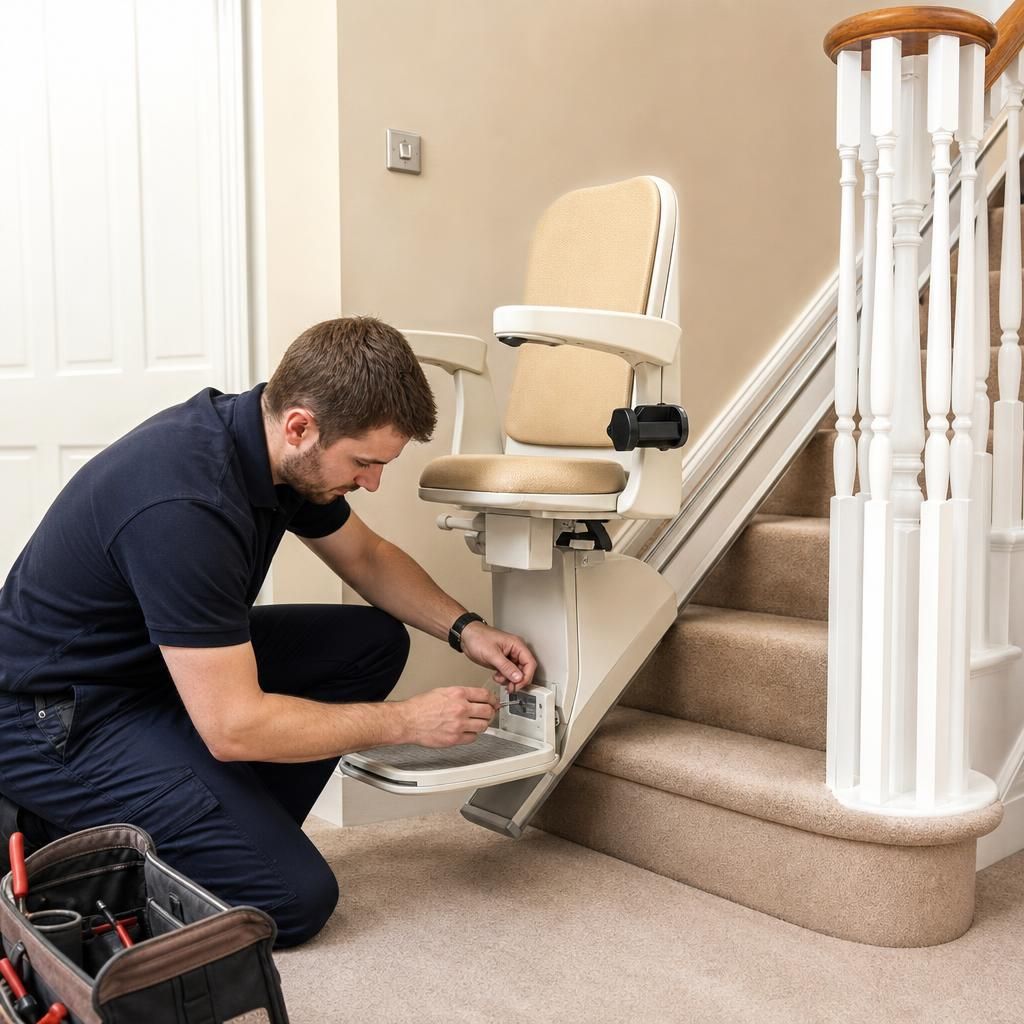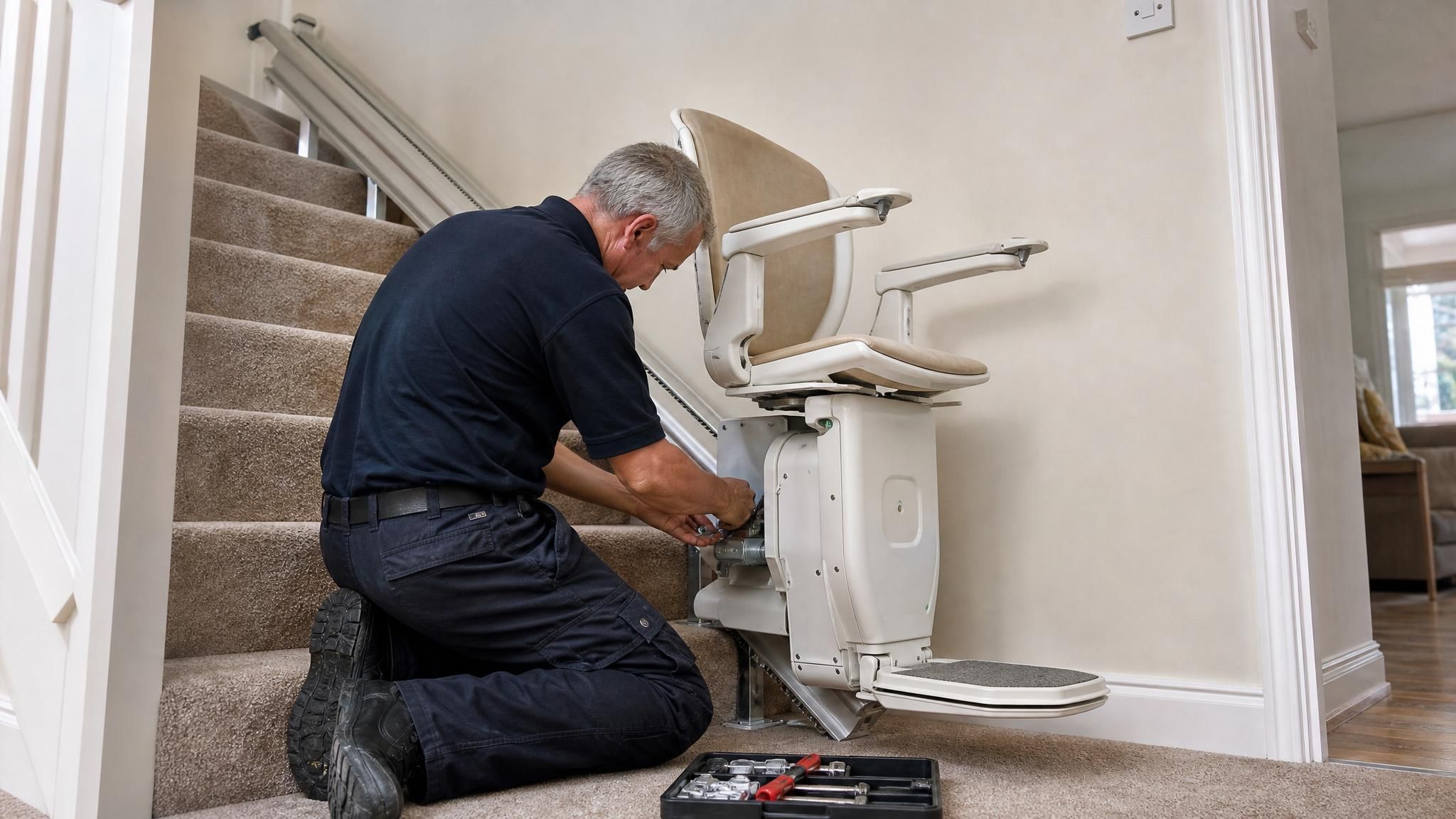
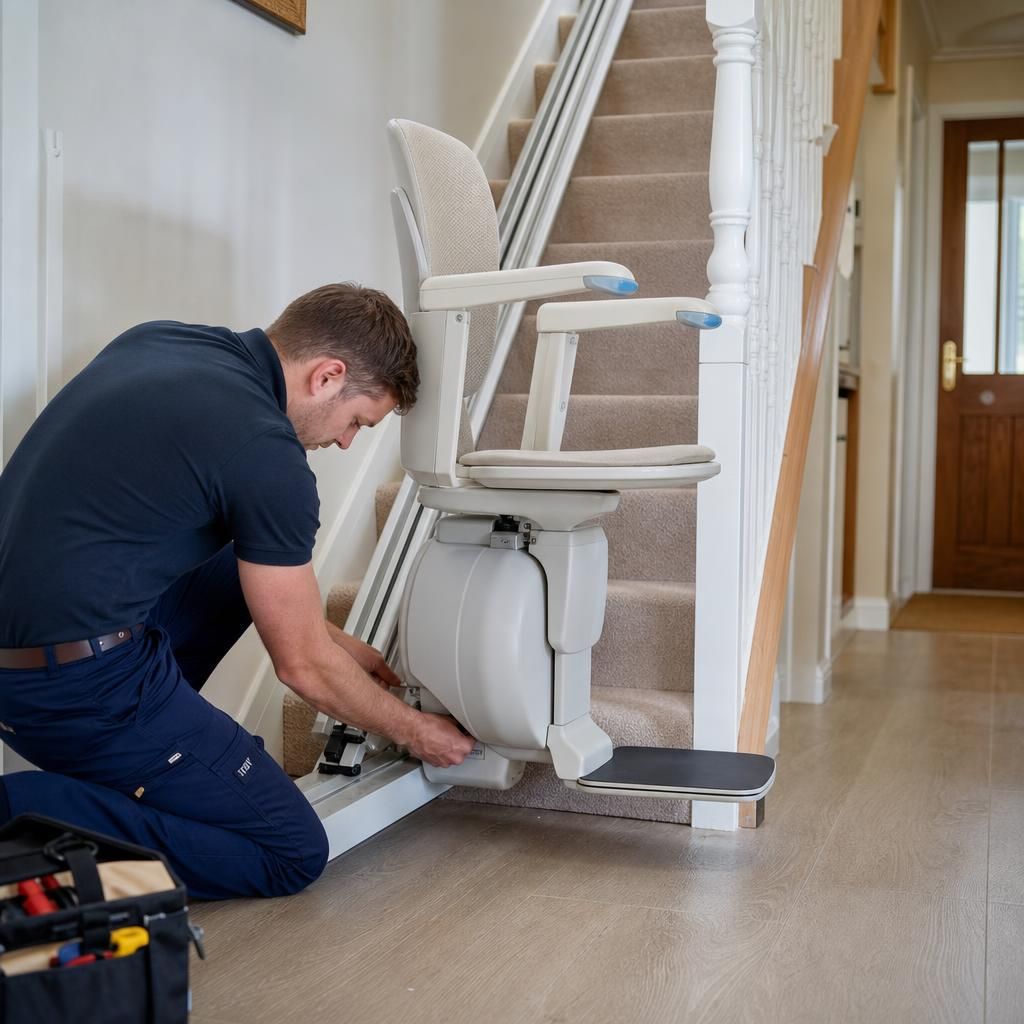
Professional Stairlift Installation & Fit

Stairlift installation and fit involve assessing your staircase, selecting compatible equipment, securely mounting the rail, and testing controls, safety features, and charging points. Professional fitting should account for landings, doorways, user needs, and safe daily operation throughout the home.

Book a free assessment

Expertise in Stairlift Assessment, Installation and Fit

Assessment Beyond Staircase Measurements

A reliable installation assessment considers more than the stair angle. The survey also reviews available headroom, stair width, landing space, nearby doors, electrical access and where the user can safely get on and off. These details help determine the most suitable rail position and parking arrangement.
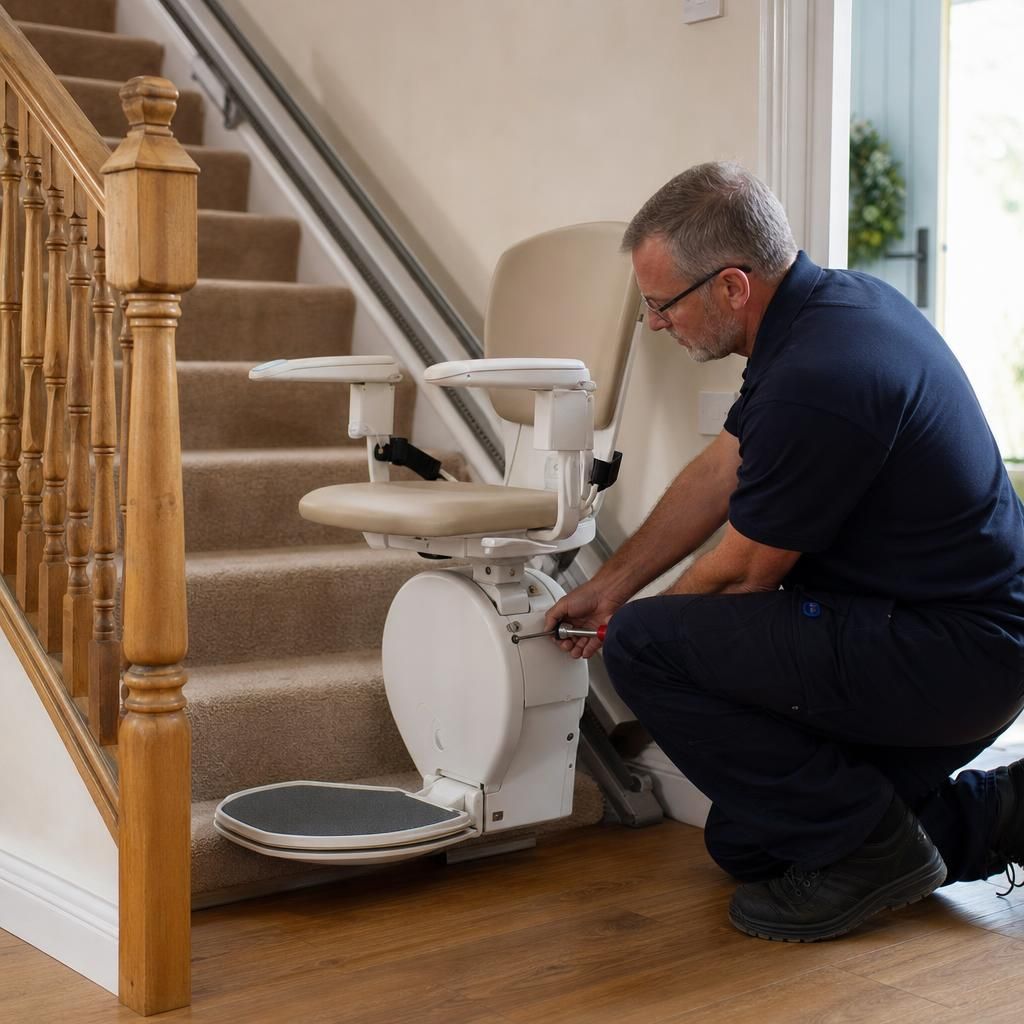
Experience With Curved Staircases

Curved staircases require a rail designed around the individual route rather than a standard straight section. Changes in direction, intermediate landings and restricted access points all affect the final fit. Careful templating and accurate installation help the lift follow the stairs while preserving practical access.

Practical Outdoor Installation

Outdoor stairlift fitting requires attention to weather exposure, surface conditions, drainage and the position of the charging point. The equipment must also remain accessible to the user in changing conditions. Assessment of the approach and landing helps establish a safer, more usable arrangement.

Secure, Considered Fixing

The rail must be fixed securely to the staircase structure while allowing sufficient clearance for the seat, footrest and user. Experienced installers work carefully around walls, banisters and doorways, keeping the installation tidy and avoiding unnecessary obstruction to the rest of the home.

Fitting Includes User Guidance

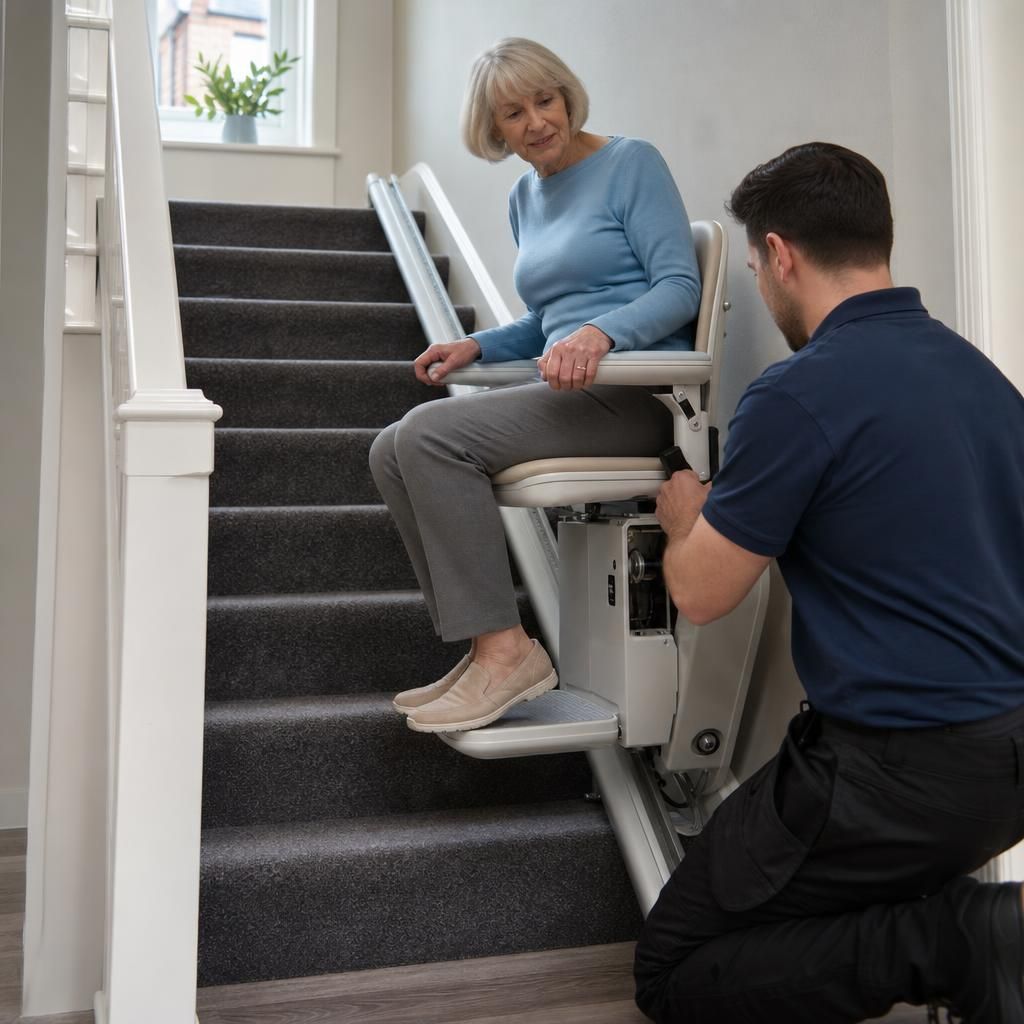
Installation is not complete until the user understands the controls and routine checks. The fitter should demonstrate starting and stopping, swivel-seat operation, armrest controls, emergency features, charging and safe use at the top and bottom of the stairs. Clear guidance supports confident day-to-day operation.

Suitability Checks for Reconditioned Lifts

A reconditioned stairlift still needs to be matched carefully to the staircase and user. Its condition, compatibility, controls, batteries and safety features should be checked before fitting. Professional installation ensures that the equipment is set up for the intended route rather than treated as a one-size-fits-all product.

Safety Checks, Guarantees and Support After Installation

Stairlift installation support covers the safety checks, warranty information and aftercare provided once the lift has been fitted. The installer should confirm that the rail, seat, controls, safety sensors and charging points work correctly, explain safe operation, and provide clear details of what the guarantee includes and how long it lasts.

If a fault develops, the recommended process is to contact the installer or service team using the details supplied at installation. Independent Stairlifts can explain the available support for the specific stairlift, including servicing, repairs and any warranty conditions, so you understand who to contact and what to expect after fitting.

Preparing your home

Preparing for stairlift installation means clearing access to the staircase and identifying any household arrangements that could affect the work. This helps the fitting team install the equipment safely and with less disruption.

What to do before the fitter arrives

Keep the stairs, landings and nearby doorways as clear as possible, and mention any concerns about flooring, radiators, doors or shared access before work begins. If someone in the household has limited mobility, arrange a safe alternative route while the installation is taking place. The fitter can explain any temporary restrictions and confirm how the stairlift will be parked when it is not in use.

Protecting your property

A professional installation should take account of the condition of the staircase, walls, flooring and surrounding fixtures. The rail is normally secured to the stairs rather than relying on the wall, but the exact fixing method depends on the stairlift and staircase structure.

Discussing fixings and potential changes

Before work starts, ask which surfaces will be used for fixings and whether the proposed route affects a doorway, landing or handrail. Fitters should work carefully around existing features and explain any necessary adjustments. If you have concerns about decoration, floor coverings or access to other rooms, raise them during the assessment so suitable arrangements can be considered.

Understanding the guarantee

A stairlift guarantee sets out which parts, labour and faults are covered after installation, together with any exclusions or conditions. The length and scope of cover can vary by model, whether the lift is new or reconditioned, and the supplier’s written terms.

What to check in the guarantee documents

Check whether the guarantee covers call-outs, replacement parts, batteries and labour, and whether servicing or other conditions apply. Keep the installation paperwork and note the correct contact details for support. Independent Stairlifts can clarify the guarantee applying to your chosen stairlift so you know what is included and which issues may be chargeable.

Reporting a fault

A stairlift fault should be reported to the installer or service team using the contact process provided at installation. Prompt reporting helps establish whether the problem is related to controls, power, the batteries, the rail or another component.

What information to provide

Describe what happened, when the issue began and whether any warning light, sound or message appeared. Do not attempt to remove covers, alter wiring or bypass a safety feature. If the lift stops in a position that prevents safe access, follow the supplied guidance and explain the situation clearly when contacting the support team.

Ongoing servicing and support

Stairlift aftercare covers the maintenance, advice and repairs needed to keep the equipment usable after fitting. The appropriate service arrangements depend on the stairlift model, its age, usage and the terms provided with the installation.

Keeping support arrangements clear

Ask who to contact for routine advice, breakdown support and servicing, and keep those details where the stairlift user or their carer can find them. Regular attention to the manufacturer’s operating guidance can help identify changes in performance early, but servicing should be carried out by a suitably qualified professional. Independent Stairlifts can explain the available aftercare for the installed equipment and advise on the next step if support is needed.

Bespoke Stairlift Installation Across the UK

Bespoke stairlift installation matches the rail, seat and controls to a particular staircase and user. The assessment considers bends, landings, narrow sections, doorways, parking positions, charging points and safe transfers.

Independent Stairlifts provides UK-wide fitting, with measurements checked before installation and operation tested afterwards. Customers receive guidance on controls, safety features, charging and aftercare.

Rail shaped to your staircase

For curved staircases, the rail is made to follow the available route around bends, landings and changes in direction rather than relying on a standard straight section.

Designed around the home

The installation can account for doorways, hallway access, parking positions and available space at the top or bottom of the stairs.

Selected for the user

Seat style, arm supports, controls and transfer position should reflect the user’s mobility, height, confidence and ability to operate the lift independently.

Safety-led fitting

The completed installation should leave safety sensors, seat restraints, swivel mechanisms and controls correctly positioned and ready for regular use.

A considered finish

Careful fitting helps the stairlift sit neatly within the staircase and keeps access routes usable for other people in the home.

Clear handover guidance

A professional handover explains everyday operation, charging, parking and what to do if the stairlift displays a warning or stops working.

What to Expect During Stairlift Installation

A stairlift installation assessment confirms your staircase layout, user needs and suitable equipment. The fitting team then agrees the design, installs and tests the lift, before explaining operation, safety, charging and aftercare.

  1. 01

    Discussing access needs

    The process starts by understanding who will use the stairlift, which parts of the staircase are difficult to manage, and whether other household members need to use the stairs. Relevant considerations include transfer ability, seating position, controls, weight capacity and whether the lift is intended for occasional or regular use.

  2. 02

    Surveying the staircase and home

    A qualified adviser examines the staircase, landings, bends, available parking space and nearby doorways. They also consider electrical access, obstructions and how the stairlift will affect movement around the hall or landing. This survey identifies practical installation requirements that may not be clear from photographs alone.

  3. 03

    Agreeing the stairlift specification

    The recommended stairlift should match the staircase and the user’s physical requirements. The installer explains suitable rail layouts, seat and control options, safety features and charging arrangements, including any limitations created by the available space. The proposed fit and price should be confirmed before work begins.

  4. 04

    Preparing the installation area

    Before fitting, the route should be made as clear as possible by moving furniture, ornaments and other items from the stairs and landing. The installation team confirms where equipment and tools can be placed and identifies any access arrangements needed for the property.

  5. 05

    Fitting the rail and lift

    The rail is secured to the stair treads or another suitable structure in line with the manufacturer’s requirements. The carriage, seat, controls, footrest and charging equipment are then assembled and adjusted. Installers aim to keep the equipment positioned safely without unnecessarily restricting normal access to the staircase.

  6. 06

    Checking operation and explaining use

    After fitting, the team runs the stairlift through its route and checks movement, stopping points, seat position, controls, safety sensors and charging. The user and their carer are shown how to sit down, fasten any safety belt, operate the controls, park the lift and respond to a stopped or obstructed journey.

  7. 07

    Confirming handover and ongoing support

    The installer provides operating guidance and records the relevant equipment and warranty information. You should know how to report a fault, arrange servicing and obtain help if the stairlift requires attention. Any questions about daily use should be resolved before the installation is considered complete.

Stairlift Installation & Fit: Your Questions Answered

What factors should be considered during a stairlift installation?

Stairlift installation typically takes a few hours depending on the complexity of the stairs. Professional installers ensure a seamless fit to enhance safety and accessibility without significant disruption to your home.

How is a stairlift installed to ensure it fits different types of staircases?

Professional stairlift installation ensures adaptability to all staircase types by adhering to precise measurements and custom adjustments. This guarantees seamless integration into your home’s architecture, enhancing safety and function.

What specific preparations should be made before the stairlift installation process begins?

Ensure the stairway area is clear and accessible, remove obstacles, and review electrical access requirements. Coordinate with your installer for specific site preparation instructions tailored to your stairlift model.

What are the key safety features considered during stairlift installation?

During installation, key safety features include secure rail attachments, seat belts, obstruction sensors, and smooth start-stop motions. Ensuring compliance with standards, these elements collectively provide a safe, reliable stairlift operation.

What can I expect during the stairlift installation process?

Experienced technicians will assess your home's staircase, configure the stairlift for optimal placement, and conduct a thorough safety check, ensuring your stairlift operates smoothly and securely once installed.

Reliable Installation with Clear Guarantees and Aftercare

A properly fitted stairlift is tested for secure travel, reliable controls and effective safety features. Your installer should also explain the guarantee, servicing arrangements and fault-reporting process, so ongoing support is clear after installation.

Contact Us

Request a free assessment

No obligation. We will talk through your staircase and options.

Ease of Use Commendation — Arthritis FoundationAll of our stairlifts carry the Ease of Use Commendation.

Questions to Ask Before Choosing a Stairlift Installer

What are the specific factors to consider when evaluating the compatibility of a stairlift with my home's architectural features?

A professional assessment ensures the stairlift's rail and seat align perfectly to the staircase, considering factors like curvature, width, and landings, guaranteeing a secure and smooth ride for users.

How can I ensure the stairlift installation process accommodates future mobility changes or home modifications?

Opt for stairlifts with modular designs and adjustable features, allowing for modifications to the rail or seat as needed, accommodating future mobility challenges or anticipated architectural changes in your home.

What are the primary safety features to look for in a stairlift installation to ensure user confidence and security?

Stairlifts should include sensors to detect obstacles, safety belts, smooth start and stop mechanisms, and battery backup to ensure continuous operation during power outages, prioritising safety and user confidence.

How does the installation process ensure that a stairlift integrates seamlessly with both the aesthetic and functional aspects of my home environment?

Our installers focus on discreetly integrating stairlifts to complement the home's decor and architecture, ensuring seamless operation while maintaining your interior’s aesthetic appeal and functional layout.

What should I expect in terms of aftercare and maintenance following the installation of a stairlift to ensure long-term reliability?

Following installation, regular maintenance checks by professional technicians are essential, alongside periodic cleaning and testing to uphold the stairlift’s performance, safety features, and extend its operational lifespan.

Arrange Your Stairlift Installation Assessment

Arrange a free stairlift assessment to discuss your staircase, mobility requirements and installation options. Independent Stairlifts can explain suitable equipment, fitting arrangements, likely costs and aftercare, helping you make an informed decision without obligation.

Contact Us

Request a free assessment

No obligation. We will talk through your staircase and options.

Ease of Use Commendation — Arthritis FoundationAll of our stairlifts carry the Ease of Use Commendation.