
What are the key safety features considered during stairlift installation?
Key safety features considered during stairlift installation include secure rail and bracket fixing, reliable braking, a seatbelt or harness, swivel and locking seats, and sensors that stop the lift when an obstacle is detected. The installer also checks the staircase, access points and user’s needs to ensure the stairlift operates safely and comfortably in the home.
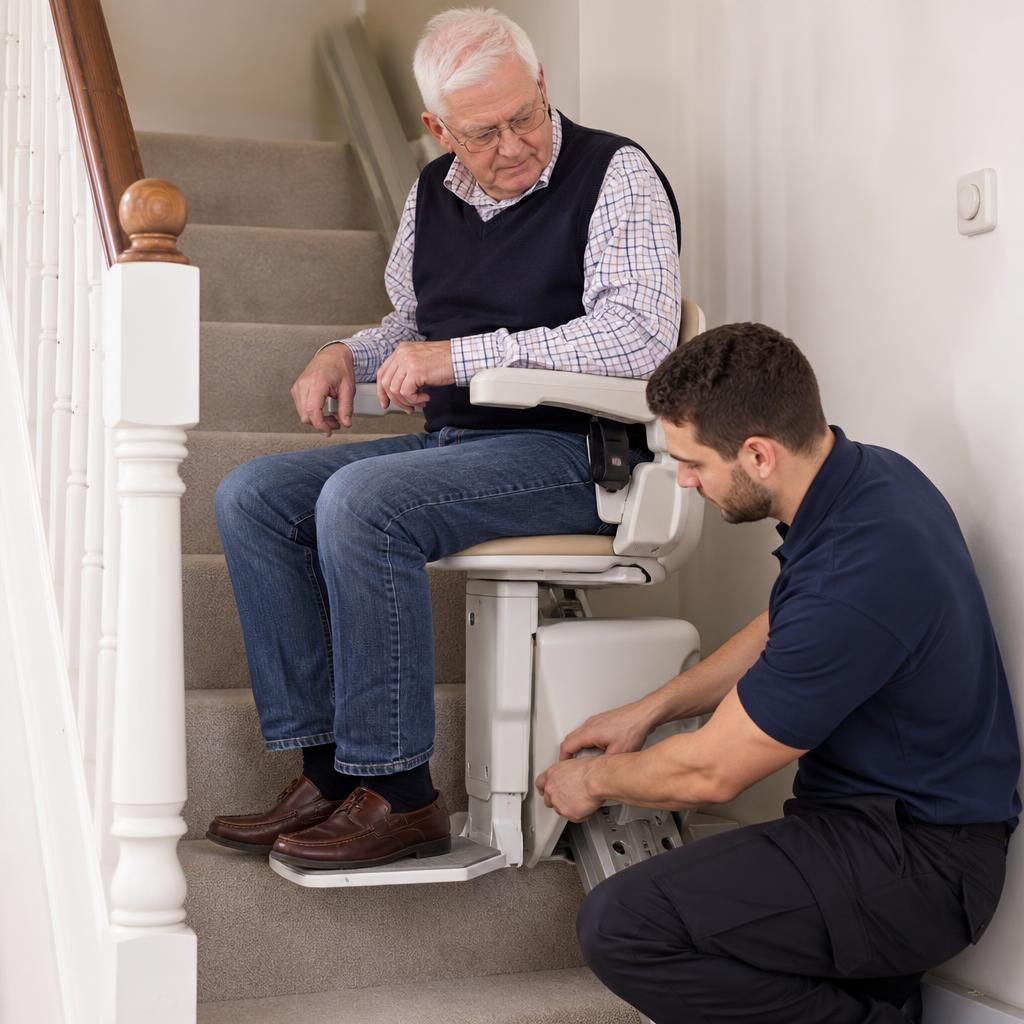
Key safety features considered during stairlift installation include secure rail fixing, dependable braking, a suitable restraint, obstacle sensors, safe seat positioning and accessible controls. The installer also assesses the staircase, landings, electrical supply and the user’s mobility so that the stairlift is fitted safely for the particular home rather than treated as a standard installation.
Assessment of the staircase and surrounding space
Safety begins before any equipment is fitted. The installer checks the staircase, steps, landings, banisters, walls, doors and nearby walkways to identify potential hazards. This includes looking at the width and shape of the stairs, changes in direction, restricted headroom, narrow entrances and whether the lift could obstruct an important doorway or escape route.
The position of the parked stairlift is also considered. It should leave suitable access at the top and bottom of the stairs, while a powered or manual folding rail may be needed where a doorway or passage is close to the foot of the staircase. On a curved staircase, each bend and transition is assessed so that the rail follows a safe, consistent route without creating unexpected contact points.
Secure rail, bracket and fixing installation
The rail is the main structural support for the stairlift. Brackets are positioned to provide stable support along the staircase, with fixings selected for the construction and condition of the steps or adjacent structure. The installer checks that the rail is level and firmly secured, with sufficient clearance from walls, handrails and other obstacles.
Fixing directly to the stairs is common, but the exact method depends on the property. The installer must account for solid, wooden, tiled or otherwise finished steps and avoid damaging services or weakening the structure. Once fitted, the rail and its brackets are checked for movement before the carriage and seat are operated.
Controlled movement and braking
A stairlift should start and stop smoothly and remain controlled when travelling up or down the rail. Its drive system and braking mechanism are checked during commissioning to ensure that the carriage does not move unexpectedly when the controls are released or power is interrupted.
Where the design includes a safety edge, overspeed protection or other movement controls, these are tested in accordance with the equipment instructions. The installer also confirms that the stairlift stops correctly at its charging and parking positions and does not travel beyond its intended limits.
Seatbelt, harness and secure seating
A seatbelt or harness helps keep the user in a stable position while the stairlift is moving. The appropriate restraint depends on the stairlift design, the user’s posture, balance and transfer ability, and whether additional support is needed. It must fasten correctly, be easy for the user or carer to operate and not restrict safe entry or exit.
The seat should be properly positioned and secured before travel. Armrests provide support during the journey, while the footrest gives the feet a defined, protected place. If the user has difficulty sitting down, standing up or turning, the installer can assess whether a powered swivel seat, hinged armrest or another seating option would improve safety.
Swivel and locking mechanisms
A swivel seat allows the user to turn towards the landing rather than stepping directly off the stairs. This can reduce twisting and help create a more controlled transfer, particularly at the top of the staircase. The seat should lock firmly in the travel position and, where appropriate, at the transfer position.
The installer checks that the swivel mechanism operates as intended and that the user can release and lock it safely. A powered swivel may be useful where the user cannot turn the seat manually, but it still requires clear instruction and correct positioning before the stairlift moves.
Obstacle and safety sensors
Sensors around the carriage, footrest and other relevant areas are designed to detect obstructions such as objects, pets or clothing in the path of the stairlift. When a sensor is activated, the lift should stop so the obstruction can be removed safely. The installer tests the sensors and explains that they are a safeguard, not a reason to leave items on the stairs or travel with loose clothing near moving parts.
It is important to keep the steps, landings and rail clear. Items placed on or beside the staircase can still create a trip or collision hazard, even when the stairlift’s sensors are working correctly.
Controls and accidental operation
Controls should be positioned where the user can reach them without leaning or twisting. The hand control, call and send controls, and any remote controls are checked to confirm that they respond correctly and that the direction of travel is clear.
Some stairlifts include a key switch, lockable control or removable handset to help prevent unintended use. The installer should show the user how to switch the stairlift on and off, stop it if necessary and use the controls from the seat and landings. Controls should not be altered or obstructed after installation.
Power supply, batteries and charging
Most modern stairlifts use rechargeable batteries, allowing them to operate during a temporary mains power failure. The installer checks the electrical connection, charging points and battery condition, then confirms that the stairlift charges correctly when parked. The user should be shown where the charging points are and how to recognise a low-battery or fault indication.
A stairlift should normally be left in a designated charging position when it is not in use. Batteries and electrical components require ongoing care, and warning lights, unusual sounds or repeated failure to charge should be reported rather than ignored.
Clearance, folding parts and access protection
The finished installation is checked for clearance between the seat, footrest, rail, walls and nearby fixtures. Folding footrests, armrests and rails must move freely and lock securely. Where a folding rail or hinged section is fitted, the installer confirms that it does not obstruct a door, walkway or other essential access when raised or lowered.
At the top and bottom of the stairs, the stairlift should stop at a position that allows a safe transfer. If the user needs to step onto a landing or into a hallway, the available space and direction of movement are considered as part of the installation rather than after it has been completed.
Final testing and user handover
After installation, the stairlift is operated through its full route to check starting, stopping, braking, sensors, seat rotation, restraints, controls, charging and any folding sections. The installer should explain safe use, including how to position the seat, fasten the belt, deal with an obstruction, respond to a fault and contact the appropriate support service.
Safety depends on both the installation and everyday use. Keep the rail and stairs clear, use the restraint as instructed, avoid carrying items that could interfere with the controls or sensors, and arrange servicing if the lift develops a fault or its performance changes. If the user’s balance, strength, posture or ability to transfer changes, request a further assessment so that the existing setup can be reviewed for continued suitability.
Safe transfers at the top and bottom of the staircase are a key part of stairlift installation. The installer checks that the seat stops in a suitable position, the landing provides enough room to stand and turn, and nearby doors or walkways remain accessible.
A swivel seat can help the user face the landing before standing, reducing the need to twist while stepping off. The swivel mechanism must lock securely in the travel and transfer positions, and any folding rail or footrest should leave the route clear. These features are tested during handover, with guidance on positioning the seat, using the restraint and completing the transfer safely.
Arrange a stairlift safety assessment
Arrange a stairlift safety assessment with Independent Stairlifts to review your current installation, user needs and any changes in the home. We can advise whether adjustments, servicing or additional safety features are appropriate.