
What specific preparations should be made before the stairlift installation process begins?
Before your stairlift installation, clear the staircase and landing, remove obstacles, and arrange safe access for the installation team. Keep relevant keys, parking or entry instructions, and any information about changes to your mobility or home available so the final checks and fitting can be completed safely.
Before stairlift installation begins, prepare the staircase, landing and surrounding areas so the fitting team can work safely and complete the final checks without obstruction. This normally means clearing the route, arranging access to the property, sharing relevant information about the user and the building, and making plans for using the stairs while the lift is being fitted.
Clear the staircase and landings
Remove furniture, ornaments, plants, shoes, rugs and other items from the stairs, hallways and the areas at the top and bottom of the staircase. Clear enough space for the installation team to carry equipment and position tools without damaging walls, flooring or furnishings. Pay particular attention to narrow landings, turns, doorways and entrances near the staircase.
Do not remove handrails, wall fittings, radiators or other fixed items yourself. Some features may affect the proposed rail position or the available clearance, so the installer should assess them first. If an item needs to be moved, this can be discussed before fitting starts.
Make the staircase safe and accessible
- Keep the stairs dry, well lit and free from loose floor coverings.
- Secure or remove any trailing cables near the installation area.
- Move fragile or valuable items away from the route used to bring equipment into the home.
- Keep children and pets away from the staircase while work is taking place.
- Tell the installation team about any uneven flooring, recent building work or known hazards.
The staircase will be unavailable while the lift is being installed, and there may be tools, packaging and components around the work area. If the user has difficulty walking or cannot safely manage the stairs without assistance, arrange a suitable place for them to remain during the fitting. Avoid planning essential trips up and down the stairs until the installer has completed the handover.
Arrange entry and practical access
Make sure the installation team can enter the property at the agreed time. Provide keys, door-entry instructions, alarm details, parking information and any relevant access codes in advance. If someone else will meet the team, confirm their name and ensure they understand where the staircase and electrical supply are located.
Tell the installer about restricted parking, controlled-access buildings, shared entrances, narrow paths, steps to the front door or other factors that may make it difficult to carry equipment inside. If the property is managed, rented or part of a sheltered or communal development, obtain any required permission before the installation date.
Share changes in mobility or health
Inform the team if the user’s mobility, balance, posture, strength, vision or ability to transfer has changed since the assessment. Also mention any new walking aid, wheelchair, oxygen equipment or other mobility-related equipment. These details can affect how the user approaches the lift, sits on the seat, transfers at the top or bottom and uses the controls.
Explain any difficulty with particular parts of the staircase, such as turning on a landing, reaching the controls, bending a knee or keeping one arm supported. The installer can then confirm that the proposed arrangement remains suitable or identify whether an adjustment is needed before work begins. Do not rely on the installation team to infer a change in the user’s condition from the physical layout alone.
Check the proposed layout before fitting
Review the planned start and finish positions, parking locations, seat orientation and any expected obstruction around doors or hallways. The final installation must leave safe space for getting on and off the stairlift and should not prevent essential doors, walkways or escape routes from being used.
If furniture has been moved since the survey, or if you have changed the staircase, flooring, doors or nearby walls, tell Independent Stairlifts before the appointment. A new obstruction or alteration can affect clearances and may require the layout to be checked again. Do not assume that a small change is irrelevant, particularly on a narrow or curved staircase.
Prepare the electrical supply
The stairlift requires access to its charging point or electrical connection. Keep the relevant socket accessible and tell the installer about any electrical issues, recent rewiring or planned work in the area. Do not use extension leads or attempt to alter the electrical supply unless this has been specifically advised by a qualified professional. The installer will confirm the charging arrangement and any electrical requirements as part of the fitting.
Plan for the installation day
- Confirm the appointment and allow the team reasonable access to the property and staircase.
- Keep the user, family member or representative available for questions about positioning and operation.
- Have any relevant survey information, agreed options or previous discussions available.
- Arrange supervision or alternative care for children, pets or anyone who may enter the work area.
- Keep the staircase unused until the installer confirms that fitting, testing and safety checks are complete.
After installation, the user should receive an explanation of the controls, charging routine, seat belt and safe operating procedure. Use this handover to raise any concern about transferring, reaching the controls, stopping positions or access around the lift. If anything about the staircase or the user’s needs has changed before the appointment, contact the team promptly rather than waiting until fitting day.
Before the stairlift fitting begins, clear the staircase, landings and nearby access route so the installation team can carry equipment safely and work without obstruction. Remove loose rugs, shoes, ornaments, plants and furniture, and secure trailing cables. Do not remove handrails, radiators or other fixed fittings, as these may affect the final rail position and should be assessed by the installer.
The staircase may be unavailable while tools, components and packaging are in the area. Arrange for the user, children and pets to remain away from the work zone, and plan an alternative place for anyone who cannot safely manage the stairs without assistance. Keep the route dry and well lit until installation, testing and the handover are complete.
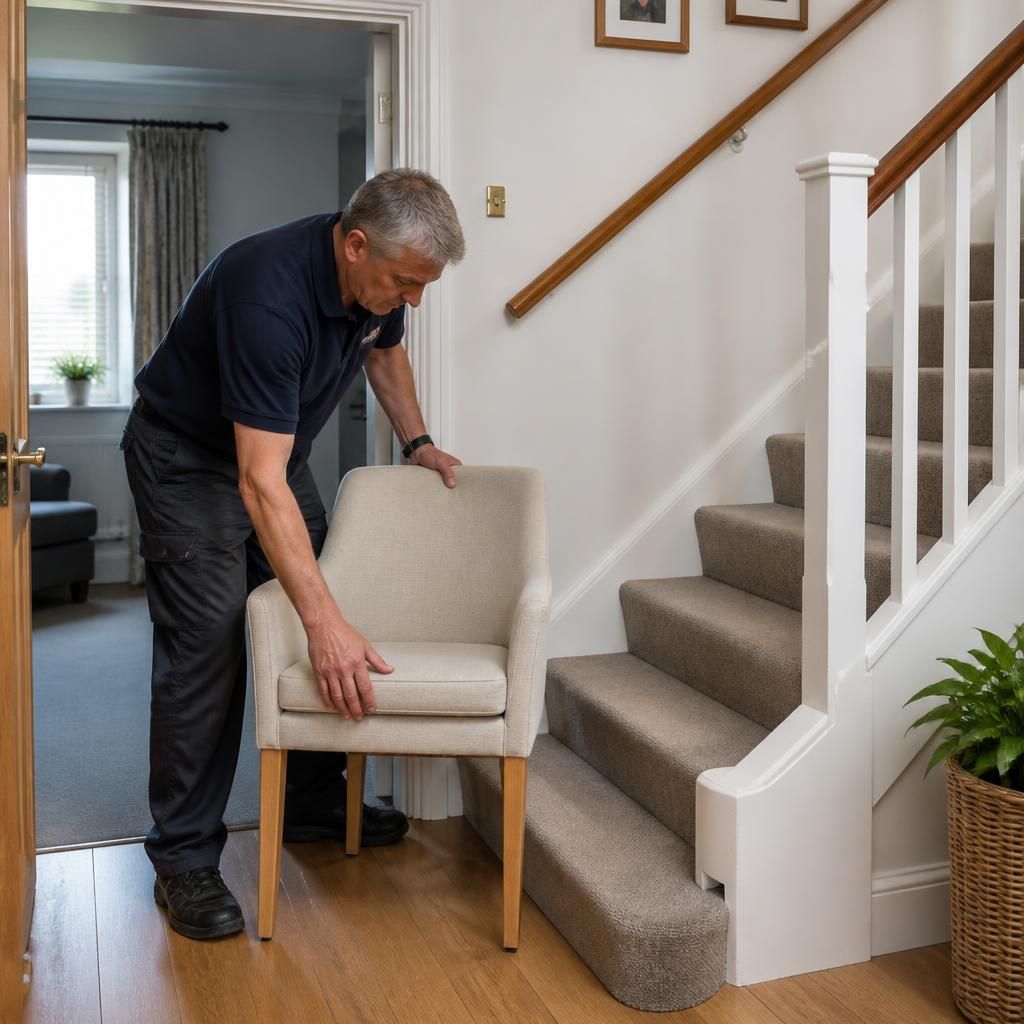
Get Ready for Your Stairlift Installation
If you have questions about preparing your home or your circumstances have changed since the assessment, contact Independent Stairlifts before the fitting date so the installation can be reviewed and arranged safely.