
What should I expect in terms of aftercare and maintenance following the installation of a stairlift to ensure long-term reliability?
Following installation, you should expect guidance on operating and caring for your stairlift, access to technical support, and advice on servicing, repairs and warranty cover. Regular checks, sensible cleaning and prompt reporting of unusual noises, movement or charging problems will help maintain safe, reliable operation over the long term.
After installation, stairlift aftercare normally includes an operating handover, warranty information, access to technical support, advice on servicing and repairs, and guidance on everyday checks. Keeping the lift clean, using it as instructed and reporting changes in performance promptly will help protect its reliability and ensure potential faults are dealt with before they affect safe use.
What should be covered at handover?
The installer should demonstrate the complete operating process and make sure the user, or the person supporting them, is comfortable with it. This should include using the controls, starting and stopping safely, fastening the seat belt where fitted, swivelling or folding the seat, using the footrest and parking the lift correctly.
You should also be shown how to use any remote controls, how to respond if the stairlift stops unexpectedly and what to do during a power cut. Keep the user instructions, warranty details and support contact information somewhere accessible. If anything is unclear after the installation, ask for it to be explained rather than relying on assumption.
What routine care can I carry out?
- Wipe the seat, armrests, controls and other accessible surfaces with a suitable slightly damp cloth, following the manufacturer’s cleaning guidance.
- Keep the rail, steps and landing clear of clothing, furniture, toys and other objects that could obstruct movement.
- Check that the lift is being parked at a charging point when it is not in use, where the model requires this.
- Keep the charging contacts and surrounding areas free from dust and dirt, without applying liquid or household cleaning products to electrical parts.
- Check visually for loose trim, damaged upholstery, unusual marks, obstructions or anything that appears to have moved.
- Make sure the seat belt, swivel mechanism and safety edges are used correctly and do not appear damaged.
Do not remove covers, interfere with wiring, lubricate components unless specifically instructed, or attempt to adjust the rail or drive mechanism yourself. These tasks require appropriate technical knowledge and may affect both safety and warranty cover.
How often is professional servicing needed?
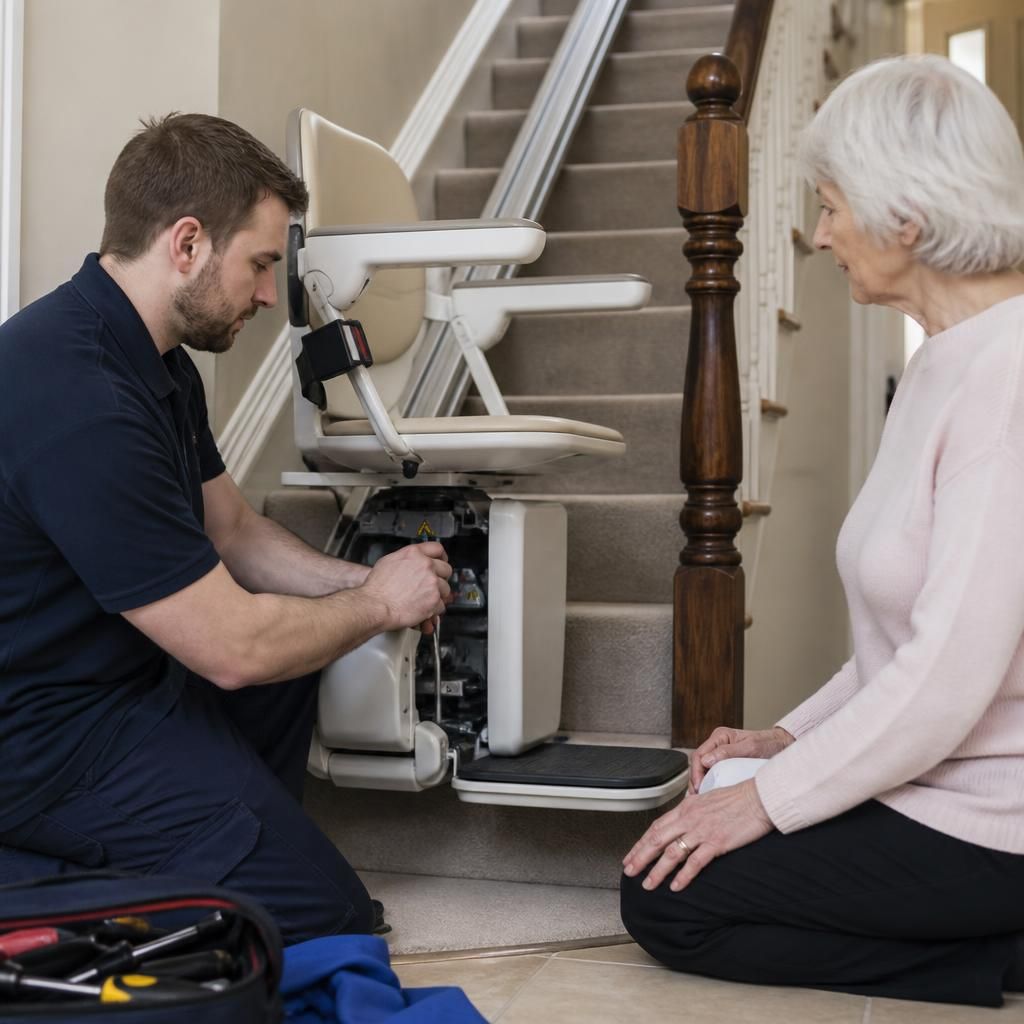
The recommended service interval depends on the stairlift model, how frequently it is used, the staircase environment and the manufacturer’s instructions. Your aftercare information should state when a service is due. A competent stairlift engineer can inspect the drive system, rail, batteries, charging equipment, safety switches, seat mechanisms, controls and other relevant components, then identify wear or adjustment needs.
Servicing is separate from ordinary cleaning and user checks. It is particularly important where the lift is used heavily, is installed in an outdoor or damp environment, or is supporting someone whose mobility or transfer ability has changed. Arrange servicing through the appropriate support team and retain any service records for future reference.
What happens if the stairlift develops a fault?
Stop using the stairlift if it behaves unusually or if a safety feature does not work as expected. Examples include jerky movement, unfamiliar noises, a burning smell, repeated stopping, failure to charge, an error message, difficulty starting or a seat belt or swivel mechanism that does not operate correctly. If it stops between floors, follow the instructions provided at handover and contact technical support. Do not try to force the lift or climb past it unless an appropriate emergency plan has been provided.
When reporting a problem, describe what happened, when it began, whether it occurs in one direction or at a particular point on the stairs, and any warning lights or sounds. This information can help the engineer prepare for the visit. A support team may be able to identify a simple operating issue remotely, but repairs and safety adjustments should be carried out by a suitably trained professional.
What does the warranty usually cover?
Your warranty terms should explain what is covered, how long cover applies, whether parts and labour are included, and how to request assistance. Coverage can differ between new, reconditioned and specialist stairlifts, so check the documents supplied for your particular installation. Damage caused by misuse, unauthorised alterations, accidental impact or missed maintenance may be treated differently from a manufacturing or installation fault.
Keep the installation paperwork and contact details, and report faults through the stated process. If the stairlift is moved, modified or exposed to unusual conditions, ask for advice first, as this may affect its warranty or future servicing requirements.
When should aftercare be reviewed?
Contact the stairlift team if the user’s mobility, balance, weight-bearing ability or preferred method of getting on and off the lift changes. A change in the home, such as new flooring, furniture, decoration or building work, can also affect access around the stairlift. The equipment may still function, but its setup, controls or surrounding space may no longer be ideal.
For outdoor stairlifts, inspect the lift more frequently for weather-related dirt, moisture, corrosion or damage, while following the model’s specific care instructions. If the property is left unoccupied for a period, ask how the lift should be isolated or left charging rather than switching it off without guidance.
Reliable long-term operation depends on three parts of aftercare: correct daily use, scheduled professional maintenance and prompt reporting of faults. If you are unsure whether a noise, charging behaviour or movement is normal, contact Independent Stairlifts for advice and have the lift checked rather than continuing to use it with a suspected fault.
Professional servicing is the planned inspection and adjustment of your stairlift by a suitably trained engineer. It is separate from routine cleaning and user checks, and helps identify wear in the drive system, batteries, charging equipment, safety switches, controls and seat mechanisms before a minor issue affects reliability.
The correct service interval depends on your model, how often it is used and the environment in which it is installed, so follow the guidance provided with your stairlift. Arrange a check sooner if you notice jerky movement, unusual noises, charging problems, repeated stops or changes in how the lift operates. Do not attempt to lubricate, adjust or remove covers yourself; record the fault and contact Independent Stairlifts for appropriate advice.
Need advice on stairlift aftercare or maintenance?
If you need advice about your stairlift’s servicing, warranty, charging or performance, contact Independent Stairlifts for practical aftercare support. We can help arrange an appropriate inspection or advise on the next steps if you have noticed a change in operation.