A clear, itemised quotation
You should be shown what covers inspection, labour, call-out time, replacement parts and VAT before agreeing to maintenance work.

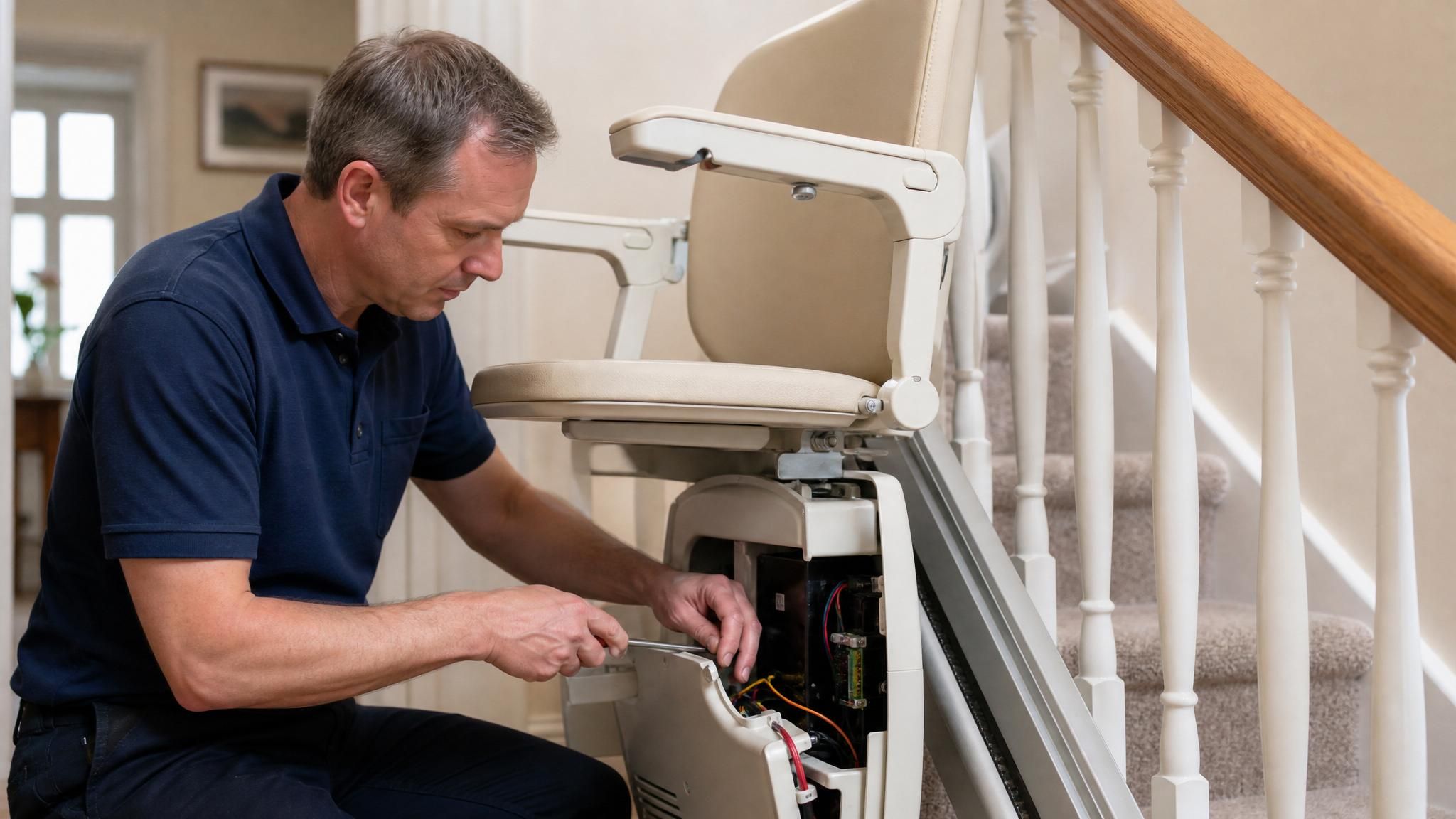
Stairlift maintenance costs cover servicing, safety checks and repairs needed to keep a lift reliable. In the UK, pricing depends on the stairlift type, fault, replacement parts and whether servicing is arranged as a one-off visit or maintenance contract.
Stairlift maintenance cost is the amount paid to inspect, adjust and repair a stairlift, either through a one-off engineer visit or a planned service agreement. The final price depends on lift type, fault, access and parts required.
During an assessment, an engineer can check charging, batteries, drive components, controls, track fixings and safety edges, then explain whether servicing or repair is appropriate. A clear quotation should separate labour, call-out charges, replacement parts and any VAT due.
Independent Stairlifts arranges advice around the individual installation, including curved, straight and outdoor systems. Comparing the likely stairlift repair cost with contract terms helps you choose suitable cover, while regular professional servicing can identify wear before it causes an avoidable breakdown.
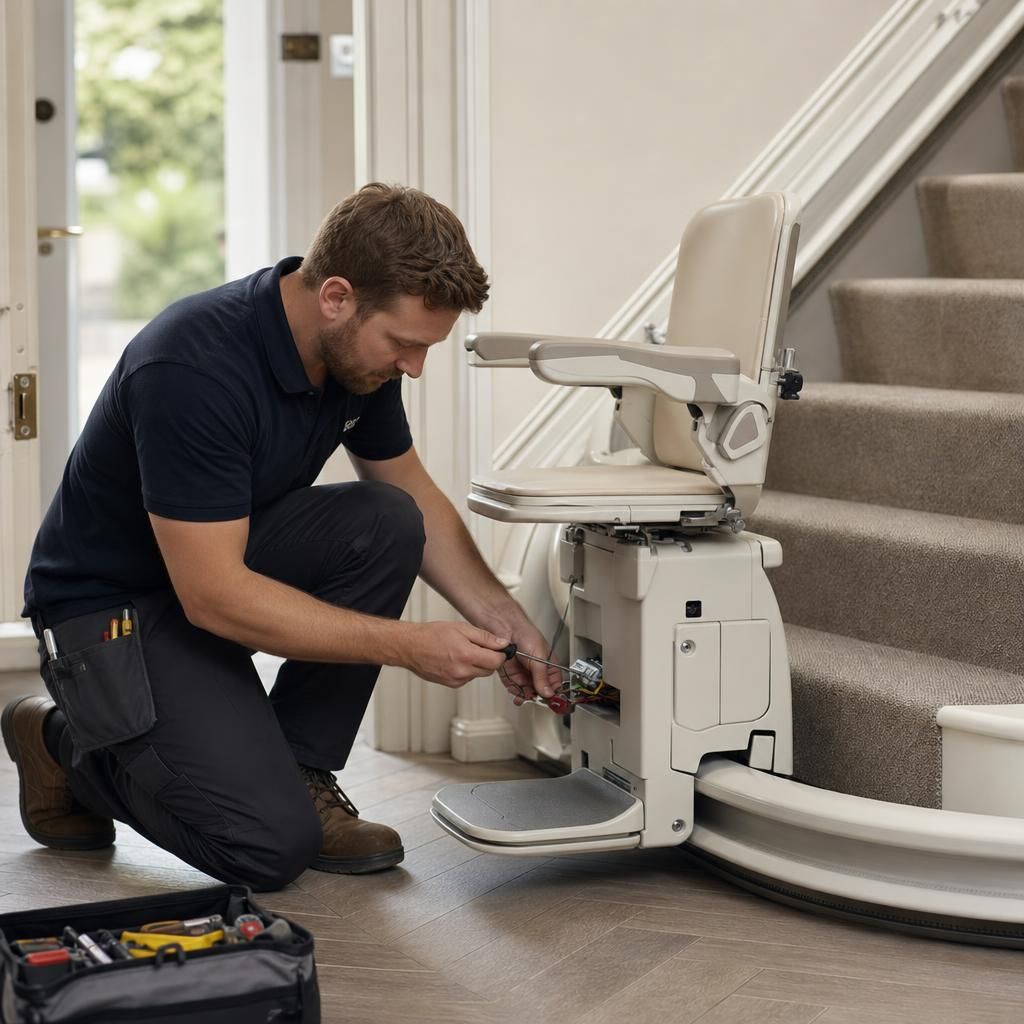
Stairlift maintenance cost depends on the type and age of the lift, the condition of its track, batteries and drive system, and whether you need a routine service, a repair or replacement parts. A one-off engineer visit may be suitable for an isolated fault, while a maintenance contract can provide planned servicing and clearer support arrangements.
The FAQs below explain what can affect stair lift repair cost, what a service may include and how to compare quotations. Ask for labour, call-out charges, parts and any VAT to be shown separately, and make sure the proposed work is suitable for your particular straight, curved or outdoor stairlift.
A stairlift service is a planned inspection and adjustment intended to keep the equipment operating safely and reliably. The exact checks depend on the model, installation and any symptoms reported.
An engineer will typically examine the track, fixings, seat, controls, safety sensors, charging system, drive mechanism and batteries. They may clean moving parts, tighten or adjust components and test the lift through its normal operation. Ask whether the service includes a written report and whether any recommended repairs are priced separately.
Neither option is automatically cheaper because the right choice depends on the lift’s age, condition and expected need for support. A contract may make costs more predictable, while a one-off visit can be more appropriate when the lift has an isolated fault.
Check what the agreement includes, such as planned servicing, call-outs, labour, parts, emergency response and cover for batteries or accidental damage. Also look for exclusions, response times, cancellation terms and any renewal changes. With a one-off repair, request a clear quotation before work begins and confirm whether an initial diagnostic or call-out charge applies.
Stairlift batteries are consumable components, so their condition can affect both reliability and the cost of a repair. Reduced travel, failure to charge or repeated low-battery warnings can indicate that the batteries or charging system need attention.
A service should assess charging contacts, the charger and battery performance rather than replacing batteries without diagnosis. Replacement cost can vary by lift model and battery specification, and some maintenance agreements treat batteries as an excluded part. Ask whether the quotation covers fitting, disposal of the old batteries and testing after replacement.
A reconditioned stairlift can still require regular servicing, even when it has been inspected before installation. Its maintenance needs depend on the equipment’s history, condition, warranty and the suitability of the installation for the user.
Confirm what inspection or refurbishment was completed, which parts were replaced, and what warranty or aftercare is provided. Ask whether the service plan applies to the specific make and model, and whether wear items such as batteries or rollers are covered. Keeping documentation of servicing and repairs can also help an engineer diagnose future faults more efficiently.
Repair is often suitable when the stairlift has a clear, limited fault and its main components remain in good condition. Replacement may warrant consideration when repairs are recurring, compatible parts are difficult to obtain or the lift no longer meets the user’s needs.
A proper assessment should identify the fault, inspect related components and explain the likely reliability of the proposed repair. Compare the total repair cost and future support with the cost, fit and warranty of a replacement stairlift. Independent Stairlifts can assess the installation and discuss suitable options for straight, curved or outdoor systems without assuming that replacement is the only solution.
Stairlift maintenance cost should be clearly itemised, including inspection, labour, call-out charges, replacement parts and VAT where applicable. This shows whether a quote covers routine servicing or repair work.
Independent Stairlifts assesses different installations and explains suitable work before it begins. That helps you compare one-off support with a maintenance agreement and choose cover matching your lift’s condition.
You should be shown what covers inspection, labour, call-out time, replacement parts and VAT before agreeing to maintenance work.
Independent Stairlifts considers the lift type, stair layout, age and condition before recommending servicing, repair or a maintenance agreement.
An engineer can review key safety features and operating components, helping identify faults or wear that may affect reliable use.
The proposed repair or service should be explained in practical terms, so you can understand why it is needed and compare it with other options.
Advice is available for straight, curved and outdoor stairlift installations, with maintenance requirements considered according to the individual system.
Independent Stairlifts’ maintenance service covers the practical factors that affect a stairlift’s reliability: assessment, suitable servicing, fault diagnosis and advice on parts or replacement. The right approach depends on whether the installation is straight, curved or outdoor, and on its age, condition and usage.
Clear explanations help compare one-off repair with planned maintenance, including labour, call-out charges, parts and VAT.
Recommendations are matched to the stairlift’s layout, age, condition and use rather than relying on a standard maintenance package.
Support covers the different mechanical and environmental demands of straight, curved and outdoor stairlift systems.
You can compare a one-off service, repair visit or ongoing maintenance agreement according to the support your lift actually needs.
A detailed quotation helps distinguish engineer time, call-out charges, parts and VAT before work is approved.
An assessment can help identify whether a problem relates to batteries, controls, charging, drive components, fixings or safety features.
Regularly scheduled checks provide a practical way to monitor wear and address developing issues before they become disruptive faults.
The suitable maintenance option depends on your stairlift’s design, age, usage and fault history. Independent Stairlifts can help compare one-off diagnosis, planned servicing, parts replacement or wider support, with advice matched to straight, curved and outdoor installations.
A one-off diagnostic visit may suit a stairlift that has developed a specific problem, such as an unusual noise, loss of movement or repeated stopping. Independent Stairlifts can assess the cause before recommending repair or replacement parts, helping avoid unnecessary work.
Regular servicing is appropriate when you want scheduled checks rather than waiting for a breakdown. Ask for the agreement to explain what inspections, labour, call-outs and follow-up support are included, so the ongoing cost is clear.
If the lift is losing charge, sounding an alert or stopping away from its normal position, battery and charging checks should be prioritised. An engineer can establish whether adjustment, a battery replacement or further investigation is needed.
Straight stairlift maintenance is often simpler to arrange, but the lift’s age, usage and condition still affect the work required. Independent Stairlifts can match the service approach to the existing installation rather than applying the same package to every home.
Curved and outdoor stairlifts may need more installation-specific assessment because their tracks, controls and exposure to the elements differ. Choose a provider able to consider the full system, access conditions and suitable parts before confirming the maintenance option.
A useful quotation should identify the inspection or repair, labour, call-out charges, parts, VAT and any exclusions. Independent Stairlifts can help you compare one-off work with planned cover, so the recommendation reflects the lift’s condition and your preferred level of support.
Routine stairlift maintenance typically includes inspecting and lubricating moving parts, testing safety features, and checking electronic systems to prevent malfunctions and ensure longevity.
Stairlift repair costs depend on factors such as age, model complexity, condition, and parts availability, influencing labour and replacement part expenses. Prioritising regular maintenance can minimise these costs.
Maintenance contracts provide routine check-ups, ensuring optimal performance, reduced breakdown risks, and potentially lower repair costs, offering peace of mind and maintaining the stairlift’s reliability over time.
Regular maintenance enhances stairlift longevity by preventing wear-related malfunctions and ensuring safety systems function optimally. This proactive approach reduces unexpected repair needs, saving costs and providing dependable performance long-term.
A comprehensive stairlift maintenance plan should include periodic inspections, lubrication of mechanical parts, testing of safety and electronic systems, and provision for emergency repairs to ensure continuous safe operation.
Independent Stairlifts offers maintenance guidance based on the stairlift’s design, condition and location. The advantages below explain how tailored assessments, suitable repair options, clear cost breakdowns and UK-wide support can help you compare maintenance providers with greater confidence.
Experience with straight and curved systems
Maintenance advice can be matched to the lift design, including the different track, drive and charging arrangements found on straight and curved stairlifts. This helps identify work that is relevant rather than applying the same checklist to every installation.
Support for outdoor stairlifts
Outdoor stairlifts face moisture, temperature changes and greater exposure than indoor models. An assessment can consider weather-related wear, external controls, charging equipment and the condition of exposed components when discussing servicing or repairs.
Options for reconditioned stairlifts
Reconditioned stairlifts require attention to the age, previous use and condition of their components. Independent Stairlifts can help assess whether servicing, a repair or replacement is the most practical option for the existing equipment.
Advice based on the whole home environment
A stairlift’s performance is affected by its installation, access points and day-to-day use. Considering the wider environment helps identify practical adjustments and ensures maintenance advice reflects how the lift is actually used.
Knowledge across complementary mobility equipment
Independent Stairlifts also works with recliners, beds and bath lifts, providing a broader view when stairlift maintenance forms part of wider mobility needs. This can help families compare the most suitable equipment and support arrangements for the home.
Routine maintenance costs typically cover the inspection and lubrication of moving parts, checking safety mechanisms, and electronic system diagnostics, ensuring safe use and potentially reducing future repair expenses.
Regular maintenance minimizes costly breakdowns by identifying wear early, ensuring continuous reliability and performance. It helps maintain value, prolongs service life, and reduces the likelihood of major repairs.
Choose a contract with regular inspections, emergency breakdown cover, and discounted repairs. Ensure transparent pricing, customisable options based on usage, and a responsive service team for maximum reliability and support.
Unexpected costs can arise from uncommon repairs not covered by standard contracts, like bespoke parts for curved models or emergency call-outs. Opt for comprehensive contracts to better manage these expenses.
Neglecting stairlift maintenance can lead to frequent breakdowns, decreased efficiency, and costly emergency repairs. Regular servicing is essential to ensure safety, reliability, and prolong the lifespan of the stairlift.
For a tailored assessment of your stairlift maintenance needs, contact Independent Stairlifts. We can discuss the fault or service required, explain likely costs, and help arrange suitable support for your installation.
Contact Us