
How can regular stairlift maintenance impact long-term repair costs?
Regular stairlift maintenance can reduce long-term repair costs by identifying wear, battery problems and safety issues before they develop into major faults. It also helps the stairlift operate efficiently and may extend the useful life of key components, although it cannot prevent every breakdown or repair.
Regular stairlift maintenance can reduce long-term repair costs by identifying wear, battery problems and safety issues before they develop into major faults. A planned service does not prevent every breakdown, but it can limit avoidable damage, improve reliability and help key components last longer.
A stairlift is used repeatedly and carries the effects of dust, vibration, changing temperatures and gradual mechanical wear. Small issues may initially have little effect on operation, but can place additional strain on other parts if they are left unresolved. For example, a worn drive component, dirty charging contacts or a weakening battery may eventually lead to poor movement, failed charging or an unexpected loss of use.
Maintenance helps identify faults at an earlier stage
During a service, an engineer can inspect the stairlift’s main mechanical, electrical and safety systems. This may include the rail, drive mechanism, seat, armrests, footrest, swivel and safety sensors, charging points, batteries and controls. Early signs of deterioration can then be addressed before they cause a more extensive failure.
Repairing or replacing one worn component is often more straightforward than dealing with secondary damage caused by continued use. A problem that affects movement, for instance, may put extra pressure on the motor or drive system. Prompt attention can therefore reduce the likelihood of a larger repair involving several related parts.
Battery care can prevent avoidable call-outs
Batteries are among the components most likely to require replacement during a stairlift’s working life. Their performance gradually reduces with age, and problems can also arise if the stairlift is not regularly returned to its charging point or if the charging contacts become dirty or misaligned.
Routine checks can identify reduced battery performance before the stairlift stops between uses. Replacing batteries at an appropriate stage is generally more manageable than waiting for a complete failure, particularly where the stairlift is an important part of moving safely around the home. Maintenance can also confirm that the lift is charging correctly rather than simply assuming that the batteries are at fault.
Cleaning and adjustment can protect mechanical parts
Dust and debris can affect sensors, switches, charging points and moving parts. Loose fixings, alignment issues or changes in the way the stairlift runs may also develop over time. Cleaning, lubrication where appropriate and adjustment by a qualified engineer can help the equipment operate without unnecessary resistance.
This matters because a stairlift that is working harder than it should may experience additional wear in the motor, gearbox or drive system. Correct maintenance procedures depend on the model, so owners should not apply household lubricants or dismantle covers without suitable guidance. Some products require specific cleaning or lubrication methods, while other parts should remain dry.
Safety checks can reduce the risk of consequential damage
Safety features such as obstruction sensors, seat switches, swivel locks, brakes and charging systems need to work together correctly. A service can reveal a damaged sensor, loose connection or switch that is not responding consistently. Correcting such faults supports safe operation and may also prevent repeated stopping, jolting or incorrect use of the drive system.
Maintenance is not a substitute for reporting a fault. If the stairlift makes an unusual noise, moves unevenly, stops unexpectedly, fails to charge or shows a warning light, it should be checked rather than used until the problem becomes more serious. Continuing to operate a faulty lift can increase repair requirements and may create an avoidable safety risk.
Maintenance can extend the useful life of the stairlift
Keeping the stairlift clean, correctly adjusted and serviced helps preserve its main components. Extending the useful life of the equipment can reduce the cost of replacing the complete stairlift sooner than expected. It may also make future repairs more predictable because wear is being monitored rather than allowed to progress unnoticed.
However, maintenance does not make a stairlift maintenance-free. Batteries, rollers, drive components, upholstery and other parts may eventually need replacement because of normal wear, age or intensive use. A service can identify these needs and help you plan for them, but it cannot remove the underlying cost of consumable or ageing components.
Preventive costs should be compared with possible repair costs
The financial benefit of maintenance is usually seen in the faults it helps prevent or contain, rather than in a guarantee that no repair bills will arise. A planned service has a known cost, whereas an unexpected breakdown may involve diagnosis, replacement parts, additional labour and an urgent attendance. If the stairlift is unusable, there may also be practical costs associated with arranging alternative access or support.
Not every repair could have been avoided through servicing. Electrical failures, accidental damage, water exposure, power problems and sudden component failure can occur even when a stairlift has been well maintained. Maintenance should therefore be viewed as a way to manage risk and detect deterioration early, not as insurance against every possible fault.
What a useful maintenance visit should achieve
- Check the stairlift’s operation throughout its travel and identify unusual noise, vibration or hesitation.
- Inspect mechanical components, fixings, rail condition and drive parts for wear or damage.
- Test batteries, charging points and relevant electrical connections.
- Check safety features, controls, sensors, switches, braking and swivel functions where fitted.
- Clean and adjust components in accordance with the manufacturer’s requirements.
- Explain any parts that may need attention soon, including the likely effect of delaying the work.
- Record the service and any recommendations so that developing issues can be monitored.
The exact checks will depend on whether the stairlift is straight, curved or installed outdoors, as well as its age, model and usage. Outdoor stairlifts may need particular attention to weather exposure, seals, covers and corrosion. Curved stairlifts have bespoke rails and additional moving sections, so inspection should take account of the complete installation rather than only the seat and visible controls.
How to get the best value from maintenance
Follow the manufacturer’s operating and charging guidance, keep the rail and surrounding area clear, and report changes in performance promptly. Avoid carrying loads or allowing children to operate the stairlift in ways it was not designed for. Keep service records and ask for clear explanations of recommended repairs, including whether a part is worn, faulty or being replaced as a precaution.
If you are considering a maintenance contract, check what is included before comparing prices. Important points include the frequency of servicing, call-out arrangements, labour, replacement parts, batteries, accidental damage, out-of-hours support and any exclusions for older or reconditioned equipment. A lower contract price may not represent better value if common repairs or parts are excluded.
Overall, regular maintenance is most likely to reduce long-term repair costs when it is combined with prompt fault reporting and correct day-to-day use. It helps identify manageable problems, protects safety-critical systems and supports longer, more reliable use of the stairlift, while allowing unavoidable repairs and component replacement to be planned rather than unexpected.
Regular stairlift maintenance can reduce long-term repair costs by identifying worn, dirty or incorrectly adjusted components before they cause a larger fault. An engineer may find issues with the batteries, charging contacts, drive system, sensors or fixings during a planned service, allowing suitable action to be taken before the stairlift stops working.
Early attention can also help prevent secondary damage. For example, a stairlift that is struggling to move may place additional strain on its motor or drive mechanism. Cleaning, adjustment or replacement of one affected part may be more straightforward than repairing several components after continued use. Maintenance cannot prevent every breakdown, but it makes developing faults easier to manage and helps you plan for unavoidable repairs, such as battery replacement caused by normal ageing.
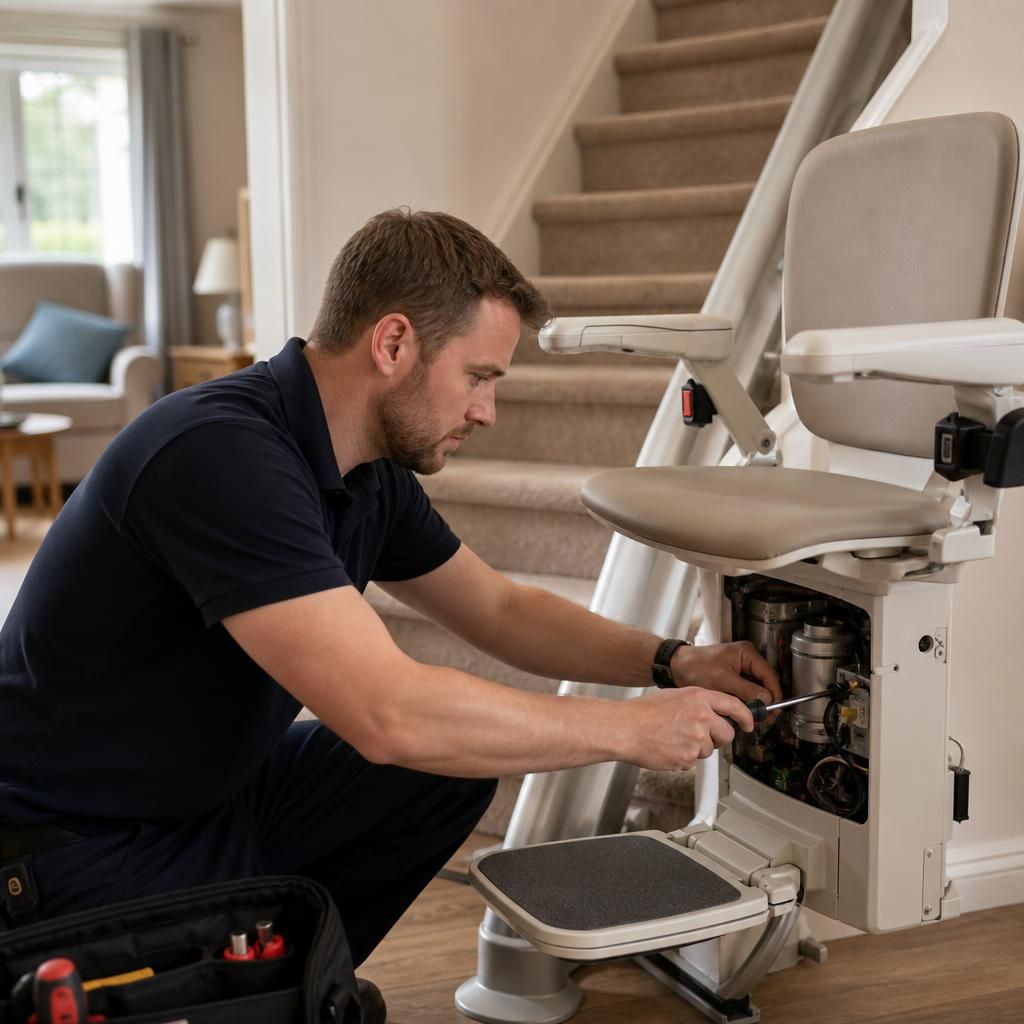
Book a stairlift maintenance assessment
Book a stairlift maintenance assessment to identify developing faults, check safety systems and help manage future repair costs. Our team can assess your stairlift and explain any recommended maintenance or replacement work.